Driver Takes out Plants/Sign on Bowdoin Median

A lane of traffic was blocked on Temescal Canyon Road on Sunday because of a solo car accident.

Around 2 p.m. on Mother’s Day, May 8, a driver slammed into the median between Radcliffe Avenue and Temescal Canyon Road on Bowdoin Street.

Pieces of his car were in the median. The school sign had been flattened.  The vehicle suffered damage and came to rest in the middle of Temescal Canyon Road.

When Circling the News arrived on the scene, the man had been detained and was in the back seat of a police car. Although he was not handcuffed or restrained, other than sitting in the back seat of the car, he started screaming he couldn’t breathe.

Fire Station 69 paramedics came, and the man was transported to the hospital.

The car interior, which could be viewed by walking by in the cross walk, had several 12-packs of Bud Light.

Nearby residents said the car was blaring music when it hit the median, and some suspected alcohol. Circling the News has no information whether the man took a DUI test or was intoxicated.

Neighbors called Scott Cullen, who had won a Golden Sparkplug award from the Pacific Palisades Community Council for beautifying that median. He came over and surveyed the damage and asked police officers if the driver could make restitution.

He was told that he should contact the city. He wrote Noah Fleishman in Councilman Mike Bonin’s office.
“Today a drunk driver drove over much of the median and took out many of the plants and left lots of car debris as the car hurled toward its final resting spot in the middle of Temescal Canyon Road.

“There are some plants left. I am going to try to salvage many of the succulents.

I think the police have sent a request to some agency to clean up the area,” Cullen said.

“Our concern is that in the past as the city maintenance group called “GREEN GARDEN, INC.” removes plants and clears out mulch – and that is the opposite of what is needed.”

Cullen said that he had removed some of the car debris and would like the City to take that debris away, without trampling the remaining plants.

He asked if the City could fix the School Zone sign, which is laying in the median.

“If you are able to intervene and help, please ask that no mulch/leaves/ground cover be removed,” Cullen said. “The mulch helps keep the ground nutrient rich and conserves water. If anything, if additional mulch can be brought that would be most helpful.”

Cullen said if he knew when a City crew would be sent out, he would be happy to stop by and assist.

The sign was pushed over and parts of a car were left in the median and adjoining road after a driver drove over it on Sunday afternoon.


Posted in Accidents/Fires | Leave a comment

Alan Eisenstock’s Playlist: Mother’s Day

(Editor’s note: Palisadian Alan Eisenstock’s 20th book, came out May 3. He wrote it with Sonya Curry, mom of NBA star Stephen Curry.
click here. When Eisenstock is not writing, he pursues what he calls “a crazy labor of love side project” that he started in March 2020: sending a weekly Covid-themed playlist of songs to his family and friends. These playlists, which can be downloaded on Spotify click here span rock ‘n’ roll and pop music from the 1950s to 2020, and Eisenstock adds one or two lines of commentary about each song that is clever, amusing and informative.)


Hi, Everyone,

For two straight years, thanks to COVID, many of us celebrated Mother’s Day on Zoom. This year, even though cases are starting to increase again, we may actually return to in-person celebrations. What to do? Idea. Hug your mom… plus, here are 17 “mother” songs. Listen up!

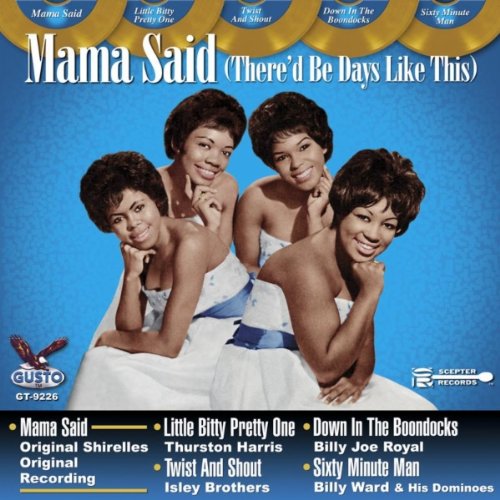
  1. “Mama Said” The Shirelles. High school friends from Passaic, NJ. They formed an R&B/soul group and entered a talent contest. I assume they won. Unclear. Anyway, Luther Dixon and Willie Denson wrote this big 1961 hit. “Mama said there’ll be days like this…”
  2. “Mother And Child Reunion” Paul Simon. Paul recorded this snappy, reggae-infused hit in 1972. One of my favorite Paul solo songs. Cissy Houston is one of the backup singers. LOVE.
  3. “Family Affair” Sly & The Family Stone. Sylvester Stewart changed his name to Sly Stone–he loved The Rolling Stones–and the funk, R&B band was born. This 1972 song was the band’s biggest hit. 1972 was a pretty good year for music.
  4. “Mother’s Little Helper” The Rolling Stones. Big Stones’ hit from 1966 and their album Aftermath. It’s about the drug that gets mothers through their day. Specifically, Valium.
  5. “Mother-in-Law” Ernie K-Doe. Ernest Kador, Jr. from New Orleans changed his name and recorded this Allen Toussaint song. It became a #1 hit in 1961. Toussaint plays piano. This one’s for my son-in-law.
  6. “Your Mother Should Know” The Beatles. Paul wanted to write a “music hall” style song and here it is from 1967 and Magical Mystery Tour. Some call this “Vaudeville Rock.” If you love 1930’s musicals, this is your groove.
  7. “Grandma’s Hands” Bill Withers. R&B icon from Slab Fork, NY. Bill wrote this ode to his grandmother in 1971. One of the most soulful voices ever. Booker T produced.
  8. “Sweet Child O’ Mine” Sheryl Crow. Ms. Crow, from Kennett, Missouri, sings and writes rock, folk, country, you name it, and has sold 50 million records. She wrote this “mother” song in 1998. Apropos of nothing, Sheryl was a high school track star, winning medals in the low hurdles.
  9. “Mama Told Me (Not To Come)” Three Dog Night. An obvious “Mama” song from 1970. The band has become a pop/rock cliche, with maybe this exception. Randy Newman wrote this song. Catchy.
  10. “The Mother” Brandi Carlile. The pride of Ravensdale, WA and one of my favorites. In this 2018 song from the album By The Way, I Forgive You, Brandi sings of all the trials and tribulations of motherhood. “Tethered to another and you’re worried all the time.” Amen.
  11. “Stacy’s Mom” Fountains Of Wayne. Power pop/rock band formed in New York. This 2003 was their biggest hit, written by Adam Schlesinger and Chris Collingwood. My son and I saw them at the now defunct House of Blues on Sunset. They blew the roof off, almost literally. Adam died from Covid in April 2020. He was 52.
  12. “Mother” John Lennon. Sad song that John wrote in 1970 while undergoing Primal Scream therapy. John’s mom died in a terrible accident. A drunk driver ran her over at a crosswalk. Thus the lyric, “Mother, you had me, but I never had you.”
  13. “Mama Tried” Merle Haggard. Country bad guy Haggard served three years in San Quentin for robbery. He wrote this song for his mom, suggesting that his outlaw ways were not her fault. The 1968 song appeared in the film Killers Three, in which Merle made his acting debut.
  14. “Tell Mama” Etta James. Born Jamesetta Hawkins. R&B, soul, jazz, blues–Etta sings it all, and brilliantly. Clarence Carter, Wilber Terrell, and Marcus Daniel co-wrote this 1967 song that became an Etta signature song. Love how all the songwriters have two first names.
  15. “Mamas Don’t Let Your Babies Grow Up To Be Cowboys” Waylon Jennings, Willie Nelson. Country singer/songwriters and husband and wife Ed and Patsy Bruce co-wrote this song. Willie and Waylon teamed up and recorded this duet, which became a #1 Country hit in 1978.
  16. “C Sections And Railway Trestles” The Avett Brothers. Seth and Scott Avett from Concord, NC form the core of this country-folk band. Love their harmony and sensibility. Seth wrote this song in 2019 describing in graphic detail the birth of his son. It comes from their album Closer Than Together.
  17. “The Wish” Bruce Springsteen. The Boss wrote this song for his mother and included it on his 1998 album Tracks. Here is the stripped down version that he sang in Springsteen On Broadway,accompanying himself on piano. Saw him on Broadway performing this song. Nearly killed me. LOVE.

And there we have it–an eclectic Mother’s Day mix. Some advice:

Don’t Forget to Disinfect… and PLAY IT LOUD! 

The link again: click here

Fact Check 

Bill Withers was born in Slab Fork, NY.

Sheryl Crow was a high school track star.


LAST WEEK’S POLL QUESTION:

Elton John’s “Rocket Man” blasted past “Take Me To The Pilot.”


THIS WEEK’S POLL QUESTION:

“Mama Said” by The Shirelles or “Family Affair” by Sly & The Family Stone. Tough one, right? Who you got?

Very Happy Mother’s Day to my wife and all you mothers out there, with a special mention to my daughter who is celebrating her first Mother’s Day!

Thanks, all,

Alan Eisenstock

Until next week,

Alan

alaneisenstock.com


Posted in Music | Leave a comment

Almost Half of $5M Venice Boardwalk ‘Encampment to Home’ Funding Used for Staffing, Operations

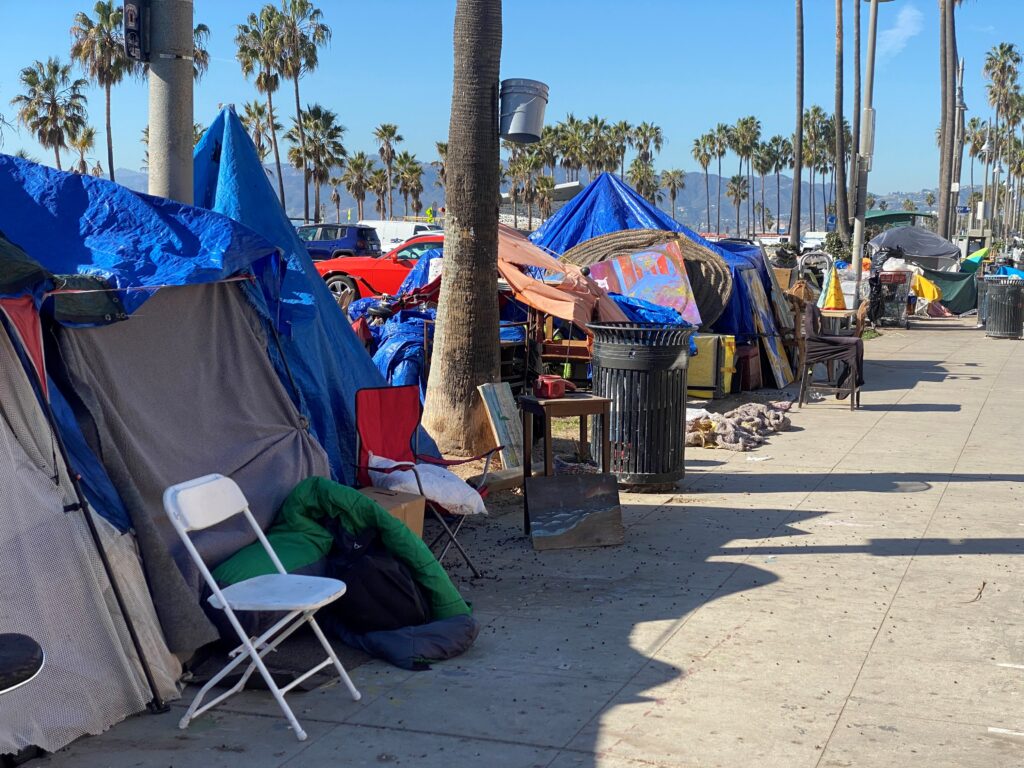
The Venice Boardwalk was lined with a homeless encampment. The L.A. County Sheriff stepped in to help restore law and order.

BY JAMIE PAIGE – WESTSIDE CURRENT EDITOR

A draft budget of the $5 million in expenditures for the Venice Boardwalk Encampment to Home program conducted in 2021 shows that almost half of the money went to Saint Joseph’s Center (SJC) staffing, operations, and “indirect” costs—despite a commitment from Councilmember Mike Bonin and SJC to use the “bulk of the budget for housing resources” and a willingness from the Los Angeles County Homeless Outreach Services Team (HOST) to supply staffing resources.

Last June, the Los Angeles City Council allocated $5 million from the city budget to pay for interim housing for more than 200 people who lived in encampments along Ocean Front Walk.

At an LA City Council Budget and Finance Committee meeting in June, SJC’s CEO Va Lecia Adams Kellum told members that the $5 million “budget would—in large- be used for housing resources, client-aid funds, food and meals, and motel costs.”

However, a budget recently sent to Westside Current shows that almost half of the money went elsewhere – $1,375,166 to Personnel Costs, $154,739 to Operating Costs, and $614,035 to unspecified Indirect Costs.

The Breakdown

Fifteen full-time staff members were hired for the Encampment to Home program by Saint Joseph’s at a cost of almost $1.4 million. According to the budget, one full-time supervisor was hired for $70,000, 10 full-time case-management staff were hired at $52,000 each and an additional twelve full-time resident monitors were hired for $650,000 (averaging $54,000 each). Benefits for all the staff added around $200,000.

“That amount of money is equivalent to what the board of supervisors pays for the HOST deputies for the year,” stated Lt. Geoffrey Deedrick, who heads the Los Angeles Sheriff’s Department’s HOST team that offered help at the Boardwalk last summer. It is unclear what time period is covered for the SJC hires. What is clear is that using the HOST team for outreach would have saved at least part of the cost of additional personnel and allowed more funds to go towards housing the homeless.

Also included in the draft budget are operating costs for things like program supplies, cell-phone service, and staff mileage and parking, totaling $153,749. Another $19,050 was spent on one-time purchases such as for filing cabinets and laptops. “We have all those supplies already and wouldn’t have needed more,” said Deedrick.

An additional $614,035 is listed as “agency indirect money” with no breakdown of how the money was spent.

At What Cost?

The Westside Current started asking for a budget breakdown last June when we first learned about the $5 million price tag. The city council promised transparency—and before approving a motion to allocate the money for the program, the Budget and Finance Committee amended the motion to include a required detailed assessment of program costs, including a detailed budget after 45 days. However, it took multiple requests over the course of seven months for the Current to obtain what is identified as a “DRAFT BUDGET.”

In justifying the cost of the program, Bonin referenced an earlier Encampment to Home program at Penmar Park. Suggesting it as a model for the Boardwalk operation, he called Penmar “very successful” but said more resources would be needed to duplicate the plan on the boardwalk.

Reporting done by the Current in March of 2021 about the Penmar program’s outcomes found that just a few months after putting people from the Penmar encampments into two Mar Vista hotels there was a drastic uptick in crime in the hotels’ neighborhood and the program had to shut down.

At the June 2021 Budget & Finance Meeting, SJC’s Kellum explained that the Boardwalk Encampment to Home project would be different. “This budget is a lesson learned from Penmar,” she stated. “We didn’t expect the [Mar Vista] “community to balk because of noise and people walking in the streets. We had to take outreach teams out of the field have them work in motels. The [Boardwalk] budget will provide for services that keep people in housing. That’s where we found we were sorely lacking.”

The DRAFT BUDGET shows that $649,466 of the listed Personnel Costs went to resident monitors. Nevertheless, Venice walk-street residents living near the Cadillac Hotel, where a number of formerly homeless Boardwalk residents were housed, have documented a dramatic spike in crimes – including fires, assaults, break-ins and open drug sales and use, many of the same issues that residents near the Mar Vista hotel had seen and experienced.

Doubling Up

While Bonin was asking for the $5 million in 2021, the HOST team along with community volunteers had already been working to connect Boardwalk homeless residents with services and housing. About 20 LASD deputies and mental health workers were assigned to help at the Boardwalk. Their intention was to continue providing this help to bolster SJC’s Boardwalk outreach teams during Encampment to Home.

At an event jointly held by HOST and celebrity hairstylist Jason Schneidman on June 18, 2021, four homeless Boardwalk people were housed and another four were connected to a reunification program.

Schneidman, who has spoken freely to the media about his past battles with addiction and a brief period of homelessness, started a nonprofit organization called THEMENSGROOMER. That day, Schneidman and seven of his stylists gave about 40 haircuts to people experiencing homelessness on the Boardwalk.

“Collaborations like these show the impact that we can have, one person at a time,” said Deedrick. “The HOST mission is humanitarian.”

However, as Bonin’s Encampment to Home program got underway, the Councilmember refused assistance from the HOST team, instead tweeting that, “We’re launching a major effort to confront the homelessness crisis at Venice Beach, address the safety needs of the housed and the unhoused, and fully reopen the park and beach for general public use. How? We’re offering housing, not handcuffs.”

Deedrick said the mission of his trained outreach team is not “handcuffs” but building relationships and trust with a population that has experienced trauma, adding that his team made zero arrests on the Boardwalk because that’s not their objective.

“The unhoused are used to adverse connections, and we are looking to change that,” Deedrick explained at the time. “If they say ‘I don’t want to talk,’ we’ll walk away and let them know we’re on their time. We have human misery and deterioration. We are coming to them from a place of grace. We want them to know they have needs and [we can]] address them to the best of our ability.” He added that his trained team was also providing safety and security on the Boardwalk.

Centennial Park, which is by the Venice Library, has been taken over by a homeless encampment. Police have responded to numerous calls at the site, including a shooting.

Centennial Park Encampment to Home?

Saint Joseph’s Center is reported to be working with Bonin and the Mayor’s Office to help clear the Centennial Park Homeless Encampment. The Crisis and Incident Response through Community-Led Engagement, or CIRCLE team is also providing outreach at the park. That program just received an additional $1.5 million from the federal government—as well as a bump in the 2022 fiscal year city budget that adds up to an additional $5 million. The program is currently said to be in a Beta stage and is only operating in Venice and Hollywood.

No further details about operations at Centennial Park are currently available except that it will be an Encampment to Home program much like the previous ones at Penmar Park, Venice Boardwalk Park, and Westchester Park.

Bonin’s critics maintain that they see a pattern in CD11. He allows an encampment to continue getting larger and larger – despite community pleas for people in the encampments to get help when it first starts growing – then claims credit for clearing the problem and providing housing.

In an email sent by John Baginski, a former member of the Venice Neighborhood Council Safety Committee, Baginski highlights that Bonin has had four sizable encampments in his district.

“Bonin creates a crisis and then pretends to solve the crisis and garners a bunch of press [while doing it],” stated Baginski “But when the press leave, [Bonin] runs away with no follow up and leaves the area with the scars, trash, inflated crime and disruption he created.”

Baginski also points out that Bonin ignores that most of the homeless do not go to or stay in the housing and that “his policies attracted many of the people to his localized crisis in the first place.”

Westside Current talked with unhoused folks at Centennial Park and been told by many that they have already been in and out of numerous encampments, hotel rooms, and shelters around the City during the past few years.
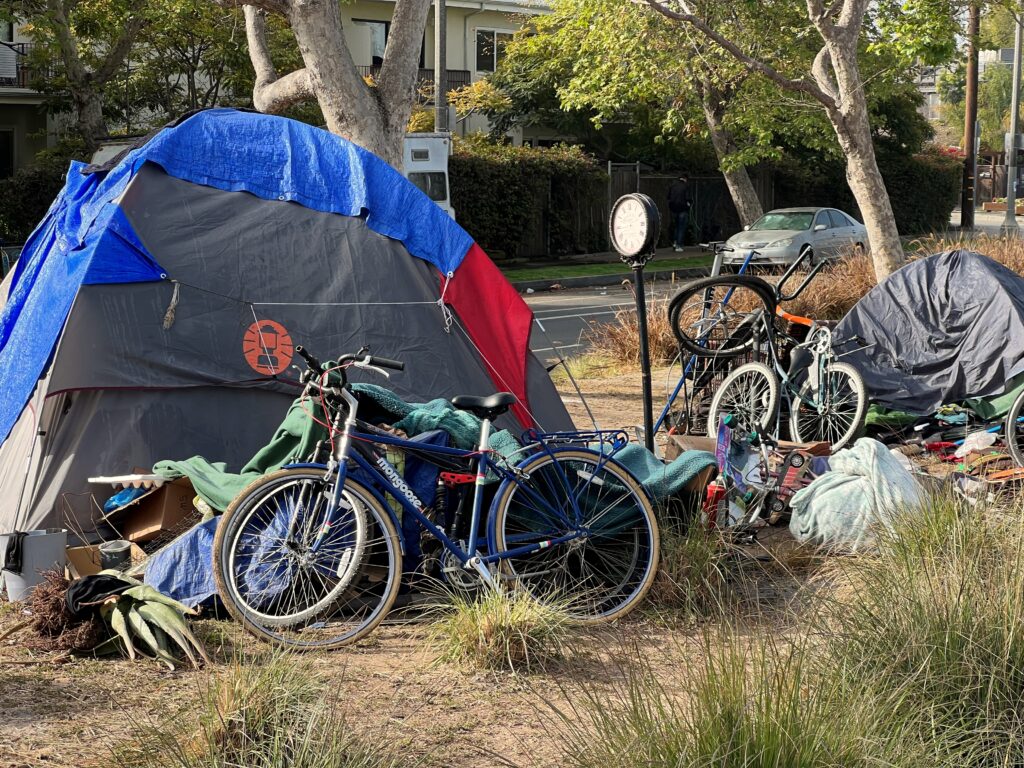
Residents who live near Centennial Park are not hopeful the area will be restored.

We reached out to Saint Joseph’s multiple times for comments on this story and extended our deadline for more than two weeks to give them additional time for a response. We did not receive one.

(Editor’s note: This important story is shared in cooperation with the Westside Current. CTN applauds editor Jamie Paige for uncovering that the money targeted for the homeless is actually going to the nonprofits who are slated to help the homeless.)

Posted in Community, Homelessness | 1 Comment

Laughter is the Secret: Emily and Jerry Mayer, Married 69 Years

Emily and Jerry Mayer have been married 69 years.

By LAURA ABRUSCATO


After 69 years of marriage, Palisadians Emily and Jerry Mayer agree that lots of laughs is one of the secrets to their long happy relationship.

That humor is on display in Jerry’s musical “You Haven’t Changed a Bit, and Other Lies” now playing at Santa Monica Playhouse through June 26.

Co-written with son Steve, the musical comedy about three couples in their 60s renewing their vows includes songs about long marriage such as “The Role Reversal Tango” and “You’re Too Important to Me.”

The couple, who have lived in Paseo Miramar for 53 years, have other advice.  “Don’t go to bed without a kiss,” says Jerry. “Don’t sweat the small stuff,” says Emily.

“Be a nice person,” says Jerry. “It’s so important you have to respect the person you’re married to.”  Adds Emily, “We’re good friends. We feel very fortunate we’ve been able to travel, and we love our home.”

They met when a friend from Western Military School suggested Jerry, 18, attend a party 16-year-old Emily was hosting. They married at ages 21 and 19.

“It was the time if you lived [together] unmarried, your father-in-law would kill you,” says Jerry, who was working for his family’s construction company in St. Louis, Missouri, at the time.

Always the class clown, Jerry was a cartoonist and wrote humor pieces for his school newspaper. He wanted to try comedy writing for his career. After selling a spec script for the show “McHale’s Navy,” the couple and their three young children moved to Los Angeles, which Emily admits “was kind of crazy.”

“We came out here cold,” recalls Jerry who once followed Buddy Hackett into a Beverly Hills parking garage and showed him some of his jokes. Although he didn’t buy them, he suggested another comedian, Fat Jack Leonard, who bought the jokes for $100.

Jerry began selling his jokes to comedians such as Phyllis Diller and Jonathan Winters. He went on to write for “M*A*S*H,” “The Bob Newhart Show,” “All in the Family,” “The Mary Tyler Moore Show,” and was the executive producer of “The Facts of Life.” While working on the latter show, an actress told him about a playwriting group where he wrote his first play, “Almost Perfect,” a comedy about marriage. It premiered in 1986 with Emily as producer.

He is currently working on his 11th play. All of his shows have run at the Santa Monica Playhouse, and most are published and are performed all over the U.S., including off-Broadway, as well as in Europe.

Son musician/composer Steven who is also the show’s musical director, lives with wife Julie and two children in West L.A.

Son Michael, an editor at the San Francisco Chronicle, lives with wife Mary in Berkeley and daughter Margie and husband Bob live in Henderson, Nevada, and are grandparents to the Mayers’ two great-grandchildren.

Their walls are taken up with family photos, pictures of famous friends from Jerry’s long TV career, and a variety of art including prints by longtime New York Times caricaturist Al Hirschfeld.

When Jerry turned 90 last September, Emily surprised him with a staged reading of his 20-year-old musical “You Haven’t Changed a Bit, and Other Lies” at Santa Monica Playhouse.

It went so well that Playhouse directors Chris De Carlo and Evelyn Rudie decided they’d like to put on the show and also be part of the cast. The Mayers have a long association with the Playhouse, which Emily calls “a wonderful asset to Santa Monica.”

“You Haven’t Changed a Bit…And Other Lies” is performed at Santa Monica Playhouse, 1211 4th St., Santa Monica, Saturdays at 7 p.m. and Sundays at 2:30 p.m. though June 26. For tickets, call: 310-394-9779, ext. 1, or go to SantaMonicaPlayhouse.com


Posted in Community | 1 Comment

The High Costs of Extracurriculars Footed by Parents

Members of Palisades High School band and color guard participate in competitions.

For many students, participation in an extracurricular activity is the key to succeeding in high school. That activity gives them a group of friends and a purpose that might not come from the classroom.

According to a study in the Education Resources Information Center: “Students who participate in extracurricular activities experience higher levels of academic achievement. These effects have been researched since the early 1930s. Students who participate frequently in extracurricular activities tend to have higher grades, better test scores, and more positive educational experiences in general. For example, participation in extracurricular activities is associated with a 2% increase in math and science test scores. Furthermore, students involved in activities have a 10% increase in their expectations of attaining a college degree, as compared to non-participants.”

The study concludes that students should be encouraged to participate in extracurriculars throughout their school years.

Palisades High School student Chaz Plager, who participates in color guards, wrote that extracurricular program may be dropped because of funding issues.

CTN reached out to PaliHi Band Director Tyler Farrell, who explained the cost of operating a competitive marching band and color guard program.

“We have averaged between $45,000–$50,000 for the marching band seasons over the past three years, and we are hoping to increase our budget for the Fall 2022 season,” Farrell said. “Pali High has traditionally only funded us with instructional materials money, which is largely used for sheet music and instrument repairs.”

Last year the program received $4,000 from PaliHi and that had to be spent on instructional materials.

The band director explained “The marching band relies heavily on financial support from our member’s families through donations, and fundraising efforts to cover the costs of show design, travel to competitions, entry fees, equipment and instruments, and the educational team that works with the students at each rehearsal.

“We brought in close to $20,000 in donations from families; $15,000 from a group-wide fundraiser; and about $8,500 from the PCHS Booster Club,” Farrell said and explained that the color guard is a year-round group that performs with the marching band in the fall but has its own competitions in the spring and is called the winter guard.

The cost of the color guard program is absorbed in the band program in the fall, but in the spring, students who participate in winter guards must raise $15,000 to keep the program intact. Currently about $1,500 has been raised.

“Right now, we are having to make sacrifices in other aspects of the program to cover the costs of the winter guard for the second time in my three-year tenure at Pali High,” Farrell said. “We have tasked the students and families to help us generate fundraising ideas that they would be willing to participate in and have not had much luck. As much as I want to see our winter guard program continue and thrive, it is just becoming unsustainable in its current state.”

Farrell said that one of the largest expenses is the educational coaches and design team that are hired. “I will add that one positive for next year is the hope that our travel to competitions/performances will be picked up by the school’s transportation budget,” he said. “This is something I’ve been fighting for about two years now, and finally looks like we will have some progress, we may have some of our travel covered next year.”

Traditionally, PaliHi has paid for the transportation costs for athletic teams to regular season games. For 2021-22, about $100,000 was paid for buses.

For the coming year, the name would be changed from athletic buses to competition buses, which would allow some transportation funding to go to band.

At the April 19 PaliHi Board of Trustees meeting, the transportation proposal was initially rejected. The subject was revisited at an April 28 meeting and passed.

The proposal, which sustains the current busing program, will also expand the competition buses – which will help the band.

The Pacific Palisades marching band marches in the annual 4th of July parade.

Posted in Arts, Kids/Parenting, Music | Leave a comment

Michael Shull Celebrated at Palisades Rec Center

Joe Halper (left) laughs while Mike Shull cuts the cake during his retirement party at Veterans Gardens at the Palisades Rec Center.


By ALISON BURMEISTER

It looked like a birthday celebration, complete with balloons and a cake, at Veterans Gardens at the Palisades Recreation Center on Friday.

Instead, Michael Shull, general manager of the L.A. City Department of Recreation and Parks, was being feted because he plans to retire in June. About 20 residents and staff gathered to express thanks to a top official, who was approachable and genuine.

“Everyone knew how to get hold of me, and I wanted people to know they shouldn’t be afraid to tell me what is wrong,” said Shull, who oversees about 480 parks.

“You mean we weren’t your only park?”  Palisades Park Advisory Board member Maryam Zar, joked.

Shull explained his philosophy, “It’s important to be accessible, and understanding what the challenges are, in order to solve problems. You have to have your ear to the ground.

“Don’t tell me what I want to hear, tell me what is wrong,” he said.

An engineer by profession, Shull joined the Department in 2005 and was appointed by Mayor Garcetti as General Manager in 2013.  Under Shull’s management 72 new parks were developed and many others were refurbished.

The Department of Recreation and Parks maintains and operates parks, swimming pools, public golf courses, recreation centers, museums, youth camps, tennis courts, sports programs, and programs for senior citizens.

During Covid, Shull said recreation centers were used to house the homeless.

“Many people don’t realize that the recreation and park services are the shelter and city welfare arm of the city,” Shull said, noting there were 24 park sites in the city used for housing the homeless.

Jasmine Dowlatshahi, the newly appointed Pali Recreation Park director, who ran one of the sites, said “We worked 12-hour shifts, fed the homeless, offered them showers at the pool and had a medical staff on board.”

When the schools closed during Covid, 50 recreation centers became LAUSD learning sites with free wi-fi, tablets and laptops.

Shull said he feels satisfied as he retires, but also acknowledges there is still work to be done.

“We are everyone’s backyard,” he said. “In a city of four million people it is important we create safe places for people to gather.”

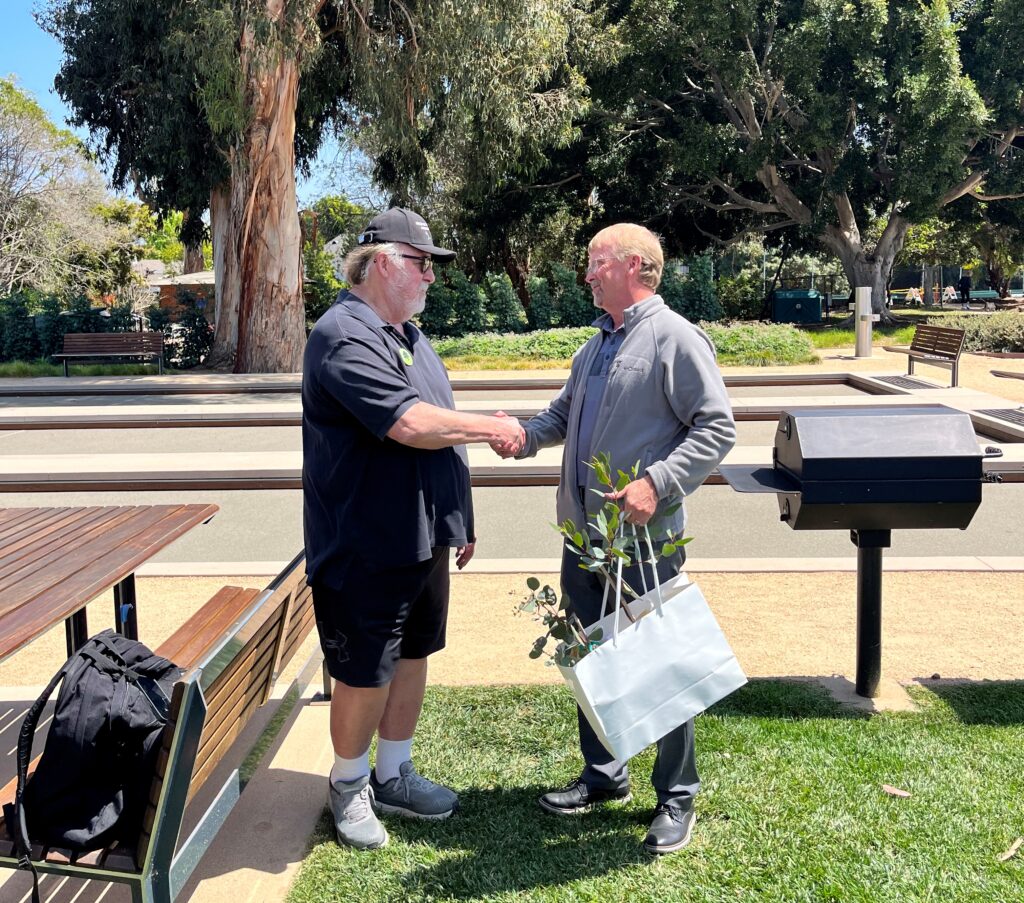
Pacific Palisades Community Council President David Card had a special “going-away” present for Shull – two small eucalyptus trees. At the entrance to the park off Alma Real, there used to be two large trees: one is still standing. Card said that Shull had helped save that tree.

When asked what he would miss the most, Shull said, “the people…the staff.”

Although Shull said he is excited to retire and spend time with his two kids and wife, who is also retired, he did mention he would likely come back and consult.

“We are certainly going to miss him,” said Joe Halper, a Palisades resident and a member of the L.A. City Board of Recreation and Park Commissioners.

Community Council President David Card presented Mike Shull (right) with two trees and thanked him for his help.

Posted in Parks | Leave a comment

Delicatessen Explored at Skirball Center: “I’ll Have What She’s Having: The Jewish Deli”

Abe Lebewohl with a hero from the Second Avenue Deli.

By LIBBY MOTIKA

Circling the News Contributor


I could be accused of chutzpah for kvetching about the schlocky workmanship of that nudnik who purports to be the community’s mensch.

Yes indeed, the list of Yiddish words is firmly seeded in the American lexicon. Arriving with the massive Jewish immigration in the mid-19th and early 20th centuries, these colorful expressions coalesced around the traditions, customs, connections, and especially beloved recipes transported by the new arrivals.

Like many immigrants today, Jews from Central and Eastern Europe often supported themselves and their families by selling the food that reflected the tastes and customs of the kitchens they left behind.

Vendors set up wooden pushcarts and barrels on New York sidewalks, selling specialty foods of their home countries, such as rye bread, smoked herring, bagels, knishes and pickles.

Those who were successful expanded into storefront grocery delicatessens offering not only kosher cured meats, but also a range of packed and canned goods.

Between 1880 and 1924, more than two million Jewish immigrants made new homes in the United States. The emergence of the delicatessen can be traced to the influx of Jewish immigrants from the Rhineland, and later in the late 19th and early 20th centuries, Jews from Eastern Europe and the Russian Empire. The regional Central and European foods such as pickles, knishes, gefilte fish, borscht and rugelach came to be served under one roof.

The story of the Jewish delicatessen and all its rich flavors and central place in the immigrants’ new lives is fully explored in an exhibition at the Skirball Cultural Center, “I’ll Have What She’s Having: The Jewish Deli,” through September 4.

Throughout the early 20th century, Jewish delicatessens opened across the country, attracting both Jewish and non-Jewish customers. By the 1930s, there were some 5,000 delis in New York City alone.

Menus on display from the landmark Carnegie Delicatessen and Lindy’s Restaurant in New York’s Theater District attest to the deli’s role as a hub for Broadway types and theater patrons.

Mid-century matchbooks from LA’s now-closed Junior’s Restaurant in Westwood and Solley’s Restaurant and Delicatessen in the San Fernando Valley are also on view.

While the basic menu offerings provided the much-loved staples familiar to the Jewish immigrants, the abundance of agriculture opened expanded food offerings.

For example, the emerging cattle industry provided the ribbons of beef that are the foundation of the classic deli sandwich.

Kosher slaughterhouses and meatpackers met the needs of Jewish consumers with beef that was produced on an industrial scale.

The Skirball exhibition considers the larger arc of the Jewish experience in the 20th century, tracing the evolution of the delicatessen to the national institutions they are today.

On view are neon signs, menus, advertisements, historical footage and film and television clips illustrating the prevalence of the deli in communities nationwide.

Of particular interest are the examples of how important the Jewish deli has become as sort of secular Jewish spaces.

Hangout places for showbiz folks, the deli at night has provided rich plots for the fascinating characters who frequent them. Visitors can enjoy footage from TV hits such as “Curb Your Enthusiasm,” Seinfeld” and the “Marvelous Mrs. Maisel.”

Following a loose chronology, the exhibition brings the visitor up to the late 20th century and changing trends.

“At the end of the 20th century, ethnic diversity began to serve as a point of celebration in food and new, artisanal Jewish delis have opened across North American and Europe,” says co-curator Lara Rabinovitch.

Eateries around the country are expanding menus that reflect the ways delis have changed in recent years, including incorporating influences from Sephardic and Israeli Jewish cuisine and focusing on justice in running their businesses.

In celebration of“I’ll Have What She’s Having: The Jewish Deli,” the Skirball will present “Late Night! The Jewish Deli,” on Friday, May 20 from 6:30-10 p.m., with exclusive after-hours access to the exhibition and food trucks.

For more information on the Skirball, 2701 N. Sepulveda Blvd., contact (310)440-4500.

Vienna Beef Factory, inspecting sausages.
Photo: Vienna Beef Museum

Posted in Arts, Education | 2 Comments

Woman’s Club Mini-Grants Applications Now Available

Recipients of the Woman’s Club grants in 2020 were all smiles as they showed their checks.

Pacific Palisades Woman’s Club President Jennifer Jones-Church announced that the club will now take applications for mini-grants for the coming year. Grants may be given for organizations that work in the areas of Arts and Recreation, Community and Charitable Organizations, Education and Beautification.

To be considered for a grant, applicant organizations must be based in Pacific Palisades and/or provide services that benefit the Palisades community.

Organizations that are defined as tax exempt under Section 501(c)(3) are eligible for consideration with a limit of one application per organization. Preference is given to applications showing a broad community outreach.

All applications must be submitted in complete and final form by May 23. Late applicants will not be considered. click here

Questions? Call (310)745-6400 or email [email protected].

In 2021, 20 organizations were awards grants during COVID.

Below is a partial list of organizations that have received grants in the past: EDUCATION: (Better Angels, Inc., Canyon School Booster Club, PRIDE Booster Club, Inc. , Paul Revere Middle School, FOM – Friends of Marquez, Palisades Enrichment Program, Palisades High School Booster Club, Palisades Charter School Foundation and Boy Scouts of America): ARTS AND RECREATION (YLC Ballet, Palisades-Malibu YMCA, Movies in The Park, Children’s Music Fund and Chamber Music Palisades): BEAUTIFICATION (Pacific Palisades Garden Club, Palisades Beautiful and Malibu Orchid Society): C0MMUNITY (Pacific Palisades Task Force on Homelessness, Westside Family Health Center, Meals on Wheels, Palisades Americanism Parade Association (PAPA), Palisades Cares, GriefHaven, The Kris Kelly Foundation, Pacific Palisades Community Council, Voice for the Animals and Pacific Palisades Historical Society.)

Visit: theppwc.org.


Posted in Community | Leave a comment

LAPD K-9 Dogs Sniff out Explosives

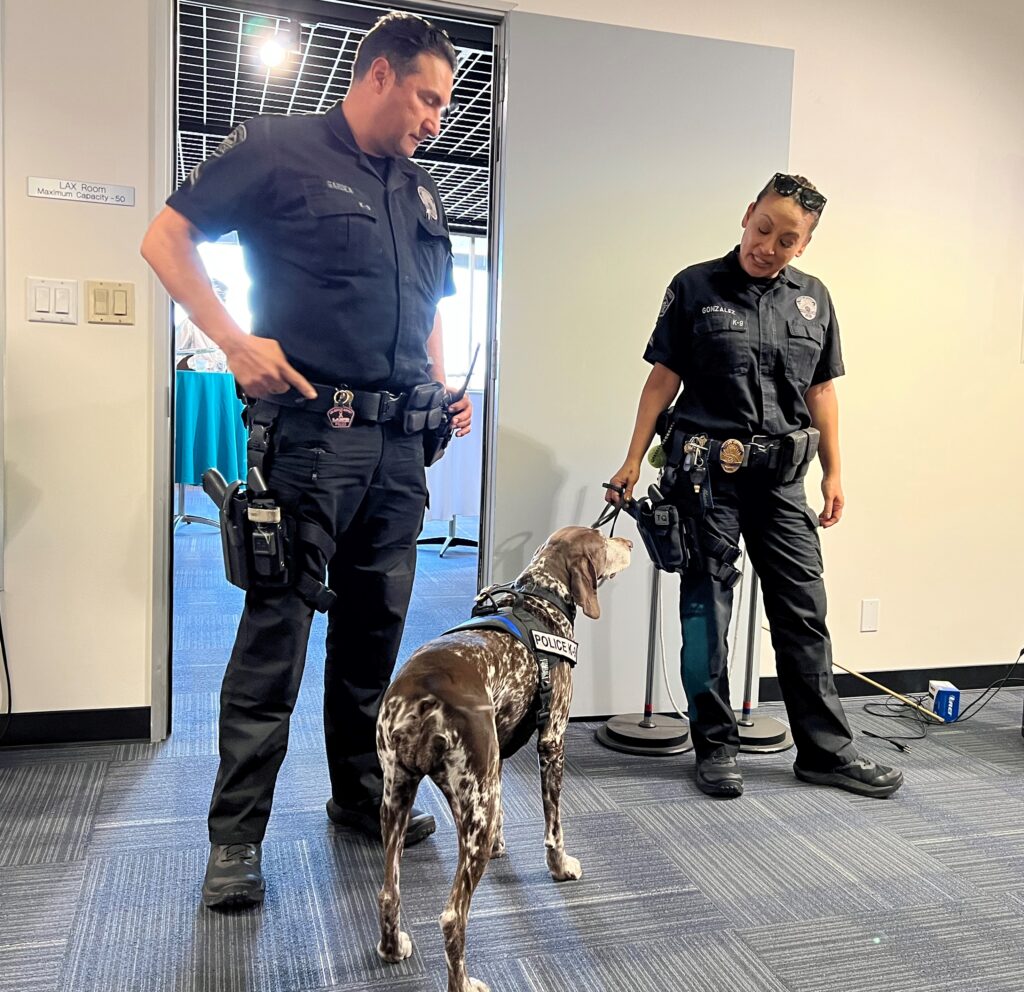
Officers Cardea (left), Nori (canine) and Gonzalez demonstrated how explosives are found at the Los Angeles airport.

The Los Angeles Airport has one of the largest canine units in the United States.  Members of American Legion Post 283, who held an April meeting at the Flight Path Museum at LAX, met Officer Nori, a German short-hair pointer and her handler Officer Gonzalez.

Canines, when not working, live with their handlers.  Nori is 11 years old.

“Maybe she’ll work one more year, and then retire and I’ll get to keep her,” Gonzalez said, noting that the dogs receive free food and medical care.

“I worked with a German Shepherd, who retired when it was 13 and it lived with me another three years,” said Officer Gardea, who was also at the presentation.

Dogs are trained to find between 16 to 18 different kinds of explosives. The two officers had arranged a demonstration in which three backpacks would be placed on the ground, one containing black powder “explosives,” but Nori cut the demonstration short. The dog ran up to the backpack that had been placed to the side, sat and didn’t move. That was the signal there was explosives.

When a dog finds a contraband, it is rewarded with a toy, not food. Gonzalez said the airport is filled with food odors, which makes it difficult to offer that as a reward. Nori was given a green tennis ball, attached to a cord, which the dog promptly played with.

Officers were asked if anyone every tried to kick or abuse the animal. “That would be assault, because the dog is considered an officer,” Gardea said. “That person would be charged, just as if he had assaulted a person.”

The handlers were asked if the dogs sniff out drugs. No, because marijuana is now legal in California and people do fly with it all over the country.

The Canine Unit was created in 2001, in response to September 11. The unit allows police to search and find explosive materials and rapidly respond to potential threats.

The dogs are used if there is an unattended bag, and Cardea said that they can even sniff out the nitroglycerin that is used in heart medications. It is also used in bombs.

The Canine Unit also conducts random and directed searches of cargo facilities, terminals, U.S. mail, aircraft and baggage handling areas.

Gonzalez said that people love to pet Nori, and canines, such as Nori seem to like the attention.

Dogs are trained at Joint Base San Antonio-Lackland. The 25,000 square foot facility has kennels for about 350 dogs.

About 325 dogs complete training each year and there are about 160 in training at any given time. The graduation rate for the canines is about 83 percent.

There are seven breeds trained: German Shepherds, Labrador Retrievers, German Short-haired Pointers, Wirehaired Pointers, Vizslas, Belgian Malinois and Golden Retrievers. It costs about $46,000 for the training (for canine and handler).

Nori was taken out of the room and then three backpacks were strewn on the floor. The dog came in and sniffed the first two, before it found “explosives” in the third. Sat. And was rewarded with a ball.

Canine Officer Nori loved the attention of Junior Auxiliary member Violet.

Posted in Crime/Police | Leave a comment

Teen Brains and Puberty “Adolessons”

Adolessons Website provides information for parents and kids.

By ALISON BURMEISTER

Two years ago, Dr. Dolly Klock, a family physician and mother to a teen and a tween, spoke to a group of parents in the library at Palisades Elementary School. She answered questions around healthy screen time, sleep habits and puberty.

Looking back, parents had no clue about the challenges they would soon face. As if raising a hormonal tween or teen wasn’t complicated enough, add in lockdowns and on-line schooling – and imagine the fun.

Dr. Dolly Klock

Many parents are still feeling the challenges and stresses, so when Dolly spoke on “Teen Partying, Parenting and Puberty” this past week at Paul Revere Middle School, the zoom event immediately filled up.

The doctor assured parents that teens’ bodies and minds were in the process of a little “remodeling.” She said, parents might feel a bit like an emotional dumping ground, and the adorable kids they once knew may now seem void of any rational reaction, but that this is part of the developmental process


Children’s brains at this point are in a state of selective processing or “synaptic pruning.”  The limbic system that is responsible for the emotional center of the brain, basic needs, hormones, fight or flight and feelings…BIG feelings…is maturing.

Meanwhile the prefrontal cortex which allows for organization, planning-ahead, foreseeing consequences and impulse control is not yet fully developed.

Therefore, what would seem like a rational way to process an emotion may result in a much bigger response from a youth than a parent would anticipate. This does not give anyone the right to be a jerk, but this is a time for parents and kids to address and affirm their family values and not take the small stuff too personally.

Tweens and teens are in the process of forming an identity and emotions are high. As parents it is good to recognize that at this time our kids may seek outside approval over family. For this reason, it is important to know who and what your kids are into.

The pandemic opened the door to technology and kids turned to technology not only for school, but also for entertainment and socialization.

Screen time for adolescents is up from five and half hours a day to eight and half hours. How does the heightened use of technology affect our children’s mental health?

Dolly points out it is not the technology itself but rather the healthy activities that technology replaces, such as in person relationships, exercise and sleep that are causing the mental health issues.

With the internet and social media, children are being exposed to pornography, “sexting” (sending lude videos, messages and photos online) and sex more than ever.

Drugs are being sold to underaged users over snapchat and mental health issues are on the rise. Kids ideas of privacy is confused: they may not want parents to know what is going on in their room, but they are perfectly fine sharing photos with virtual strangers.

The doctor is quick to say, “communication is key.” If you are looking for a way to start up an uncomfortable conversation about sex, puberty or teenage partying, sometimes the best way to start this conversation is by asking them what they know.

If they clam up, maybe relate to them by finding out what they are interested in. Watch a YouTube show or movie with them, find out who they follow on Tik Tok, play a game or sport with them, read with them, encourage them to invite a friend over.

Rather than pulling our kids into the living room for a serious sit-down conversation, parents can create “teachable moments” by relating to our kids through characters in a show or book, discovering a new app, playing a game, or practicing an instrument.

Dolly suggests trying to normalize conversations around uncomfortable situations like sex, drugs, and mental health. The more open you are to talking about them with your child, the less likely they will seek answers somewhere else.

The doctor offers 15 years of clinical medical work and is the founder of “Adolessons.” She provides parent-child puberty classes, group workshops and private parenting consultations. She works to help parents and teens start the important conversations about tricky subjects like puberty and sex, drugs and alcohol, body image and technology use.

In the past couple of years, where conversations on the sideline of a game, before pick-up or after a performance were convenient encounters for parents to check in with one another, the pandemic also placed a pause on many opportunities for parents to connect.

Dolly encourages you to create a community to share your thoughts with other parents and their kids and she is here to help you do just that. Visit: www.adolessonsla.com/

Posted in Kids/Parenting | 1 Comment