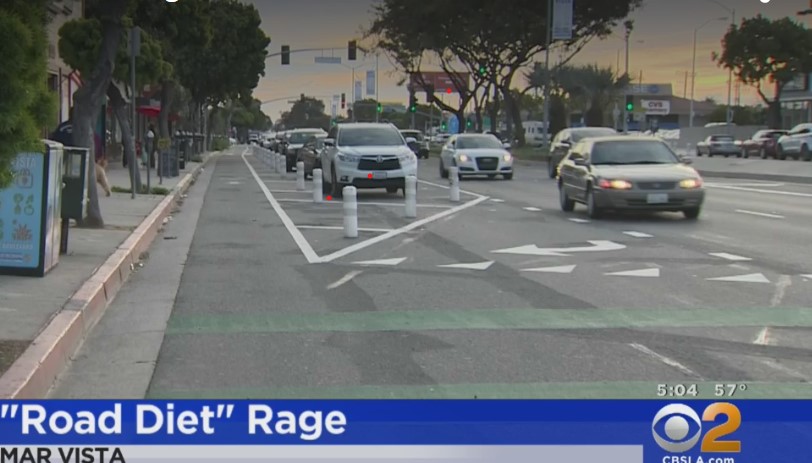
Good Habits to Prevent Aging Prematurely

By NANCY BROWN

(Editor’s note: Nancy Brown, writes for a monthly newsletter for the Hot Springs Country Senior Center in Wyoming. Brown is a retired nurse practitioner, who started her career in the neonatal ward, and then trained in dermatology.)

I bet all of you have thought of some good habits you have and then some bad habits that you have acquired.

Some of my good habits are, but not limited to: exercising regularly, seeing my doctor annually, and getting the recommended tests and immunizations done, seeing my eye doctor and dentist every six months and trying to have a positive attitude.

The bad habit list goes on and on and on: getting too little sleep, too much sun, not following the suggested food pyramid for eating and maybe drinking a beer occasionally.

AARP had an interesting article (“Good Habits that Might Age Your Prematurely”) that asked, “When does something healthy become unhealthy?” They asked experts about what healthy habits that they wished people would take breaks, especially as they age.

The five good habits that may become unhealthy:

1) Stay out of the sun.

2) Eating nutrition bars

3) Drinking water when you are thirsty

4) Walk every day for exercise

5) Wear supportive shoes

Why do these good habits become bad?

SUNLIGHT – has a number of positive effects including when we start the day, makes our body feel awake and energized and helps regulate our appetites. It has a big affect on our moods. But on average a person over 50 spends less than an hour a day in sunlight. RECOMMENDATION: get a minimum of 15 to 30 minutes of sunlight in the morning and then again in the evening.

NUTRITION BARS – sound healthy, but anyone who reads the ingredients can see that they are high in sugar content as are fruit juices, smoothies and breakfast cereals. Excess sugar is linked to high blood pressure, heart disease and diabetes. RECOMMENDATION: Read labels, if the grams of protein and fiber totaled together is higher than the total sugar, the bar is probably okay.

WATER – by the time you are thirsty, you are probably already dehydrated. About 70 percent of older adults maybe under hydrated. Being dehydrated can increase the risk for urinary tract infection, may increase the risk for diabetes, as well as colon and bladder cancer. RECOMMENDATION: Drink water so that you need to pee every two to three hours during the day – and alcohol, which causes dehydration does not count.

WALKING – as one ages, we lose muscle mass and joint mobility – unless you strength train. Walking is good, but we need to do other workouts. Most of us as we age are worried about falling or think we are too old to lift weights. RECOMMENDATION: Get at least 150 minutes of moderate exercise, which could include walking and water aerobics and at least two days a week of muscle building activities. To work on balance, walk backwards at least three times a week.

SHOES – wearing shoes all day deprives our feet of their chance to work. Our toes need to push into the ground to help maintain balance and our feet muscles need to contract to maintain to maintain balance and support. The more you wear shoes, the less your brain practices those skills. Nerves in our feet tend to lose sensitivity. RECOMMENDATION: Go barefoot at least 30 minutes a day.

Here are three anti-aging snacks:

  1. Almonds, which contain Vitamin E, and prevents cells from damage.
  2. Berries, which contain anthocyanins and are good for memory.
  3. Greek yogurt, which offers calcium and provides probiotics for the gut and protein to support muscles.
Posted in Health | 1 Comment

Another Venice Road Diet in Motion with Little Public, NC Input

By ANGELA MCGREGOR

 (Editor’s note: This story ran on September 20 in the Westside Current. If anyone has ever driven Venice Boulevard, one knows how the current road diet causes traffic issues and now the City planned to extend it. In this case, the Venice Neighborhood Council was not approached about the plan, until the middle of September. Sunset Boulevard and Temescal Canyon Road are due for repaving and all City roads are supposed to come under scrutiny about making them more accessible for bicycles and pedestrians. Roads in Pacific Palisades need to stay open for evacuation purposes.) 


There’s another road diet slated on the westside, and the path the LADOT is taking to move it forward is a familiar one.

On August 31, in a Zoomed Town Hall, the Los Angeles Department of Transportation (LADOT) presented proposed Venice Boulevard mobility improvements between Lincoln Boulevard and National Boulevard.

Essentially an extension of the so-called “Great Streets Pilot Project” that went into effect between Beethoven and Inglewood in Mar Vista in late 2017, the improvements would include dedicated bike lanes separated from car traffic by a parking lane as well as dedicated bus lanes.

It would result in the loss of a lane for car traffic in either direction and the loss of two parking spaces per block.  Protected bike lanes would stretch for 5.1 miles in either direction, and automobile travel on this major artery would be purposefully slowed — in LADOT-speak, a process called “traffic calming.” The presentation included a project timeline showing completion of the project by the end of 2022.

This project is urgently needed, according to LADOT, because in the past ten years 1203 collisions occurred on this section of Venice Boulevard with 58 people killed or severely injured.

The Zoom meeting featured a slideshow of what was called “unprecedented” outreach efforts:  LADOT kiosks on sidewalks and at the Mar Vista Farmer’s market, as well as an online survey. But no mention was made of any support for the project from any neighborhood council except for Palms, whose logo was featured on the flyer for the event.

Before their presentation, meeting organizers conducted a survey of the roughly 300 attendees and stated that 58% of them were local residents who mainly biked around the neighborhood (according to recent census data, just 1% of Los Angeles residents commute to work by bicycle).

One meeting attendee who frequently commutes by car on Venice told us she was unable to get through during public comments and was surprised that no one mentioned Venice Boulevard’s status as a designated tsunami evacuation zone.

Streets for All (SFA) a bicycle advocacy not-for-profit, live tweeted public comments favorable to the project.  They also conducted an extensive social media campaign in advance of the meeting to their 6725 Twitter followers, encouraging them to fill out Metro L.A.’s online survey.

They also periodically tweeted out the results of that survey. On August 31, SFA tweeted:  “As of Monday, the survey has received 1200+ responses, 70% of which are from project area residents, 74% of all respondents feel there is a need to “improve safety and access for everyone!” About 62% support protecting bike lanes and 47% would ride the bus more or already use it!”

CD5 Councilmember Paul Koretz was on hand for the presentation and called the proposal a “big win” for Palms (which is in his district), one he was excited about when he “learned of it last year.”

CD11 Transportation Director Eric Bruins stated that Councilmember Bonin’s office was also “very excited” about the presentation but did not indicate when they’d first become aware of it. Bruins is a former Planning & Policy Director for the Los Angeles County Bicycle Coalition.

Two years ago, at the July 2020 meeting of the Transportation Committee of the Palms Neighborhood Council (PNC), Jay Greenstein, Koretz’s Chief Field and Transportation Deputy, stated in the meeting’s minutes “Before we knew ADAPT would repave, we wanted to talk long term about Venice.

“Protected bike lanes would mean a road diet,” Greenstein said. “Talking with CD 11 about Venice being a Metro BRT [Bus Rapid Transit] corridor to move buses more quickly. Metro says that Venice is a candidate.”

ADAPT — Adjusted Deployment to Accelerate Paving in High Traffic Corridors — was a project to take advantage of the lack of traffic during the pandemic announced by the Mayor in April of 2020.

Thirteen million was earmarked for Venice Blvd., and as Greenstein put it, “Rather than take money out of the $13 million, they might shoulder all of the cost. Metro could potentially pay for the improvements so we might be able to stretch the $13 million.”

As for the need for public outreach, Greenstein stated, “Can’t say what the public engagement will involve.  Has to do with lawsuits against the city.  Stakeholders have felt like they’ve been excluded from the conversation.  The conversation should happen in the next six months.”

Also attending the meeting (and providing the only general public comment) was a person identified as “Lindsey” who stated they “Work with Streets for All” and expressed the need to give “people an option to not drive (BRT/protected bike lane).”

In February 2020, Streets for All published a page on their website titled “Venice Blvd. For All,” which detailed the organization’s desired changes (dedicated bus lanes, protected mobility lanes, and pedestrian improvements), in keeping with the city’s Mobility Plan 2035, which was passed in 2016, and lists Venice Boulevard as a “Comprehensive Transit Enhanced Street”.  The changes to the Boulevard illustrated on Streets for All’s site are nearly identical to the proposed Venice Boulevard Safety and Mobility Project.

A month before this meeting, on June 10, 2020, Koretz had filed a motion with the city stating, “The Department of Transportation (LADOT) is undertaking various planning activities along Venice Boulevard that require consultant support in order to conduct effective community engagement. Funding is dedicated to this corridor and is available for planning and project development purposes.”

The motion – Council File 22-0694, seconded by Mike Bonin  – requested $300,000 to finance these efforts, and it passed on June 17, despite public comments complaining that “This motion is too vague. 1) What are these “various planning activities” along Venice Blvd? 2) Where are these activities taking place?”

According to Palms Neighborhood Council Transportation Committee member Kay Hartman, who was at the PNC meeting, LADOT came up with a plan that PNC would conduct community outreach, with LADOT backing.

Hartman opposed this, telling the Current, “My position was, why should we be doing the outreach? We have no money, the Department of Transportation should be doing the outreach, if they want to do this, let the city pay for it. ”

In September the PNC’s General Board passed their motion to support, “the creation of a Community Engagement Plan to genuinely and equitably gather community input and create a consensus on whether and how to move forward with Venice Blvd. safety improvements. The Community Engagement Plan would be developed and led by the Neighborhood Council in partnership with LADOT.”

Neither the Venice Neighborhood Council nor the Mar Vista Community Council were notified by the CD11 Council office that these plans for Venice Blvd. were in the works until last month.

According to Mar Vista Community Council Chair Tyler LaFerriere, “LADOT reached out to the leadership of our Transportation and Infrastructure committee to present, answer questions and get feedback as soon as possible before the workshop on the 31. That meeting took place the evening of August 3. We then invited LADOT to do a repeat presentation at the August 17 Board meeting of the MVCC.

LADOT began presenting roughly at 7:45 p.m., and we did not conclude the meeting until a little after 10 p.m. to allow for Board questions and comments in addition to public comment.”

In late August 2022, Venice Neighborhood Council President Jim Murez told the Current, “We have not received any official presentation nor been able to participate in the design or consideration if the plans that are being proposed are even a good idea for the community.”

After contrasting LADOT’s outreach approach with the one taken for the Lincoln Fast Forward Project, in which the VNC “were included in the loop from the start to the present” Murez said, “Between the disassembly of the railroad by the City in the 1950’s and now this latest move to cut us off from downtown, the promises made to Abbot Kinney are all being broken.”  Murez was the Chair of the VNC’s Parking & Transportation Committee and was a candidate for CD11 Councilperson in the 2022 primary election.

This perceived lack of timely outreach regarding the project is particularly galling to many residents, given the public outcry that followed the installation of the Mar Vista “Great Streets Pilot Project” in May of 2017.

A local news station reported on the turmoil created by the changes and profiled a local restaurateur who said he’d been put out of business by the road diet.  Unforeseen problems included cut-through traffic on nearby residential streets, emergency vehicles stuck in the near-gridlocked traffic, and pedestrian near misses with speeding bicycles who were, in turn, occasionally colliding with right-turning vehicles to whom they were no longer visible because of the parking lane between them.

In July, two months after the project had already been installed, LADOT conducted contentious Town Halls with both the Mar Vista Community Council and the Venice Neighborhood Council. The decision was made to await judgment on whether to keep the road diet in place until after an LADOT Safety Study was issued.

In December of 2018, 18 months after the changes were implemented, LADOT issued that safety study.  Despite a 16% decrease in bicycle traffic and a slight increase in automobile collisions (from 23 to 25), the project was deemed a success and Councilman Bonin posted a video informing residents that “Mar Vista is moving forward” and “great things are happening here,” and that the road diet was now permanent.

On September 12, LADOT presented its proposed plan to the Parking and Transportation Committee of the Venice Neighborhood Council.  It was essentially the same slideshow they had presented on August 31, to a much smaller audience.  About half of the public comment favored the proposal, which representatives insisted was “not baked in,” awaiting more public commentary.  They encouraged Venice residents to fill out their online survey, which is set to close on September 30.

At the meeting, Jim Murez noted the lack of outreach to Venice, and asked multiple questions regarding the extent to which vehicle traffic would be impacted.  He asked that the LADOT come to a VNC General Board meeting to present their plans, as it was “the only fair thing to do.”

In response, an LADOT representative stated that their failure to reach out to the VNC was a “gross oversight,” and said they would “add more meetings,” explaining that the agency is “short staffed.”

Committee member Selena Inouye presented a motion noting the presence of only the Palms Neighborhood Council’s logo on promotional materials for the project (which had been shared by Councilman Bonin’s office on social media), as well as the two-year-old Council File in support of outreach for the project.

The motion went on to state “Venice stakeholders want to have the same opportunities for input into this project as were given to the stakeholders in Palms. This includes discussions about what we want on Venice Blvd. at the VNC Parking and Transportation Committee with Councilmember Bonin’s Transportation Deputy Eric Bruins and LADOT in attendance.

“Until such time as these discussions can take place and our input is incorporated into the project, stakeholders are clear that the VNC should not support the Venice Blvd. Mobility Improvements Project.”

Inouye is also Chair of the Westside Regional Alliance of Councils’ Mobility and Transportation Committee and noted that LADOT had failed to reach out to that organization as well.

After Inouye’s motion had passed, with four votes in favor and one abstention, Committee Chair Robert Thibodeau pointed out that this kind of opposition was to be expected when “we’re the last people being invited to the party.”
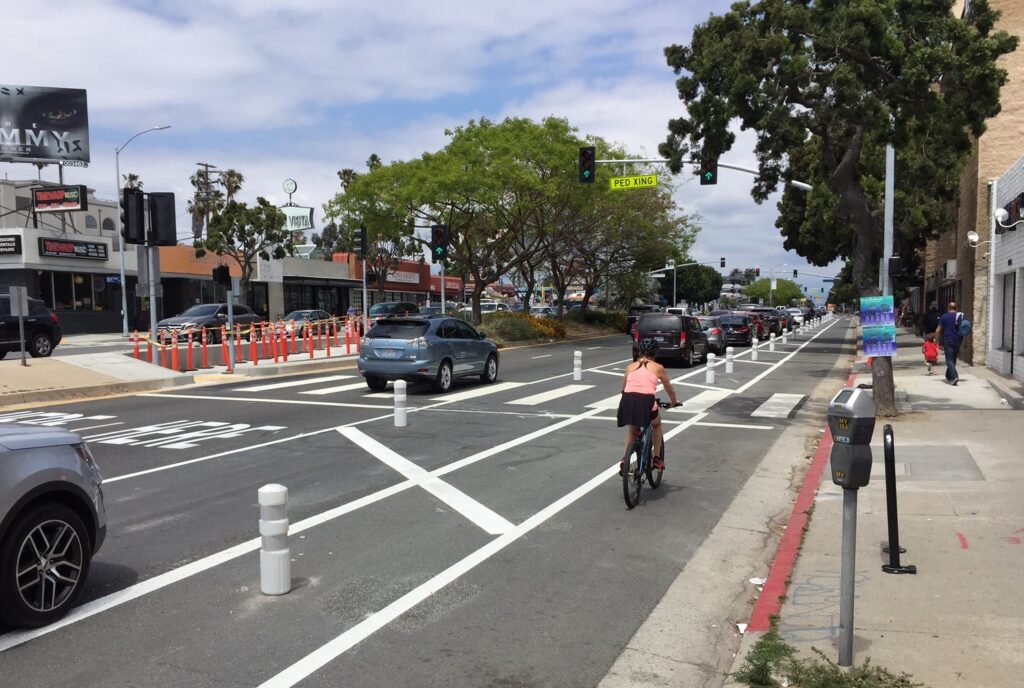
In interviews with Damian Newton at Streetsblog, both candidates for CD11 Councilperson weighed in on the Mar Vista Road diet.

Traci Park stated that she was still hearing complaints from residents about it. “Constituents were angry enough that it led to the initial recall effort against the council member,” Park remembered. “I have certainly heard frequently over the last year plus that I’ve been campaigning…that folks remain concerned about it… At the heart of all of that was the lack of engagement and input from the community and a pervasive saying that this was something that was intended to be a pilot program and that it was done without much input.”

As for Erin Darling, who has been endorsed by Streets for All, he told Newton as they had coffee alongside a protected Mar Vista bike lane that “I think generally public outreach has to be thorough. Design can’t be predetermined. People have to feel like they have a say. Outreach is still huge.

“So there has to be flexibility, but there also has to be communication that with climate change there’s an immediacy that we need to act on,” Darling said. “Let’s acknowledge that in L.A. when you take a lane people react viscerally like you’ve taken something away from them. But here we are looking at it, and I don’t see massive congestion.”


 

Posted in City/Councilman Mike Bonin, Community | 4 Comments

Patrick Wall Spoke on the Sexual Assault of Minors

Patrick Wall, who has spent 30 years investigating, researching and publishing reports of the clerical sexual assaults of minors, spoke to the Palisades Optimist Club on September 6.

Initially trained in philosophy, theology and Canon Law, he was a monk at Saint John’s Abbey and Priest/Canonical Attorney in the Archdiocese of Saint Paul in Minneapolis.

“I joined the monastery and went to school in Rome and Jerusalem,” Wall said, but then in 1991 people started coming forward with sexual abuse cases related to the church. “There were 13 cases in Minnesota.”

He was tasked with investigating.

“My whole DNA changed after hearing these stories,” Wall said, and was next sent to Alaska to investigate sexual abuse between priests and native people. “The power imbalance was insane.’

He said that less than one percent of the priests were ever arrested. Instead, the “geographic solution” was used, which means those priests were moved to a new location where they continued to assault minors.

More recently the Boy Scouts came under scrutiny because they also knew that there were predators, but they were listed in the ineligible volunteer files.

Wall said that people need to be supervised around children and that “Kids need to be believed.”

He said that often people try to dispute the idea that children need to be believed by bringing up the McMartin Preschool trial. That 1980s case lasted seven years, with no convictions and all charges dropped.

Wall said the problem of child sexual abuse has “existed forever” and was documented as early as 1395.

There have been books written about the predators: “The Body Keeps the Score” by Bessel Van Der Kolk: “Sex, Priests, and Secret Codes,” by Thomas P.Doyle, Richard Sipe and Patrick Wall and “Predators” by Anna Salter.

Wall said there are numerous books about predators, but “When it comes to survivors, there haven’t been a lot of studies.”

“Any intervention at any stage can help survivors heal,” he said. “It’s not the trauma that determines the outcome, but the person’s response to that trauma.

“Sometimes just asking the question ‘Were you assaulted?’ is enough to help them heal,” Wall said, and noted that people are starting to look at the brains of survivors to see where the trauma resides.

“They can use stem cells to help them regrow that part of the brain that was traumatized,” he said, noting that is an experimental approach, but is promising to help those who have suffered sexual abuse. “More data is needed; kids need to be believed and the past is not the future.”

Posted in Health, Kids/Parenting | Leave a comment

Pacific Palisades Task Force on Homeless Meeting September 26

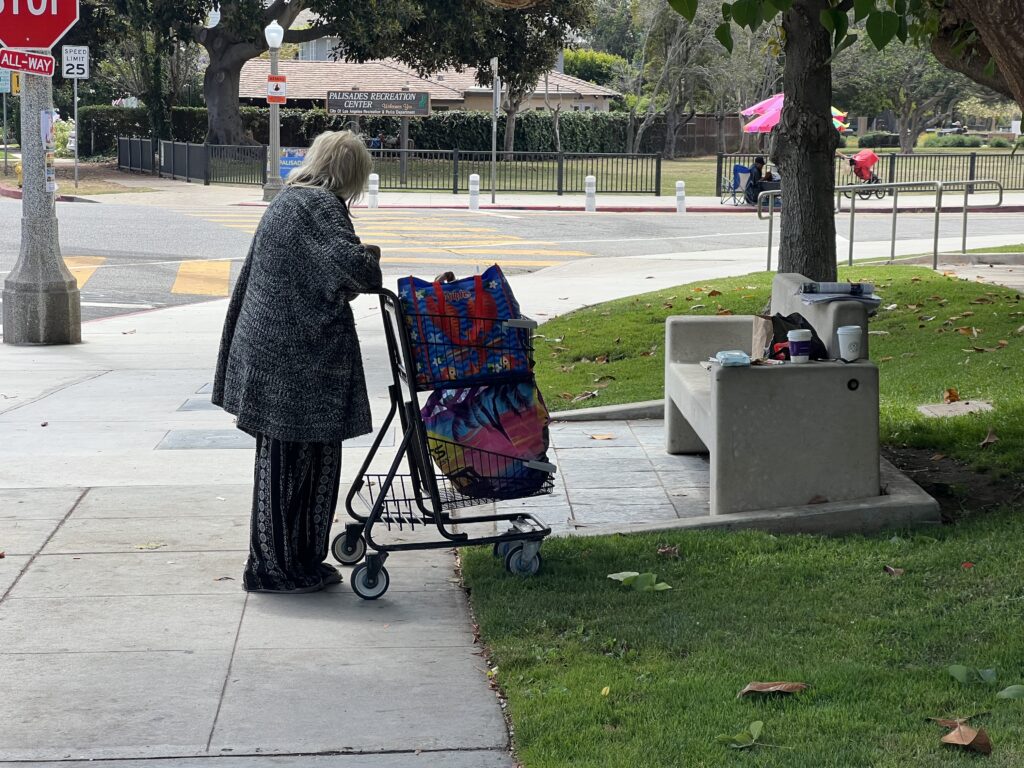
This is one of the homeless women that was helped over the summer.

The Pacific Palisades Task Force on Homelessness, which was founded in 2016 to address the growing number of homeless in this community, holds public meetings, quarterly.

The nonprofit, which is funded by local residents and groups, holds the meetings as a way of educating the community.

This Zoom meeting will be held from 7 to 8:15 p.m. on Monday, September 26. The topic “Intervening before Homelessness Happens,” will be addressed by the Executive Director of the California Policy Lab at UCLA, Janey Rountree.

Despite the number of unhoused people who daily are helped to move into housing by housing agencies, the net numbers of homeless people on L.A.’s streets are reportedly growing at a conservative estimate of 20 people a day. Can anything be done to reverse this deeply concerning trend?

Rountree will discuss the Lab’s innovative predictive modeling that is now enabling LA County social work teams to focus on specific individuals to prevent them from falling into homelessness.

Residents are encouraged to submit questions for Rountree when registering for the webinar at palisadeshomelesss.org.

PPTFH Co-presidents Sharon Browning and Sharon Kilbride wrote in the current PPTFH newsletter “We have had an increase in the number of homeless individuals coming to the Palisades. Carrying out our ‘relentless engagement philosophy, we have talked with and offered services to most of these individuals and, to the best of our ability, ensured there was no camping in our high-fire hazard restricted entry hillside areas. . . .Thank you to the outreach team from People Concern, the Volunteer Response Team and LAPD Beach detail. “

To view the last webinar “A New Approach to Helping the Most Severely Ill and Vulnerable” with Judge Stephen Manley, go to the website.

By the numbers:

163 homeless engaged by the task force are off the streets.

71 percent reduction in the number of homeless individuals.

152 pre-existing abandoned encampment areas have been removed and the areas cleaned

6 homeless fires have been extinguished by the Los Angeles Fire Department.

Posted in General | Leave a comment

Smaller Pumps Installed in Temescal Rainwater Holding Tank

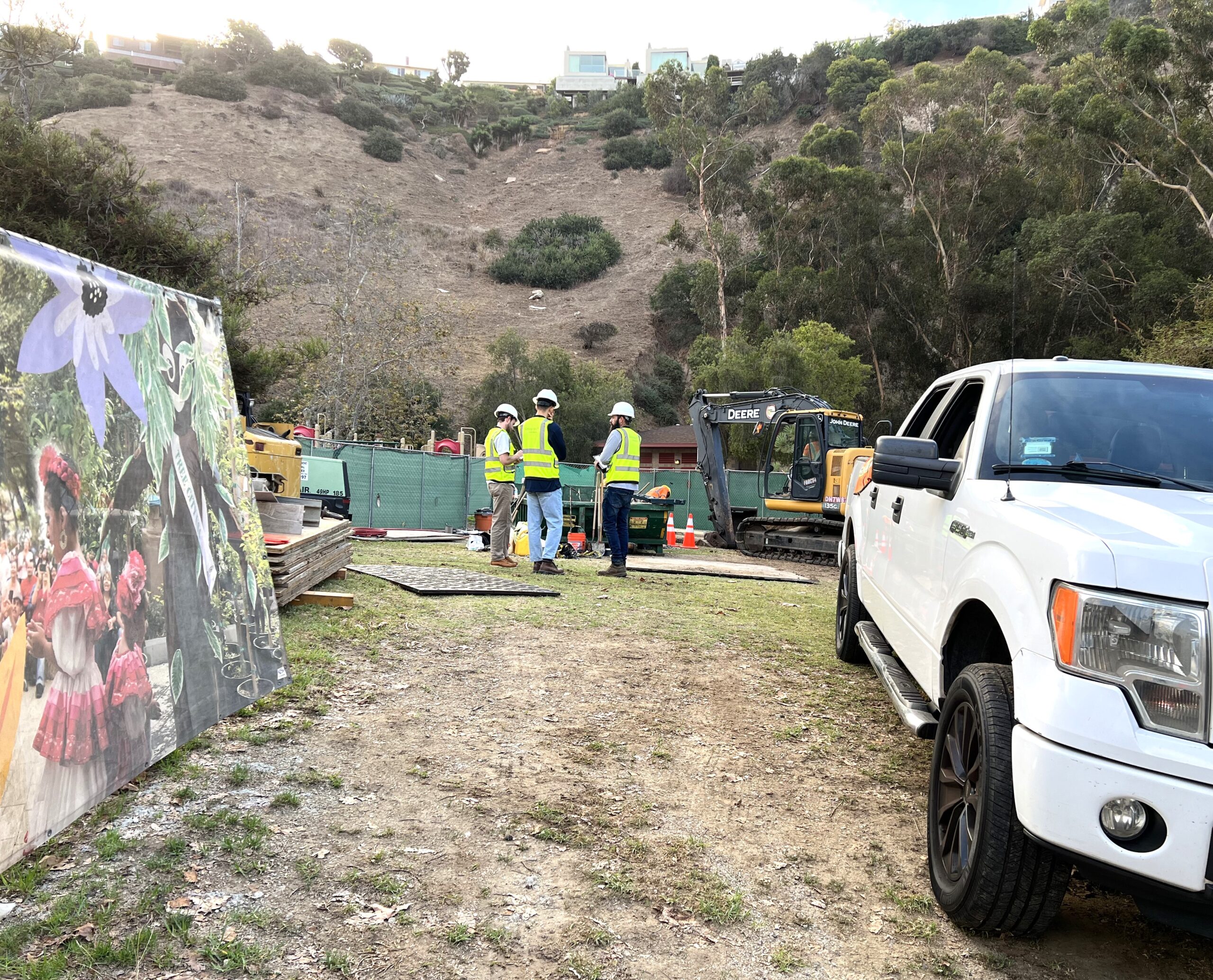
Workers are on Temescal Canyon to install the correct-sized pump in the underwater tank.

The construction, to ensure that the stormwater runoff in Temescal Canyon was cleaned – and reused – rather than rushing into the ocean, started in 2012.

Now, 10 years later issues are being resolved to use that water to irrigate the park that borders on either side of Temescal Canyon Road.

Geosyntec, a consulting and engineering firm, had been hired by the City to ensure that the system, which has not been operational, will work once larger pumps are replaced with smaller ones.

The original project included capturing the initial phases of stormwater runoff, which is the dirtiest, and putting it in the underground holding tank.

The tank is located below the playground. Once the current repairs are complete, the project will reuse all water captured, either on-site or at Hyperion recycling plant.

Any remaining water would be piped to the bottom of Temescal Canyon and be pumped to the Coastal Interceptor Relief Sewer, which goes to the Hyperion Wastewater Treatment Plant in El Segundo.

The system has not been operational because the pumps located in the holding tanks were pumping too much water for the sewer pipes.

No one suspected that the 16-inches diameter discharge pipe at the base of the Canyon, would feed into to a 9-inch diameter sewer pipe, a few miles south of Temescal Canyon Road, near the Lifeguard Headquarters.

The size of the pumps in the holding tanks meant that too much water was being discharged, and the 9-inch pipe couldn’t handle it.

Once the problem is resolved, stormwater can be treated onsite (behind the restroom buildings) and be reused in irrigation.

The initial project, which started in 2012, was estimated to cost $14.2 million, (raised to $17.7 million) and was funded under Prop O and the Clean Water Act. Project completion was slated for 2013.

The system was to include a diversion structure (16 ft. by 12 ft. and 24 ft. deep), a hydrodynamic separator and a 1.25-million-gallon cement-reinforced holding tank buried beneath the playground.

From that tank, runoff would be cleaned to be used for irrigation and water the tank couldn’t hold would be pumped to the Hyperion.

The project was shut down in 2012, as this editor reported in a story, “An investigation was under way Friday into the death of one of two men who became trapped in a trench in the Pacific Palisades area while working on a city storm water project, authorities said.

“The victim, later identified by the county coroner’s office as 50-year-old Gilbert Vargas, was found buried up to his chest, unconscious and not breathing, when firefighters arrived in the 200 block of North Temescal Canyon Road near Pacific Coast Highway at 1:34 p.m. Thursday, said Erik Scott of the Los Angeles Fire Department.

“The other worker, who had been buried up to hip-level in the trench, was freed around 3 p.m. and taken by ground ambulance to the parking lot of Will Rogers State Beach, where a fire department helicopter flew him to a hospital in serious but stable condition, Scott said.”

Construction resumed and the first part of the project was completed in 2013.

The second phase of the construction started in August 2016, and included constructing the stormwater treatment building, a submersible pump (inside the existing underground tank), 2,500 feet of treated stormwater line and 2,800 feet of new irrigation pipline. at a projected cost. The cost was estimated at $3.1 million.

Currently, Geosyntec is onsite at Temescal working to replace the new pumps. Once that is done, the system should finally be operational – just in time for the rainy season.


Posted in Community, Environmental | 1 Comment

CRIME – Update from Senior Lead Officer Brian Espin

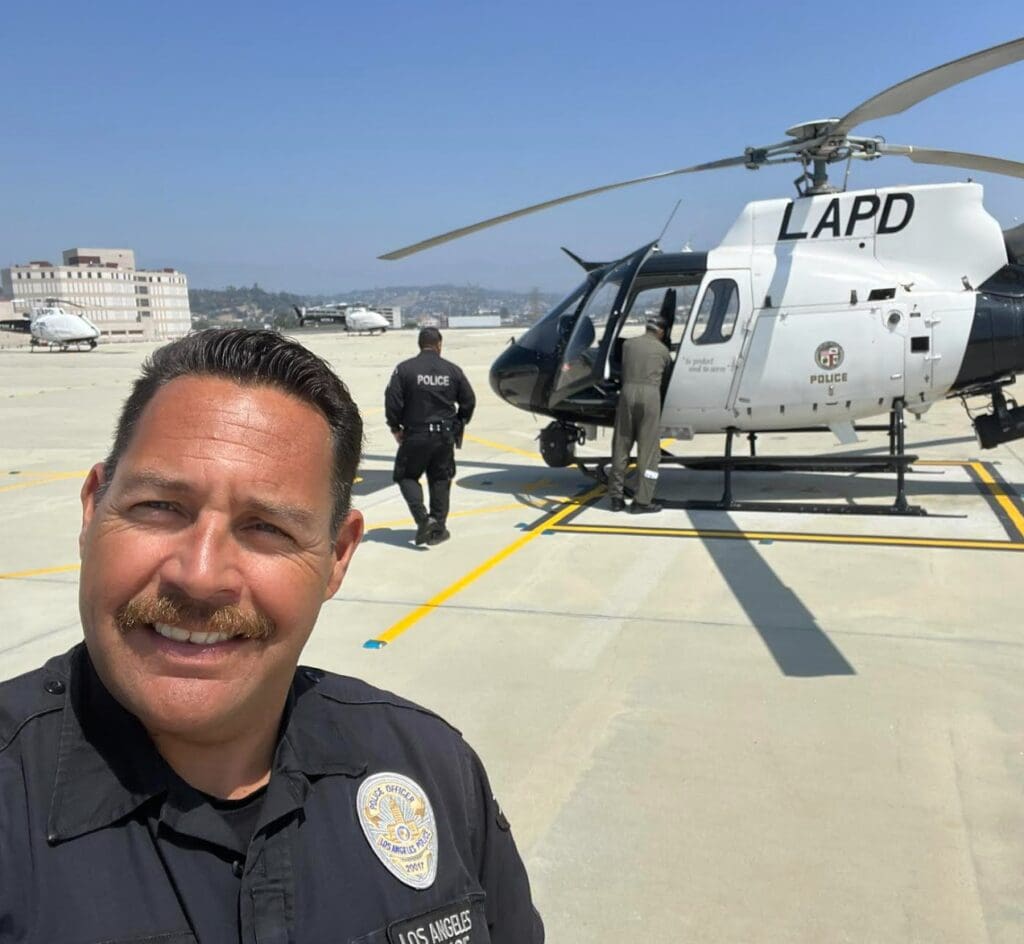
Senior Lead Office Brian Espin took a tour of the Palisades from aboard a helicopter.

Senior Lead Officer Brian Espin started his report with this information: this message is one that I sent out to some of the immediate neighbors of a burglary incident that occurred on Thursday, September 15.

“There was a burglary on Chastain Parkway on September 15.  Unknown suspects entered the residence through an unlocked door while house sitters were inside.

“One of the house sitters walked into the main area of the house and observed one suspect on the second floor of the house.  Once the suspect realized there were people in the house, the suspect fled the house possibly with some property.

“This prompted a police response with searching the area and neighboring residences for the suspect. It was later determined through surveillance footage, there were three suspects involved. All suspects fled prior to officers’ arrival,” Espin said in his report.

Espin also reminds residents When calling 911 or the non-emergency line (877-275-5273), please be patient and know your location and a detailed description of the incident you are calling about. Our LAPD Dispatchers are very good at determining the nature of response.”

BURGLARY:

September 7 8:22 to 8:46 p.m. in the 16500 block of Via Floresta. Unknown suspects smashed rear door, entered residence, took victims property.

September 8 to 9, 3 p.m. to 8:30 a.m., in the 300 block of Las Casas Avenue. Unknown suspects used a took to break rear window of a residence. The suspects reached through the window into a closed structure and removed victim’s safe.


BURGLARY THEFT FROM VEHICLE:

September 4 to 5, 7 p.m. to 7 a.m. in the 200 block of Ocean Avenue. Suspect opened vehicle, possibly unlocked door. Suspect then opened rear trunk and removed property and fled.

September 8, 9:36 to 11:45 a.m., at Pacific Coast Highway and Temescal Canyon Road. The unknowns suspect took victim’s key fob from the rear wheel, unlocked vehicle, took victim’s wallet and cellphone and fled.

September 9 to 10, 10 a.m. to 8:30 a.m., in the 16400 block of Sunset Boulevard. The victim had parked vehicle on the street. When victim returned, he/she found the vehicle had been rummaged through and property taken.


GRAND THEFT PERSON:

September 8, 1:30 to 4 p.m., in the 15000 block of Sunset. The suspect returned a phone back to the victim and demanded money for return of the phone. The suspect followed victim and grabbed the victim’s arm, then fled the scene.


Posted in Crime/Police | 1 Comment

VIEWPOINT: What Goes on Behind Closed Doors Needs to be Aired

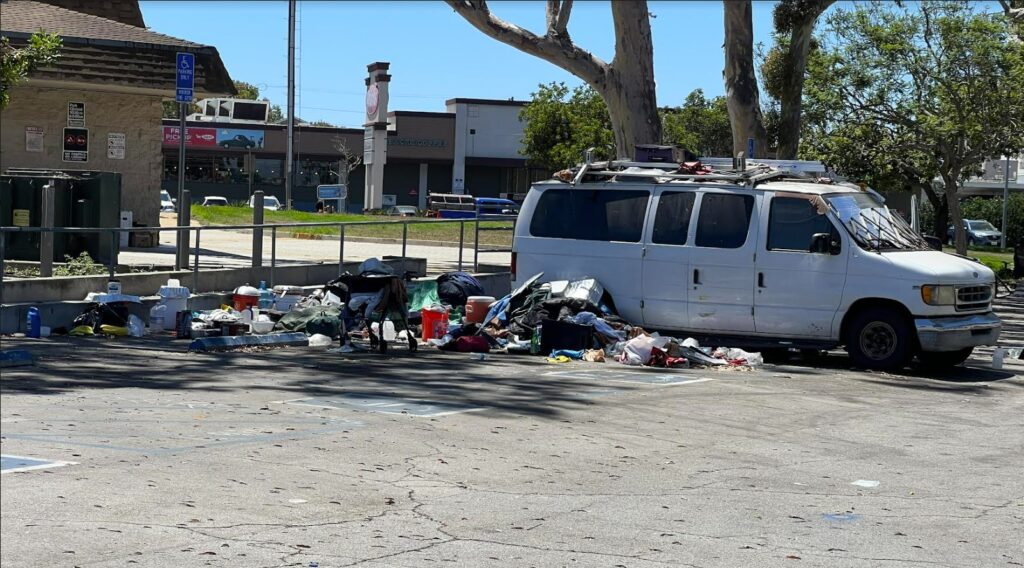
Homeless and garbage have taken away handicapped parking spaces at the Westchester Senior Center. New RVs are being brought to this parking lot, according to residents.

Westchester residents have been fighting to get the park back for children and seniors.

In a misguided attempt to help, L.A. City officials allowed the homeless to live in tents around the periphery of the park. Then later, those same officials allowed the homeless to occupy parking spaces in a lot which removed access to the senior center and the library. This is the same municipal lot where Councilman Mike Bonin’s office is located.

There have been numerous shootings and incidences of individuals exposing themselves to children in Westchester Park. Residents have complained about the drug paraphernalia and hypodermic needles left in the park. There have been almost 500 service calls to LAPD since January 2020 and does not include 911 calls.

A parking lot next to Westchester Swimming Pool was turned into a Safe Parking lot, but neither residents nor the Neighborhood Council were consulted. With the lot fenced off, park residents who wanted to use the swimming pool, had few spaces.

That lot, which could hold 25 cars, routinely had under 10. That parking agreement was supposed to expire in July, but Bonin asked for an extension from Recreation and Parks, which was granted until October 2.

This is the only park in the City that has Safe Parking. There are other areas in the City with room for these vehicles. To see locations and spaces available visit:click here.

Fall programming at Westchester is set to start on October 2, and now residents learned that Bonin has requested another parking lot, one that is 200 feet from a childcare center and park ballfields be given to 24-hour Safe Parking.

Safe Parking was instituted so that those in their vehicles could park their cars in a safe location overnight, have access to a porta potty, receive services, and then drive out the next day to either go to work or look for work.

Residents learned through public records requests that Bonin wanted to move the lot to a different area of the park and make it a 24-hour lot, which would be the first and only one in the City.

At the September 6 Westchester NC meeting, Bonin’s Deputy Director Noah Fleishman told residents that the plan was to move RVs from the Wetlands to the Safe Parking Program. The RVs along the Ballona have destroyed an environmentally sensitive wetlands that one expert said, could take years to reclaim.

Additionally, there have been shootings and at least three fires in the “No Parking” location since RVs have illegally parked on Jefferson. The occupants have been offered assistance, but most prefer their current living arrangement.

Garbage from illegal dwellers is finding its way into the environmentally-sensitive Ballona Wetlands.

One resident wrote CTN, “Information as to whether there will be a requirement that the vehicles be operable, which is always an express condition of Safe Parking in LA but does not appear to be a condition for the proposed 24-hour Safe Parking in Westchester Park.”

As one Rec and Parks Commissioner pointed out at the September 15 board meeting, this would turn a public park into a residential area. If people are not required to leave, what about cooking fires and are there accessible fire hydrants?  Has the fire department been consulted about the location? What about sanitation? Even if there are porta potties, are there places to shower? If RVs are allowed, is there a place to dump the sewage?

Westchester residents say they learned that this 24-hour lot will be funded by the county, which will pay Los Angeles Homeless Services Authority.

Residents say they have empathy for homeless, but ordinary citizens should have the right to use the parks without fearing for their safety.

Westchester residents have now hired attorney John Murdock, who sent a letter to RAP Commissioners reminding them that parks are not zoned for residency.

Posted in Councilman Mike Bonin, Environmental, Homelessness | Leave a comment

90272: High Schoolers’ Struggle to Balance Work and Studies

Palisades High School student Jesse O’Shea custom paints toys as her side job.

By CHAZ PLAGER

Getting a part-time job is a ubiquitous high school experience. Once students hit junior year and turn sixteen, many quickly rush to get a work permit.

Some students want experience working in general, some just want something to do, and others just want scratch. However, not all jobs are created equal.

At Palisades Charter High School, certain students have found unique jobs on the side that you don’t see every day.

JESSE O’SHEA

Jesse O’Shea is a junior who works on the side doing custom paintings of toys. Specifically, cheap toys called “Little Pet Shop” which are small figures that come in packs of three.

Jesse has a list of prices for customers to choose from and request a design based on their preferences or specific instructions. She then mails the toy to customers using a platform called Etsy, an online marketplace for handmade goods. “It’s a really niche community, but I was kind of surprised by how many people were both interested in what I had to sell, and also how big people in the community like Strongwater (@strongwater_customs on Instagram) were willing to help.”

To her, this job is a steppingstone for greater future opportunities. “It doesn’t pay too much, only about $7-9 an hour if I’m lucky, but it’s something I really like to do, and I’m hoping it can get me a career in the arts later in life.”


CHANTAL TRENT

Chantal Trent, a junior, is a rising singer-songwriter with over 14,000 plays on Apple Music. She debuted in 2019 with her self-produced single, “Falling”.

She makes her music in a home studio with the help of her friends and family. “I stopped over quarantine because, you know, but now that it’s over, I quit my day job to focus on music. I hope that I can put out an album or EP soon enough.”

Chantal has made $300 from plays alone off of Spotify. “I really hope I can get a job in the music industry one day, whether that means being a singer or just becoming a producer, I’d be fine.”

If you want to see her sing in person, she can be found during the monthly Open Mic Night at Alana’s Coffee Shop in Venice.


CAPRICE KAYLE

Junior Caprice Kayle has a truly unusual job for a teenager. In her free time, she’s a day trader specializing in options. On her best day, Caprice earned more than $6,000.

“I started with 500 dollars in March of this year and invested in different stuff, and I turned it into $10k within a few weeks,” she said.

Of course, with big gains come big losses– throughout her time as a trader, Caprice has gained $30k, and lost $60k, cumulatively.

She’s currently up $10k, so she’s cautiously optimistic about future investments. Being a good day trader means constantly having the market on watch, which she has no problem doing.

“I just don’t think school can teach me anything worthwhile. I’d rather do something that can make me money.” Caprice hopes to become a hedge fund manager or a real estate investor in the future.


SAMER AWADA

Samer Awada is a senior from El Segundo High School who resells sneakers. His yearly salary? $112,000. Awada has 250,000 followers on TikTok and 7,000 on Instagram under the handle @sneaker_plug_la.

Samer buys up limited edition or highly sought-after sneakers and sells them to eager buyers. Weekly, he earns about $2,000.

“I just want to make enough money to travel the world,” Samer said. “I don’t want anything tying me down. I want to drive big cars and live independently on my own schedule, with money not being a problem. Live the life, basically.”

At his current pace, Samer is set to become a millionaire in a few more years. Which is, put simply, insane.

Samar Awada buys and sells sneakers. Here he is in front of items to be shipped.

MICHAEL MALLOUK

Michael Mallouk, a junior who scoops ice cream at Rite-Aid,was asked about how he feels about that sort of money going to Awada, his answer was surprising. “That’s cool for him, but I’m fine doing what I do now. I’m earning money and experience.”

Mallouk has no plans for the future at present, however he makes beats for rap songs in his free time under the name MIKEYLIKESITT. “Going into music would be the dream, but it’s not exactly realistic,” he said.

ANONYMOUS

Hearing the exploits of these other students, though, it may be time to reevaluate what exactly is less realistic than the very real teenage day trader. Every light side has a shadow, however. While it’s not exactly comfortable to talk about, there do exist students who do unscrupulous and sometimes downright illegal things for a price. One student who asked to stay anonymous told me about a friend of theirs who was a drug dealer before being caught and suspended.

“I think he just did it for fun, you know,” the person said. “He got invited to all sorts of parties, he carried a fake gun around, he made tons of illegal connections. And of course, he made a bunch of money too. But he got caught eventually, so I wouldn’t say it was worth it.”

Certain jobs may not pay too well at present, but they provide good experience for the future. Being a drug dealer, the only future in store is a nice spot in a juvenile detention center, or worse. Nothing is truly impossible or unrealistic. Giving up on a dream because it’s “unattainable” will just leave regrets later in life. Don’t let it go to waste.


Posted in Kids/Parenting, Schools | Leave a comment

Starting Yoga at 50 Makes Sense

BY ALISON BURMEISTER

Raise your hand if you ever experience joint pain, back aches, and overall body stiffness.

Raise your other hand if you ever notice difficulty sleeping at night, inexplainable weight gain and/or surprising skin issues.

Now take both hands, reach down, and touch your toes.

If you said “yes” to soreness and “no” to touching toes, it is definitely time for yoga.

Yoga is great way to stay limber, maintain good posture, balance and mobility: it helps to increase blood circulation, lower stress, and boost energy levels.

And let’s be clear, yoga is stretching, strengthening and conscious breathing.

Even the strongest and most agile of athletes will eventually find that their bodies aren’t what they used to be. Done properly, yoga is a great way to rehabilitate and recover from some of the more taxing activities we put our bodies through in our youth.

If you have never tried yoga, there are several different types of yoga. There are also modifications and props, making yoga accessible to people of all ages and abilities.

Yoga has many upsides for folks over 50, by simply turning our bodies upside down.

INCREASED BLOOD FLOW – Hatha and Vinyasa yoga, two styles of yoga, which focus on breath-linked movements, bring more oxygen to your cells.

Twisting postures brings fresh oxygenated blood to organs, and inversions reverse blood flow from the lower body to the brain and heart. Slow, relaxing yoga practices lower blood pressure and improves circulation.

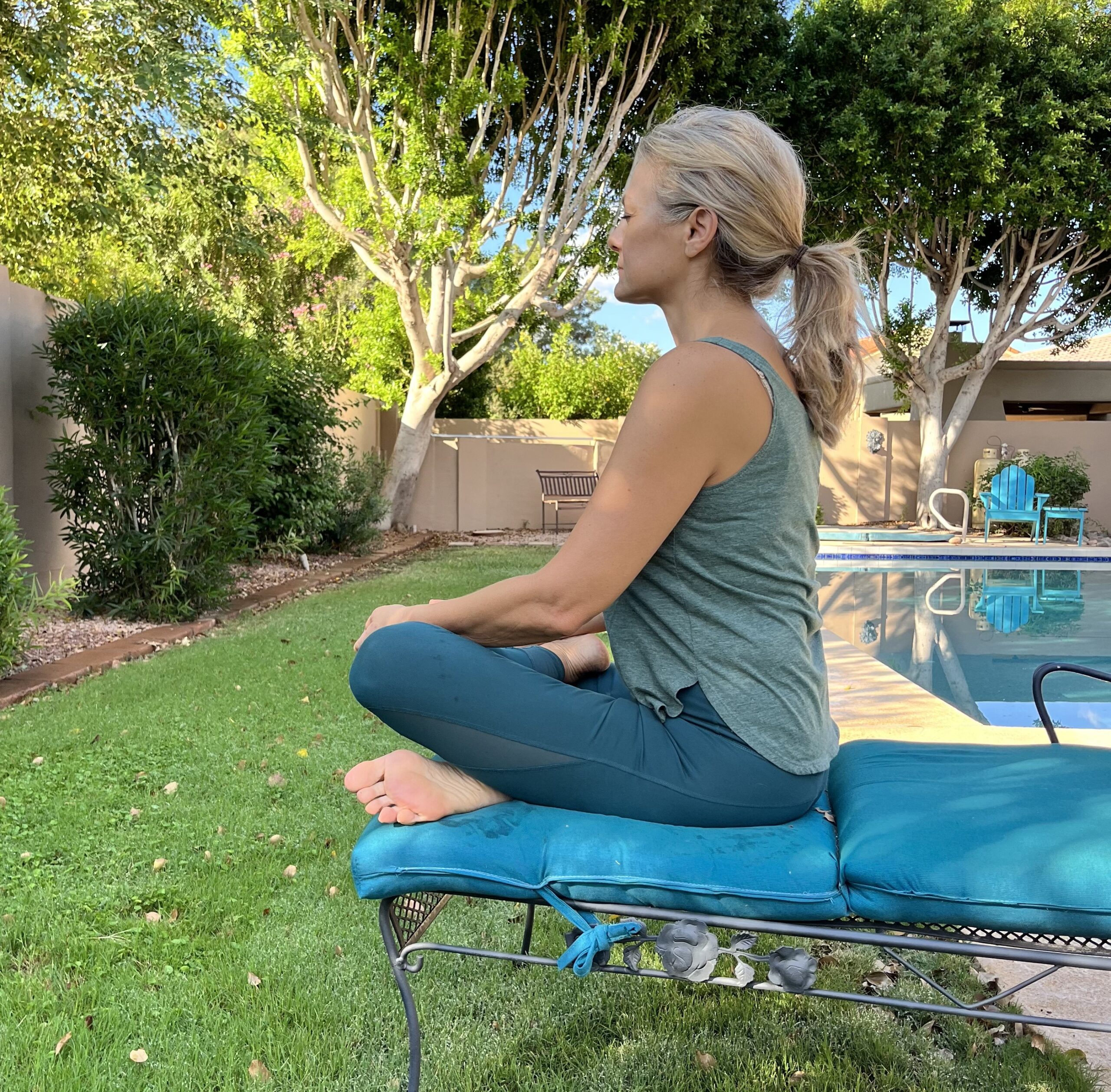
INCREASED MOBILITY/DECREASED WEIGHT GAIN-The poses of yoga were originally designed so a person could sit for hours comfortably in meditation. Today these poses help us to simply function in our daily lives. The more flexible you are the easier it is to move. The more you move the more likely you are to exercise and maintain a healthy weight.

STRENGTHEN AND STRETCH – Studies show that after age 30, we begin to lose as much as three to five percent of muscle mass per decade.

Ligaments also tend to shorten and lose some flexibility, making joints feel stiff.

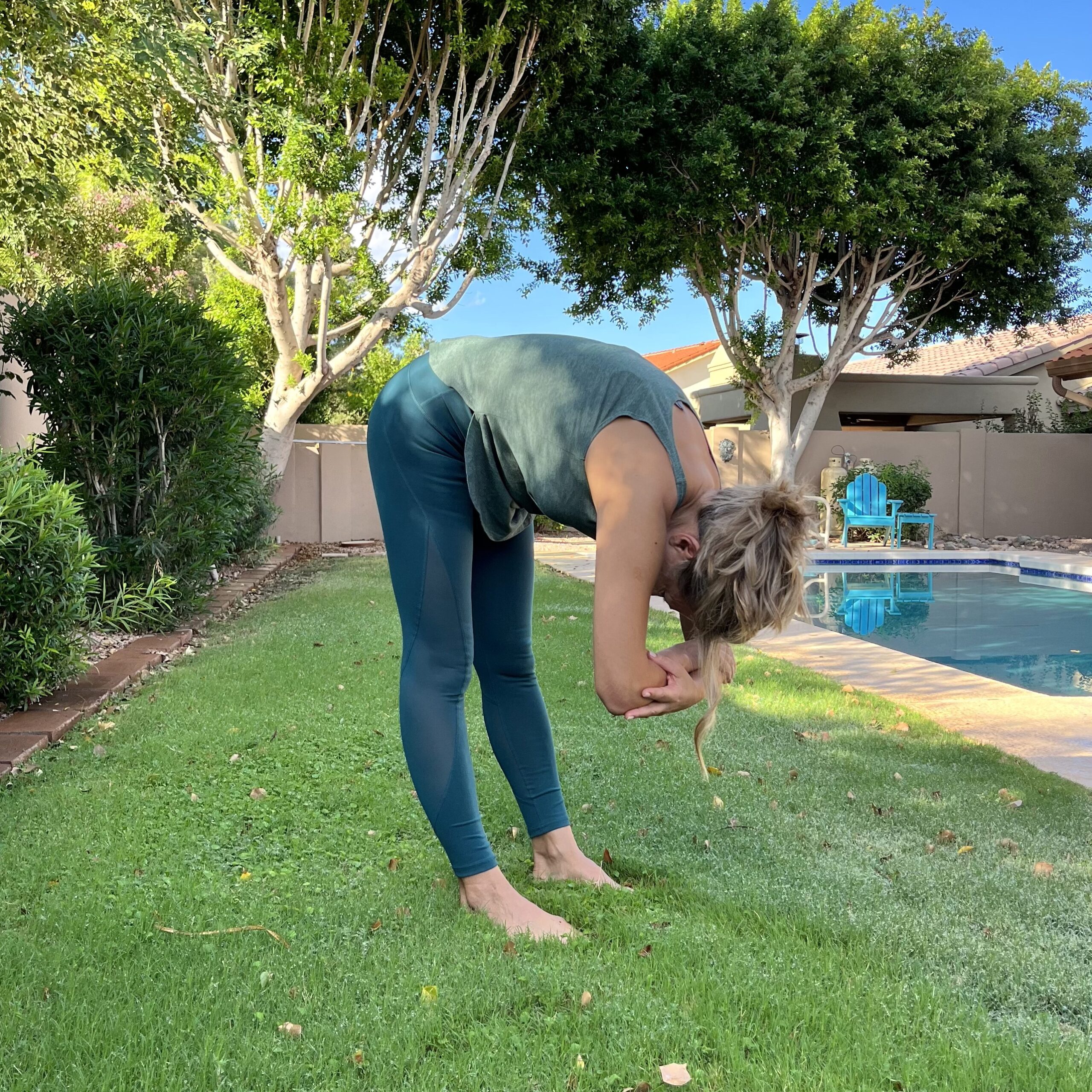
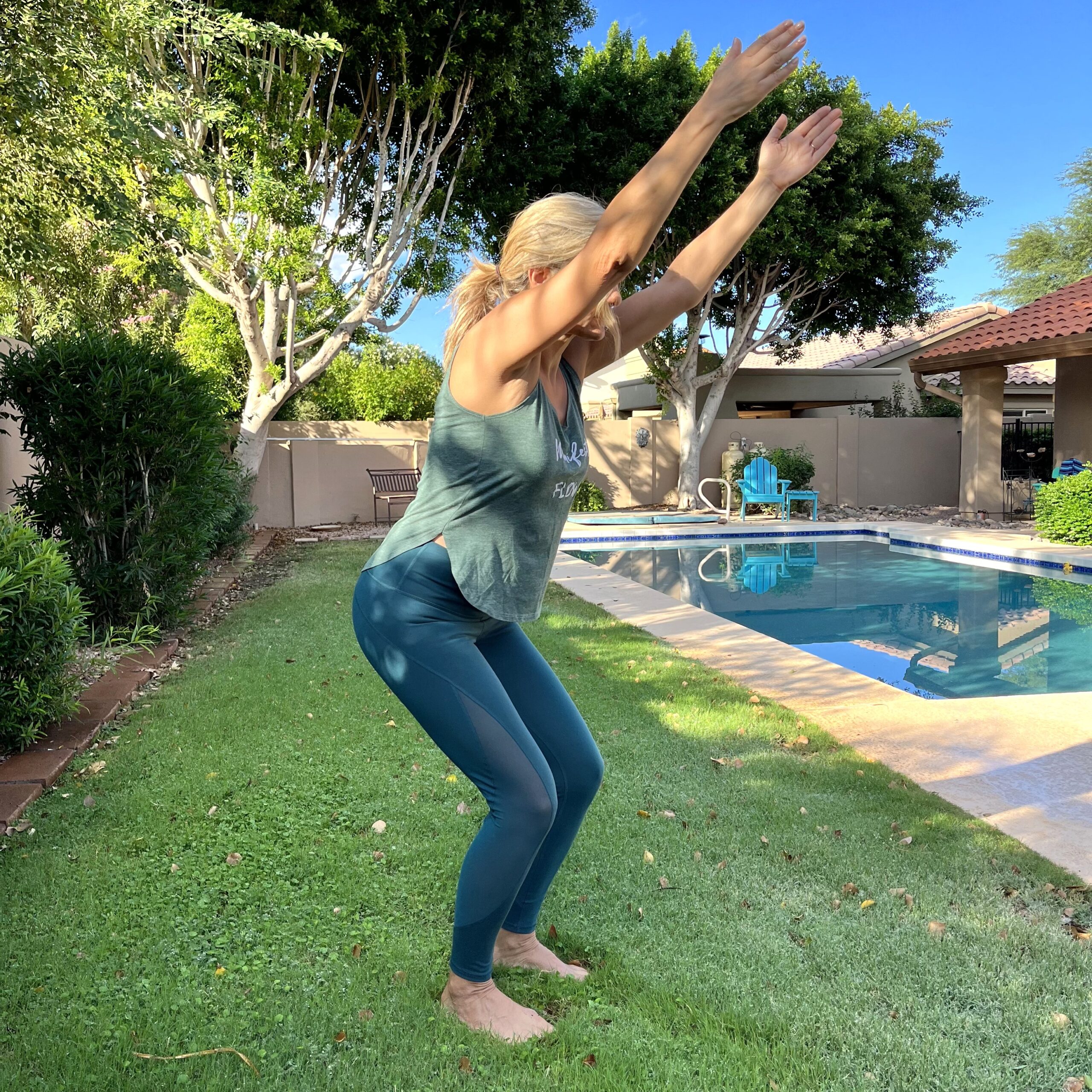
Yoga poses are both concentric and eccentric. In a concentric contraction, such as squatting into “chair pose,” the muscle tension shortens making for stronger muscles. During eccentric contraction, such as “forward fold,” the muscle tension lengthens making for stretched out muscles.

The stronger and more flexible we are, the easier it is to maintain proper posture and remain steady on our feet when we fall out of balance.

REDUCE STRESS/ANXIETY – When you are stressed, tension is stored in the body making you feel tight and often causing pain.

The stretching of yoga releases tension from problem areas, including the hips and shoulders. Breathwork, meditation and slow conscious movements signal to the parasympathetic (fight or flight) nervous system that you are in a state of peace and calm.

The less stress we have in our bodies, the less likely our body will become inflamed reducing the risk factors for auto immune diseases such as rheumatoid arthritis, lupus, psoriasis, Crohn’s disease, and celiac disease.

RELIEVE MENAPAUSE SYMPTOMS – Typically in their 40’s and 50’s, women experience a natural decline in estrogen. Side effects include, mood swings, hot flashes, joint and muscle aches, an increase in visceral fat mass (AKA “belly fat”) and a decrease in bone density and muscle mass. Less muscle means greater weakness and less mobility, both of which may increase your risk of falls and fractures.

Yoga helps to rebalance your emotions, restore depleted energy, reinvigorate a sluggish metabolism, tone and strengthen muscles, build bone density, balance and boost heart health

MINIMIZE WRINKLES – Without even realizing it, we hold a lot of stress in our face. From staring at our screens, to squinting and even sleeping, the muscles in our face need to relax.

Just like the rest of our body, gravity, muscle loss and stress take a toll on our face. Releasing a clenched jaw and furrowed brows, helps to smooth away wrinkles. Specific facial yoga exercises may also rejuvenate skin’s glow by reducing oxidative stress, which breaks down skin’s elasticity.

IMPROVE SLEEP – Levels of the brain’s natural nighttime sedative, melatonin, decrease with age. A daily practice of yoga increases melatonin levels. Various techniques of pranayama or breathwork are very helpful to calm the mind and body for sleep. Stretching right before bed can also help to relax tight muscles that might otherwise cramp or stiffen in the middle of the night.

ENHANCE BRAIN POWER – Studies have shown that the brain structure changes after meditation, resulting in improved awareness, attention, and self-related thinking. The areas of the brain that govern these functions, the hippocampus, amygdala, cingulate cortex, and prefrontal cortex have been shown to increase, and along with all these benefits, memory is also shown to improve. A combination of movement, breathing, and meditation is more powerful for brain health than one of those components on its own.

Still not convinced yoga is for you? It’s not surprising that many people are turned off or intimidated by yoga classes. Leave out all the fancy Sanskrit, references to astral portals and celestial beings, the practice of yoga is basically stretching, strengthening and conscious breathing. Something we can all use.

(Editor’s note: Alison Burmeister teaches a Thursday 6 p.m. class at the Palisades-Malibu YMCA and also teaches group and private classes Visit: alisonburmeister.com).


Posted in Health | 1 Comment

Stop Feeling: Look at the Numbers

Saturday Night Live had a reoccurring sketch for years with Jane Curtin putting forth a reasonable and levelheaded argument and then Dan Akroyd, instead of debating, would simply say, “Jane, you ignorant slut.”

It was funny on a comedy show because one assumed that Akroyd didn’t have the facts to argue and effectively ended the exchange with name calling.

This editor was recently called an “ignorant slut,” because I mentioned an August 19, Wall Street Journal piece (“Fauci and Walensky Double Down on Failure”) that examined the evidence of lockdowns and mask mandates that was based on (“Johns Hopkins working paper Says Covid-19 Lockdowns Not Worth It, Sparks Fierce Debate.”)

The John Hopkins paper, which can be found online, notes: “While this meta-analysis concludes that lockdowns have had little to no public health effects, they have imposed enormous economic and social costs where they have been adopted,” the three economists who wrote the paper concluded. “In consequence, lockdown policies are ill-founded and should be rejected as a pandemic policy instrument.”

I was told I was ignorant because I ignored the data.

At the beginning of Covid, this editor followed the World Health Tracker that reported deaths across the world.

In every country, the statistics showed that the people who were most likely to succumb to Covid 19 were over 85 years of age or had a co-morbidity. That never changed.

David Grabowski of the Harvard Medical School said in a December 2021, PBS News Hour said, “The individuals making up the bulk of the deaths among older adults are the those oldest old. So, they’re individuals ages 85 and older. They’re individuals with comorbidities, cardiovascular disease, obesity, diabetes. They are also typically individuals living in nursing homes.”

Additionally, several studies showed that “Obesity was a risk factor for hospitalization and death, particularly among adults ages younger than 65.” (https://www.cdc.gov/mmwr/volumes/70/wr/mm7010e4.htm)

The daily death rate by age was available as a statistic.

Since this editor was not in the categories most seriously affected by Covid, I made the choice to travel during California’s lockdown. I flew to South Dakota and Wyoming several times, where the shutdowns had been brief. The planes were empty and the filtration system exceptional. Masks were not always required; businesses were open as were schools.

How did those stats compare to Florida and California for death rates? (September 5 death counts were used.)

Wyoming had 1,881 Covid deaths. Population: 581,348. About .3 percent of the population died from Covid.

South Dakota had 2,993 Covid deaths. About .34 of the population died from Covid. Population: 879,336.

Florida had 80,027 Covid deaths or about .37 percent of the population died from Covid. Population: 21.22 million.

California, 94,973 deaths 39.35 million people, which meant about .24 percent died from Covid.

By closing everything down California had a .13 better outcome than Florida and .06 better than Wyoming. That statistic doesn’t analyze the financial or mental health damage that might have been afflicted on its population.

In the analysis in the Wall Street Journal Tierney wrote,

“U.S. States with more restrictive policies fared no better, on average, than states with less-restrictive policies. There’s still no convincing evidence that masks provided any significant benefits. When case rates through the pandemic are plotted on a graph, the trajectory in states with mask mandates is virtually identical to the trajectory in states without mandates. (The states without mandates actually had slight fewer Covid deaths per capita.) International comparisons yield similar results.”

“Florida and Sweden were accused of deadly folly for keeping schools and businesses open without masks, but their polices have been vindicated. In Florida, the cumulative age-adjusted rate of Covid mortality is below the national average, the rate of excess mortality is lower than in California, which endured one of the nation’s strictest lockdowns and worst spikes in unemployment.”

CTN compared Sweden and L.A. County statistics:

Sweden: Population is 10.35 million people. About 19,904 died from Covid, about a.19 percent rate.

L.A. County has about 10.04 million people. About 33, 171 about a .33 percent rate of deaths.

Beaches were closed during the Covid Pandemic.

SCHOOL CHILDREN:

United States: McKinsey & Company released a July 2021 report: “the impact of the pandemic on K–12 student learning was significant, leaving students on average five months behind in mathematics and four months behind in reading by the end of the school year.

“The pandemic widened preexisting opportunity and achievement gaps, hitting historically disadvantaged students hardest. And the crisis had an impact on not just academics but also the broader health and well-being of students, with more than 35 percent of parents very or extremely concerned about their children’s mental health.”

Sweden: in a ScienceDirect International Journal of Education Research 2022 Abstract reported: 1. No COVID-19 related learning loss in reading in Swedish primary school students. 2)The proportion of students with weak reading skills did not increase during the pandemic, and 3) Students from disadvantaged socio-economic backgrounds were not especially affected.

Anders Tegnell was Sweden’s head epidemiologist. He worked in Zaire during the 1995 Ebola epidemic, and then served as an expert on infectious diseases for the European Union before being hired by the Swedish public-health agency in 2013. The Swedish health agency communicated to the public that there was insufficient evidence that masks prevent transmissions, that they are often used incorrectly, and that they could be used as an excuse not to distance properly, which would be harmful.

Barbara Ferrer, was the director of L.A. County Department of Public Health. In May 2020, Ferrer announced that stay at home orders would gradually be relaxed under a five-step plan. The L.A. Times reported, “When beaches reopen this week, how people can use the sand will look different. Face coverings will be required when not in the water, and sunbathing won’t be allowed. Only active recreation — surfing, running, walking and swimming — will be permitted. Coolers, chairs, umbrellas and any of the other accessories that typically dot the shoreline should be left at home.”

All  outdoor basketball hoops had fencing on them to prevent people from shooting baskets in Los Angeles county. The thought was to keep people inside instead of exercising.

Posted in Community, Health | 5 Comments