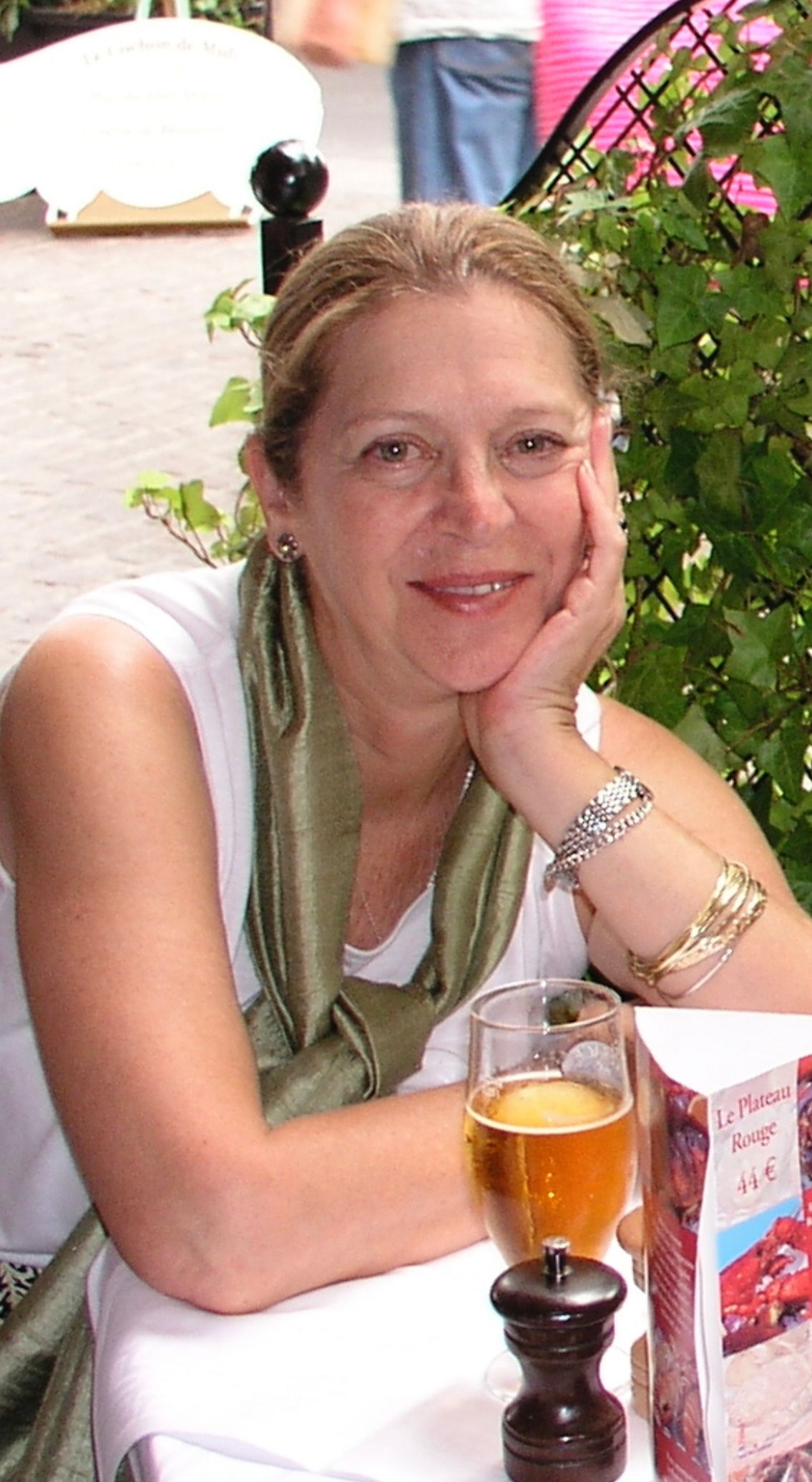
Obituary: Mary J. Rapoport, 80; Longtime Resident and a Leader in the National Women’s Political Caucus

Mary J. Rapoport was born in New York City to Sylvia and Joseph Feder on October 19, 1941. She passed away on September 18, with her family at her side.

Growing up in Washington Heights, Mary graduated from the High School of Performing Arts in drama and Hunter College in political science.

She married Paris Match photojournalist I.C. Rapoport during her junior year and after graduation moved to Washington, D.C. to join her husband, where she worked at the Institute for Sino-Soviet Studies at George Washington University.

Mary also worked alongside her husband for Paris Match magazine covering the White House during the Cuban Missile and later was asked to coordinate the reportage of the JFK funeral.

Moving to New York, Mary set herself to raise a family while her husband continued to photograph for Match and Life magazines until the couple moved to Connecticut.

In Ridgefield, Mary was a founder of the local chapter of the National Women’s Political Caucus (NWPC) and made headlines after suing the town to stop taxpayer funds going to the local Boys Club swimming pool renovation while those same funds were denied access to local girls.

In a landmark decision, affecting gender specific organizations nationwide, the Federal Bench ruled in the Caucus’ favor. Mary also served as the National Membership Chair for the NWPC.

Moving with her family to Pacific Palisades, in 1978, Mary started the Westside chapter of the NWPC and was its Chair. Raising funds for feminist women, Mary accepted a position with the Los Angeles Women’s Foundation and built a successful fund-raising program focusing on empowering disadvantaged women and girls.

Mary founded the Bread and Roses Award honoring exceptional women for their vital role improving the quality of life in the local community. Mary herself was a recipient of that coveted award in 1995.

She was a founding board member of “Save Las Pulgas Canyon,” a community organization that successfully preserved the last remaining free running stream in Los Angeles from inappropriate development.

Mary is survived by her husband I.C. Rapoport; two sons, Benjamin (Lana) and Caleb (Whitney) and four grandchildren, August, Alena, Shen and Maya.

A celebration of her life will be held at 2 p.m. on October 23 at Kehillat Israel Temple in Pacific Palisades, where she was a member for 44 years.

Donations in Mary’s name can be made to Doctors Without Borders (Medecins Sans Frontières).


Posted in Obituaries | 1 Comment

Violinist Movses Pogossian Featured at Guild’s Opening

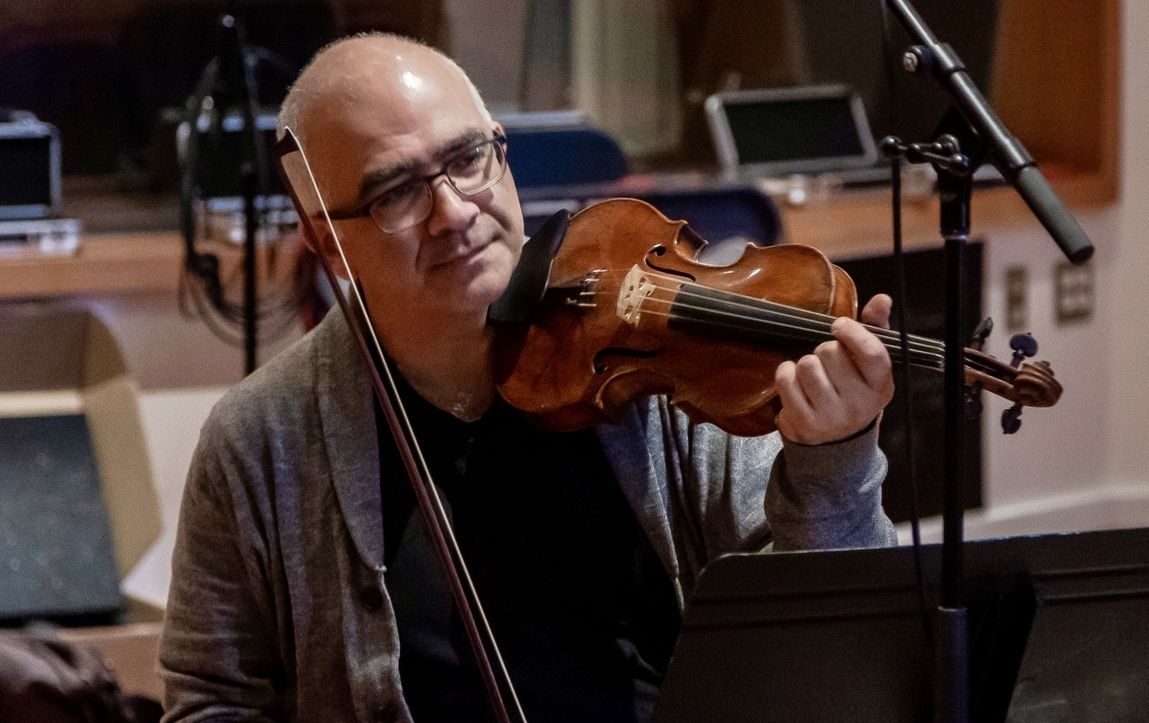
Movses Pogossian will perform at St. Matthew’s Music Guild

St. Matthew’s Music Guild opens its 38th season of concerts at 8 p.m. on Friday, October 14, with renowned violinist Movses Pogossian.

Pogossian has performed with members of the Tokyo, Kronos, and Brentano string quartets, and frequently collaborates with the Apple Hill Chamber Players, touring worldwide and teaching annually at their summer music festival in New Hampshire.

A committed propagate of new music, he has premiered over 30 works, and worked closely with composers such as G. Kurtag, A. R. Thomas, T. Mansurian and V. Sharafyan.

Since earning his advanced degrees from the Komitas Conservatory in Armenia and the Tchaikovsky Conservatory of Music in Moscow, Pogossian has held teaching positions at Duquesne, Bowling Green, Wayne State, and SUNY Buffalo Universities, and is currently professor of Violin and Director of the Armenian Music Center at UCLA.

The violinist made his American debut performing the Tchaikovsky Concerto with the Boston Pops at Symphony Hall in 1990. Richard Dyer of the Boston Globe wrote: “There is freedom in his playing, but also taste and discipline. It was a fiery, centered and highly musical performance…”

Pogossian is a prizewinner of the 1986 Tchaikovsky International Competition, and the youngest-ever First Prize winner of the USSR National Violin Competition.

He performs with the Chamber Orchestra at St. Matthew’s under the direction of Music Director and Conductor Dwayne S. Milburn.

The concert opens with Mozart’s jubilant Symphony No. 34, composed in 1780.

Also, on the program is the evocative essay “Unspoken” by southern Californian Alan Menton.

Menton is Professor of Music Theory and Composition at Fullerton College and has been hailed for his cross-cultural style that encompasses diverse musical interests but also literature, history, religion and dance.

He writes, “for ‘Unspoken’ I set out to write a film score for an imaginary film…leaving the…task [of coming up with the images] to the audience.”

All concerts are held at St. Matthew’s Church, 1031 Bienveneda Ave., Pacific Palisades. Tickets are $35 or Music Guild Season passes are available for as little as $200. For information, visit MusicGuildOnline.org or call (310) 573-7422.

Posted in Music | Leave a comment

Pure Joy! “Mamma Mia!” Opens at Palisades High School


(Caption (left to right), Rosie (Carlie Given), Donna (River Tharae) and Tanya (Chantal Trent) perform in “Mamma Mia!”

This is the kind of production that makes you glad there is live theater. This reviewer listened in awe at the tremendous voices in the Palisades High School production of “Mamma Mia” – and never stopped smiling- because it was pure joy to be there.

The staging, the costuming and the choreography were all top-notch, and the 10-piece orchestra balanced perfectly with the performers.

Do yourself a favor. If you like theater and have never gone to a musical at the high school, go to this one.

“Mamma Mia!” a musical written by British playwright Catherine Johnson, is based on songs recorded by Swedish group ABBA. The musical opened in the West End of London in 1999 and opened in the U.S. in San Francisco in 2000 before moving to Los Angeles. It opened on Broadway in 2001.

Join the cast as they sing through hits “Lay All Your Love on Me,” “Dancing Queen,” “Money, Money, Money” and “Mamma Mia.”

The action takes place at a rustic inn on the sunny, paradisiacal Greek island where Sophie (Annika Johansson), the main character, grew up. From the moment she steps on stage Johansson is the epitome of sweetness and innocence—with an incredible voice.

It is clear why director Nancy Fracchiolla cast her in the lead, because how many exceptional voices can one high school have?

It turns out many. With the introduction of Sophie’s mother Donna (River Tharae), the audience realizes there is another fantastic singer in a main role—and then her two best friends, Rosie (Carlie Given), and Tanya (Chantal Trent) are superb, too.

It became obvious that Fracchiolla was tasked with finding a musical that would allow many “stars” to shine—and they did.

The story revolves around Sophie, who is about to marry her fiancé, Sky (Asker Bishop), and wants her father to walk her down the aisle but doesn’t know who he is. After she discovers her mother’s old diary, the search is narrowed to Harry (Theo King), Bill (Sammy White) and Sam (Ben Santos).

The guys are all good and Santos is a joy to listen to, what a pure lovely voice!

Sophie invites all three of her possible fathers to the wedding, without telling her mother Donna. Who will walk her down the aisle? Who is her father? Is it important?

More than 100 Pali students were part of the production, that was choreographed by Hazel Clarke.

Opening night is tomorrow, Friday, October 7, at 8 p.m. The rest of the performances are 7 p.m. on October 8, 9, 13, 14 and 15. For tickets: go.palihigh.org/gofan.

(Editor’s note: to my Palisades Optimist friend that traveled downtown to the Ahmanson to see the musical “Oklahoma” and was disappointed. Travel to PaliHi and see “Mamma Mia!” you won’t be sorry.)


Posted in Reviews, Schools | 1 Comment

Shantytowns/Hoovervilles Were Homeless Encampments

During the 1930s there were large concentrations of families living in Shanytowns.

By REECE PASCOE

A pregnant woman has just given birth, but she knows the baby is dead it stopped kicking days ago.

Malnourished kids play with their ribs showing though their shirts. Fathers/husbands are out looking for a job, any job. The women are cleaning the clothes in the river – the same water they drink and the same place they go to the bathroom. These were not the living conditions in concentration camps in Germany or the gulags in Siberia, but in shantytowns (Hoovervilles), even here in sunny Southern California.

After the roaring 20s, the Great Depression hit, leaving many jobless and homeless. Families couldn’t pay rent and were kicked out of their homes with nowhere to go.  Many were penniless after selling their life belongings.

After exiting their homes with only the clothes on their back and sadness, uprooted families came together. They formed little communities, everywhere and anywhere. They were located next to drainage ditches, alongside buildings, by a lake, in a park: they are called shantytowns (Hoovervilles).

What is the difference between Hoovervilles of the 30s and 40s and today’s tent cities (Gavin Ghettos)?

Those shantytowns were named after President Herbert Hoover, who was widely blamed for the depression.  The term Hooversvilles was coined by newspaper reporter Charles Michelson.

Then there were other terms, such as “Hoover blanket” (old newspaper used as blanketing). A “Hoover flag” was an empty pocket turned inside out and “Hoover leather” was cardboard used to line a shoe when the sole wore through. A “Hoover wagon” was an automobile with horses hitched to it, often with the engine removed.

Hoovervilles where not isolated to one area of the country, they popped up from Seattle to LA to New York to St. Louis. All were different, some had mayors, some had houses 20 feet tall, some were by lakes, some houses were made out of brick, and some were in drainage ditches.

Seattle had one of the biggest and longest lasting shantytowns. It lasted for 10 years and is one of the best documented cases. The population at one point was 1,200 and the impromptu town spanned more than nine acres. It had an unofficial mayor. The population consisted of all races but was a majority male. The city made very few requests from the tenets, one was that there be no women and children. The second was that there were some building and sanitation codes, like having designated spots for bathrooms.

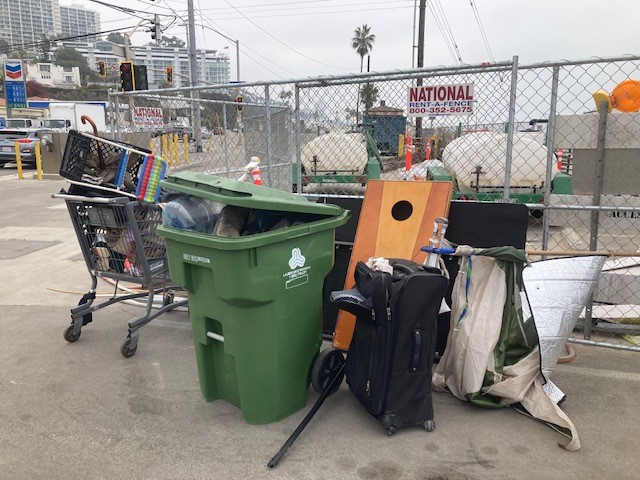
Today’s Gavin Ghettos are also outside of San Francisco, but the majority of the makeshift dwellings are here in Southern California. They are all different, some are packs of RVs, some are lines of tents, some are located under freeways, some are next to the nearest outlet so “tenants” can charge their iphones.

One of the biggest differences between today’s occupants and those in the 1930s, was families were forced out of their homes because people lost jobs.

Unemployed Hooverville residents took any available work, such as fruit picking or packing. John Steinbeck wrote about a family who lived in a California Hooverville in his 1939 Pulitzer Prize-winning novel “The Grapes of Wrath.”

Once they got a job and means to pay for themselves and their loved ones, they would move into stable housing out of the Shantytowns.

Today there are “help wanted” signs everywhere. Many living in encampments chose to live on the beach for free, eat breakfast at food banks and take daily snacks from charity groups. I understand that some people today are not living like this by choice, but that is the exception to the rule.

The second big problem today is drugs and alcohol. Back then recreational drugs were unheard of, most of the drugs homeless people are addicted to now were not invented, like meth, crack and many prescription pills.

A third problem is mental illness. About a fifth of the population has a mental illness and about 50 percent of the homeless have a MI.

In the late 1800s and early 1900s, there were asylums for those with mental issues. By the height of institutionalization in 1955 about a half a million people were living in state-run psychiatric facilities, according to a May 2021 Atlantic story (“The Truth about Deinstitutionalization”).

Franklin D. Roosevelt’s New Deal provided public works projects and other economic programs to try and end the shantytowns. However, there were many corrupt politicians, so a vast majority of the money never went to those who needed it. And today, I am so glad we don’t have a problem with corruption. I know all the tax dollars are going to those who need it the most.

What created the problem in the 1930s? Was it everyone living outside their means, was it the market crash, was it Calvin Coolidge presidency, was it Herbert Hoover “a chicken for every pot, and a car in every backyard,” was it the Franklin D. Roosevelt New Deal?

What brought an end to the shantytowns? Was it FDR’s New Deal, was it World War II or was it time?  Ask 100 different professionals and get 100 different answers.

Today is similar to the 1930s because we all see the problem, and we all know that our solution is the right one and yours is the wrong one.

Homeless encampments on Venice Beach popped up as the unemployed opted for living on the sand.

Posted in Homelessness | 5 Comments

Unhoused Not Allowed to Block Roosevelt Tunnel

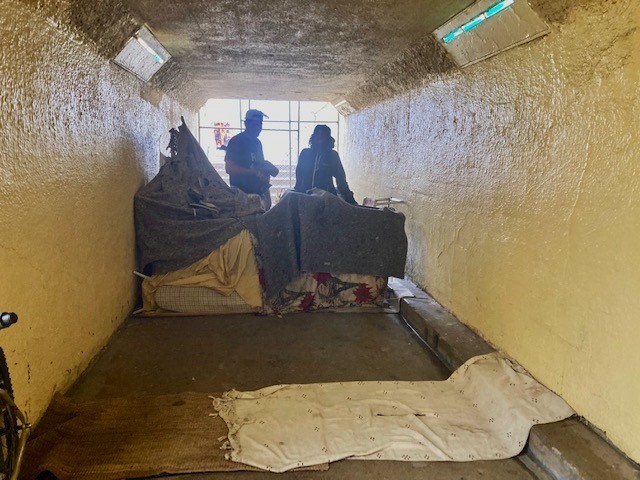
Three men illegally blocked the tunnel that provides access to the beach.

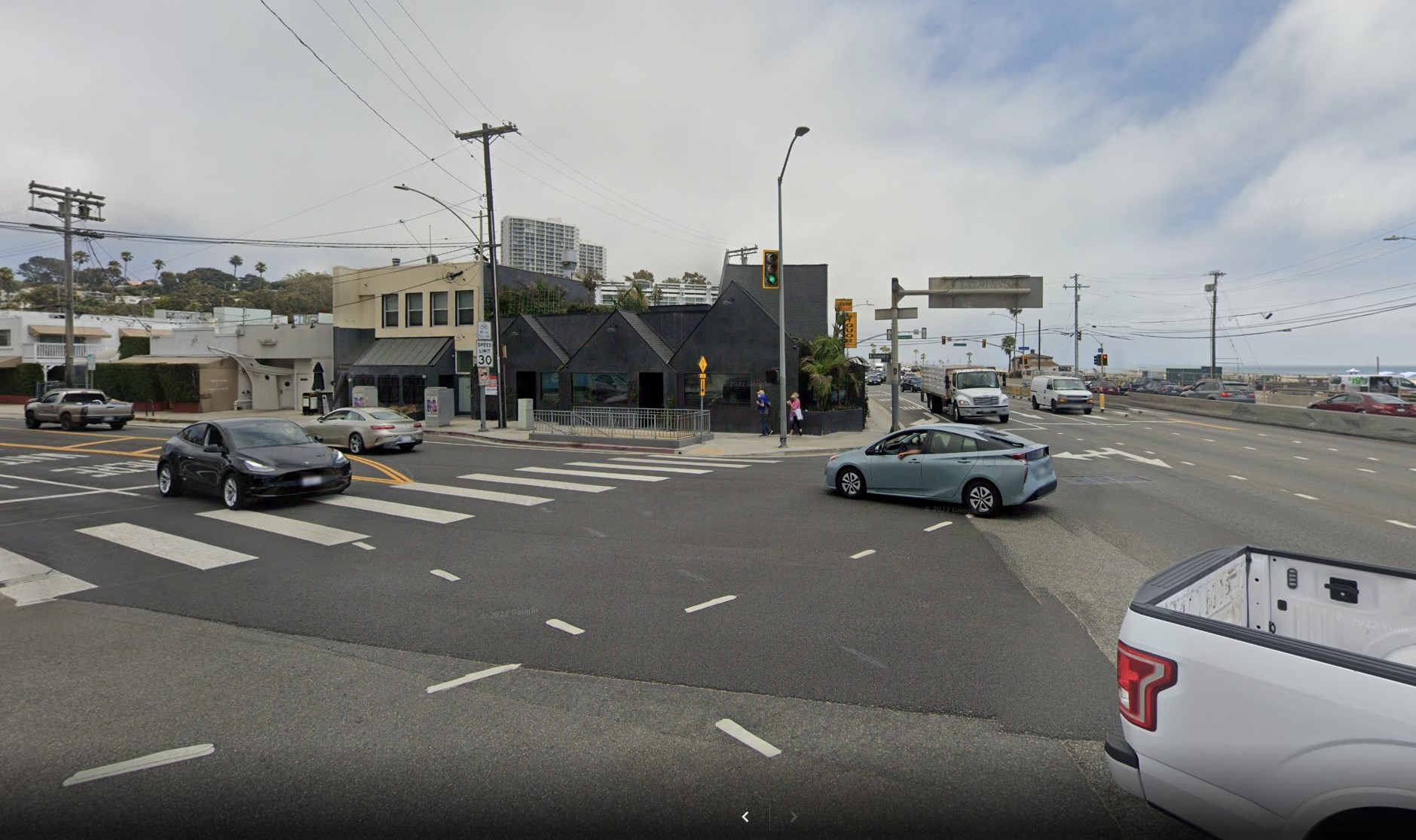
Co-president of the Pacific Palisades Task Force on Homelessness (PPTFH), Sharon Kilbride, was tipped off that the Roosevelt Tunnel, one of the few ways for pedestrians to safely cross Pacific Coast Highway to reach the beach from West Channel Road and Chautauqua had been blocked by several men.

A sign is posted above the tunnel entrance “No Loitering LAMC 63.93”

Needles were found onsite.

She went to the site and found three men who had taken over the tunnel. “There were beds, chairs, tables and carts,” Kilbride said, and noted that various needles had been found and the men appeared to be using meth. “I engaged the group and told them that LAPD was in-route, and they fled the tunnel.”

Kenny, who is unhoused, has worked with the PPTFH before keeping the two tunnels in that area cleared of sand and other items. He is paid for his services. Kilbride said, “Kenny spent an hour with me, cleaning up the mess.”

If residents see a camp inside the tunnel, they are asked to call 911.

“Those fellows were bad news and not interested in any services,” Kilbride said, and added “Kenny cleaned everything up, please thank him when you see him.”

Kenny helps keep the tunnel and stairs swept and clean.

Kenny helped drag the items out of the tunnel so that passage was possible.

The tunnel, built in 1940, was described in the 2013 Los Angeles Historic Resources Inventory as “Pedestrian tunnel that runs underneath Pacific Coast Highway from West Channel Road to the beach; concrete construction, rough stucco finish, concrete steps, metal balustrades and handrails.”

It was noted that: “Rare example of a pedestrian tunnel in Los Angeles; runs underneath Pacific Coast Highway; provides access from the Pacific Palisades commercial area to the beach. Pedestrian tunnels appear to be of local significance only and may not meet significance thresholds for the National or California registers.”

The tunnel (accessed by the railing) allows beachgoers to safely cross under PCH’s six lanes of traffic.

Posted in Homelessness | 1 Comment

“The Ropin’ Fool” Plays at Will Rogers Park, Free Event


To celebrate the 100th Anniversary of The Ropin’ Fool, the Will Rogers Ranch Foundation is planning a special event at the Will Rogers State Historic Park on Saturday, October 8, and all residents are invited.

Come to Will Rogers Park at 1501 Will Rogers State Park from 4 to 9 p.m. (parking will be free after 4 p.m.). Enjoy picnicking, and free popcorn and churros.

There will be Will Rogers trivia and prizes. Kids, and adults are invited to try roping skills: ropes will be provided. There will be tours of the Historic Park ranch house

Two-time Guiness World Record holder and cowboy trick roper Will Roberts will be on hand to demonstrate his skills from 4 p.m. until dusk. (He holds the Guinness World Record for Gun Spinning and Most People Inside a Spinning Lasso.)

Roberts is an award-winning actor, film and television weapons expert, cowboy, author reporter, dancer and onetime Cirque Du Soleil act. Robert’s TV credits include principal roles in the Netflix hit Lucifer. He has appeared in True Terror-Robert Enblund, Wave Rider, Mann & Wife and Last Man Standing.

He also appeared on The Ellen Show as “The Dancing Dad.”  He is also a balloon artist and professional clown. A magician, he is a member of the Magic Castle in Hollywood and the Magic Circle in the UK.

Just before the movies at dusk, Roberts will comment on Rogers’ trick roping seen in The Ropin’ Fool. Many of those skills, which were part of Will Rogers vaudeville act, have never been equaled by anyone.

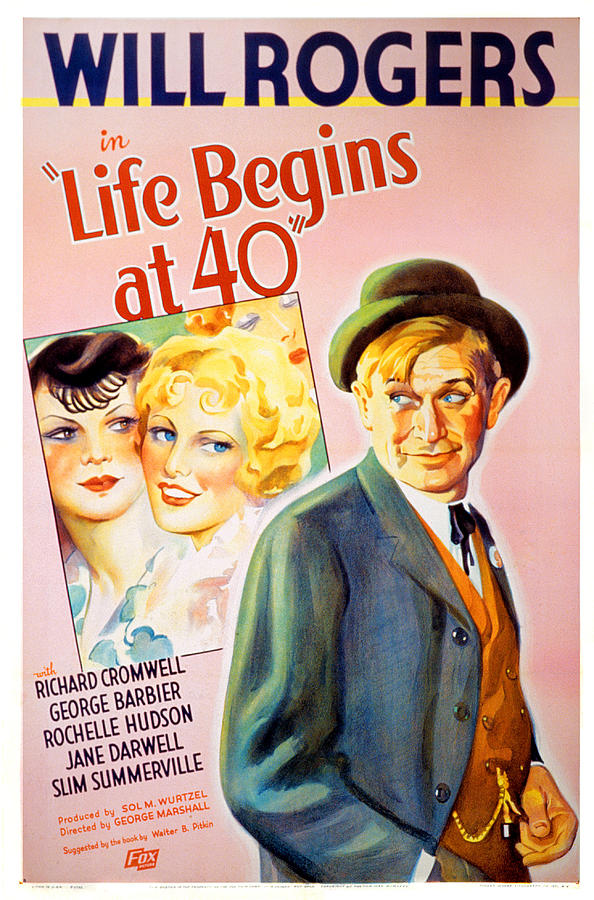
After the 1922 silent film, The Ropin’ Fool, a classic Will Rogers 1934 comedy Life Begins at 40 with Jane Darwell (Grapes of Wrath) and a young Sterling Holloway (Disney’s Winnie the Pooh) will be shown.

Will Rogers in a scene from “Life Begins at 40.”

Posted in Film/Television, General, Parks | Leave a comment

OBITUARY – Susan Orenstein, 79, Longtime Resident and Past President of the Historical Society

By BILL BRUNS

Susan Orenstein, an active member of the Pacific Palisades Historical Society and the Temescal Canyon Association for many years, passed away on September 26.

Born November 25, 1942, to Randall and Pauline Coates, Susan grew up in Saline, Michigan, where she attended area schools. In 1960, she enrolled at the University of Michigan. There she met her future husband, Martin Orenstein.

After graduating, Susan worked at the University of Michigan television studios before moving to New York to become a stewardess at TWA. During her short time with the airline, she experienced the transition of domestic commercial airlines from prop to jet engines.

After Martin completed medical school, he and Susan were married in 1967 and headed west to Hollywood where Martin served his internship at Cedars of Lebanon. Susan found a job as assistant to the program manager at KFI radio.

The couple took a 6-week South Pacific tour before moving to Pacific Palisades in 1968, when Martin obtained a residency as a radiologist with the Wadsworth VA Hospital in Brentwood. He was the head radiologist at Ventura County Hospital when he died in 1983, at age 41.

Susan and Martin had two children: Gregg (born in 1972) and Mark (1974). She volunteered at Brentwood Science Magnet, where her sons attended school. She also taught stained-glass construction at Westside Art School and for UCLA Extension.

“Susan was an active member of the Temescal Canyon Association for more than 20 years and kept the minutes of our monthly meetings,” said past president Gil Dembo. “She had a strong interest in Los Liones State Park and the Liberty Canyon animal crossing. Her latest project was helping to plant a milkweed garden to increase Monarch butterflies and help their migration.”

Susan also joined the Palisades Historical Society and served as president from 1992 to 1994. “She had great computer skills and could easily handle our membership files and even MailChimp,” said longtime board secretary Shirley Haggstrom. “She was also instrumental in setting up our website. After I turned to her and David Wolfberg for help, the three of us launched the website on April 8, 2007.”

Haggstrom added, “Susan and I were friends and secretaries for many years—Susan for TCA and me for PPHS. We worked together doing newsletters, getting speakers, and writing letters for both organizations.”

 Susan is survived by her sons, Mark, who lives in East Los Angeles (wife Ann Gottesman), and Gregg, who lives in Pomona and will marry Junnette Tibor in November; a grandson six months in the womb; her brother, Roger Coates of Paw Paw, Michigan; her sister, Carol Jesmore of Sausalito, California; two nephews, Scott and Ken Coates, and several cousins.

A service is being planned, with location, date and time to be announced.

Donations in Susan’s honor can be made to the Pacific Palisades Historical Society, the Sierra Club, or the World Wildlife Foundation.


Posted in Obituaries | 1 Comment

Burned-Out Venice Canal Residents Say Homeless To Blame for Sunday Fire

(Editor’s note My husband was returning from the airport around 11 p.m. October 2 and saw fire engines racing down Lincoln, near Venice Boulevard. He asked what it was and this editor found the LAFD reports.  According to a spokesperson, a 9-1-1 call was received at 10:44 p.m., by 11:51 p.m., the three-story, single family dwelling was ingulfed in flames and it was declared Major Emergency status.

At 12:06 a.m., LAFD wrote that more than 100 firefighters extinguished the Major Emergency structure fire in one hour and 20 minutes with no injuries reported. 

A 12:19 a.m. update noted “A total of five homes were damaged – The 3 story home under renovation is a total loss as is one of the exposed homes. Three additional homes sustained damage to the eves from the ember cast. The number of displaced occupants is unknown at this time. No injuries reported. LAFD Arson is responding for the investigation per protocol for this scale of an incident. “

The October 4 story – below – is printed in cooperation with Westside Current.)
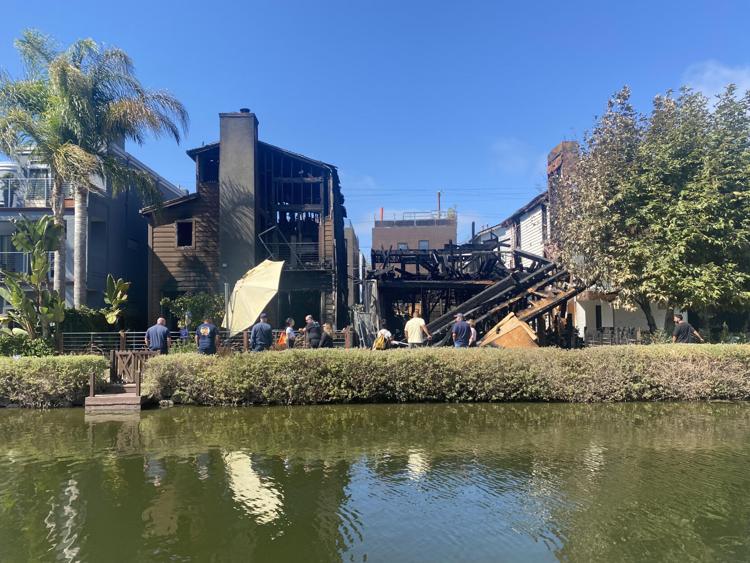
This home was under construction along the Venice Canal. It burned October 2.

By SANDRA CLARK

Outraged neighbors say a three-story home under construction where a fire began late Sunday night in the Venice Canals had become a fixture for transients since building at the location started nearly one and a half years ago.

It took over 100 firefighters to put out the blaze. The fire damaged five homes, including the three story home under construction.

The sprawling structure housed an unlocked porta potty that many people used, said one longtime Venice Beach resident whose house is located directly across the alley from the sight.

Glen Searle witnessed the horrific chain of events first hand after being alerted to the fire when he heard loud noises causing his dog to get up and run to the window.

“I heard a noise, but I always hear noise in that place because people come and go all the time. There is a toilet and privacy in there,” Searle told the Current. “I think I was one of the first people to see the fire and what I saw looked like a campfire on a piece of plywood on the concrete. It seemed like a pretty contained fire, but by the time the fire department came, it looked like an inferno.”

Searle said he saw people coming and going the previous night, including a tall, man who showed up late Saturday night with a bike. “This person was there for a very long time and made a great deal of noise. He brought his whole bike in (the construction site) and was covered in plastic bags.

“The alley is constantly littered with crack pipes. I find hypodermics. I see people smoking crack, and it’s been like this for a long time,” added Searle.

Another neighbor told the Current that there’s no doubt in his mind as to how this blaze got started. “It’s an empty house, there are no utilities, the fire started and someone ran out,” said Ron Orr. “We don’t call the cops anymore because they don’t come. They say their hands are tied.”

Irma Hawkins, 71, and her husband Martin Kasindorf, 82, watched in horror as their home for over twenty years went up in flames. Fortunately, no one was injured and the couple got their Standard Poodle named Bodhi before leaving the premises. For a while, the couple worried about their missing cat Emily, who showed up later that morning.

“The fire jumped over to our house,” Irma recalled. “I got out of the house and I thought, Oh God, they are going to be here. My house will be saved and that wasn’t even close. I know it was thirty minutes, and it was more than that when the water started flowing.”

The couple’s house has since been red tagged and is no longer inhabitable. When asked how she felt about losing her home of 24 years, the former clinical psychologist replied, “I thought, I get to move because this place sucks. You know it’s a renegade place. If you’re homeless, you can come here and camp on the street, and there’s no recourse.”

“You can do whatever you want. You can skateboard, and break into houses. It’s lawless. We are now living every other neighbor’s nightmare because this could easily happen to anyone.”

Many blame City Councilman Mike Bonin for his hands-off approach to dealing with the ongoing homeless crisis in Venice Beach and the surrounding areas.

“For me, this has been waiting to happen. This has been a ticking time bomb,” said Devon Daley who lives just a few houses away from the charred homes. “Many of the homeless live out of our garbage cans. We hear noises all the time, yelling and screaming. I can listen to it from my bedroom. People are rattling through the trash cans.”

“The city needs to address this head-on instead of passively allowing people to live on the sidewalks and suffer accordingly,” Daley added.

“Bonin is letting homeless people live and die on our streets. He’s not enforcing existing laws so everybody’s lives are at risk,” said local Charles Edward.

At 4 a.m., firefighters were called again when the ambers from the initial blaze traveled up to 441 Carroll Canal, sparking a roof fire that was subsequently put out.

Traci Park, a candidate in the Council District 11 race, visited the area around Monday morning and spoke to residents impacted by the fire.

Arson investigators were sent to the scene under a protocol for an incident of this scale, Stewart said. We asked about the neighbors’ allegations and were told there is no comment until an investigation is complete.

The home of Irma Hawkins, 71, and her husband Martin Kasindorf, 82, burned and was red-tagged.

Posted in Accidents/Fires | Leave a comment

Dr. Jane Goodall Visits Pacific Palisades

Seventh grader Quinlyn Kirtley portrayed Dr. Jane Goodall in third grade, and was excited to meet her role model. Cindy and Bill Simon look on as the two chat.

Scientist and activist Dr. Jane Goodall, who is known for her landmark studies of chimpanzees in Gombe, Tanzania, was a guest of Seven Arrows Elementary School on September 28.

More than 500 students in kindergarten through high school from Seven Arrows and other schools were invited to gather at Simon Meadow, in Temescal Gateway Park, not only to honor Goodall, but to hear her words of inspiration.

There, Goodall told the students “you cannot get through a single day without having an impact on the world around you. What you do makes a difference, and you have to decide what kind of difference you want to make,” Goodall said and pointed out that “Young people, when informed and empowered, when they realize that what they do truly makes a difference, can indeed change the world.”

Goodall started working with chimpanzees in 1960, when she was 26. She was able to prove that chimpanzees have personalities and profound intelligence, which challenged existing ideas about what separated us from other animals. Her insights transformed the scientific landscape and shaped an understanding globally that all living creatures are connected and that respect for all life on Earth is the key to protecting the world we all share.

She first visited Seven Arrows, a kindergarten through sixth grade school, in 1994 and school founder, Margarita Pagliai, who was inspired by Goodall, created a curriculum with an emphasis on science and humanity. Seven Arrows students now participate in at least one Ethical Leadership Project prior to their graduation. These projects support causes related to conservation, animal preservation, and peace.

Twenty-eight years later, Seven Arrows is now partnering with Goodall and her Roots & Shoots youth program.

More than 500 students visited Simon Meadow to hear Dr. Jane Goodall’s message.

“We are honored to welcome back Dr. Jane Goodall to Seven Arrows and touched that she entrusted our school to create a Los Angeles-wide community event including children from public and private schools throughout the city,” Pagliai said. “Inspiring hope through action is the essence of her legacy. She is a beacon of light for all of us, guiding and inspiring us to harness the power within to make a difference in the world around us.  She reminds us that every individual matters and each one of us makes a difference”

The Jane Goodall Institute is a global community-centered conservation organization founded in 1977 that advances the vision and work of Dr. Jane Goodall. (visit: janegoodall.org or @janegoodallinst).

Roots & Shoots is a global youth-powered program of the Jane Goodall Institute led by young people (and educators) who want to make a difference in their communities. (visit: rootsandshoots.org and @RootsAndShoots). Youth can sign up for free to become members of Roots & Shoots. That website has numerous projects that individuals can perform.  There are also ideas for community projects.

“Let us develop respect for all living things. Let us try to replace violence and intolerance with understanding and compassion. And love,” Goodall said and added, “Every individual has a role to play. Every individual makes a difference.”

In addition to Seven Arrows, schools attending included The Accelerated School, SG Jung, Crossroads, Frostig, Katella High School, Le Lycee Francais, New Roads, SoLa Impact, Pasadena High School, Wildwood, Windward, Brentwood, Loyola, Kinetic Academy Charter, Carson Street Elementary, Alfred B. Nobel Charter Middle School and Ocean Charter.

Additional attendees included members of the Palisades Forestry Committee, TreePeople, Bio Citizen L.A. the Palisades-Malibu YMCA, World Space Foundation, Resilient Palisades and Cleaner Greener Whittier.

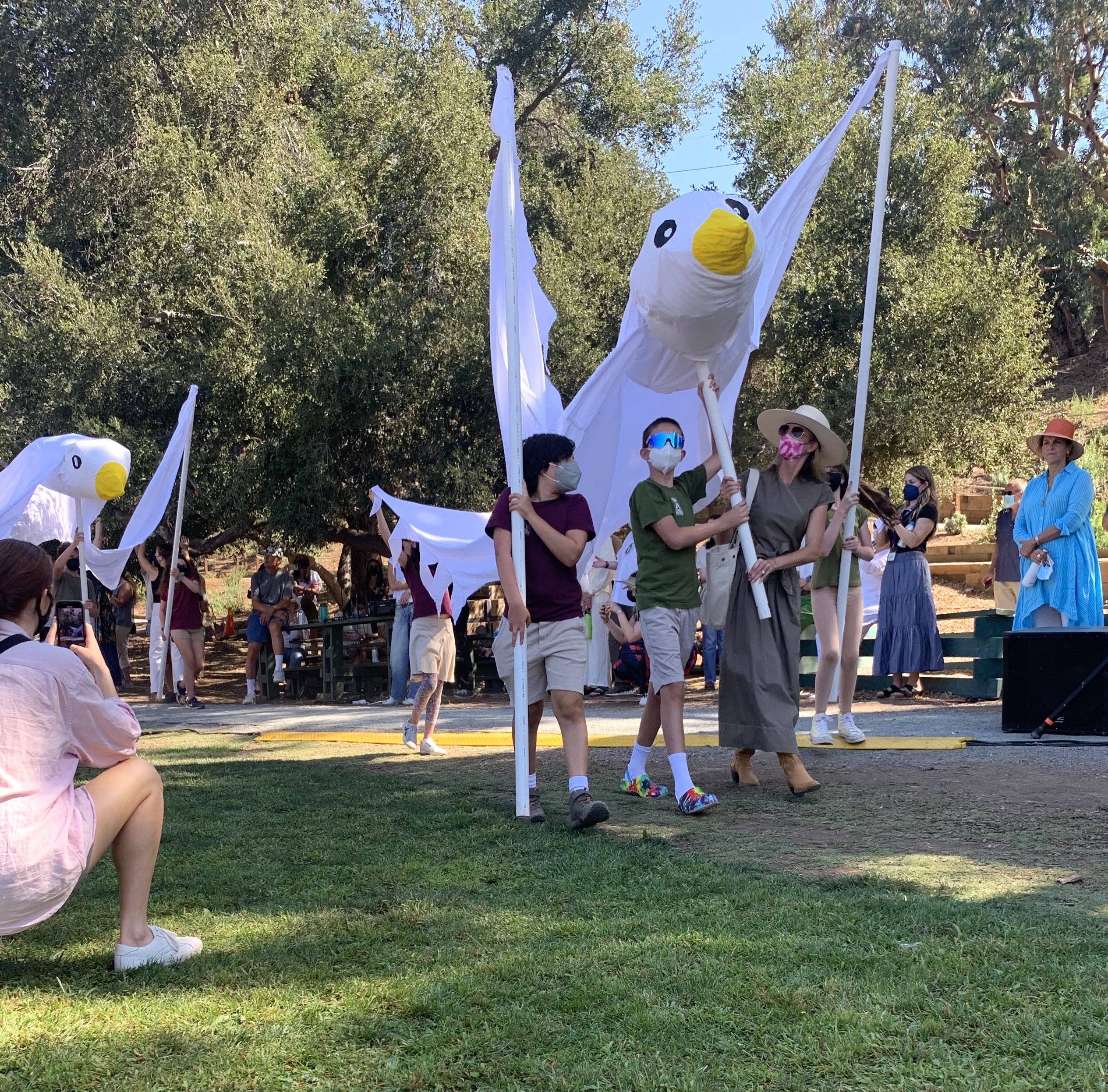
A parade of doves started that event. Seven Arrows head of school Margarita Pagliai (in blue), watched as her students led the procession.


Posted in Environmental | 1 Comment

American Cinematheque Presents a Ray Liotta Retrospective

The American Cinematheque will present a retrospective for celebrated actor and Palisadian Ray Liotta. The series starts Tuesday, October 11, and runs through Saturday, October 22 at the Aero Theatre, 1328 Montana Avenue, Santa Monica, and Los Feliz 3, 1822 N. Vermont Avenue.

The series includes films with some of Liotta’s most memorable performances, and features special guests including Dennis Lehane and James Mangold, who share memories of artistic collaborations with the late actor.

As American Cinematheque wrote “Ray Liotta stumbled into acting almost by accident as a student at the University of Miami but there was nothing accidental about his success. Being proactive about his career and filling his time with study during lean years made him one of the most respected performers of the last several decades. As he noted about his approach to his craft during a 2002 appearance at the Cinematheque, ‘This is all about the imagination. The imagination is like a muscle – the more you use it the stronger it’s going to get.’”

Although Liotta started in soap operas, it was his role as Melanie Griffith’s violent ex in “Something Wild” that started his Hollywood career.

He was cast in leading roles in “Dominick and Eugene” and in Martin Scorsese’s “Goodfellas.” His performance was opposite Robert De Niro and Joe Pesci. The film was nominated for a Best Picture Oscar.

He made “Cop Land” and “Identity” with director James Mangold. Liotta won an Emmy in 2005 for his guest appearance in “ER.”

The new limited series “Black Bird” from Apple TV+ features one of his most acclaimed final roles: James “Big Jim” Keene, a father in failing health whose imprisoned son is offered a dangerous deal.

On October 15, at 5 p.m. a question-and-answer discussion about Liotta’s career will be held with “Black Bird” showrunner Dennis Lehane, moderated by Tim Grierson. The screening will begin with “Black Bird” Episode 103. The event is free, but people must RSVP – first come, first served. The RSVP does not guarantee a seat.

That will be followed by “Goodfellas.”

To see the complete listing and reserve tickets, click here.


Posted in Film/Television | Leave a comment