Volunteers Sought for the Pacific Palisades Homeless Count 

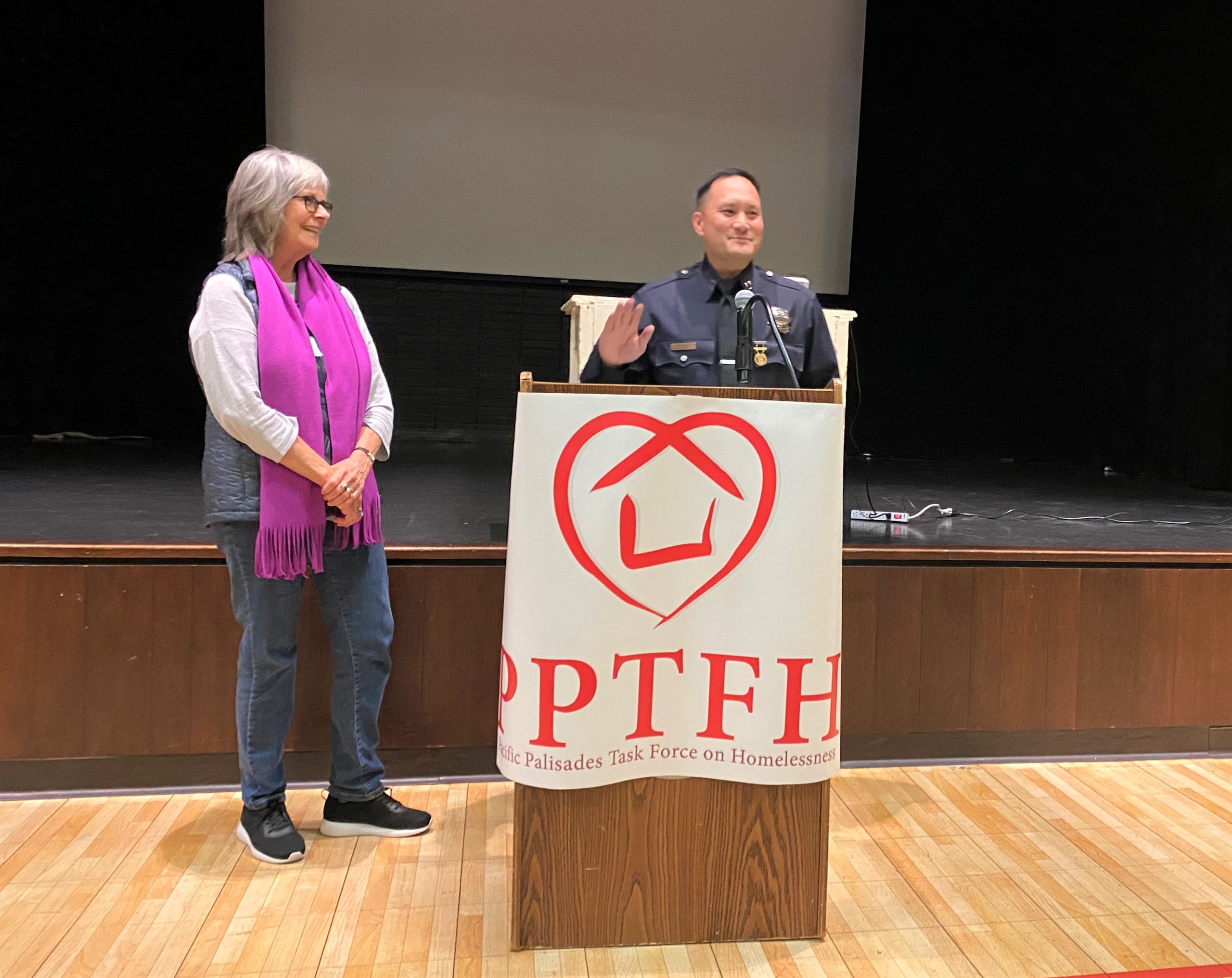
LAPD Captain Jonathan Tom spoke to those who volunteered to count the Homeless at the annual count in 2019. PPTFH volunteer Kim Cleary helps organize the event.

Kim Clary, the site coordinator for the Homeless Count, has announced that the count in Pacific Palisades will take place on January 25, around 5 to 5:30 a.m., the exact time will be announced closer to the count. Volunteers will meet in Corpus Christi Church gymnasium prior to the count.

Although the Los Angeles Homeless Services Authority (LAHSA) is the sponsor of the count, Pacific Palisades Task Force on Homelessness (PPTFH) will manage the count here.

LAHSA is sending out notices to all previous volunteers on an ongoing basis.  Since PPTFH is doing its own recruitment, the Palisades deployment site (Corpus Christi) is not listed on the LAHSA web site.

If you are interested in volunteering here, contact Kim Clary at [email protected] to sign up.

“If possible, we would like volunteers to pre-form their own counting teams from their pods. Volunteers serving on an individual basis will be paired with others and will be required to drive to count locations separately from the deployment site where they will walk the area,” Clary said. “If you have not volunteered for the count before, we hope you will consider doing so.”

PPTFH hopes residents will consider joining the local nonprofit for its once-a-year important event.

Posted in Homelessness | 1 Comment

Robertson Selected as Outstanding Educator of the Year (Part 2)

(Editor’s note: This is part two of a story about the agriculture and animals at Revere Middle School.)

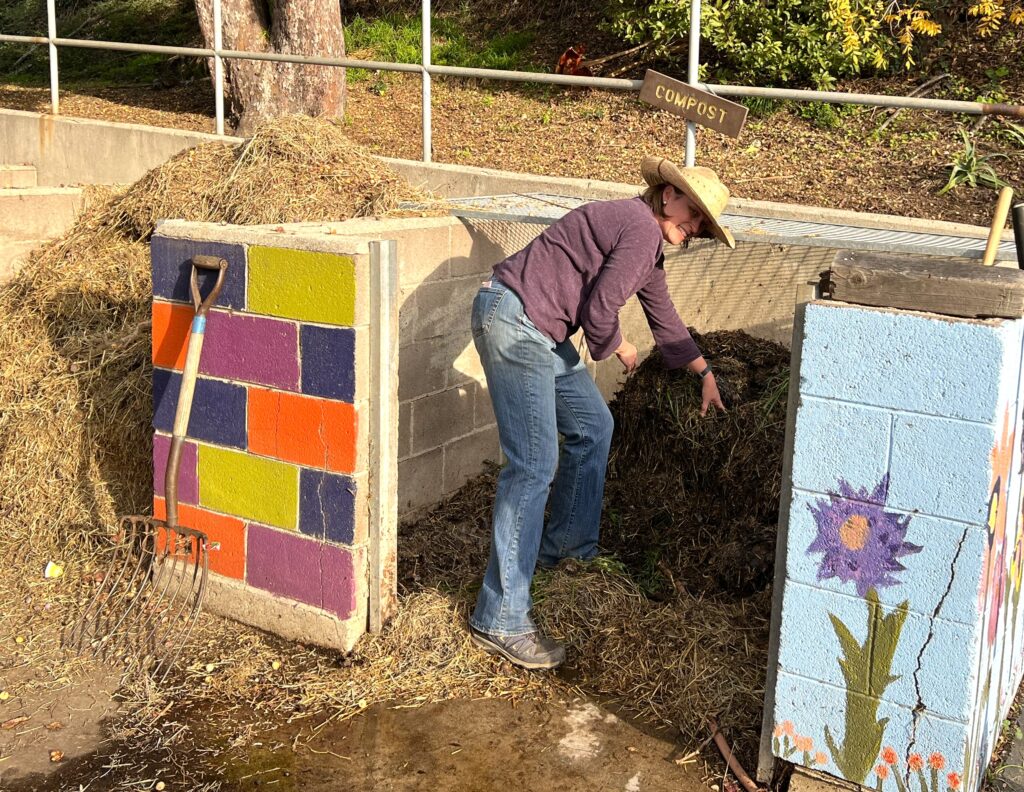
Carrie Robertson “turns” the hot compost bin on the Revere campus. The cold compost bin is behind her.

Carrie Robertson, who has worked at Paul Revere Charter Middle School since 2011, was named the “Outstanding Educator of the Year” by the California Foundation for Agriculture in the Classroom in December.

Robertson received a Literacy for Life grant, and $500 to fund a worm bin project, “Urban Worms: Food Waste Warriors” plus an additional $1,000 for other projects.

“I was frustrated with food waste on this campus,” Robertson said. “There is a great deal of waste, especially with vegetables.” The farm receives vegetables and salad that was going to be thrown in the trash and “we use the food waste in our compost bin.”

Robertson is teaching her students the difference between hot and cold composting. In the cold compost bin, first there is a layer of brown material (leaves, small branches, cardboard) and then a layer of green material such as food waste is added. Every week or two the material is turned or more material can be added – and stirred. The material decomposes and after several months, the compost can be used as a soil amendment.

She also has a hot compost, too, and showed her students how hot it can get by cooking an egg in it. “It cooked solid,” Robertson said about the egg. In a hot compost, generally around 150 degrees, high-nitrogen materials are required, such as chicken waste.  At that temperature, weed seeds and disease pathogens die. She raked the hot compost and had this editor smell it.

It was a rich earthy smell. “We don’t want a manure smell at the farm,” Robertson said. “We’ve been inspired by ‘Kiss the Ground.’” The film is a full-length documentary that examines “regenerative agriculture.”

The film notes that “The way we currently grow the majority of our food, fiber, and fuel is actually damaging our planet’s ecosystem at an alarming rate through loss of topsoil, loss of biodiversity, desertification, habitat destruction, and air and water pollution.”

One of the ways to stop damaging the ecosystem is by improving soil health by moving carbon from the atmosphere back into the soil.

Another 2020 documentary that students watched was “The Biggest Little Farm” about an organic and biodynamic farm located 40 miles north of Los Angeles. That farm’s goal is to make the land more productive and biodiverse over time. “One of the key components of healthy soil is organic matter, which is anything that is alive or was once living, such as a plant root, an earthworm, or a microbe.”

Earthworms are used for composting and can help keep food waste out of landfill. Unavoidable food waste, such as eggshells, vegetable peels and tea bags can be “recycled’ by worms. They eat the scraps, which become compost as it passed through the worm’s body.  That compost becomes organic fertilizer.

Worm farms are low maintenance and efficient at processing organic matter.

“We try to keep everything here,” said Robertson, who in addition to adding a “worm farm” is planning a research project on oak species for the spring.

The planting area was under construction in 2021 to 2022 to replace an existing sidewalk back to the grape vines with an almost exact duplicate, but “Sometimes when there is a challenge, you can rethink things,” she said. “Lot of ideas come from the kids.”

The students are responsible for weeding and maintain the vineyard where several varieties of grapes are grown. “[Grapes] are a huge part of the state’s economy,” Robertson notes.

The Island Marrow is a native plant that is growing at Revere.

Kids do the weeding, the planting, the picking.  Students learn about native plants such as the Island Mallow, which is native to Catalina Island and super drought resistant—and growing well at its Revere home.

“Time in childhood should include authentic unstructured activities,” Robertson said. “It should be a time about personal discoveries about nature.

“The bottom line is kids need personal nature experiences,” she said.

If she could change anything, “I wish Palisades High School could create an animal science class, so the kids could continue with what they learn here.”

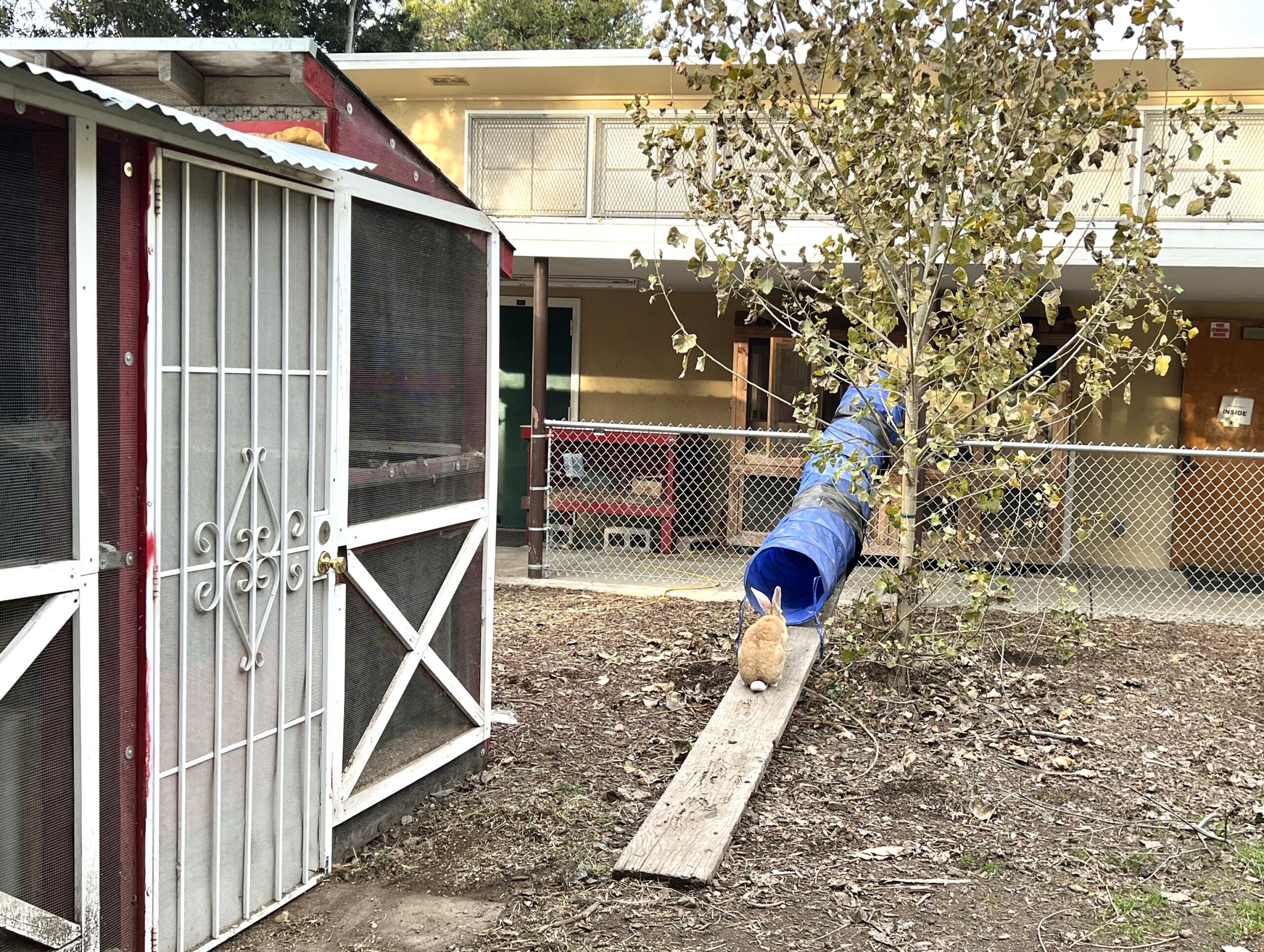
The Flemish rabbit goes up through a tunnel to his cage every night – to be safe from predators.


Posted in Schools | Leave a comment

Exciting Year of Shows Planned at Theatre Palisades

Theatre Palisades, the local community theater has announced its schedule for the upcoming year.

Five unique and entertaining presentations will include Other Desert Cities, Run for Your Wife, The Andrews Brothers, Bell Book & Candle and Towards Zero.

OTHER DESERT CITIES

Other Desert Cities by Jon Robin Baitz will run from January 13 through February 18, Fridays and Saturdays at 8 p.m. and Sunday at 2 p.m. This play was a finalist for the 2012 Pulitzer Prize for Drama and also received five Tony nominations including for Best Play, Best Actress in a Play, Best Featured Actress in a Play, Best Scenic Design and Best Lighting Design. Judith Light won for Best Featured Actress in a Play.

The play takes place around Christmas Eve in 2004, when a daughter returns to Palm Springs, California, after spending six years in New York writing magazine pieces.

She announces and presents to her family a memoir recounting a pivotal and tragic event in the family’s history: the suicide of her late brother Henry, who had been involved with the radical underground subculture in Venice.

Producers are Martha Hunter and Laura Goldstein, with director Chloe King. The cast includes: Holly Sidell, Michele Schultz, Richard Johnson, Amy Goddard and Levente Tarr.

RUN FOR YOUR WIFE

(March 31 – May 6)

Run for Your Wife is a 1983 comedy by Ray Cooney. John Smith, a London cab driver, with two wives and two lives, operates on a precise schedule juggling them both – until he’s mugged and ends up in the hospital.  Since he has two addresses, two police departments investigate and Smith’s carefully planned life falls upside down and hijinks ensue.

THE ANDREWS BROTHERS

(June 2 – July 8)

A snippet of this show was previewed at the annual awards show and this editor almost fell out of her seat laughing as Peter Miller, Gregg Abbott and Bill Wolfe, performed as the Andrew sisters/brothers, singing “Don’t Sit Under the Apple Tree.” This musical, The Andrews Brothers, created by Roger Bean, centers around a USO performance from the Andrew Sisters. When a cancellation appears likely, three earnest stagehands are determined to go on with the show.  “Pleasingly silly! No-holds-barred goofiness!” was one of the show reviews in the L.A. Times.

BELL, BOOK & CANDLE

(August 25 – October 7)

Bell, Book & Candle is a 1958 fantasy, romantic comedy by John Van Druten. Gillian Holroyd is a modern-day witch living in New York City’s Greenwich Village, who encounters charming publisher Shepherd Henderson. She decides to make him hers by casting a love spell and takes added pleasure in doing so because Henderson is engaged to her old college rival. Problems arise when Gillian finds herself actually falling for Shepherd. The problem?  She will lose her powers if she falls in love.

TOWARDS ZERO

(November 3 – December 9)

Towards Zero is a work of detective fiction by the great dame Agatha Christie and many consider it one of her finest stories.

“A murder is the culmination of a lot of different circumstances, all converging at a given moment at a given point,” Christie wrote about this play that sees an elderly widow murdered at a clifftop seaside house. A detective must sort out what is the connection between a failed suicide attempt, a wrongful accusation of theft against a schoolgirl, and the romantic life of a famous tennis player?

TICKETS:  Residents can purchase individual tickets or a season subscription. General Admission $22; Seniors & Students $20 or become a Patron Member for $90 and receive tickets to all five shows, including the musical. Or for $40 become an Active Member and work in some capacity for three shows and receive a ticket to all shows. Box Office: (310) 454-1970 or theatrepalisades.org or to discuss options for affordable theater.


Posted in Reviews | 1 Comment

World Premiere and International Harpist Featured at Chamber Music Palisades

Cristina Montes Mateo will perform with Chamber Music Palisades.

Chamber Music Palisades (CMP) presents its first concert of the new year on Wednesday, January 18, 8 pm, at St. Matthew’s Parish – and the program is spectacular.

It includes host Alan Chapman, a world premiere, We Begin, by Derrick Skye and one of the top harpists in the world, Cristina Montes Mateo.

According to Maestro Zubin Mehta, conductor emeritus of the Los Angeles Philharmonic, “Cristina is one among those very few individuals who have reached the very top of her field.”

A renowned Spanish harpist, Mateo, is featured not only in Skye’s new work, but also in the stunningly beautiful trio by Debussy for flute, viola and harp.

Mateo was the Unanimous 1st Prize winner at the “Torneo Internazionale di Musica” (Rome) and the International Harp Competition “V. Bucchi.” She has also won four more international contests (Paris -Laskine and Sacem-, Madrid and Tokyo), as well as numerous national awards. She is recognized as one of the leading harpists of her generation.

Derrick Skye

We Begin includes harp, flute, violin, cello, and electronics.  Skye, an American with Ghanaian, Nigerian, British, Irish, and Native American ancestry, incorporates many cultural influences into his work, reflecting his diverse background.

He believes music is the doorway into understanding other cultures. “My hope is that listeners will resonate with ‘We Begin’ in a way that helps them embark upon their days,” Skye said.

Alan Chapman, educator, radio host (Classical KUSC, Los Angeles), composer/lyricist will serve as the evening’s host. He was a longtime faculty member at Occidental College and is currently a member of the music theory faculty of the Colburn Conservatory.

Chapman has been a commentator for Chamber Music Palisades since the series began and is a regular speaker at the Los Angeles Philharmonic’s Upbeat Live series since its inception in 1984.  He has performed extensively with his wife, soprano Karen Benjamin, including engagements at Carnegie Hall and Lincoln Center.

The concert also includes a Mozart Duo for violin and viola and two trios for flute, violin and viola, one by Ignazio Fiorillo, a contemporary of C. P. E. Bach, and one by Max Reger, a contemporary of Rachmaninoff.

Musicians joining Skye and Mateo for this enjoyable evening are violinist Maya Magub, violist Robert Brophy, cellist Armen Ksajikian, and flutist Susan Greenberg, CMP artistic director.

Single tickets are $35; full-time students are free with ID. Tickets may be purchased at cmpalisades.org or at the door. Out of concern for the audience, performers, and staff, masks are required inside the church

Alan Chapman will host this exciting musical evening.

Posted in Music | Leave a comment

Robertson Selected as Outstanding Educator of the Year (Part 1)

(Editor’s note: this is part one of a two-part story about Paul Revere Middle School Agricultural teacher. Today the story centers around the animals, tomorrow about dealing with food waste in an agricultural setting.)

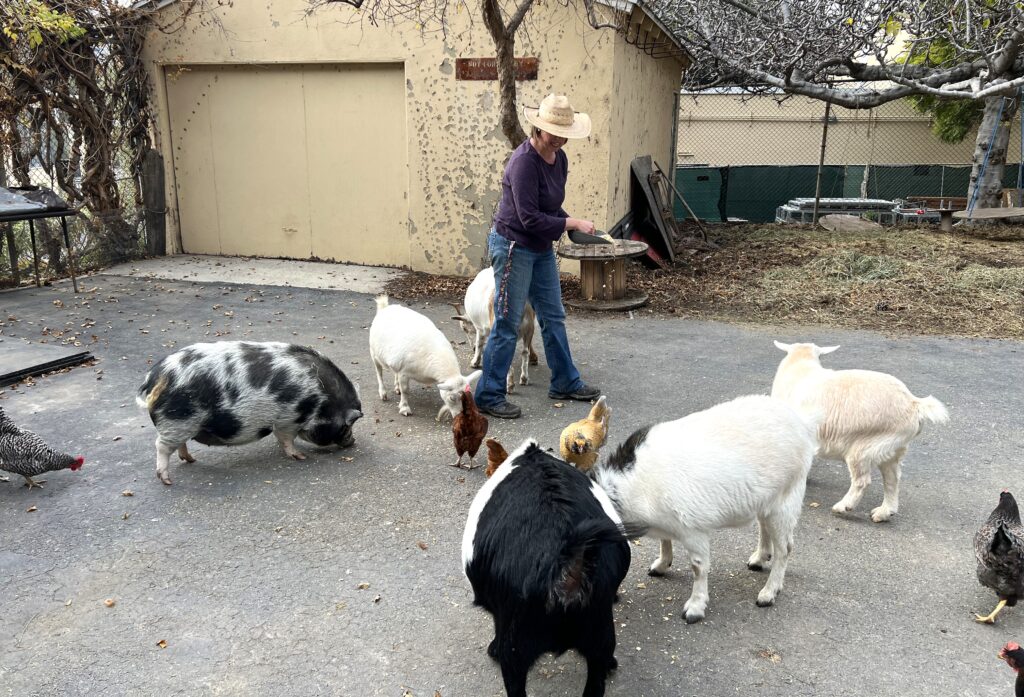
Paul Revere teacher Carrie Robertson feeds the animals.

Carrie Robertson, who has worked at Paul Revere Charter Middle School since 2011, was named the “Outstanding Educator of the Year” by the California Foundation for Agriculture in the Classroom in December.

Robertson received a Literacy for Life grant, and $500 to fund a worm bin project, “Urban Worms: Food Waste Warriors” plus an additional $1,000 for other projects.

During the winter break, Circling the News stopped by to visit the Farm, a two-acre parcel on campus, that is surrounded by multi-million-dollar homes. Planning on a short trip to learn more about worm bins, this editor came away in wonderment after several hours at the farm. This is the only middle or high school campus on the westside that teaches horticulture or animal husbandry.

The animals, 11 chickens, five goats, a Flemish giant rabbit, two chinchillas, a pot-bellied pig and three guinea pigs came running to see the editor. All were rescues except for the chickens.

“They miss the students,” Robertson said and added that during the lunch hour between 100 and 150 students come the northernmost area of the campus to help care for the animals and hold them. Students also come to the area, which provides a meditative area to be with nature.

“These animals matter to the kids and students, who are in charge of all aspects of animal care,” said Robertson, the school’s agriculture teacher. More than 500 students, annually rotate through her classes in farming, gardening and animal science.

Robertson works with place-based education, which means using the local community and environment as a starting point to teach concepts across the curriculum.

“I was just teaching about P22 two weeks ago,” she said. “The news about him is devastating.”

The animal area underwent remodeling in 2019 in order that the kids could learn best practices for animals which include the five freedoms: 1) freedom from hunger and thirst; 2) freedom from discomfort; 3) freedom from pain, injury and disease; 4) freedom to express normal behavior; and 5) freedom from fear and distress.

Animal behavior included the goat “Billy” letting this editor know with a little shove that her place was behind him following Robertson through the yard and garden.

Students have built several enrichment “toys” for the animals, which are hung in cages. The focus on the enclosures is to keep the stress levels low.

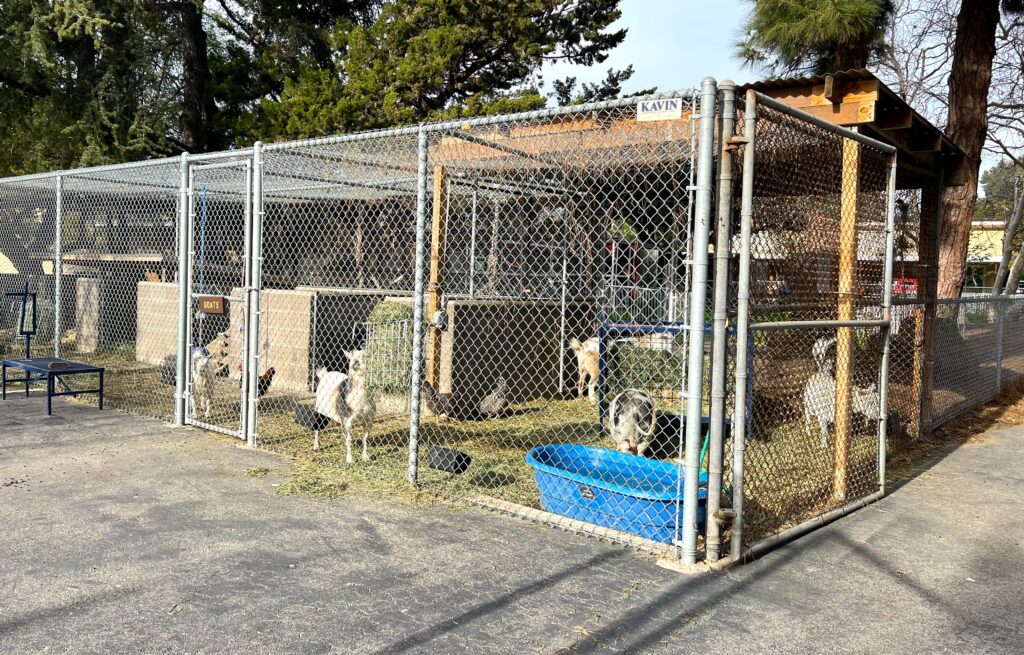
The animals are shut up at night to protect them from predators, such as coyotes, bobcats and owls.

Pest-proof track cans were installed and “That was a huge change that had to happen,” Robertson said.

A pest-free trash bin was installed on the farm. In the background you can see the “pasture” and chicken coop.

Robertson also receives help during school breaks from Alejandro Juanillo, a local horse expert, who works at the stables across Sunset.

Parents help with financial support for the farm, and “This school community and administration is so supportive,” she said. Parents donations help pay for the animal feed.

One goal is to create and teach regenerative farming to students, who planted Bermuda grass by the cages and this semester planted rye grass and buckwheat and clover.

“The pasture is cooling and retains water. Once it was established, we haven’t had to water,” Robertson said, and noted that initially it was student leaders in the animal science lunch program, who monitored its growth. “The kids were protective of the grass and took ownership.

“I’m proud of my students, they do the right thing,” said Robertson, who lives in the San Fernando Valley. She grew up on her father’s cattle ranch in Agoura Hills and raised pigs and cattle while at Canoga Park High School, later graduating from Cal Poly San Luis Obispo with a degree in animal science.

At night animals are locked in cages to protect them from predators.

Posted in Schools | 2 Comments

Electrical Outages in the Highlands, Huntington Palisades

The Pacific Palisades DWP building was built in 1935. It is still the only building responsible for supplying power to the town
Photo: Palisades Historical Society

A resident wrote on January 3, “I returned December 17th to the Highlands and since my return we have lost power multiple times for several hours at a time…no warning, no explanation.  Yesterday [January 2] it was out for over 5 hours.”

CTN sent an inquiry to L.A. Department of Power and Water, “Why is the Palisades Highlands experiencing power outages?”

DWP Spokesperson Carol Tucker replied on January 6, “We did look into it and here is what we found. There were several calls on December 16 from the same customer in the Palisades area that were determined to be caused by customer equipment. That was resolved quickly.

“We did some research and did identify outages on 12/21/22, 1/1/23 and 1/2/23 that affected some customers in the Palisades area. The equipment was underground, which is more complex to locate the problem and also to repair once identified.

“Various short outages can occur as part of the troubleshooting process to locate the source of the problem, as was the case with the outage on 1/2/23 which did result in a 12 hour outage,” Tucker said.

On January 5, CTN had received another resident’s email “Surprised you haven’t covered all the recent power outages in the Palisades:  the Huntington all day yesterday for sure, plus traffic lights out, including at the very dangerous PCH/Chautauqua intersection.

“My husband grew up in NYC and I grew up in Wisconsin and neither of us recall any power outages in our youth.  What’s going on with LA infrastructure?”

That inquiry was also sent to Tucker, when she responds, CTN will update readers.

Posted in Alerts | 1 Comment

“Dry January” a Time to Ponder and Reset

Over the holidays, alcohol consumption tends to go up, so many people use this month, dubbed “Dry January,” to not drink or as a starting point for more long-term sobriety.

Here’s a challenge to friends, relatives and residents, can you go the rest of the month without beer, wine or an alcoholic drink?

The less alcohol people consume, means sleep improves, energy improves, and overall well-being can improve.

Various types of cancers, such as oral, pharynx and larynx, colorectal and esophageal, and liver and breast cancers are linked to alcohol consumption.

This occurs because the ethanol in alcohol breaks down to acetaldehyde, a known carcinogen. Alcohol can affect levels of hormones like estrogen and alcohol makes the body less able to break down and absorb vitamins A, C, D, E and folate, which help protect the body against cancer.

Before pointing fingers at youth as a abusers, seniors need to examine their own lives. The National Institute on Drug Abuse wrote that alcohol consumption was greater for those 50 and older than younger age groups.

According to a 2020 Department of Health and Human Services statistic, more than 800,000 seniors suffered from drug addiction and 2.7 million suffered from alcohol addiction.

According to the National Center for Health in 2019-2020 more than 5,000 older adults died of drug overdoses, but more than 11,600 succumbed to alcohol.

Additionally, with age, the body develops a lower tolerance for alcohol. That increases the effects of alcohol more rapidly, which puts seniors more at risk for falling, car crashes and other accidents.

Addressing alcohol abuse in millennials is a new memoir, “Drinking Games,” by Sarah Levy, 33. A Brown graduate, she appeared confident and happy and drank to get drunk to dull social anxiety.

She frequently blacked out but continued to function the next day . . .until she woke up next to her boss’s best friend and no memory of how she got there. Then “the voice in my head told me I was out of excuses. The desperation not to feel that way again, prompted me to seek help,” she said. She will speak on January 18 at Skylight Books in Los Feliz.


NEW HORROR WITH DRUG USE:

An animal sedative, xylazine, is being mixed with fentanyl and causing disastrous results. Xylazine causes wounds to erupt with a scaly dead tissue, which left untreated can result in amputation. The animal tranquilizer causes a blackout stupor that allows victims to be robbed or raped. The drug is not listed as an illegal substance and is not subject to strict monitoring.

Posted in Health | Leave a comment

CRIME – Senior Lead Officer Espin Release Crime Report

LAPD Officer Brian Espin

Pacific Palisades Senior Lead Officer Brian Espin released the following report:

BURGLARY

December 25, 11:21 p.m. in the 17000 Block of Castellammare Drive (Hot Prowl). Suspect entered through read door, ransacked home and took miscellaneous items. Victim returned to home and told suspect to leave. Suspect took a phone case, toiletries and fled.

December 29 to 30, 1 to 7:15 p.m., in the 1400 block of Monte Grande Place. Unknown suspects broke rear door, entered residence, removed victim’s property that included laptop and jewelry valued at $16,000 and fled. DNA swab taken and prints taken.

December 29 2:29 to 3:110, in the 600 block of Ocampo Drive. Suspect entered residence and took property, jewelry and handbags, valued at $75,000. Suspects fled in a red sedan. Ring video was available.

December 30, 6 to 10 p.m., in the 13700 block of Sunset Boulevard. Suspect smashed rear window, entered residence, took items, including jewelry and handgun, valued at $100,000 and fled. DNA recovered.

December 31, 8:16 p.m., in the 400 block of Alma Real. Suspects smashed rear door window and entered residence. Unknown if any property was taken.

BURGLARY THEFT FROM VEHICLE

December 26, 10:45 a.m., at Channel Road and Pacific Coast Highway. Suspect entered secured vehicle, removed property and fled.

December 26, 3 to 5:45 p.m., Temescal Canyon Road and Pacific Coast Highway. Suspect smashed vehicle window, took victim’s credit cards and used those cards in Santa Monica.

December 27 to 28, 8 a.m., in the 500 block of Erskine Drive. Suspect used took to gain entry and removed property from vehicle.

December 27, 11:30 a.m. to 1:30 p.m. Sunset Boulevard and Temescal Canyon Road. Suspect removed victim property from vehicle and fled location.

THEFT

December 27, 7:16 p.m., in the 1300 block of Goucher Street. Suspect took victim’s delivered package and fled.

December 30, 10:07 a.m.  to noon, in the 500 block of Los Liones Drive. Suspect took victim’s package and fled.


Contact: Brian Espin

Los Angeles Police Department

West Los Angeles Area

(310) 444-0737

[email protected]

Emergency : 911

Non-Emergency : 877-275-5273 (877-ask-lapd)

Posted in General | Leave a comment

Sleep’s Important: But Experts Don’t Know Its Purpose

“No one knows what sleep is for,” said Dr. George Labrot, a board-certified sleep specialist. “But we do know there are severe consequences if you don’t get it.”

Research over the past decade has shown the health consequences of poor or interrupted sleep can include obesity, diabetes, cardiovascular disease, psychiatric illness and injuries due to accidents. Labrot, a board-certified specialist with the UCLA Sleep Lab, spoke to Pacific Palisades Optimists in December.

Labrot said that experiments showed that people who had adequate sleep, showed a better response with vaccinations and immune response.

“We know sleep must be important,” he said, “because all animals with brains, sleep.”

He explained that some mammals have four brain states. Wakefulness, hibernation and two states of sleep.

During hibernation, the brain is more at rest than during REM (rapid eye movement) sleep, but animals come out of hibernation to get REM.

Humans have three brain states: awake, non-REM sleep and REM.

Humans cycle through non-REM – Stage 1, Stage 2 and Stage 3 (deep sleep). During deep sleep, the body repairs and regrows tissues and builds bone and muscle. “During non-REM brain waves become quiet and synchronized,” Labrot said.

After cycling through non-Rem, people go into REM.

“No one knows what REM sleep is for,” Labrot said. “Fetuses have REM sleep and even newborns have 10 hours of REM.”

Many feel that REM sleep is connected with dreaming, but Labrot said, “We don’t believe dreaming starts until someone is about five years old, so REM isn’t for dreaming.”

REM generally occurs in the second half of the night. “We do know if one is deprived of REM sleep, the next time you sleep you get more REM,” Labrot said and explained during REM, “we are paralyzed except for our eyeballs and diaphragms.”

During REM, people also become “cold-blooded” body temperature drops and is not controlled. “That’s why we have to bundle babies.”

The doctor said there is a condition called REM sleep behavior disorder in which people fail to become paralyzed during REM sleep.

“It is dangerous in itself, because people act out their dreams–behaving with their eyes closed in a dream environment–and can suffer self-injury or cause injury to a bed partner,” said Labrot, noting that a person knows if they have been in REM sleep if they wake up with a clitoral or penile erection.

“Within 15 years of people diagnosed with REM Sleep Behavior Disorder will have one of three degenerative brain conditions: Parkinson’s Disease, Lewy Body Dementia or multiple system atrophy,” he said.

Doctors have discovered there are people without REM and have been unable to determine that there is any unknown consequence.

“Surprisingly, if we refuse to allow a depressed person to have REM, the depression will disappear after the first night of REM deprivation,” Labrot said, “and will re-appear following the first night in which they are again allowed to have REM.”

The doctor was asked about sleep walking and said, “Sleep walking is not dangerous, because the visual cortex wakes up.”

Labrot also addressed insomnia. “Regardless of the cause of acute insomnia, if it lasts long enough sleep will become the issue.

“Sleep aids such as Ambien might work for acute insomnia, but they are not good for chronic insomnia,” Labrot said.

Once people start worrying about not being able to fall asleep, “the sleep centers deep in the brain cannot put us to sleep if the cerebral cortex remains active, as it will if we are facing our greatest challenge of the day–falling asleep,” Labrot said, and noted that for chronic insomnia, cognitive behavioral therapy for insomnia works better than drugs.

The commonest cause of excessive daytime sleepiness in the U.S. is behaviorally induced insufficient sleep.

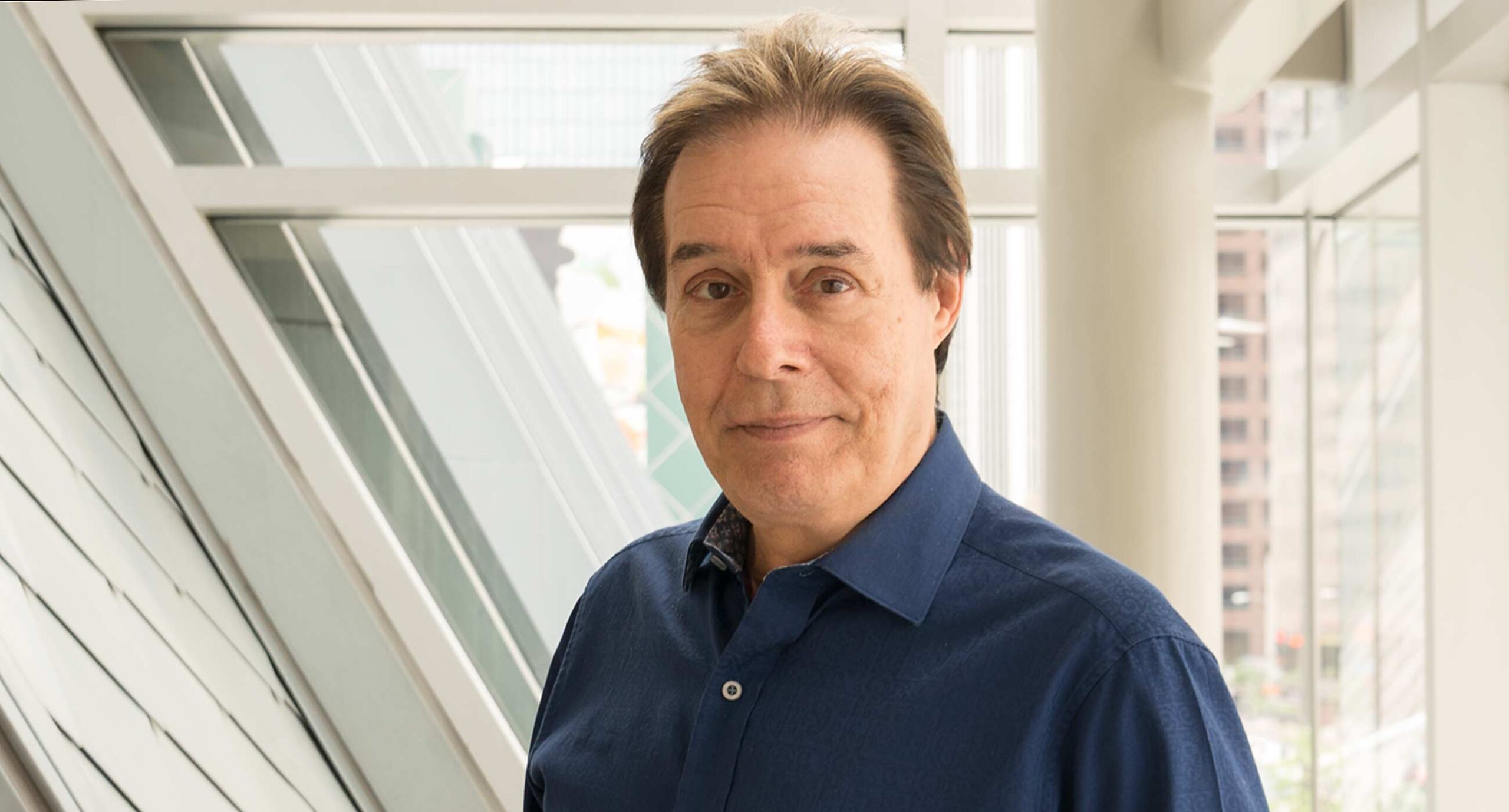
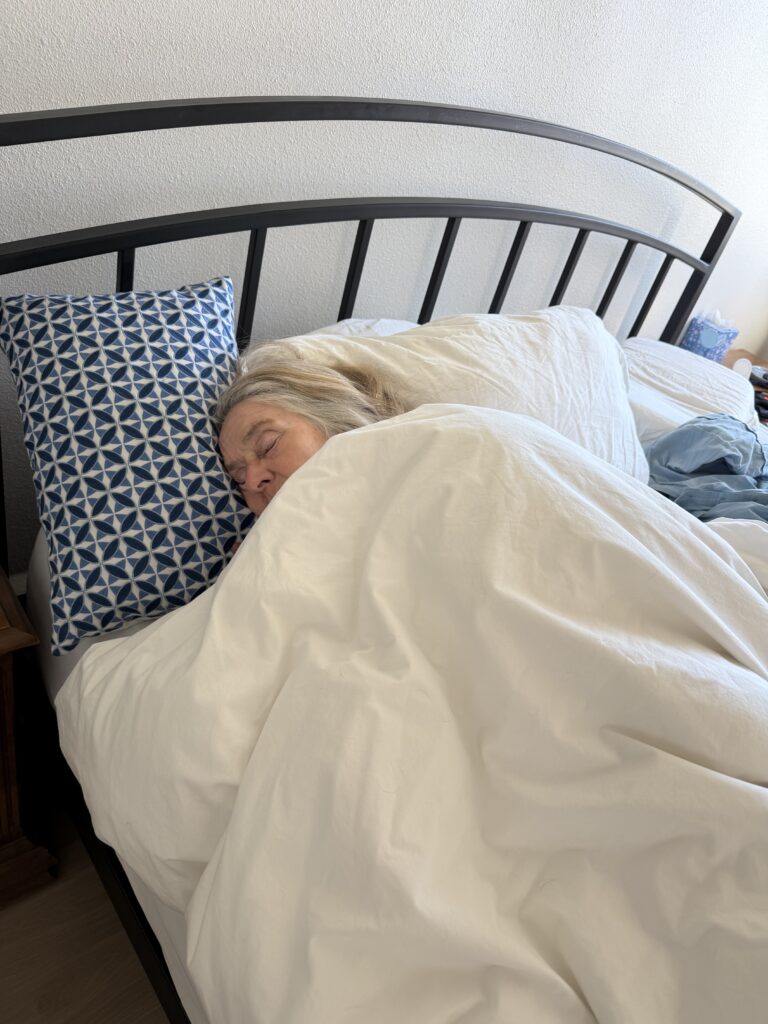
Dr. George Labrot is a sleep specialist .

He explained that at the beginning of the 1900s, people averaged about 9 hours of sleep per night and that adults in pre-agricultural societies average about 7 ½ hours a night.

“Now, the average worker sleeps less than six hours a night,” he said. “Most adults average seven and half hours a night, but most require more than that.”

He said a study showed that adults whose sleep was restricted to less than 6-1/2 hours/night for three nights measured a deterioration in short term memory, timed-complex decision making and fine motor control.

“I tell people a bed should be for sleep or sex,” Labrot said, noting that good sleep hygiene includes: a quiet room that is not too hot nor too cold, no blue light (from phones, iPads) and no caffeine.

“People forget that chocolate has caffeine,” Labrot said. “Caffeine has a six-hour half-life.”

(Editor’s note: in a 2018 CTN story “ADHD May Be Linked to Lack of Sleep,” Labrot examined how the lack of sleep-in children could result in an ADHD diagnosis.)

Posted in Health | 2 Comments

“Avatar 2: The Way of Water” Delivers

“Avatar 2: The Way of Water” is playing in theaters.
Photo: Walt Disney Studios

By CHAZ PLAGER

James Cameron’s Avatar, if nothing else, is famous for being the highest grossing film of all time, grossing over $2.922 billion when it was released in 2009.

Outside of those facts, people really don’t seem to remember the film. I, who watched the first movie about seven years ago, had to explain to my parents during the opening monologue of Avatar 2 what the planet was, who the protagonist was, why the two sides were fighting, and who Quaritch was.

If your movie came out 14 years ago, I feel you owe it to the audience to quickly explain what happened in the last movie.

Avatar 2: The Way of Water is the second film of the Avatar quadrilogy. Director James Cameron has been hyping this movie and the two apparently supposed to come after it for over a decade now, so I came into the movie with mixed expectations. Would it really be that good?

Long story short– it’s not as good as the first. The overall story of Avatar is a conflict between humans, trying to colonize the alien planet Pandora after the Earth starts to die, and the native aliens of Pandora, the Na’vi, who just don’t want to get wiped out.

The protagonist, Jake Sully, is a human who undergoes an experimental procedure to be put into the mind of a Na’vi and take over its body. An Avatar. Get it? Jake realizes that the Na’vi probably don’t deserve to get colonized for resources and joins them in rebellion against humans. He manages to drive them back in the first movie, and they come back in the second seeking revenge.

The plot of the movie is where I have the most complaints. How much does Avatar 2 advance that overall story of rebellion…? It doesn’t. The difference between the start and the end of Avatar 2 consists of simply “an important character died and now Jake Sully lives somewhere else on Pandora.”

Is that oversimplifying it? Yes, but only slightly. There are only a few characters who I really found myself caring about through the movie, including the little brother Lo’ak and Spider.

However, you absolutely have to see this movie while it’s still in theaters. Why would I tell you that you absolutely have to see the film while it’s in theaters? Simple. This movie is absolutely perfect from a technical and performance standpoint. It is gorgeous.

It makes you feel like you are really there. The world is meticulously detailed and fight scenes are perfectly choreographed. With IMAX video and 3D, you feel so completely immersed in the world it’s almost scary. It is, without exaggeration, transcendent. Even my parents who didn’t understand what was going on were still moved by the insane underwater images.

The actors are also incredible. Not a single miss in the casting department– shoutouts to Zoe Saldana as Naytiri, who can scream so realistically I thought they might have killed her parents on set. That’s a joke, but this movie had a $500 million budget. Who knows what they did?

I spent a long time complaining about this movie, but I’m glad I spent those 3 hours and 12 minutes on it. It was a truly breathtaking experience.


Posted in Reviews | Leave a comment