Streetlights Parallel the History of L.A. in “Electric Moons”

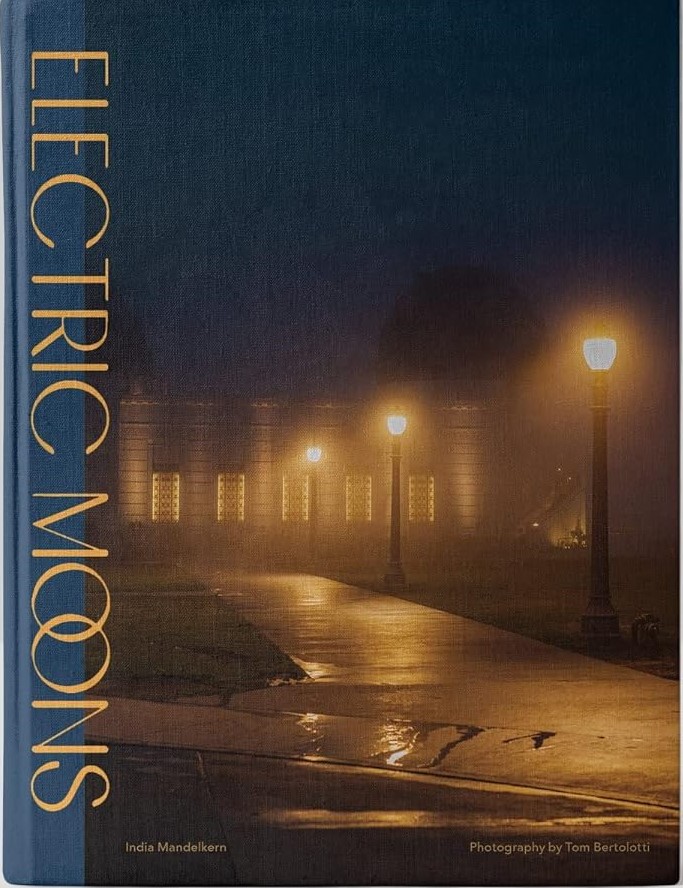
India Mandelkern, who grew up in the Palisades, has written a new book Electric Moons: A Social History of the Street Lighting in Los Angeles.

“Believe it or not there are or different street lights designs in Los Angeles than anywhere else,” she said. ”We have good weather, which has allowed many historic designs to live on. This is a flat, expansive city made up of hundreds of neighborhoods that have striven to differentiate themselves architecturally.”

Mandelkern added that “for streetlight experts, Los Angeles is the holy grail.”

She said there’s not just one light that dominates Los Angeles. “During the 1950s, Los Angeles started coming out with what they called ‘City Designs’ which were much plainer and more functional than the neoclassical inspired ones of the 1920s and 1930s. Unfortunately, we have lost of many historic lights due to road widenings, freeways being built, or ‘road safety’ upgrades.”

Mandelkern, who attended Village School and then Harvard Westlake, was asked if there were any historic or notable lights in the Palisades.

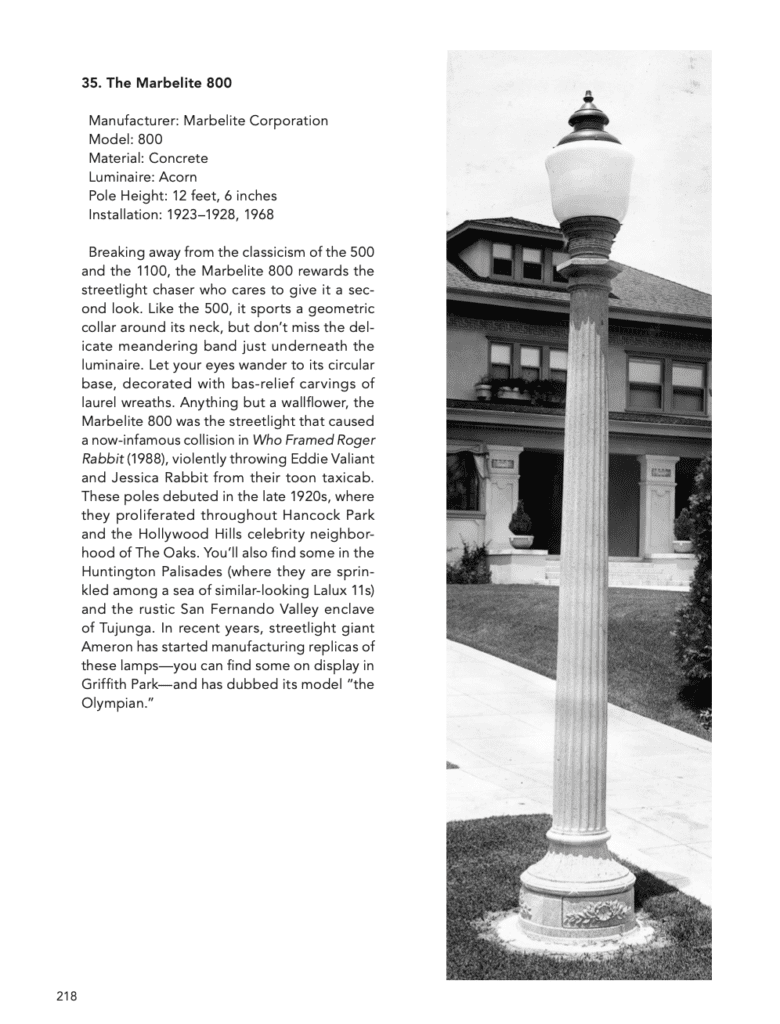
“In the neighborhood where I grew up, there were Lalux 11s and Marbelite 800s – in fact there was one right outside my parent’s house,” she said. “The Huntington is marked by Marbelites and the Riviera is graced by French Kings.”

Elsewhere in the city you’ll find the Broadway Rose, the Wilshire Lantern, the Olympic Special, the L.A. Crook, – all of them distinctive streetlights, designed to create a sense of place and pride within a rapidly expanding metropolis.

India Mandelkern’s new book is receiving rave reviews.

Mandelkern, who graduated from Middlebury College and earned a Ph.D. in history from UC Berkeley said she had never really noticed the lights growing up, but “discovered them” during a two-year postdoctoral fellowship at LACMA from 2016-2018.

During the tenth anniversary of Chris Burden’s outdoor temple “Urban Light,” which was a large-scale assemblage sculpture that consisted of restored streetlamps from the 1920s and 1930s, Mandelkern wrote a field guide of the history of each lamppost in the installation. Her zine was successful and quickly sold out.

“But by that time, I had done a lot of research, and had a lot more to say about the way that street lighting has been intertwined with the history of LA,” Mandelkern said. “Streetlights can tell us a lot about the way that the city developed, the way we move around it, as well as crime, policing, and how we define public space.”

Then Covid hit and “I spent a lot of the pandemic writing the manuscript,” Mandelkern said. “When you couldn’t really go anywhere (let alone visit any museums), streetlights to me were the closest things to sculptures.”

The first draft of the book was finished in 2021, but Mandelkern said, “I’m not a photographer and most of the images didn’t really capture Los Angeles as it is today.”
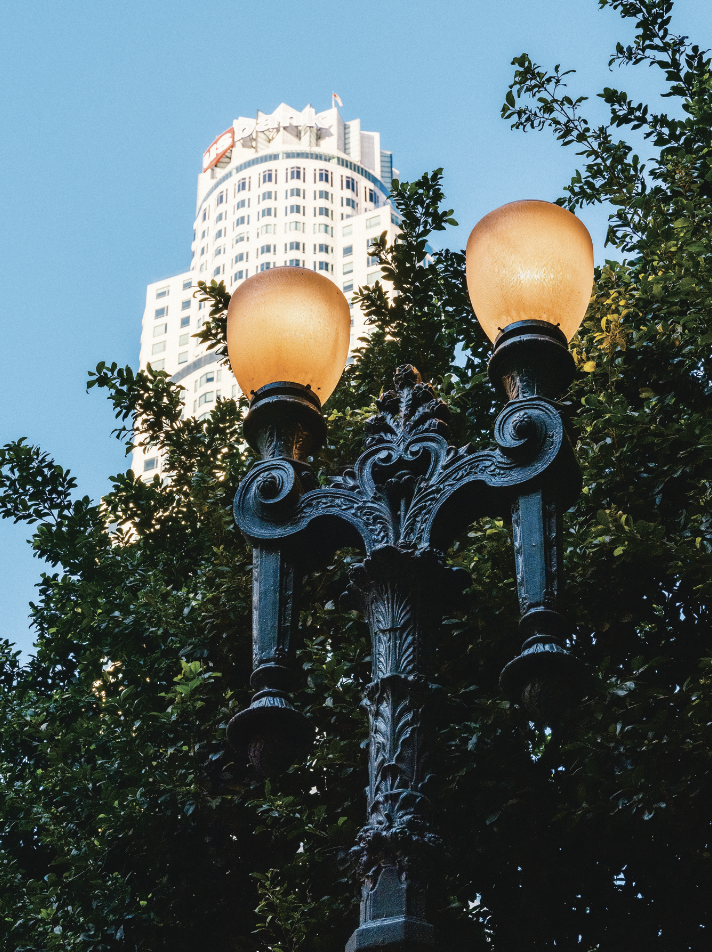
Broadway Rose
Photo: Tom Bertolotti

It was only when she met photographer Tom Bertolotti, in 2022, that she felt the book came alive. “He really changed the book from a history into a living, breathing portrait of Los Angeles, warts and all.”

The book, peppered with color photography, concludes with a “field guide” to forty iconic streetlight designs still extant in Los Angeles.

In his foreword to the book, Christopher Hawthorne, the former architecture critic for the Los Angeles Times and then the city’s first Chief Design Officer, writes: “This is a book about streetlights … that is also a compact and pointed history of modern Los Angeles…. [Mandelkern] picks up the streetlight and uses it as a kind of torch or flashlight, sweeping it across the broad terrain of Los Angeles to illuminate topics as diverse as policing, public art, race, technology, labor, and the structure of city government.”

India is the daughter of Mark Mandelkern and Margot Metzner. The book, published by Hat & Beard Press can be ordered directly from the publisher click here and will also be available at a number of independent bookstores.
Posted in Books, City, History | 1 Comment

Local Scouts Encounter Disasters and Accidents  

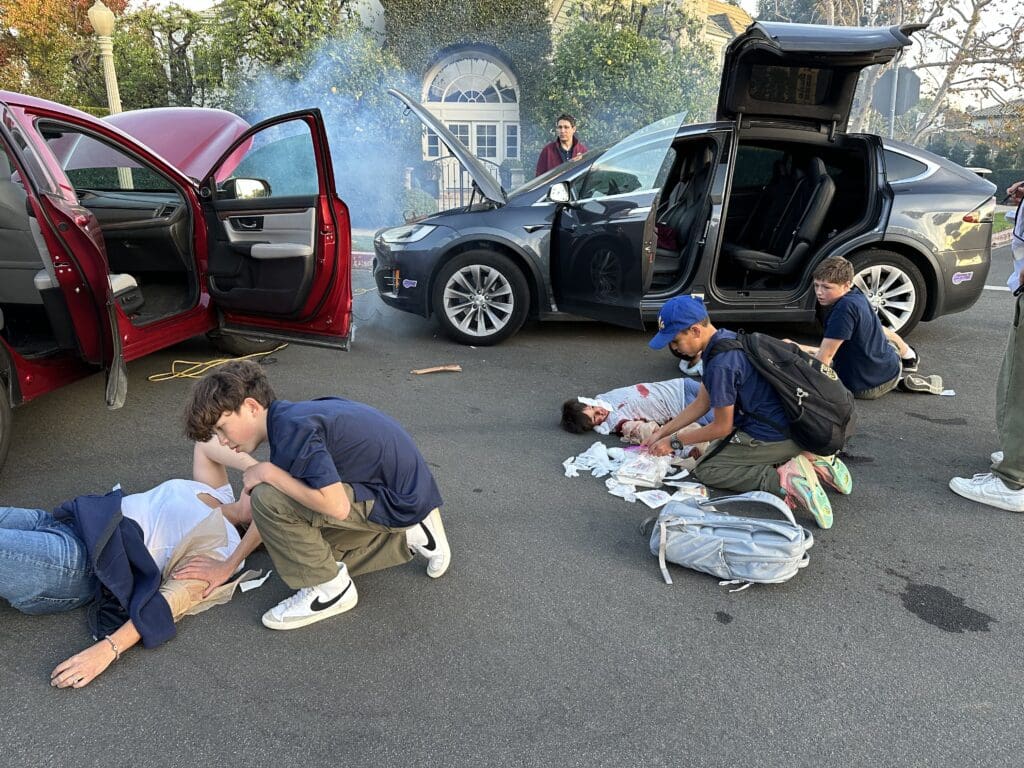
During the Disaster Preparedness Event, Scouts came upon an accident scene.
Photo: MOLLY MORGAN

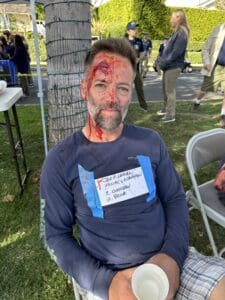
Electrocutions, car accidents, drownings, cardiac arrest and a chainsaw accident: the Huntington Palisades looked like a massive catastrophe site on December 10 – but that was by design.

Troop 223 held a disaster preparedness event. This long-held tradition involves realistic scenes that include crashed cars and volunteers undergoing makeup, so the injuries appear realistic.

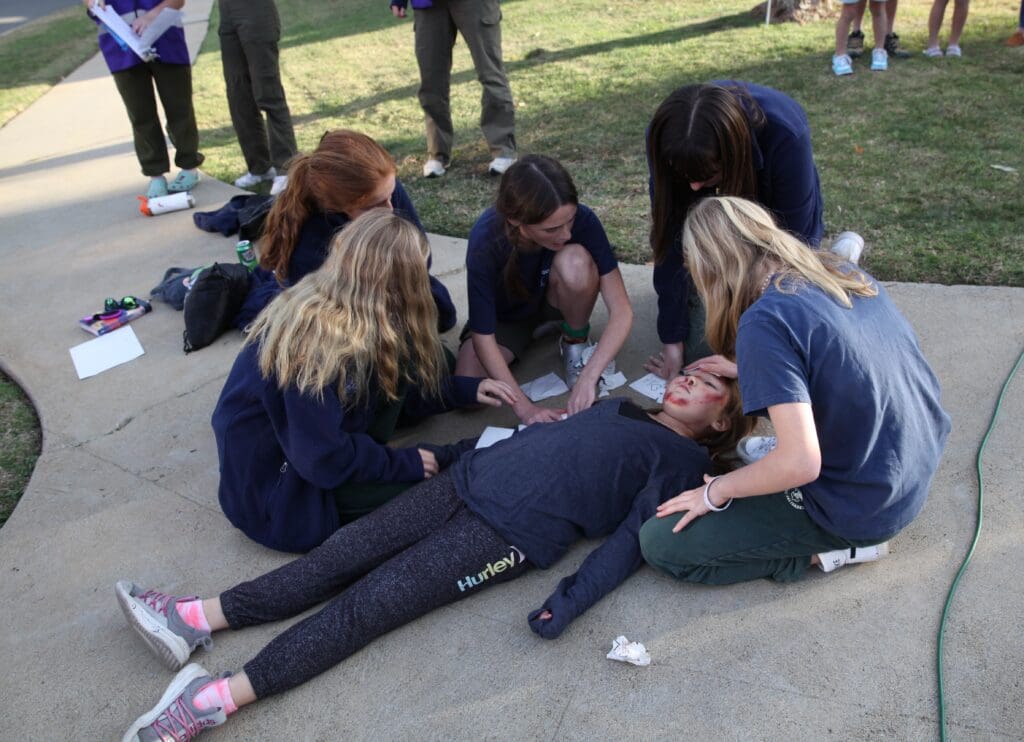
Then, it was up to the 80 boys and 45 girls to use First Aid and lifesaving training to help the “survivors.”  The Scout had been practicing for several months at regular Troop meetings in simulated events.

At 2 p.m. patrols walked to one of 12 locations. Each patrol went through the same four simulated accident scenes (although not in the same location).

Makeup on a resident was simulating a chainsaw accident. Photo: MOLLY MORGAN

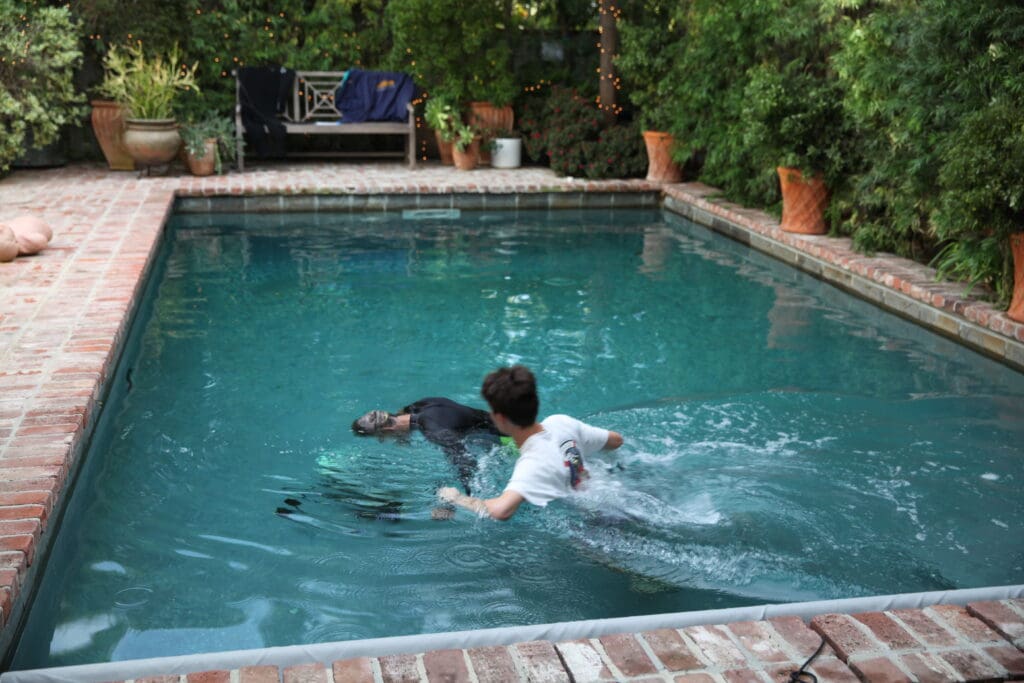
In addition to the simulated drowning and two-car crash, there was an overturned barbeque resulting in third-degree burns and a car hitting a bicyclist.

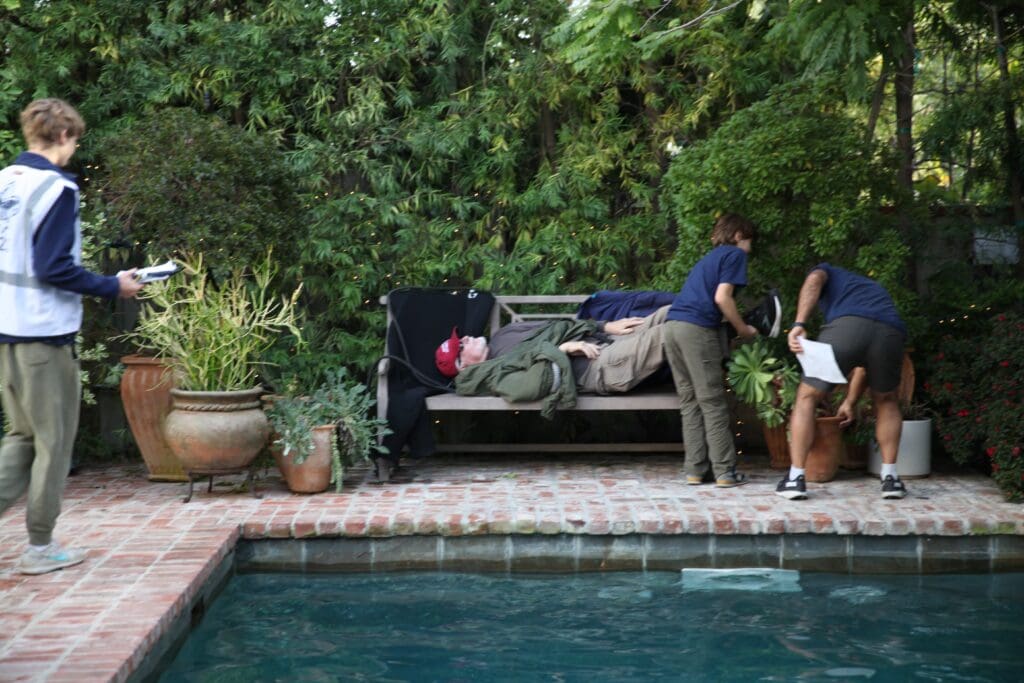
Local Rich Wilken initially was in “shock” but then went into “cardiac arrest” and Scouts worked to “revive” him.

The patrols spent about 20 minutes at each scene. “They did not know the accidents or injuries in advance,” said Andy Hubsch, who is Senior Leadership for Assistant Scoutmasters. “They needed to be prepared to deal with whatever they encountered.”

Hubsch said Scouts use a “Check, Call, Care,” protocol: check for hazards – to prevent additional victims, call 911 and then administer care.

After performing First Aid, the young Scouts spent about five minutes afterwards for a brief reflection, about how they did and how they might have done better. Then, they walked to the next accident site.

Senior Scouts, who had led the Troop meeting instruction and practice, were at the event leading the reflections and scoring. The Seniors used walkie-talkies to report the scores to the Command Post, located at the intersection of Pampas Ricas and Chapala, which was then recorded on a Big Board.

The boys’ event was a close contest, but ultimately, it was won by the Seminoles Patrol led by Ryan Ruud. The girls’ event was won by the Phoenix Patrol, led by Liza Lowe.

A Girls’ Patrol worked on a victim.
Photo: MOLLY MORGAN

“We were grateful to Palisades Senior Lead Office Brian Espin and LAFD Station 69, who helped us by ‘responding to 911 calls’ and sharing their knowledge and experience with our Scouts,” Hubsch said. “Their presence, along with the professional entertainment industry make-up artists, helped tremendously to add realism to our event, which greatly contributed to its success.”

This event was done in 2019 – pre-pandemic but is generally held every two to three years.

If there are any fifth or sixth graders, boys or girls, who are interested in participating in Scouts, contact Greg Frost (boys) [email protected] and Larry Kirven (girls) [email protected].

Scouts had to save a drowning victim.
Photo: MOLLY MORGAN


Rich Wilken, who was initially in shock and then went into cardiac arrest was saved by Scouts.
Photo: MOLLY MORGAN

Posted in Kids/Parenting | Leave a comment

Pacific Palisades Baseball Association Registration Underway


MLB player Augie Sylk with Bob Benton (right) at the annual Palisades Baseball pancake breakfast.

Registration for the Pacific Palisades Baseball Association spring season is underway. Boys and girls aged 6 to 14 as of April 30, 2024, are welcome to participate.

Tryouts will be held for six-year-olds on Friday, January 19. On Saturday and Sunday, January 20 and 21, tryouts will be held for the other ages.

The registration fee will increase after December 31, 2023.

PPBA is a long-time tradition in the Palisades and kids of all ages weekly play one or two games. Team sizes are kept small to maximize playing time.

“After Covid, we had numbers that we have never had before,” said Bob Benton, the PPBA Commissioner, who has led that association for 33 years. Last year there were eight Shetland teams (6–7 year olds), 10 Pinto (7, 8, 9 year olds), 10 Mustang (9-10 year olds) eight Bronco (11-12 year olds) and four Pony teams (13-14 year olds).

PPBA has also taken over the 5-pitch program at the Palisades Recreation Center.

The association works hard to balance the teams, so that everyone has a chance to make a run at the end of the season World Series.

At a recent Optimist meeting, Benton told members he had gotten involved with the Board in the mid-80s, because had just had his third son and they figured he’d be around for several years.

He’s stayed and said, “My success is based on how good my board is.” Local dads also provide guidance and stability to the program by serving on the board.

This year’s opening day, which includes the Pancake Breakfast, is scheduled for March 9. Many consider the pancake breakfast the second-best day in the Palisades (4th of July, with the parade, run and fireworks is first).

To register: click here.

Call (310) 625-7220 or email [email protected]

Safe!
Photo RICH SCHMITT

Posted in Kids/Parenting, Sports | Leave a comment

Packs of Male Youths Running Unchecked

If you know these teens, they could use a strong male to help them realize their night activities are not beneficial to themselves or the community.

The onslaught has been nonstop at the Palisades Recreation Center and other local parks, even Temescal Gateway Park has suffered. Male youths, teens, have been setting off fireworks, vandalizing signs and bathrooms. Packs of youth have been running into CVS and trying to steal items.

A Huntington Palisades resident tried to stop teens from vandalizing the bathrooms by the tennis courts on Friday night around 8:30 p.m., and they shouted out “F U*igger” when he told them to stop.

“Coincidentally at that very moment a police car siren sounded nearby from about 300 feet away and they quickly ran away,” the resident reported on social media and added that “Since the canyon’s opening, there have been explosions almost every night and fireworks thrown at my 12-year-old son while he was in our backyard.”

CTN received this report from another Rec Center neighbor on December 16. “There have been explosions for four hours from 8 p.m. to midnight. This is the fourth night in seven days.

“Last night there were 10 kids on electric bikes. They enter on Alma Real and ride all over the Rec Center, around the lighted paths around the baseball diamonds. They throw explosives by Veteran’s Gardens and on the playground.”

On that Saturday, after the kids on the e-bikes left left the park, a teen in a Mercedes AMG with twin turbos drag raced around until midnight.

The resident told CTN and Palisades Senior Lead Office Brian Espin that Gates Patrol knows the kids, has told the parents and also turned the information over to the Los Angeles Police Department.

A security company is not allowed to make arrests but had told the resident that the kids have boasted about their expensive bikes ($5,000) and the explosions.

Espin said, “I will reach out to Gates Security to find out who the kids are and will definitely go and make a house call and speak with their parents.

“Our Patrol Officers are going into the park nightly, but when the Officers leave that is when the kids come out and start their nuisance activities,” Espin said. “It comes down to parents not allowing their kids to take out those bikes and check their backpacks before allowing them out at night. I still encourage conversations with neighbors who also might know the kids to educate the parents of what their kids might be involved in.”

Fireworks explosions are a frequent occurrence at the Palisades Rec Center.

Maybe the Palisades needs to take a lesson from Botswana. Over a period of three years, researchers examined 281 male elephants in an all-male area in Botswana’s Makgadikgadi Pans National Park. Researchers found that all of the adolescent elephants were more aggressive when fewer older males were present. They were more likely to be aggressive towards non-elephants such as vehicles, humans, livestock and other wildlife.

The adolescent elephants were considerably less aggressive towards non-elephants when in the presence of adult elephants. The research suggests that older adults are a social buffer against risk as they are more experienced and therefore have a more accurate understanding of threats. Even more so, this research teaches us that having older males present around younger adolescents can reduce the chances of extreme behavior and wildlife-elephant conflicts.

Parents need to ask their teens where they are going in the evening, and to check backpacks. The fireworks that are continually shot off are most likely being shipped to addresses in the Palisades – and unless kids have a job, parents are paying for them.

The parents of the identified kids should be required to volunteer to patrol the park. Police and security guards are not going to be able to solve this, but rather it has to come from dads. Men are extremely important in raising children. The Fatherless Generation, has complied statistics (click here), which include:

  1. Children with involved, loving fathers are significantly more likely to do well in school, have healthy self-esteem, exhibit empathy and pro-social behavior, and avoid high-risk behaviors such as drug use, truancy, and criminal activity compared to children who have uninvolved fathers.
  2. Studies on parent-child relationships and child wellbeing show that father love is an important factor in predicting the social, emotional, and cognitive development and functioning of children and young adults.
  3. About 24 million children (34 percent) live absent their biological father.
  4. Nearly 20 million children (27 percent) live in single-parent homes.
  5. About 43 percent of first marriages dissolve within fifteen years; about 60 percent of divorcing couples have children; and approximately one million children each year experience the divorce of their parents.
  6. Fathers who live with their children are more likely to have a close, enduring relationship with their children than those who do not.
Posted in General | 4 Comments

Historical Society Hosts Salon at Mann House

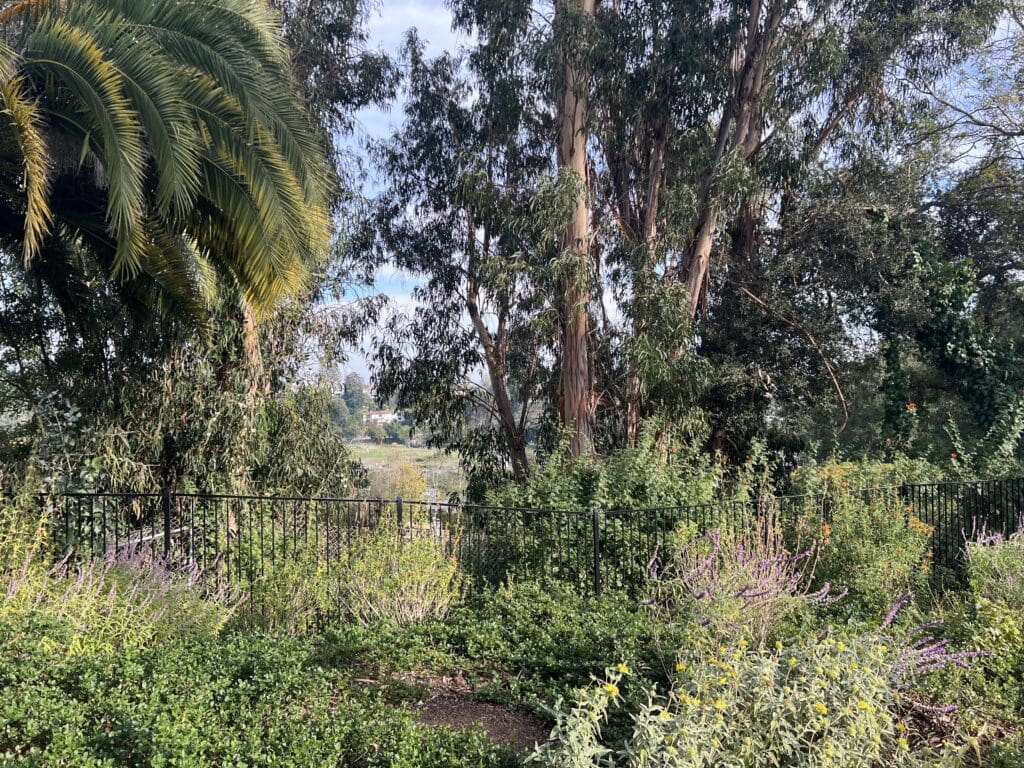
The Thomas Mann yard, on San Remo, is above Sunset Boulevard and the Paul Revere Middle School playing fields and campus.

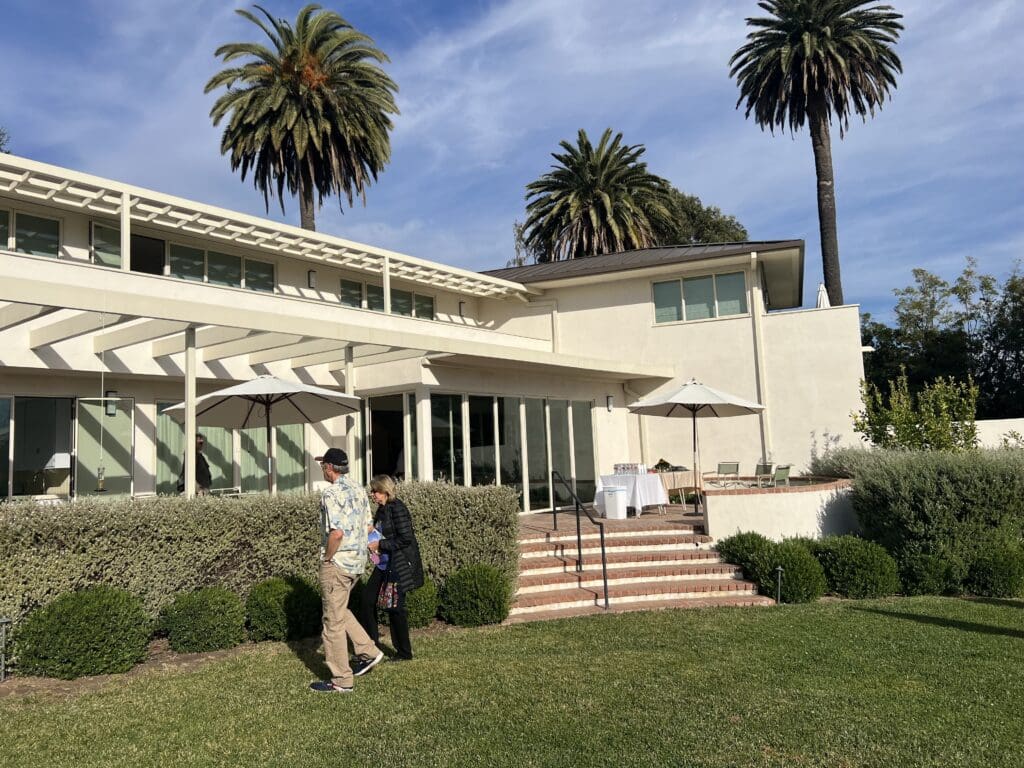
Those attending the event were allowed to stroll on grounds by the house.

Before World War II broke out, numerous prominent writers, artists and musical composers escaped from fascism and Nazi Germany. A number of them moved to Los Angeles and settled in Brentwood, Pacific Palisades and Santa Monica.

Keeping in the tradition of salons, the Palisades Historical Society held a Sunday afternoon program at the Thomas Mann House on San Remo Drive on December 3.

Benno Herz, the Mann House program director, welcomed 72 members of the Historical Society and guests to a gathering in the living room.

The German government purchased the house in 2016, and it is part of the Mann Houses Network, which includes residences in Lubeck, Munich, Nida and Zurich.

Annually, about 10 to 15 scholars live in the house for three-to-five-month sabbaticals.

German émigré Thomas Mann, who won the Nobel Prize for literature in 1929, built the house in 1941 and lived there with his family until 1952. His library is much as it was when he wrote “Joseph the Provider” and “Doctor Faustus,” as he wrestled with questions about democracy, freedom, migration and exile.

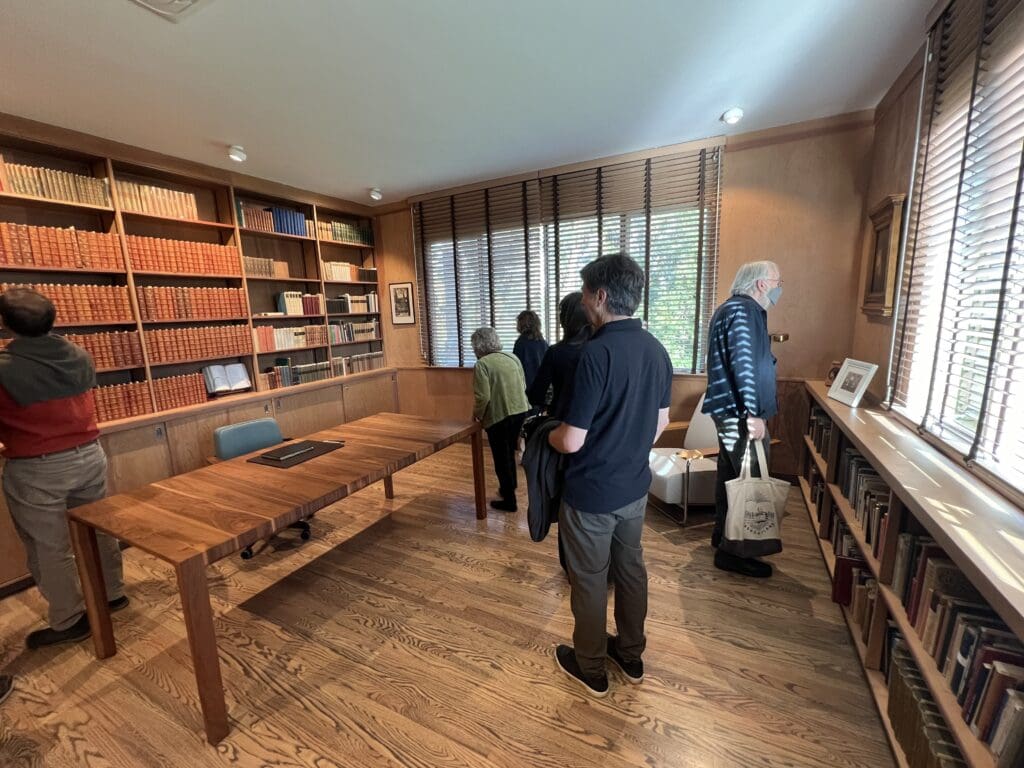
Those attending the Mann event were allowed inside the library, where the light streamed in through the windows of a room that is lined with books.

A piano sits in the corner of the living room and Herz explained that Mann’s grandson had just donated the piano (which had traveled to Switzerland with the family in 1952) back to its original home in the Riviera neighborhood.

Thomas Mann’s library remains unchanged from when he wrote at that location.

After Herz welcomed everybody, guests listened to Palisades historian Randy Young, who provided interesting tidbits about the famous exiles who settled in this sleepy community in the 1930s and ‘40s. He also showed photographs from that era.

Randy Young

“This is not a history but a search,” Young said of his remarks, explaining that when he and his mother, Betty Lou, began to write a book about Rustic Canyon in 1973-74, “it started us on an historical Easter Egg hunt.”

He spoke about the notable people who lived in “Weimar By the Sea” before and after World War II, including Christopher Isherwood, Berthold Viertel and his wife Salka, Bertolt Brecht, composers Hanns Eisler and Ernst Toch, Charles Laughton, director Max Reinhardt and Aldous Huxley.

“Greta Garbo lived on Mabery (in Santa Monica Canyon) for a while,” Young said. “We had the fruit of Europe living here: the intellectual elite.”

He was asked why and answered, “It was Hollywood. Hollywood was known as a magical place.” The writers and actors were sought by Hollywood and “Marlene Dietrich got a lot of people hired here.”

Young had long conversations with Marta Feuchtwanger, who with her German-Jewish author husband Lion had purchased the Villa Aurora on Paseo Miramar, which today also serves as a scholar’s residence.

He touched briefly on the Josepho Ranch, which was supposedly going to be a Nazi outpost, once the Germans won WWII.

Paul Williams, a noted architect, planned a grand mansion in upper Rustic Canyon that would include a power station and other buildings. But when they started to bulldoze the property, Will Rogers, who lived adjacent, sued and possibly stopped the construction.

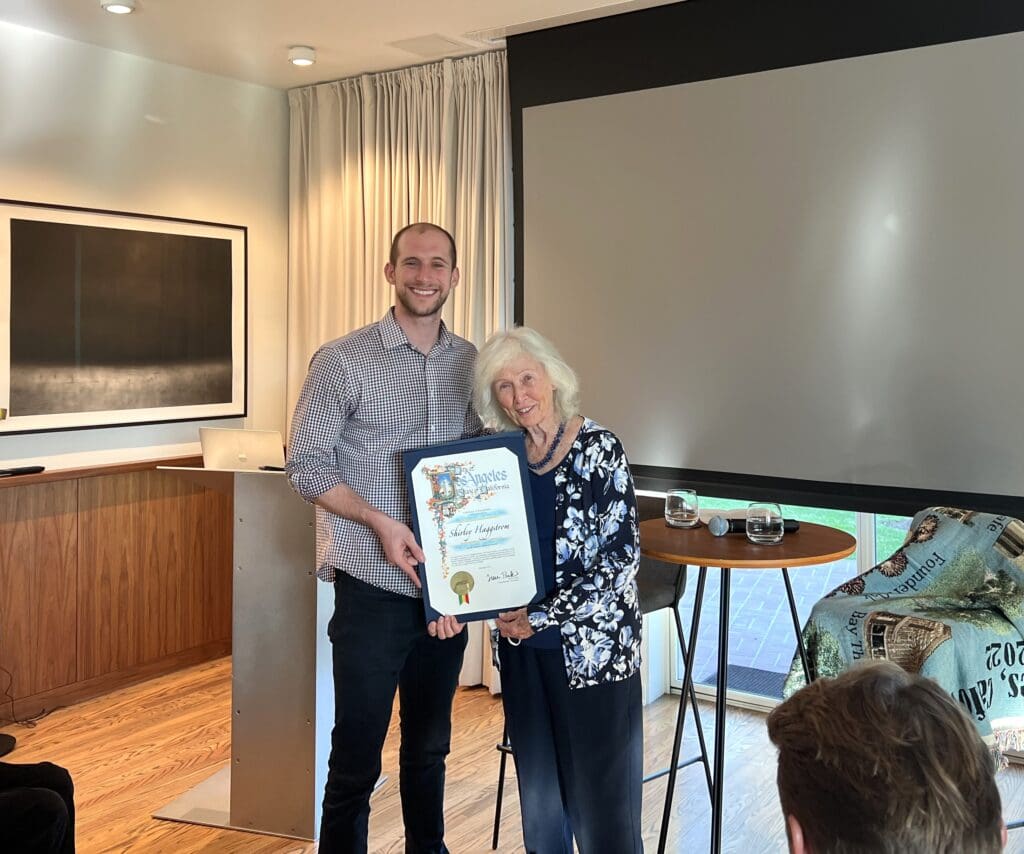
Councilmember Traci Park’s field deputy Michael Amster presented Shirley Hagstrom with a proclamation from the City of Los Angeles.

During the afternoon, City Councilwoman Traci Park’s field deputy, Michael Amster, presented a certificate of appreciation from the L.A. City Council to Palisades Historical Society board member Shirley Haggstrom, in honor of all she has done in her various volunteer roles, including with the Temescal Canyon Association and serving on the Pacific Palisades Community Council.

Shirley is one of the unsung heroes who gracefully and gladly work to keep Pacific Palisades alive and true to its traditions and beauty.


Posted in Community, History | Leave a comment

GUSTAF SODERBERG – Best of the Best


This editor can think of at least five individuals or groups that should have been honored by the town/community council but have not. Either they have been overlooked or people were unaware of the contributions made.

They still should be acknowledged because – they are the Best of the Best.

Lars Gustaf Soderberg

Lars Gustaf Soderbergh played a vital role in addressing California Coastal Commission concern about parking for Potrero. Thirty spaces would need to be constructed by the Palisades Rec Center or at the base of the canyon.

Soderberg was a talented member of the Park Advisory Committee. As early as January 2008, Los Angeles City was challenged with how to add those spaces.

Initially the City wanted to add parking and bathrooms at the base of Potrero Canyon across from the lifeguard station off Pacific Coast Highway. The Potrero committee nixed that idea.

Soderbergh, a LEED-certified architect and the founding principal of Van Tilburg, Banvard & Soderbergh, an architecture, planning and urban design company, redesigned the area in front of the Rec Center.

At a July 2014 Park Advisory Board adopted Soderbergh’s plan that would allow for the increased spaces to be constructed without sacrificing any trees or play areas.

That plan included 17 new spaces configured at the center island in front of the Rec Center building and the remaining spaces to be added by relocating the sidewalk from the library to the playground further west.

Norman Kulla, senior counsel to Councilman Mike Bonin, felt that the Soderbergh Plan satisfied those that requirement, which means construction money for the parking lot would come from Potrero Park funds.

Initially, some parking spaces were going to be cut into the round island in front of the gym, while allowing the five existing pine trees to stay in place.

Then the prolonged drought and lack of watering resulted in the stone pine trees dying in front of the Rec Center and the trees were cut down in 2016.

The island was replaced with a design that included more parking. 
Photo: Bernice Fox

This enabled Soderbergh to rethink the island, turning it from more of a circle into a triangle. His updated plan provided additional parking spaces, a sidewalk (with crosswalks), a place for two mature trees, and benches that will offer a safe place for kids to wait for rides, while maintaining a way to “circle” in front of the Rec Center to pick up kids.

The plan added 28 net spaces to the parking lot and Soderbergh worked with L.A. City’s Pedro Garcia, who was overseeing Potrero Canyon construction. Ultimately, it was Soderbergh’s plan that was adopted by the City.

It was Gustaf Soderbergh’s design that added the parking, required by the Coastal Commission at the Rec Center Parking lot.

Soderberg found out that Potrero Canyon Park funds would only pay for part of the resurfacing of the parking lot and the addition of the spaces (in his plan) and alerted the PAB Board.

Ultimately, it was Soderbergh’s clever use of space and his plan that allowed the needed parking for the George Wolfberg Park at Potrero Canyon. Without that additional parking, the Wolfberg would not have opened in December 2022.

Soderberg, who was a long-time resident of Pacific Palisades, passed away in November. He was 71 and never recognized for not only his vision, but also for working with the City all those years to see the plan implemented.

He is the Best of the Best.


Posted in Community | 2 Comments

Christmas Trees Shipped to the Y-Lot this Week

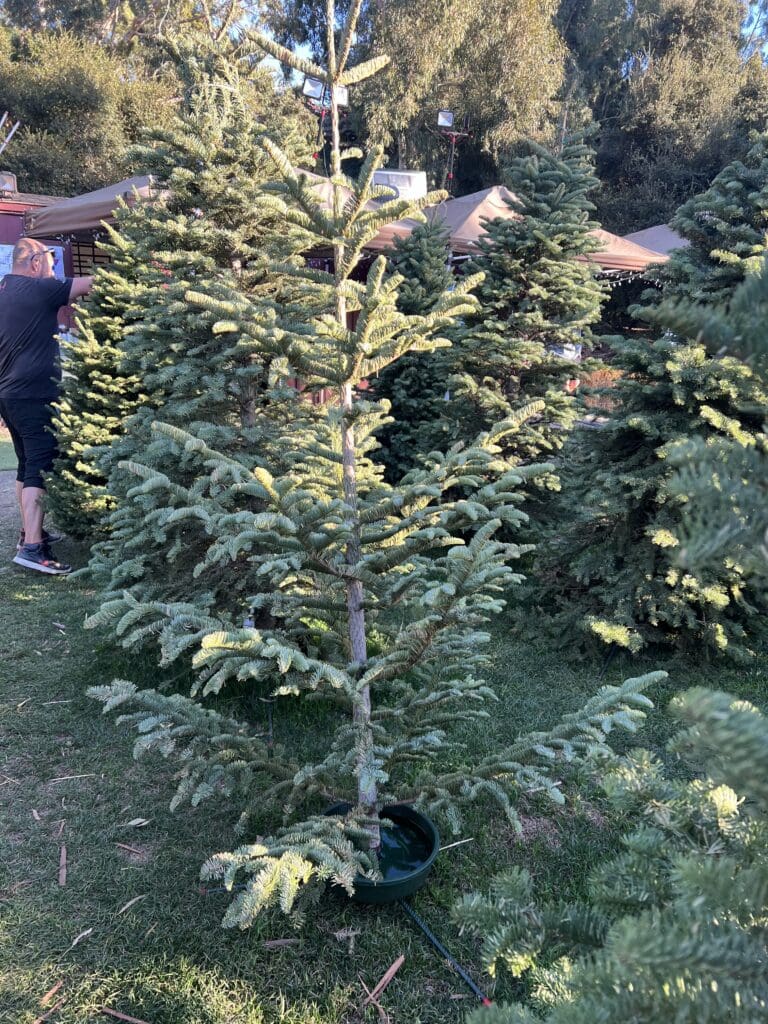
The underside of the branches of the Nordmann tree are silvery. The YMCA Tlot carries that tree.

Fresh Christmas trees were shipped to the Palisades-Malibu YMCA lot on Tuesday this week. There are sizes from desktop to 14-ft. tall that will fit any space. YMCA Executive Director Jim Kirtley wanted to ensure that Palisades residents had a wide selection from which to select.

Kirtley said there are three types of trees on the lot to choose from. There are the standard Noble trees, and then the “knobby” Vintage Noble or as some call them the “Charlie Brown” trees.

This is a vintage Nobel tree.

“Look at the underside on the branches of the Nordmann,” Kirtley said. The top of the branches is a deep green, but the underside is silvery. When lights are placed on the branches, the reflection makes the tree seem magical.

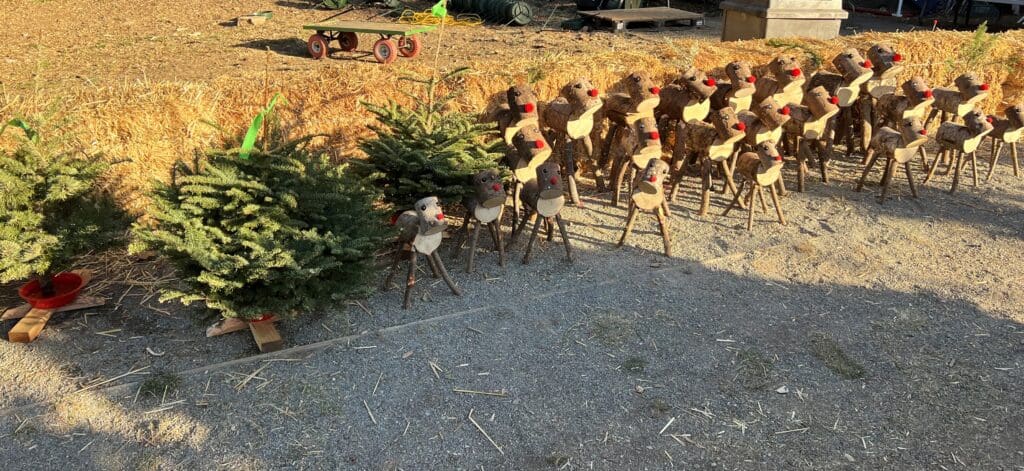
There are also reindeer crafted from tree trunks – with antlers made from tree branches. There are several sizes and could be a perfect decoration for doorsteps.

There are also wreaths and garlands for sale, and the Y will deliver.

The lot will be open Monday through Friday from 3 to 7 p.m. and on Saturday and Sunday from 11 a.m. to 7 p.m. The trees are located in Simon Meadow, at the corner of Temescal Canyon Road and Sunset Boulevard.

Sales from the trees support Y-programs including the community food program, scholarships and the valuable teen Youth & Government program. High school students travel to Sacramento and through hands-on experience enacting legislation, learn about the judicial and executive systems.

The herd of “reindeer” await being purchased.

Posted in Holidays | Leave a comment

Palisadian Morris Studying in Prague on Fulbright Research Award

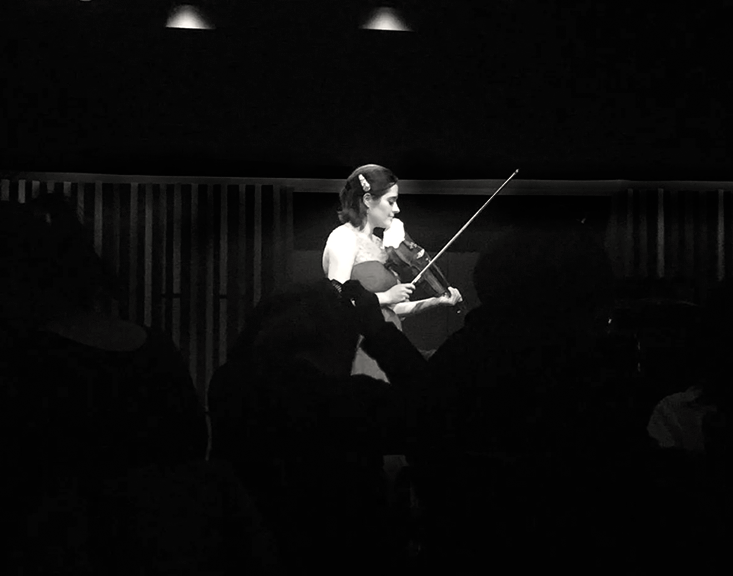
Avery Morris is in Prague doing research on a Fulbright Award.

During Covid, Avery Morris, with her twin sister Alexandra, performed outdoor concerts in the Marquez Knolls area to the joy of residents, who sat on lawn chairs in the street.

To prepare for the concerts Morris spent time on the internet searching for violin/viola duets to perform. It was then she learned of the work of Czech modernist composer and Holocaust victim, Gideon Klein.

One year later, her interest in Klein grew further, and Klein’s violin compositions became the subject of her doctoral lecture recital at Stony Brook University, where she is pursuing her doctorate in musical arts.

After uncovering Klein’s never-before-heard violin manuscripts, transcribing and performing them, she was awarded a Fulbright Study Research Award for the topic, “Gideon Klein’s Lost Works and the Legacy of Czech Musical Modernism.”

“I thought Klein was a well-known composer,” said Morris, who received a master’s degree in violin performance from the University of Ottawa. “But it turned out that many of my professors had never heard of him.

“Those that do know his work, know his string trio, which was the last piece he ever wrote, and possibly his piano sonata. Aside from those pieces, too few musicians are familiar with his rich experimental music written before his deportation to Terezin” she said.

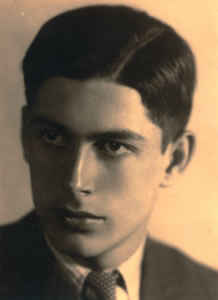
Gideon Klein

Avery learned that Klein (1919-1945) had been offered a scholarship at the Royal Academy of Music in London, but anti-Jewish legislation prevented his emigration. His final works were composed when he was a prisoner in the concentration camp Theresienstadt in Terezin.

He subsequently was sent to Auschwitz and was killed in January 1945, when he was only 26 years old.

In the 1990s, Klein’s pre-Terezin compositions were first discovered in a suitcase in the attic of a house in Prague.

Curious about these works, Avery contacted the Jewish Museum in Prague with hopes of getting access to the scans.

“I became obsessed with his life and his compositions,” Avery said. Many of the pieces discovered are sadly not complete, but mere fragments, something which Avery often finds more interesting.

At Stony Brook, “I ended up transcribing one solo violin piece” for part of her doctoral program. “The next semester I did another piece,” she said, and added her teachers Jennifer Frautschi, violinist and artist-in-residence, and Hagai Shaham at Stony Brook told her, “Violinists need to know and perform this piece. It needs to make its way into the standard violin repertoire.”

Frautschi also encouraged Avery to apply for the Fulbright Study Research Award.

Avery explained to CTN in an interview that one of Klein’s compositions uses quarter tones, which are the notes in between standard chromatic pitches. “This music purposely sounds out of tune, though gives rise to new colors and musical timbres,” she said. This was a common fad in the 1930s when many Czech composers were experimenting with microtonal music, specifically at the conservatory where Klein was studying.

“Prague Conservatory had a microtonal department, led by Klein’s professor and the dedicatee of his quarter tone composition, Alois Haba,” Avery said but, “the Nazis considered this music degenerate.”

The German government forbade it and shut the program down in 1941.There are still a few pianos in Prague that were designed with extra keys (between the regular keys) so that quarter tones could be played.

In Prague, Avery will have access to the quarter-tone piano Klein studied on.

Avery said of the pre-Terezin pieces she’s seen; it seems that Klein was in a period of exploration with his music. Fragments she’s explored include a jazz sketch for saxophone, violin, percussion and piano; a dodecaphonic violin solo piece; a blues sketch written in homage to American jazz pianist, Teddy Wilson and a piece for harpsichord and string instruments.

In months leading up to her move to Prague, copyright restrictions prevented the Jewish Museum from uploading the pieces online, only validating her need to continue her research abroad.

“I needed to see the archives in person,” Avery said. “In developing my research, I also need to work with local composers, musicologists and Czech translators who are familiar with Klein’s work – as well as experience the city in which Klein lived and these musical compositions were born.”

A biography of Klein “Don’t Forget About Me” was recently published by David Fligg. In a recent Zoom meeting with him, Avery asked him, “Would Klein even want his unfinished fragments these pieces performed?”

Fligg said, “That’s a fair question, but it’s scholarship. It’s up to people if they want to play it or not, and audiences if they want to hear it.”

Avery feels there should be a historical record and that Klein’s pieces deserve to be heard.

While in Prague, Avery hopes to explore other Czech composers from the same time period as Klein, to better understand his musical language.

She will take regular lessons from Josef špaček, former concertmaster of the Czech Philharmonic. Additionally, she will organize frequent performances at her Fulbright affiliate institution, the Academy for Performing Arts (HAMU) and meet regularly with her research advisor Dr. Iva Oplištilová.

Avery began playing violin at age seven, while at Marquez Elementary and then continued her studies at Paul Revere Middle School.

Sisters Avery and Alexandra Morris won first place in the annual Palisades Symphony youth competition in 2013 and performed Mozart’s Sinfonia Concertante (first movement) for violin, viola and orchestra with the Palisades Symphony in Mercer Hall.

They attended Crossroads High School before attending Bard College of Conservatory of Music. Her sister now works at UCLA in cancer research. They are the daughters of Patricia, a professor at Otis College of Art and Design, and Jeff, head of Facility Brand, a branding and design consultancy.

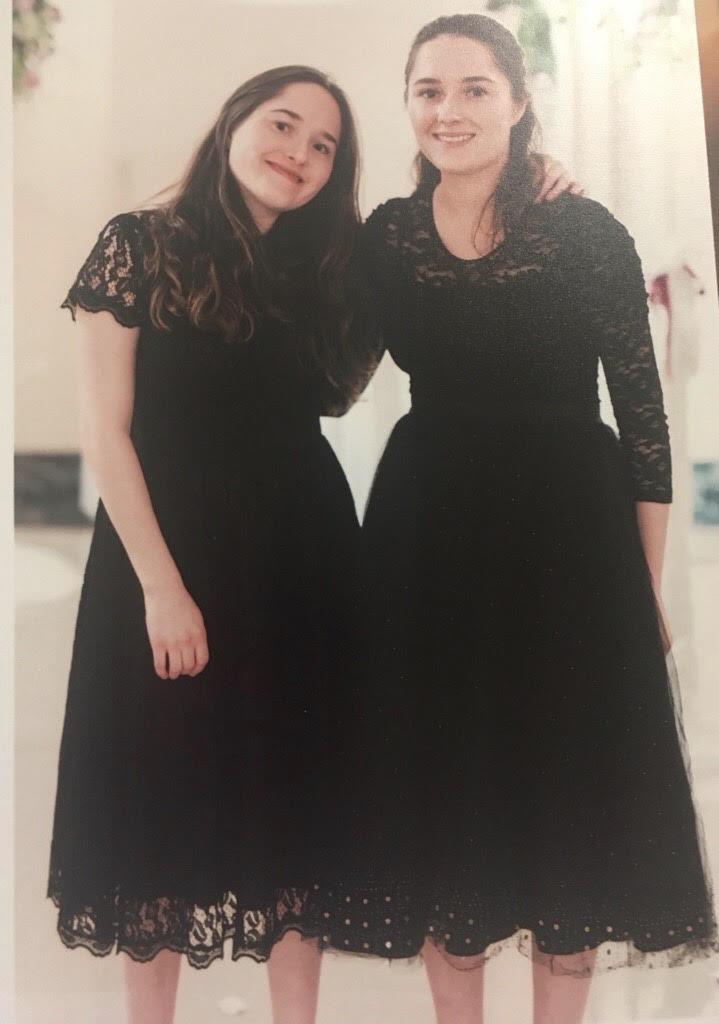
Avery (left) and Alexandrza Morris hosted free outdoor concerts for residents during Covid.

Posted in Music | Leave a comment

DICK LITTLESTONE: The Best of the Best

This editor can think of at least five individuals or groups that should have been honored by the town/community council but have not. Either they have been overlooked or people were unaware of the contributions made.

They still should be acknowledged because they were the Best of the Best.

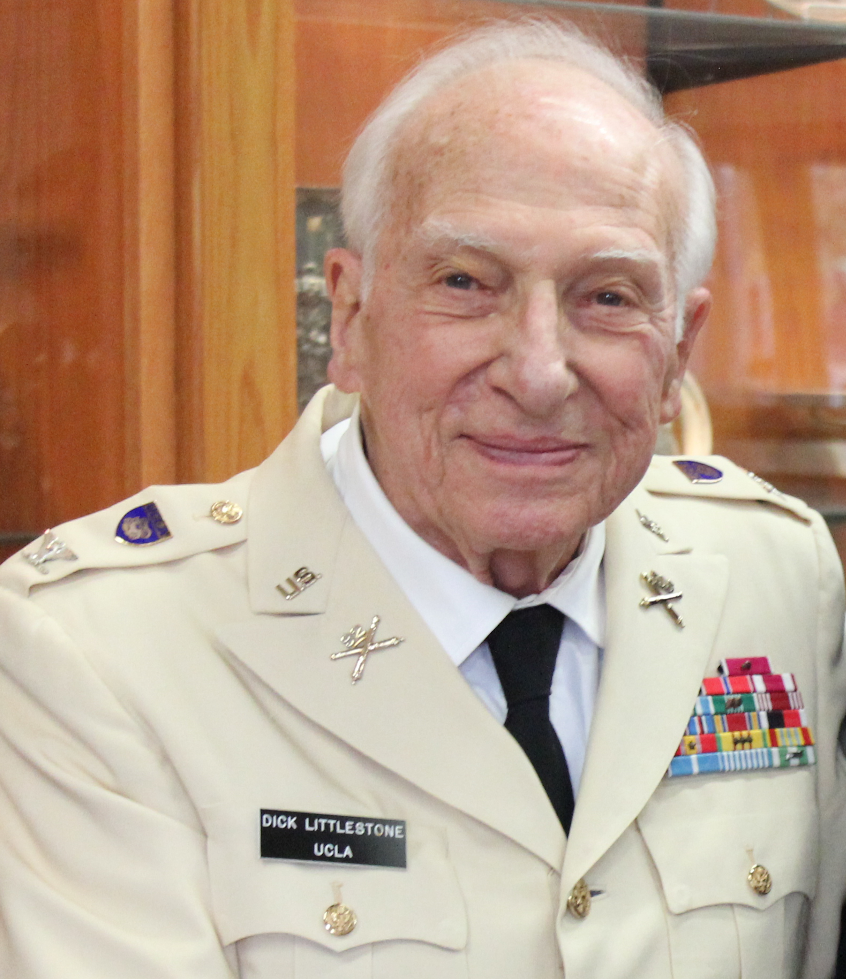
Colonel Dick Littlestone is the “Best of the Best.”

Dick Littlestone was born in 1923 in Chicago and moved to Los Angeles with his parents in 1929. Then, his family suffered a series of misfortunes, his father was put in a sanitarium, his brother contracted TB and his mother suffered a nervous breakdown. Littlestone was put in foster care and lived with a “spinster” in Tujunga.

In 1943, he was drafted by the U.S. Army and was recommended to attend West Point. He entered the school in 1944 and graduated in 1947.

He married his wife of 72 years, Doris, in 1948.

Littlestone spent 32 years in the Army, serving as a battalion operations officer in Korea and a logistics officer in Vietnam. His valor and skill earned him a number of decorations including the Legion of Merit, the Bronze Star, and more than a dozen other medals.

After 32 years of service, Littlestone went back to school and received a master’s degree in business from the Anderson School of Business at UCLA, and in physics and nuclear engineering from the University of Virginia in Charlottesville.

The family moved to the Palisades in 1972.

As he approached retirement, he kept active with community projects.

Littlestone volunteered on the 84 Olympics Youth Activities Subcommission, whose report led to the creation of the LA84 Foundation which has provided an average of $7 million in grants each year to youth sports activities and installations throughout Southern California.

He was  active in Pacific Palisades Rotary, members remembered that “he was always a worker; always had a project in mind. His motto was always helping others.”

Littlestone, with the help of then-Councilman Marvin Braude, got a stop sign installed at the corner of Antioch and Swarthmore.

He worked to get the left-turn signal installed at Mandeville and Sunset, the streetlights in the Huntington Palisades upgraded and a safer student drop-off plan adopted at Paul Revere Middle School.

Former Pacific Palisades Community Council President David Card said, “He singlehandedly got the homeowners association and the city to beautify the little island at Alma Real and Ocampo.”

Littlestone started a one-man campaign in 1997 to have the VA build a Columbarium at the West L.A. VA campus, because there was no more burial room at the cemetery.  That turned into a 20-year effort and finally in 2017 there was a ground-breaking ceremony for the Columbarium, which can hold ashes for nearly 100,000 veterans.

Even in his 90s, he remained an activist, writing letters to newspapers and the Council office. He had been working on the sidewalks on Antioch, which are not handicapped accessible, when he passed in May 2021 at age 99.

Dick Littlestone in front of the traffic island on Alma Real he helped beautify.

Posted in Community | 3 Comments

Billy Crystal Receives Kennedy Center Honor

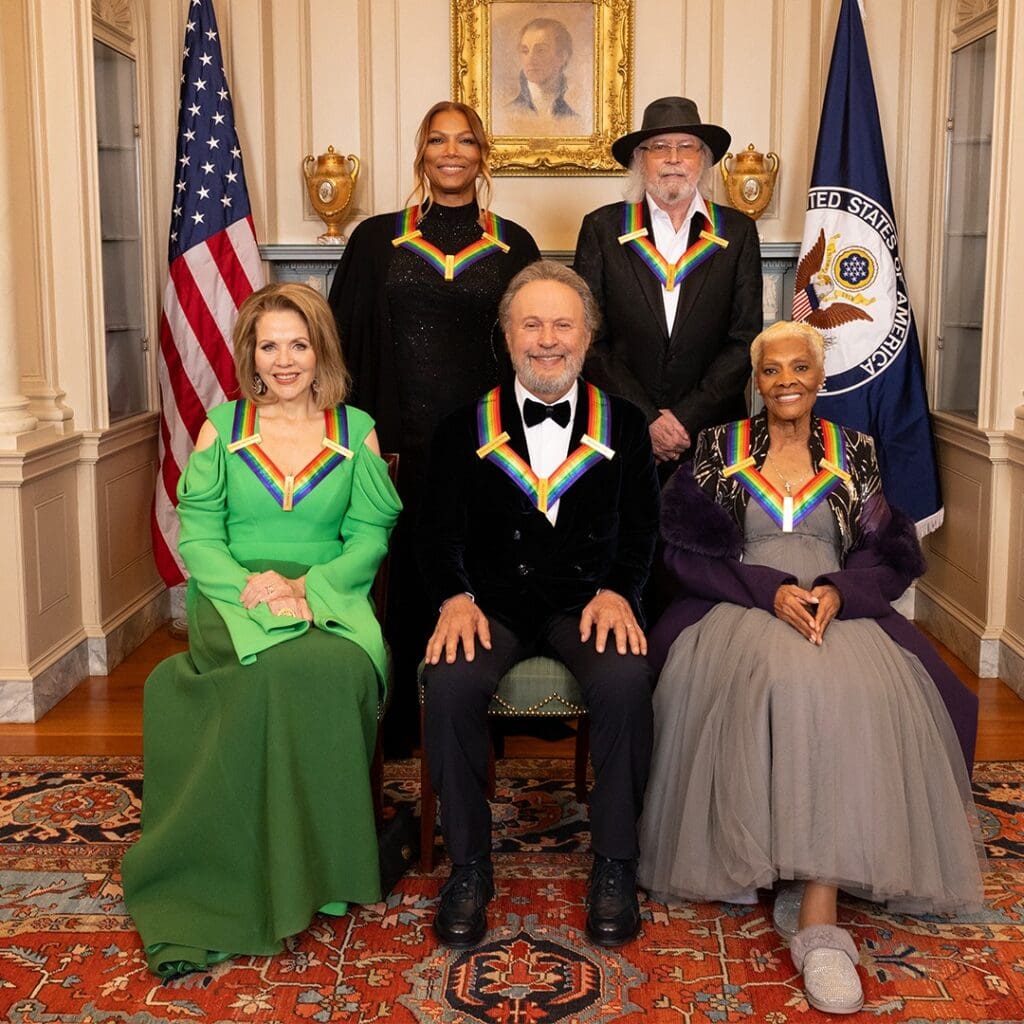
The 46th Kennedy Center honorees are Renee Fleming, Billy Crystal, Dionne Warwick (back row) Queen Latifah and Barry Gibb.
Photo: Mary Kouw, CBS

Billy Crystal, Palisades resident and former honorary co-mayor, was recognized by President Joe Biden for being selected as a Kennedy Center Honoree at a reception in the East Room of the White House on December 3.

Crystal was named not only for long-time comedic triumphs on stage, film and television, but also for his philanthropic efforts with Comic Relief, raising $75 million to help supply medical aid. He was the 2007 recipient of the Kennedy Center Mark Twain Prize for American Humor and the author of five books.

Prior to the ceremony on December 3, the Washington Post wrote “Billy Crystal is the last of his kind. The versatile comedian became the ultimate showman. But it was never an act.”

The story tells how Crystal, who was working as a substitute teacher on Long Island, was having anxiety attacks because he felt he couldn’t support his wife, Janice or six-month old daughter Jenny.

Then Janice told him she was going back to work, he would watch the baby during the day, and he could hit the comedy clubs at night.

In that interview, he acknowledges his wife’s guidance and support and said, “All of this is possible because of that one moment.”

After the White House reception Crystal and fellow honorees, opera singer Renee Fleming, music star Barry Gibb, singer Dionne Warwick and rapper and actor Queen Latifah, went to the Kennedy Center for the show.

An ABC News report said that movie director Rob Reiner – who cast Crystal in multiple iconic roles – poked fun at the honoree. “I hope this doesn’t give him a big head, because honestly his head’s already big,” Reiner said.

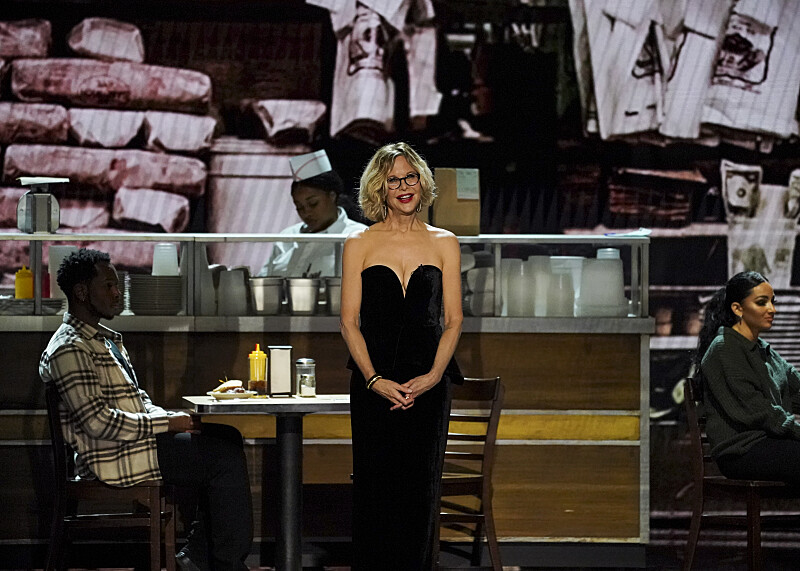
Reiner narrated a large portion of Crystal’s tribute, and others who spoke were his When Harry Met Sally costar Meg Ryan, Whoopi Goldberg, Bob Costas and 2009 Kennedy Center honoree Robert De Niro. Lin-Manuel Miranda, a 2018 honoree, performed an original song in Crystal’s honor.

Meg Ryan, Billy Crystal’s co-star, fetted him at the ceremony.
Photo: CBS

When he received the award, Crystal gave the following speech:

When Deborah Rutter [President of the Kennedy Center] called me months ago and told me about this [award], I got very emotional, which I still am, and I have been throughout this whole experience.

You start thinking about something my grandparents kept saying to me over and over again, which was, “Enjoy it. It goes by so fast.”

I think about how lucky I’ve been to start my life the way I did. We are the product of our environment, and I was brought home to a house filled with music and the music of American jazz and laughter.

My family owned a little record store in New York City called the Commodore Music Shop. My dad managed the store during the week. He produced these great jazz concerts on weekends, and the predominantly African-American musicians often were in our house.

My family, my ancestors, are all from Rostov and Odessa. So, the combination of my Russian-Jewish relatives and these black jazz musicians was an

intoxicating combination. The house always smelled of brisket and bourbon. And that’s where I started.

When I was 13 years old, President Kennedy was in office, and he had something that no other President had at that time I was aware of–a sense of humor. We would watch his press conferences; he was witty, funny, and charming.

The luckiest thing of all is that in 1966, I met a beautiful girl on the beach. I was eighteen, and she was seventeen. Fifty-seven years later, we’re married. We started dating during the Johnson administration if that helps at all.

We have two beautiful daughters who are with us tonight, who grew up during my career. None of this happens without the partnership I’ve shared with Janice over the years.

And my two girls are here tonight with their wonderful husbands. What I do for a living is joy. But the real work is taking two little infants and watching them become the great women and mothers they are today.

And I know they’re looking at me right now with this beautiful medallion on my neck. You’ve grown up throughout my career, and I know what you’re thinking, “Who’s going to get that when he’s gone?”

Thank you, Kennedy Center, I toast you! This is awesome!

The Kennedy Center Honors ceremony will be broadcast on December 27 on CBS.

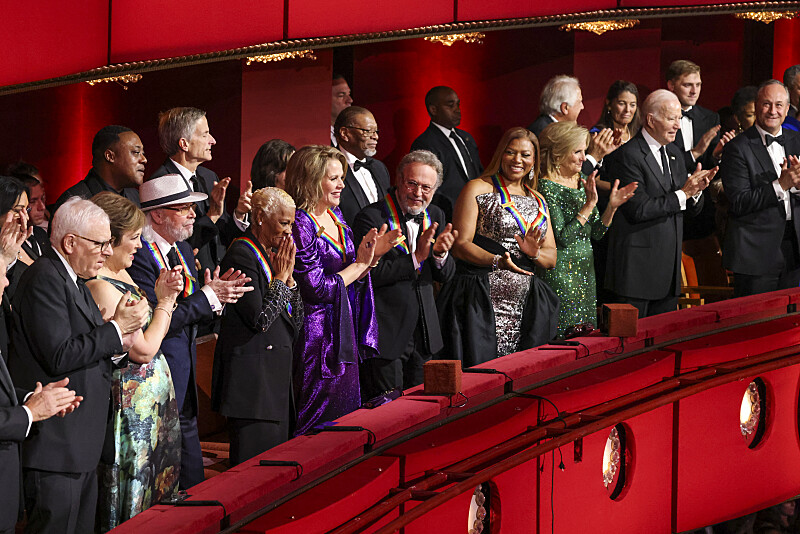
The Kennedy Center awardees were honored by President Joe Biden and his wife.
Photo: CBS

Posted in Film/Television | 2 Comments