
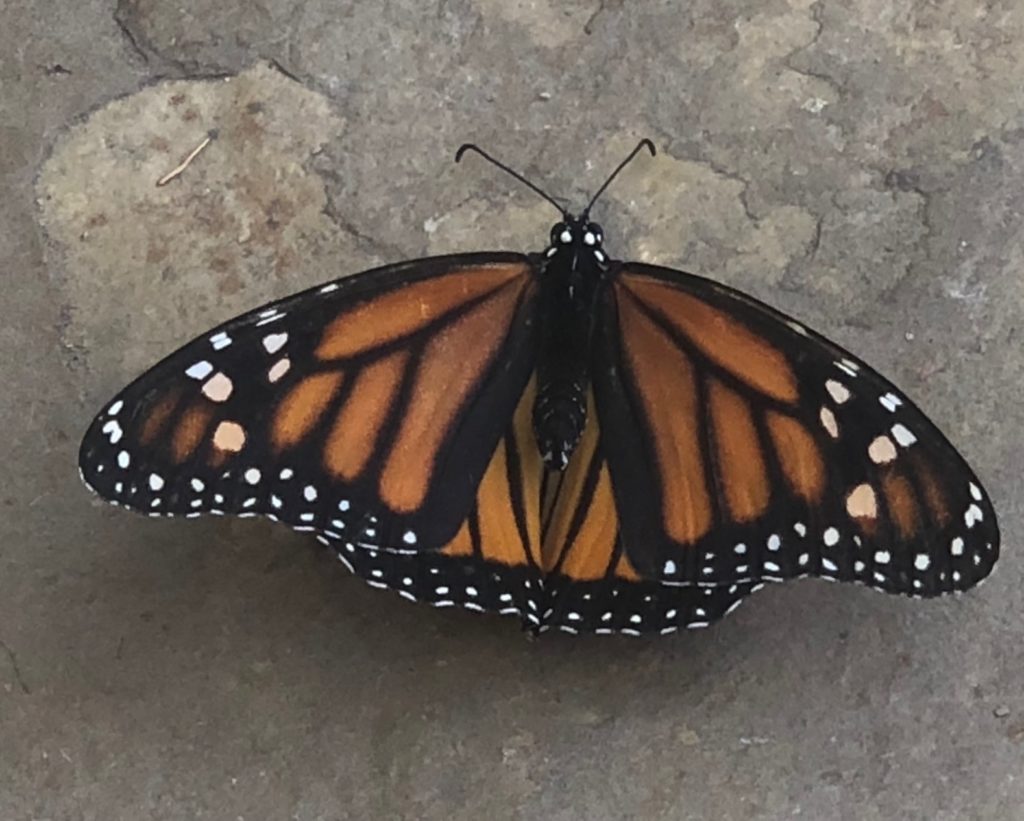
Those rebuilding in the Palisades need a biologist to verify it is not a Monarch Butterfly potential area.
People rebuilding in Pacific Palisades lost their homes/possessions, their yards, everything. The Army Corps of Engineers came to town and within five months had scrapped most lots clean. Then it’s been more than a year with insurance not paying and city requirements fluctuating.
Just when a Highlands resident had worked through those roadblocks and thought he was reaching the finish line and a final plan check, he was told he needed a biologist’s statement.
This four-page “Biologist’s Statement of Biological Resources,” through the City of L.A. Planning Department (CP-3613 [4.24.2005]) is required.
The biologist’s application statement notes “The California Environmental Quality Act directs public agencies to assess and disclose the environmental effects of the projects it approves. . . .failure by a project applicant to disclose known biological resources on the project site may results in a violation of CEQA.”
The form requires protected trees/shrubs to be addressed, to find out if the project is in the Monarch Butterfly Potential area and if there any other special status species within a 0.25-mile radius of the site.
Most of the builders, inspectors and architects the resident spoke with had never heard of this new requirement, so the resident reached out to a company Envicom, located in Westlake Village, for guidance.
The resident learned that Envicom will come to the site, fill out the report and the resident pays $2,200.
To recap. The entire lot burns. The resident rebuilds, but can’t get a final plan check until a biologist okays it.
The form specifies it has to be a qualified biologist, with a bachelor’s degree in biology or ecology and five years of professional experience . . .and knows the relevant local, state and federal laws and regulations governing the protection of biological resources and meets the CDFW qualifications for botanical field surveyors.