CD 11 Candidate Forum Will Be Held April 6

A CD 11 Candidate Forum will be held with an invited audience and also via Zoom, at 6:30 p.m. on Wednesday, April 6.

Hosted by the Westside Current and Circling the News, the editors have some great questions and also have questions for candidates submitted by community members. If you would like to submit a question, there is still time, go to: [email protected].

To register for the Zoom presentation,  click here.

A special thanks to our sponsors, which include the American Legion Post 283 Auxiliary, Hotel Erwin, Winston House, Arbor collective, Venice Whaler, REA Security, Wallflower, Venice Ale House, Pardee Properties and Venice V Hotel.

Posted in General | 3 Comments

Wen Chen Addresses Chinese Propaganda, Persecution of Falun Gong and Organ Harvesting

Wen Chen told the Palisades Rotary Club in February that she initially believed that the Tiananmen Massacre never happened.

Born and raised in China, she came to Cal Tech as a graduate student in 1995. “My friends asked me about Tiananmen Square, and I said there was no massacre; that students had killed the soldiers.

“I believed that no students were killed by the government,” Chen said, noting that even when she was shown photos, “I thought Hollywood had made them.”

But, around 2000, she realized she had been brainwashed and decided to speak on human rights, especially about the prosecution of those practicing Falun Gong – a traditional Chinese meditation practice.

Chen said the practice is famous for its health benefits and taught for free, because there is a belief that no one should profit from it.

Chen said there were two reasons that the Chinese government started to persecute the Falun: 1) it became really popular – with more than 100 million people practicing it in more than 100 countries. 2) and more people joined Falun Gong than the Communist party.

In 1998, it was estimated that more than 17 million Chinese were practitioners.  “It made the communists nervous because it’s important for them to control people’s minds. But since Falun Gong does not have leaders, the Communists started a massive persecution.”

Chen said that the Communists maintain authority through violence and propagation. She said that it has been estimated that about half million Falun Gong had been sent to labor camps.

A Chinese nurse came to America in 2006 and made an allegation that her ex-husband, a doctor, had killed more than 2,000 Falun Gong and took their corneas.

At the time, organ transplants were easily obtained in China. The waiting time for kidney and liver transplants in the United States was two to three years, but in China it was only one to four weeks.

In one year, China performed 100,000 organ donations, “where did they find all those organs?” Chen asked, thinking that one explanation could be the larger population.

But, “The people in China are Buddhists, Taoist and believe in Confucianism,” Chen said, noting that the common thread for all of those religions is the people believe in reincarnation, which means they don’t donate organs.

In 2006, two Canadians interviewed different hospitals pretending to be organ buyers. They specifically asked about the Falun Gong as donors because those who practice are considered healthy, because don’t smoke or drink.

The investigative reporters were told that a donor could be found in 14 hours, that they just needed to come with cash and “the doctors said they guaranteed the quality,” Chen said.

There was a 2015 Peabody Award Winning Documentary “Human Harvest” and there were several books written “Bloody Harvest,” “State Organs” and “The Slaughter.” Based on data analysis from Chinese medical journal publications, and updated June 2016 report, there were 60,000 to 100,000 transplants annually in China. About 90 percent of the organs came from those identified as Falun Gong and about 10 percent from Christians, Tibetans and Uighurs.

Why did doctors use the Falun Gong? Chen said it was because “they are demonized. People were told that Falun Gong were crazy, that they kill themselves, kill others and eat babies. The doctor and police don’t consider these people as human.”

She said the Israeli government was the first not to allow insurance to cover organ transplants in China, and several other countries followed suit.

In the U.S. in 2016, a non-binding resolution was passed condemning forced organ harvesting in China. “Why did reaction take so long and why was it so weak,” Chen asked. “The Chinese government was pressuring our elected officials not to speak out.”

Ten states passed legislation against the organ harvesting and in 2017, California tried to pass SJR-10, introduced by Senator Anderson. “Before the resolution, the Chinese embassy sent a message to every official and Senate President Kevin De Leon blocked the resolution,” Chen said.

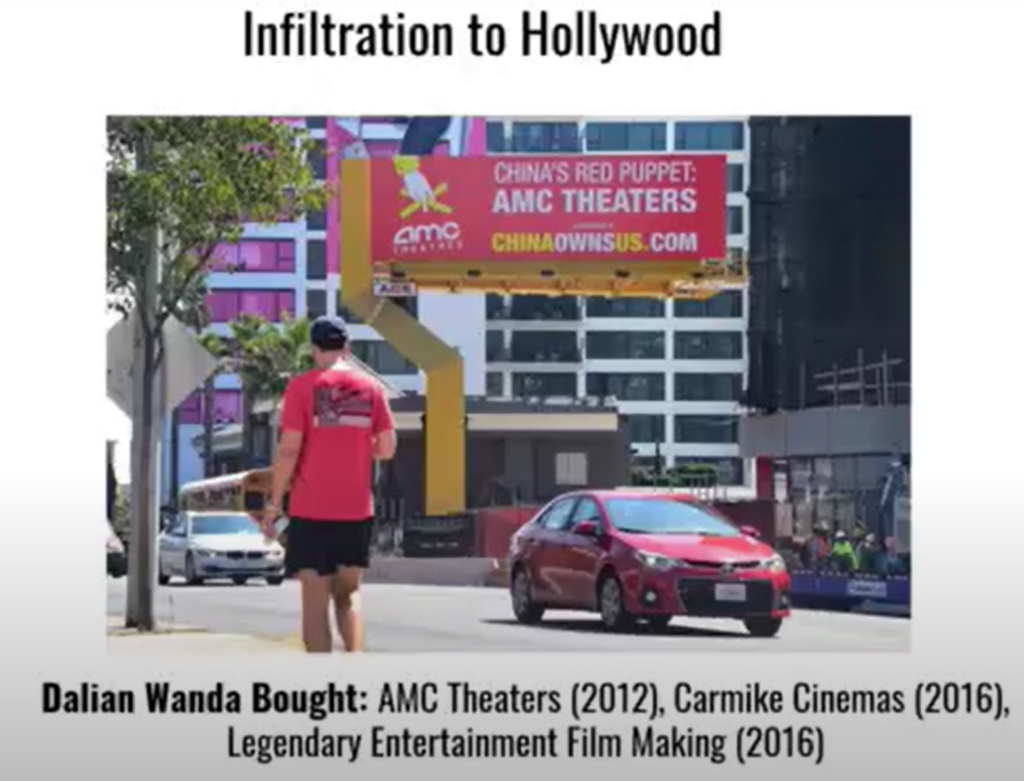
She also addressed the amount of money that China sends to mainstream newspapers to “run its propaganda.” Papers receiving advertising money include the New York Times, the L.A. Times, the Washington Post and the Wall Street Journal.

Chen also advised people to look at the Confucius Institute, a free program from China that is offered in some universities and high schools, which offers language courses.

“It also teaches the Chinese communists party version of history,” she said, noting that the course blocks topics about Tibet, Taiwan and the Tiananmen Massacre. “They teach that the Americans started the Korean War because they wanted to invade North Korea and then China.”

Chen said, “The Chinese people are awakening because 50,000 signed a petition (2015) against organ harvesting.” She hopes that human rights will continue to grow in China because people are learning that “so many people taking action together, means the individual risk is much smaller.” And she is encouraged because others like her are quitting the Communist Party.

She lists several websites to visit: stoporganharvesting.org; theepochtimes.com and challengesweface.org.

Visit: https://wenchenview.blogspot.com/

Posted in Community, Education | 1 Comment

Oversized Business Signs Invoke Community Concern

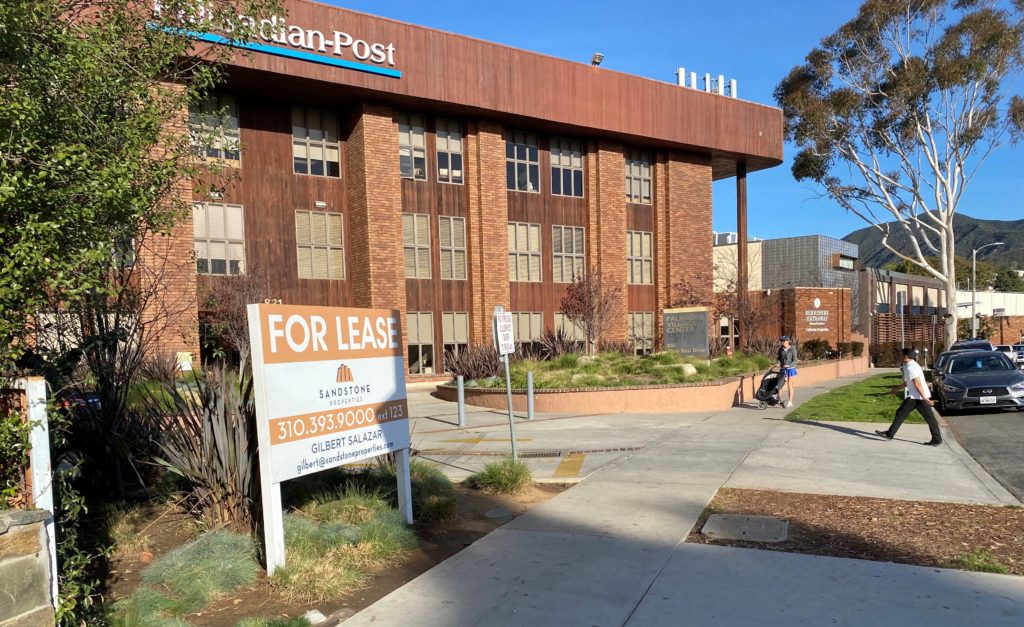
The exterior of the 881 Alma Real building will be renovated. The Palisadian-Post signs have been taken down for the renovation.

(Editor’s note: I wrote this story in June 2017 and I’m reprinting it for people who may have not followed the sign issue, that was raised when the Palisadian-Post, which occupies one office in the 881 Alma Real Building, was allowed to put up two over-sized signs.)

At the May 25 Pacific Palisades Community Council meeting, representatives for two City officials responded to community outrage regarding a Superior Court ruling that will allow two illegal Palisadian-Post signs to be placed on the building parapet at 881 Alma Real.

Mayor Eric Garcetti’s Westside Area Representative Daniel Tam and Councilman Mike Bonin’s Senior Planner Ezra Gale listened as residents and the PPCC asked them to do something about the Superior Court ruling that overturns not only the Palisades Design Review Board decision, but also a West L.A. Planning decision because of the Permit Streamlining Act.

Many residents like Donna Vaccarino, a DRB member, wanted to know why the ruling couldn’t be litigated.

Garcetti’s representative Daniel Tam said that something was in the works. The News contacted the Mayor’s public information officer George Kivork, who wrote on June 2: “Since the litigation is technically not final and conclusive, I cannot speak to any of the specific details at this time.”

PPCC President Maryam Zar acknowledged that she had been told the City Attorney wouldn’t litigate, but she wanted to know what could be done to prevent a similar situation in the future.

“As Ezra communicated at the [Community Council] meeting, Councilmember Bonin was incredibly frustrated with the process in this situation and is taking steps to address the issues raised,” the councilman’s public information officer David Graham-Caso wrote in a June 2 email to the News.

Yet, others questioned why it took the City Planning Department a year to provide the required paperwork to the Palisadian-Post, trigging the Act.

The News asked Graham-Caso that question. He responded: “Your question would be best directed to the City Attorney’s office, which was responsible for filing the appeal.”

The News contacted Rob Wilcox in L.A. City Attorney Mike Feuer’s office, but had not received a response by press time.

Zar has tried to contact Palisadian-Post owner Alan Smolinisky to appeal to his civic pride and follow the Palisades Specific Plan, but he had not returned her email. At the meeting, Area 6 first alternate David Peterson said he was friends with Smolinisky and would speak with him.

Zar was asked if she had contacted the building’s owner, Eric Kroh. No, but she planned to.

The controversy started at a May 2015 hearing before the DRB. Attorney David Ruben, of Sheppard Mullin Richter & Hampton, represented the Post and the signs. Ruben said: “This isn’t the biggest proposal in the world, there isn’t a lot to say. We took care to make sure the signs are with the size [allowed by] the Specific Plan. They are the logo and service mark of the Palisadian-Post.

“One of the signs will go where a prior First Interstate sign was [located] and we’re proposing placing them on two sides, so that all of the people can see the signs,” he said. “The paper has been in existence for 87 years and it would be a nice thing for such an old paper to be recognized.”

DRB member Donna Vaccarino said the signs did not follow Palisades Specific Plan guidelines because the logo sign was 27 ft. long and the height 4’1.”  Both measurements were beyond the allowed limits.

“We think the signs are proportionate to the building and don’t dominate the building,” Ruben said.

The 89,856-sq.-ft., multi-tenant building is owned by Kroh, founder and president of Sandstone Properties. The Post occupies about 2,600 feet of space.

DRB Vice Chair David Hibbert told Ruben that section 13.B.3. of the Pacific Palisades Commercial Village Neighborhoods Specific Plan stated: “For all buildings occupied by several businesses or uses, the size of signs pertaining to each business or use is governed by the proportion of the building frontage occupied by that business or use.”

“I don’t think that is relevant,” Ruben said.

“Signs are placed immediately adjacent to the businesses they advertise,” Hibbert replied. “The Palisadian-Post has no association with this building whatsoever.”

Ruben asked if this was personal on the part of the DRB members. “Does this have to do with signs or something else?”

The six members present assured the lawyer it was strictly a signage compliance issue.

“The Specific Plan was developed in 1985 to stop the proliferation of signs [in the business district],” Hibbert noted.

Ruben argued that the proposed Post signs would be building identification signs. This was an argument the DRB also rejected.

Rick Mills, a former member of the DRB for 13 years and chair for eight, spoke against the application during the public comment period

“I’ve seen a lot of sign applications,” Mills said, noting that the Alma Real building and the First Interstate sign at the top of it predated the Specific Plan, so that particular sign was grandfathered in. “When a nonconforming sign is removed there is no right to replace it.”

“One of the goals of the Specific Plan was to get rid of signs like the Interstate sign,” Hibbert said.

When the DRB members voted to oppose the signage application, Ruben reminded them, “You have discretion to make a recommendation, but the City can overrule that.”

Actually, the City Planning Department agreed with the DRB, but then failed to release its findings in a timely manner.

Last month, DRB President Barbara Kohn told the News in an e-mail, “Reuben corresponded with city planner/planning department until 2016, bombarding the city with legal papers during which time I continually requested status.”

Reuben filed papers with the Superior Court, arguing that the City had violated the Permit Streamlining Act (65921). A hearing was held March 29. In the court document, Reuben stated that the initial application for the signage was filed on April 7, 2015 and the case heard on May 15, but that the City didn’t issue a decision until April 22, 2016, which was more than a year from the initial filing. Reuben argued that this violated the Act.

According to Court papers, L.A. City Planning had to act within 10 calendar days following the DRB’s decision. The Act states that an agency has 30 days after an application is submitted to inform the applicant whether or not the application is complete. If an agency fails to approve or disapprove the permit within the time limits, the permit is subject to being “deemed approved.”

Superior Court Judge Amy D. Hogue wrote that “Sections 11.5.7.C and 16.50E do not require the Planning Department to specifically provide notice of Project Permit Compliance process. . . and as a result, Petitioner’s Application was ‘deemed approved’ as of June 8, 2015.”

As Community Council Legal Counsel Ron Dean noted, “All systems fail at some point. But in this case, a minor failure still results in a project going forward, no matter how illegal it might be.

“The City should encourage the state to amend the Streamlining Act to provide for graduated penalties,” Dean said.


Posted in General | 1 Comment

PaliHi Students Robbed in Alley by Methodist Church

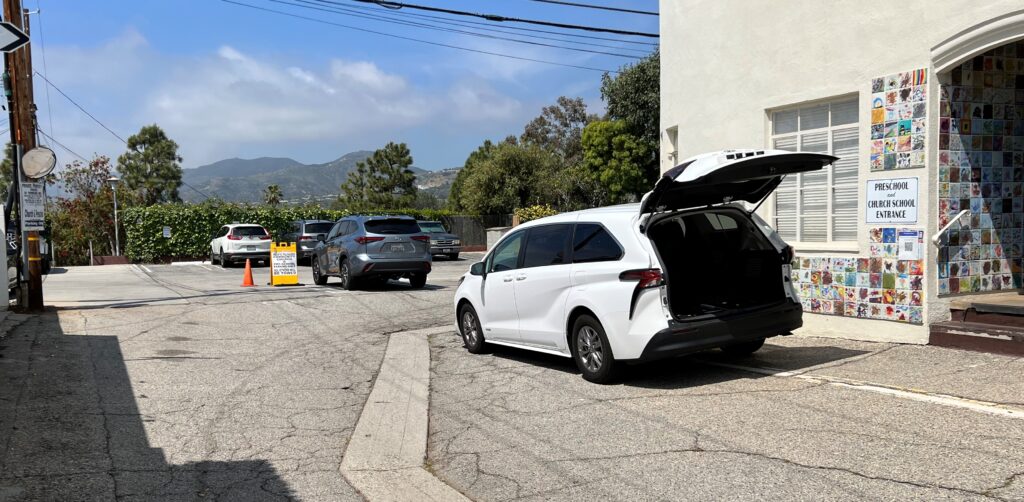
Palisades High School students were robbed in this busy alleyway that connects Haverford Avenue to Via de la Paz, via stairs. Preschool, elementary and high school students all use the thoroughfare.

A resident wrote Circling the News that a “couple of Palisades High School students” were robbed around 5 p.m. on March 21, in the alleyway next to the Methodist Church. According to the teens, a car with three black males stopped them and the driver said, “Give us all your shit.”

The students, who believed that one of the men was holding a handgun, gave up their phones, etc., and the suspects drove off. The students returned to the high school and called a parent, who drove them to the West L.A. Police station to file a report.

Circling the News contacted Senior Lead Officer Brian Espin and West L.A. Commander Captain Jonathan Tom.

Espin replied, “The students were hanging out in an alley in the area of Bowdoin and Via De La Paz. Suspect’s vehicle drove up and two suspects exited the vehicle and asked for property. Victims gave suspects property. Both suspects re-entered the vehicle and drove away.  While the vehicle was driving away the victim observed the driver suspect in the vehicle with what appeared to be a gun in the suspect’s lap. The gun was not used during the incident, but was observed as the vehicle drove away.”

Espin said that he had been in contact with patrol officers and the beach patrol officers, who had been directed to be in the area (of the church) for extra patrol.

Tom said, “Due to the myriad of issues and complaints that Palisades residents have, we are being pulled in many different directions and cannot guarantee extra patrol on a regular basis based on the one incident. That being said, we will make sure that the assigned officers as available are spending time in that area after school for at least the next week.”

Circling the News explained to LAPD that the “alleyway” is heavily trafficked by pedestrians: preschool, elementary and high school kids, because Bowdoin Street dead ends in the church parking lot by a stairwell.

That stairwell connects Radcliffe and Haverford Streets with Via de la Paz and the Village.

In the mornings, that area is filled with parents dropping off children at the Methodist Preschool. Also, numerous parents walk older kids to either Palisades Elementary, located at the corner of Bowdoin and Via de la Paz, or to Village School at the corner of Swarthmore and Bowdoin.

The flow of pedestrian traffic returns in the afternoon, when Palisades High students access the stairs to go into town and to wait for the Metro and Big Blue buses.

Generally, the kids who take the late bus from PaliHi make a dash (around 5 p.m.) up to the Palisades Garden Café to eat before heading home.


Posted in Crime/Police | 7 Comments

Asking the Wrong Question, Can Give the Wrong Answer: Housing First Doesn’t Help the Mentally Ill

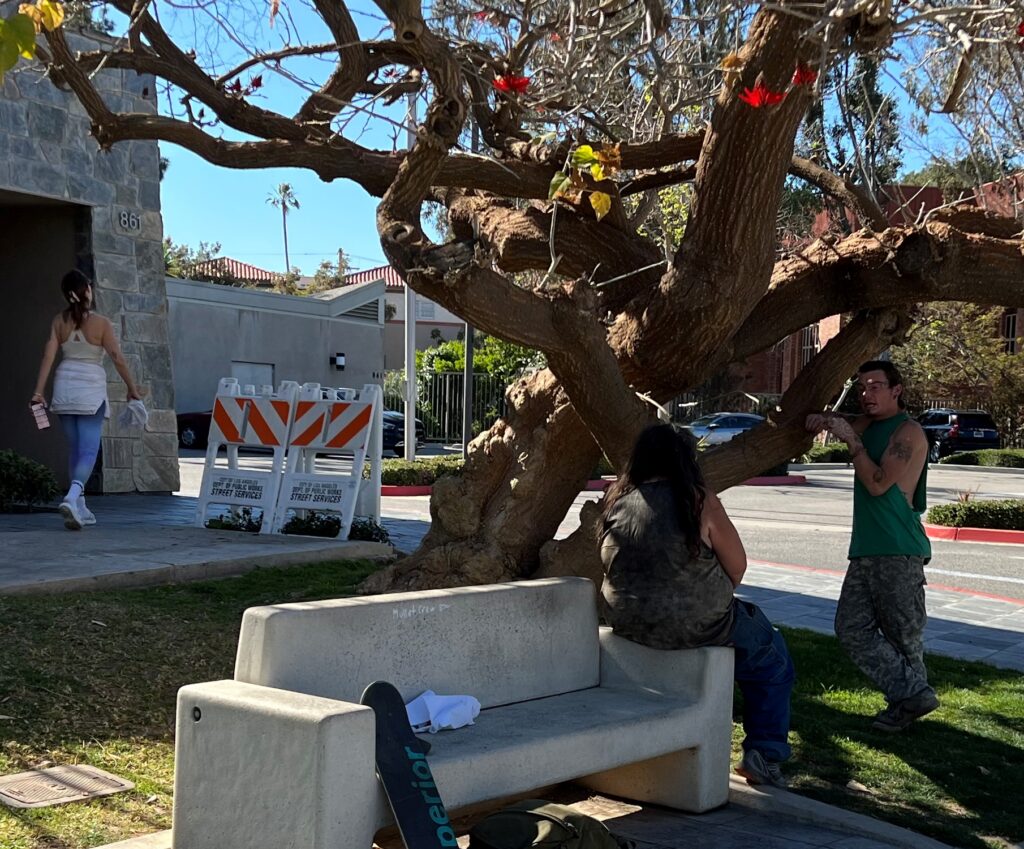
Ruby (center) has lived in the Palisades Library portico for the past few years. She is often joined by other homeless individuals (right).

Los Angeles can never take care of its homeless population unless it starts asking the correct question: how many people have mental issues?  Is there an institutional setting in which they can be helped?

Jimmy Dean, a homeless woman, who used to camp in Temescal Canyon received housing through the Pacific Palisades Task Force on Homelessness.

She was kicked out, because she threw feces at other homeless, and on the walls of an apartment. Housing was not the answer to her problems. After a two year absence, she was found back in Temescal Canyon last week, screaming obscenities at those trying to help her.

Ruby, who has been diagnosed with mental illness, continues to live by the Palisades Library and is now attracting other homeless, who stand guard by the entrance to the portico. Residents treat her like a feral cat and bring her food – and she has conversations with them. One resident, even went so far as to say, “she’s the smartest woman I know.”

I won’t dispute anyone’s IQ, but intelligence doesn’t have anything to do with mental illness. One day this editor found Ruby lying, not moving on the stone, and had trouble rousing her. She finally came to, and I asked, “Ruby are you okay?” It took her time to focus and then I realized, she had passed out. The alcohol bottles were nearby. She looked at me and started screaming obscenities – she identified me in those rants.

Now, I no longer go close to her, I no longer consider her harmless, and worry that at some point she may “snap.”

The man in front of Gelson’s was probably in his 30s. He had a small cart filled with accumulated items. His shoes were bad and beyond repair. He was standing and staring, when I walked by.

He had a deer leg poking out of the cart. It was a real deer leg, and I stopped and asked him where he got it. He told me he had found it by the Lake Shrine.

I asked him if the Palisades Task Force on Homelessness had contacted him. He didn’t respond. I asked if he needed anything because someone could help him. He didn’t respond and then started staring off in the distance, again. I could feel him watching me as I walked off.  I alerted the Pacific Palisades Task Force on Homelessness, who said they knew about him. Several readers had also contacted Circling the News, because the same man was found sleeping by Corpus Elementary School.

Last week, a woman was walking on Via de la Paz by the Palisades Elementary School during a school day. She had put zinc oxide or some grease, all over her face and was carrying an open beer bottle, taking swigs as she walked. She was talking to herself.

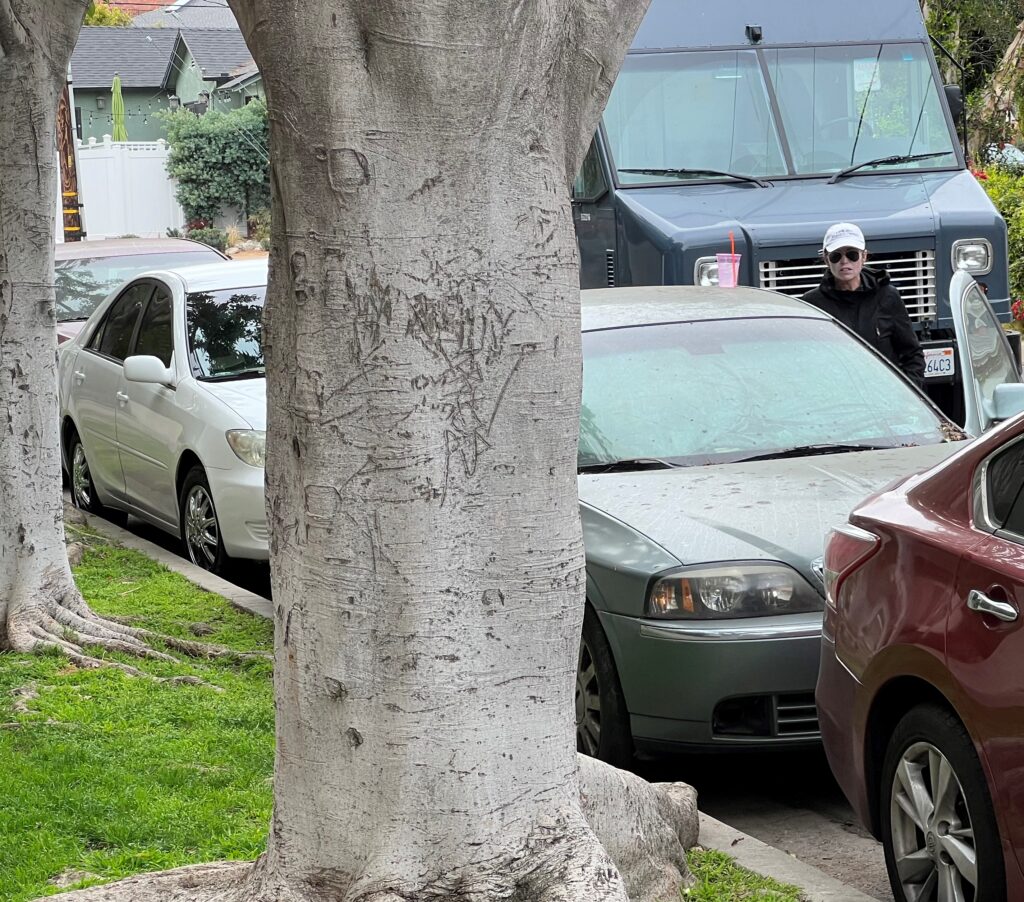
I recognized her as Danielle, the woman who has terrorized neighbors by pooping and urinating on their lawns, living out of her car on Albright Street for more than two years.

Her family has tried to help her. Neighbors have called the police repeatedly, but according to police there’s nothing they can do.

The police have told neighbors that she is not dangerous to self or others – and that she can care for herself. She goes to the local grocery store and buys alcohol.

There appears to be nothing that anyone can do if someone is mentally ill. And as long as they are not wielding a knife or a handgun, they are not considered gravely disabled and can not be held with a 5150.

A 5150 is an involuntary psychiatric hold. According to a speaker at a recent Task Force meeting, Dr. Roderick Shaner, there is a disagreement about whether a person fits into a 5150. “If a person is dangerous to self, to others or is gravely disabled, he/she can be detained for 72 hours,” he noted.

Shaner said, “If you take someone who is gravely disabled and take them to units, in a few days the voices stop, they get meals, sleep and medicine, and they say, ‘I don’t want to be in a hospital,’ and by the way, ‘I promise to take my meds.’ We can’t hold beyond 47 days, but antidotally if we give people proper treatment, they do well.”

Long-time resident and a former Citizen of the year, Chuck McGlothlin wrote Circling the News.

“I appreciate everything the Palisades Homeless Committee has done for our Village. I feel that Los Angeles County should start building Mental Facilities – the number of homeless people with mental problems is estimated at 50 percent.

“These poor people with mental problems need care and support immediately, and we should handle it like a FEMA disaster and start helping these unfortunate people.

“Yesterday at the front entrance to Los Angeles Community College on Vermont Avenue near Hollywood with over 20,000 students, I saw a homeless man defecate on the sidewalk.

“As a civilized society, in the wealthiest country in the world, our lack of concern for mentally ill people is unacceptable.”

We agree with McGlothlin. The question that needs to be asked and then answered is how many people have mental issues and how can they best be helped? Housing first is not the answer for this group of people.

(Editor’s note: many people in California blame Ronald Reagan for shuttering the large asylums, but the real story starts with President John F. Kennedy, and then progressed with the idea that with medication, mental illness was curable, and institutions should be closed. To read the story, visit:  https://www.circlingthenews.com/lack-of-assistan…the-mentally-ill/ ‎)

Danielle has lived in her car on Albright for the past two years. Neighbors have complained to police that she is defecating and urinating on lawns.

Posted in General | 4 Comments

Simon’s “Prisoner of Second Avenue” Reverberates to Today’s World

Jud Meyers (Mel) and Ashley Adler (Edna) play a couple who are going through hard times in “Prisoner of Second Avenue,” at Theatre Palisades.
Photo: Joy Daunis

By LIBBY MOTIKA

Circling the News Contributor

Despite all the challenges of the last two years, Theatre Palisades’ stalwart cast and crew prevailed and reopened last Friday night with Neil Simon’s “The Prisoner of Second Avenue.”

Thanking the full house, producer Sherman Wayne assured the audience “no matter the decade or the century, theater reminds us that we are not alone and allows us to face life’s problems so we can move forward.”

While somewhat of a departure for Neil Simon’s joke-light fare, “The Prisoner of Second Avenue,” written in the early 1970s, is as relatable today as it reflects the anxious, exhausted country we are now living in.

Set in New York City, as are most of the native New Yorker’s plays, “Prisoner” describes the city in the 1970s beset with a high crime rate, high inflation and frequent garbage strikes.

Simon comments on the sorry state of the city by centering the action around longtime city dwellers Mel and Edna Edison, who are trapped in these new and unsettling circumstances.

The couple’s life is being upended by the accumulation of annoyances, big and small, that frays their sense of well-being and safety.

Act One finds the couple in the living room of their 14th floor apartment trying to cope. The barking dogs, the continuous flushing toilet, rude neighbors and smell of garbage fuels a slingshot banter – Mel grousing at full tilt, Edna working patiently to ease his frustration. Mel asserts “when you are a human being, you have the right to complain.”

The coup de grace that finally kills Mel’s dignity and sense of worth, is having been fired from his job of 22 years. Flattened, Mel loses his grip and suffers a mental breakdown.

“I am unraveling, something is happening to me, I am losing control,” he says. Edna suggests analysis. “I don’t need analysis, I need lost and found!”

Although most of Simon’s work is autobiographical, “The Prisoner of Second Avenue” is an exception as it is based on his first wife’s uncle who went bankrupt and had a nervous breakdown in his 40s.

Certainly, there is nothing funny about that, but Simon alleviates the gloom in the second act by introducing Mel’s siblings, who while debating ways to help their poor brother, fall into bickering among themselves as siblings often do. Families do this, and that makes the squabbling funny.

The play hinges on Mel and Edna, who must keep their domestic back-and-forth choreographed, playing against each other, while pitched toward exaggeration, so the audience somehow believes that their love will carry them through these troubles.

Jud Meyers (Mel) and Ashley Adler (Edna) are perfectly matched, delivering ratatat volleys with impeccable timing, landing jokes seamlessly. As with many couples, when one is down, the other reassures, alternating as the situation presents itself.

Directed by Gail Bernardi, the play also features a supporting cast, including Patricia Butler, Laura Goldstein, Martha Hunter and Ben Lupejkis as Mel’s siblings. Kudos to Sherman Wayne for designing an efficient set with views of the living room, hallway, balcony and kitchen — all on the modestly sized playhouse stage.

“The Prisoner of Second Avenue” continues through May 1, Fridays and Saturdays at 8 p.m. and Sundays at 2 p.m. at Pierson Playhouse, 941 Temescal Canyon Road. (Visit: theatrepalisades.org.)

The family (left to right) Laura Goldstein, Ben Lupejkis, Martha Hunter and Patricia Butler, discuss ways to help their sibling, who is having a nervous breakdown.
Photo: Joy Daunis


Posted in Reviews | Leave a comment

Seniors Neglected by City of Los Angeles

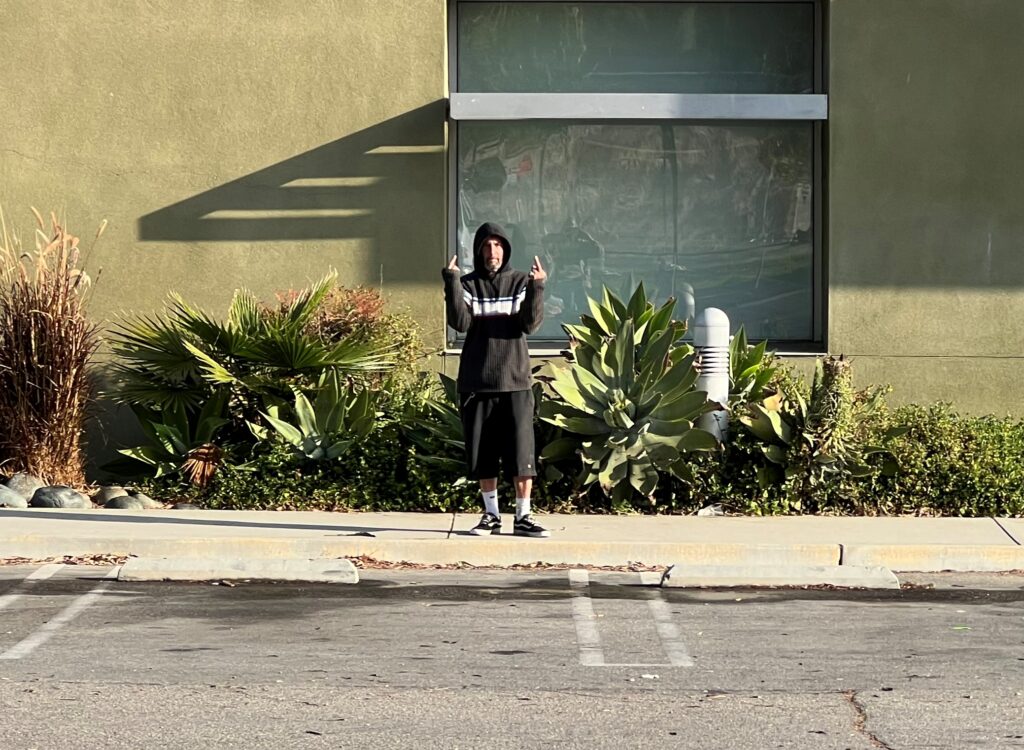
This man shouted profanities at the Circling the News editor, when photos were taken in the Westchester Library/Senior Center parking lot.

A Westchester senior asked Circling the News, “Why are the seniors not taken care of?”

In Los Angeles, one in four people are identified as a “senior” citizen (60+). According to an 2016 Empower La study “Purposeful Aging,” (https://empowerla.org/wp-content/uploads/2017/02/Purposeful-Aging-6222016b.pdf), the City has 1,889,056 seniors. The study states that age-friendly environments allow people to stay active and connected.

The Department of Rec and Parks, operates 29 senior centers, two of which are on the Westside (Westchester and Felicia Mahood Center. The Venice Senior Center is shuttered.).

But, only 16 are open. Many used to have a lunch program. Now only three have a “grab and go.”

Three years ago, the Westchester Center was a vibrant hangout for seniors, but then the homeless, many of whom were mentally ill or strung out on drugs were allowed to take over Westchester Park.

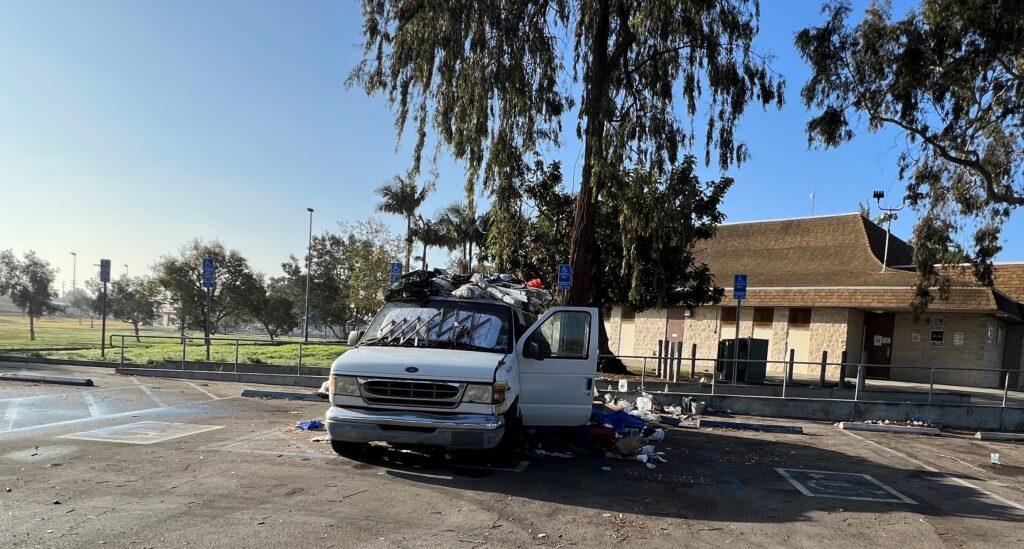
One transient has junk and trash stretched across three handicapped parking areas.

“I don’t understand why they can’t clean it up,” a Westchester resident told CTN.

CTN contacted Rec and Parks, and spokesperson Rose Watson said, “The handicapped parking lot is available to seniors. The lot is managed by the Department of General Services. We’ll reach out to them and make them aware that a homeless encampment is keeping seniors from being able to park in the handicapped spots.”

This editor grew familiar with senior centers while visiting my late mother-in-law in Valentine, Nebraska. The center provided a nutritious hot lunch for $2.50, and then served as a gathering place for people to talk or play cards after eating. The social aspect was important, because many of the seniors no longer had family living nearby.

The hot lunch served, for many, was the main meal of the day – and maybe the only meal. My mother-in-law would eat oatmeal for breakfast, then the hot lunch and perhaps an apple for dinner. She, like many seniors, no longer had the desire or need to fix the “family” dinner or to do a big grocery shopping.

The Westchester Senior Center used to operate the same way, and according to one resident between 75 to 80 people were fed daily.

“Mornings were busy, there were always between 25 to 50 people,” the resident said, noting that “A lot of people came and had doughnuts and bagels. There was a group of men, eight or nine, that were here and would have coffee and sit and chat.”

The resident explained “It was a lovely place, warm and welcoming. When there were sponsored day trips, such as a bus going to casino, you might get 90 people going.”

Lunch was described as “A lot of people really looked forward to it.  It was a happy place.”

Another resident said “We used to have events that 65 to 80 people attended; and the Rotary luncheon at Christmas had 100 people. “We would have a lot of fun. People would just drop in, but that’s not happening now.”

What changed? The homeless were given priority.

“It’s such a shame. There’s a homeless person who has a dog that’s bitten some people,” a resident said.

“Give us our senior center back,” another Westchester resident said. “How do you let 10 people hold the library and the center hostage?”

Yet, another said, “We all feel uncomfortable just to go there. The parking lot doesn’t look safe and the people hanging around it are frightening.”

The residents told CTN that they called 311 and Bonin’s office, but nothing has changed. “I see all sorts of concerns about nursing homes and kids, but what about seniors?” that resident asked.

Another resident summed up the situation: “It’s about safety, it’s about common sense. It’s time to give our senior centers back to the seniors.”

One person’s belongings stretched across three-handicapped parking spaces in front of the Westchester Senior Center.

(Editor’s note: It seems that the City’s seniors have largely been neglected. CTN asked how many senior centers had WIFI or computer help, which has now become vital. Watson is checking. CTN also feels that there should also be a senior center—or place for seniors to receive hot lunches in

Posted in General | 1 Comment

Monday’s Rainfall Brings Town Close to Its Season Average

Monday’s rain caused some curb-side and street flooding.


About 1.1 inches of rain fell across Pacific Palisades yesterday, ending a 12-week dry spell during what is normally the “rainy” season.

Thanks to 10.1 inches of rain in December, the Palisades is now close to its annual average of 13.78 inches, measured from July 1 through June 30. We had .1 inch of rain in July and .66 inch in October, bringing the season total to 11.96 inches — and we can always hope for April showers.

The late Ted Mackie, who served as Carol Leacock’s assistant L.A. County rainmeister, compiled a chart of Palisades rainfall that spanned 73 years, back to 1942.

He reported that the driest cycle was the five years between 1987 and 1991, when Pacific Palisades received less than 10 inches of rain each year.

The five wettest years were 1978, 1983, 1995, 1998 and 2006. The most rain recorded here was 42.60 inches in 1997-1998.

The five driest years on record were 1976, 1990, 2007, 2012 and 2014.

Since 1942, the driest season in the Palisades was 4.11 inches in 2006-2007. The 2013-2014 season ended with 6.13 inches.

Posted in Environmental | Leave a comment

$50 Million Spent on Potrero, Maybe More, and Still No Park

The green circle shows the area of photo 1 and 2, in George Wolfberg Park at Potrero Canyon found below. The road in the upper left is Friends Street.

The latest estimate for the opening of the George Wolfberg Park at Potrero Canyon is now this fall, Pacific Palisades Community Council President David Card told members at their March 24 meeting.

For readers who keep track of always-elastic construction deadlines, L.A. City officials vowed in February 2011 that a new park in the canyon would be dedicated within five years.

At that ceremony down near the mouth of Potrero, longtime resident and Community Council member Ted Mackie quipped: “The people who will attend that park dedication haven’t been born yet.”

For readers who have tried to keep track of the money spent on this park since construction to fill the canyon began in 1988, here are the latest costs.

The initial contract for landscaping was made to Ford E.C. Inc. for $8,892,394 last May, but following the December 2021 rains, an additional $630,000 was asked to repair areas of significant damage located in the lower portion of the park.

In 2016, dirt came from Caruso’s Palisades Village underground parking lot and was deposited in Potrero Canyon. Concern was raised about the dirt quality but was dismissed by City officials. In 2018, OHL USA INC won the new grading bid in Potrero for $13,526,579.

But a year later, OHL asked for and received an additional $4 million because of 1) heavy rains in 2018, 2) fill dirt was undocumented; and 3) there were boulders and rocks on the site.

Former Palisadian-Post editor Bill Bruns found a 1989 letter in his files that was sent to then-Councilmember Cindy Miscikowski.

The resident wrote: “Your predecessor told us that this landfill was to be at no cost to the Taxpayer, which I could feel in my bones at the time that the statement was untrue. But in my naivete I thought “well what’s a couple of hundred thousand dollars?” Well, it is now 12 years later, and the $20 million mentioned in the article was the same $20 million mentioned last year, so someone is suing a minimal public figure instead of the true current cost which must be increasing with the passage of time.”

Ted Mackie told Palisades News in 2015 that he remembered when officials promised in 1984 that the new park would be completed in five years, at a cost of $3 million.

In that 2015 story, Potrero Canyon Project Manager Mary Nemick said, “The construction of the park is currently projected to be completed in December 2017, and the latest cost estimate is $30.5 million.

The park, which lies between Huntington Palisades and DePauw/Friends streets, extends from below the Palisades Recreation Center to Pacific Coast Highway.

Residential property along the rim of Potrero Canyon began sliding into the canyon in the 1960s. From 1964 to 1975, the City purchased properties along the rim, with the eventual goal of stabilizing the canyon. The City, because of litigation, was then required to purchase an additional 22 properties along the canyon rim.

In 1986, a study was done for proposed plans to stabilize the canyon and create the park and the fill project began in 1988. The first phase, completed in 1990, consisted of cleaning out the trees and brush in the 80-ft. high canyon and installing a storm drain.

To fund the completion of Potrero Park, the City and Coastal Commission agreed that all lots and houses owned by the City would be sold and the proceeds dedicated towards completion of the park. Twenty-one properties were sold, generating more than $40 million.

The City must also fulfill an obligation to the Coastal Commission, which required a five-year maintenance assurance at a projected cost of $2.5 million.

But of course, all that real estate money has now been spent.

The state appropriated $11 million for a pedestrian bridge that will connect the mouth of the park with the Will Rogers State Beach parking lot. The City’s Bureau of Engineering is tasked with making the plans—and they’ll get busy on it in July – a mere year later after funding was announced. The true cost of the bridge may be more or less than the money available from the state.

What about the trail that was supposed to be completed from the mouth of Potrero to Temescal Canyon Road (so that hikers who want to access the beach can safely cross at a light instead of darting across six lanes of PCH)? That is part of a Caltrans easement that is still being worked on, according to Card.

The easement goes back to the 1958 “killer slide” below Via de las Olas. At that time, PCH was closer inland to the bluffs, but had to be rerouted following the slide.

District Highway Superintendent Vaugh O. Sheff, who was overseeing the removal of an earlier slide from that area, was killed when the new slide came down the hill from just below Via de las Olas. PCH was moved around the toe of the slide, closer to the ocean, but the Caltrans easement, which is further inland between Potrero and Temescal Canyons, remained.

Pacific Coast Highway used to run closer to Via de las Olas bluffs, but after the “killer slide” it was moved closer to the ocean.


Posted in Parks | Leave a comment

Street Tree Planting Is Underway in Pacific Palisades

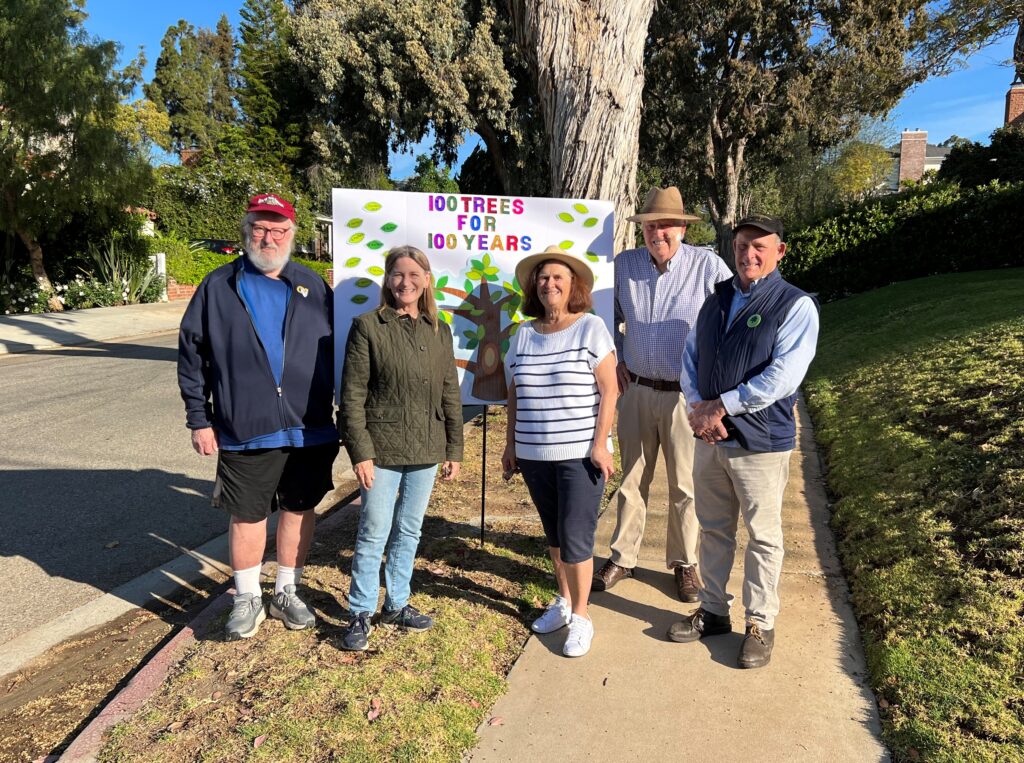
Members of the Palisades Forestry Committee (left to right) David Card, Cindy Kirven, Nancy Niles, Bill Bruns and Bruce Schwartz gathered on Hartzell for the parkway tree planting.

The Palisades Forestry Committee, under the auspices of the Pacific Palisades Community Council, has pledged to plant 100 trees this year to help celebrate the town’s centennial.

The first of the hundred, a Coast Live Oak, was planted at Founders Oak Island on Haverford on January 14, on the town’s official birthday.

The next 10 trees were planted last Thursday on the parkways along Hartzell Street (between Sunset and Bestor) — leaving only 89 trees to go. Next up: Via de la Paz from the bluffs up to Bestor, but excluding the business district.

To get on the list to receive a free residential street tree,  receive more information or to volunteer, email: [email protected].

The committee was formed in 2019, under the late PPCC President George Wolfberg’s leadership.

Committee Chair Cindy Kiven told Circling the News, “It is exciting and also a relief to finally get these street trees into the ground following George’s appointment of the committee more than two years ago.

“In a world full of bad news and divisiveness, it is particularly rewarding to have the neighbors, individually, and the supporting city agencies all come together to beautify the neighborhood and better the environment,” Kirven said. “With the new relationships forged from working on this test street [Hartzell], I am anticipating a rapidly expanding effort for outreach to additional neighbors on a street-by-street basis.”

Two species (Mondell Pine and Arbutus ‘Marina’) were recommended by the Forestry Committee and approved by the city’s Urban Forestry Division for Hartzell. Individual homeowners must pledge to water their tree regularly for at least three years, until the tree’s roots are established.

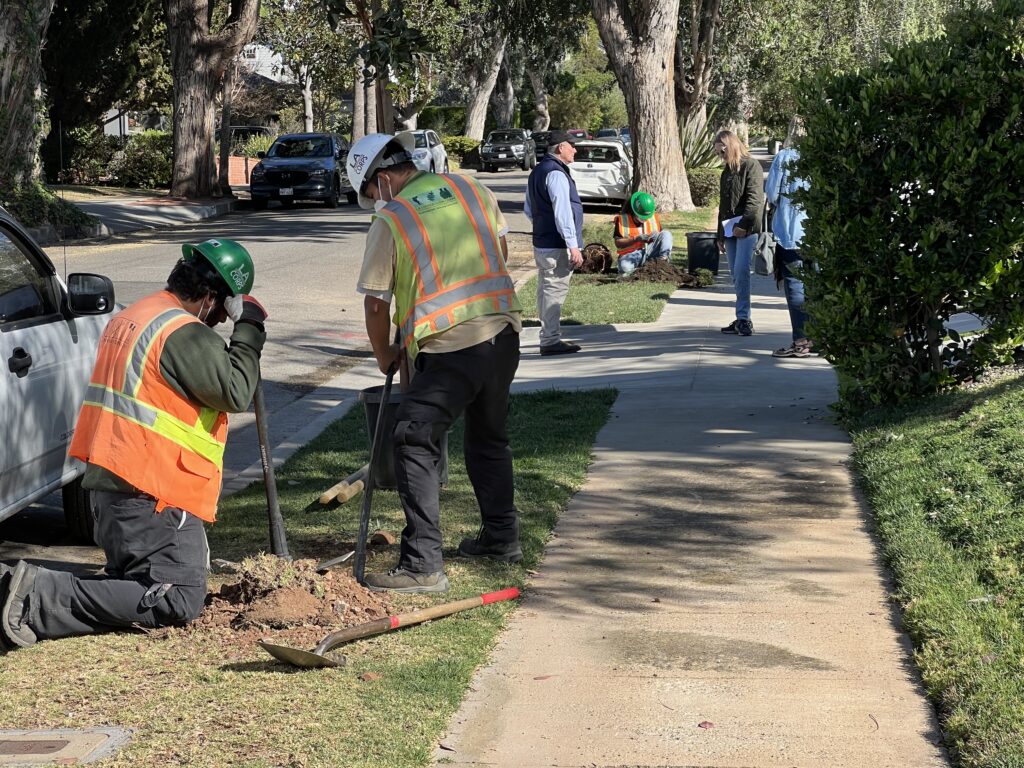
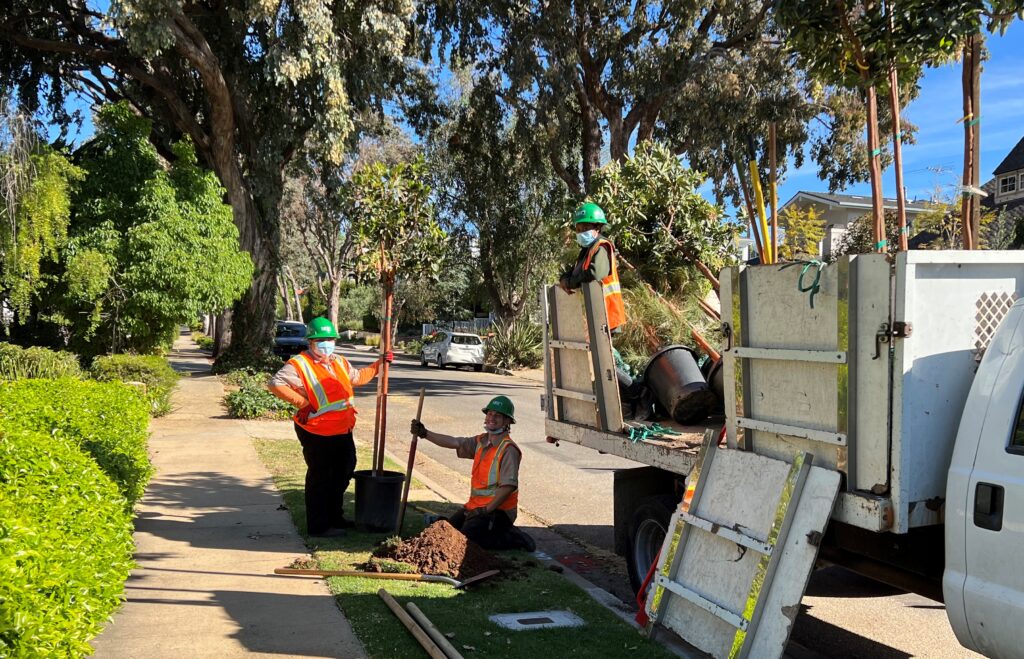
City Plants, a program supported by the L.A. Department of Water and Power, arranged for a L.A. Conservation Corps crew to dig the holes in approved parkway spaces and do the actual planting. The trees are free and are planted at no cost to the homeowner.

One Hartzell resident was extremely disappointed on Thursday, because workers encountered a gas line where the tree was supposed to be planted. Another resident was also disappointed when workers discovered a tree root that filled the intended space.

The Palisades Forestry Committee, led by Kirven, includes Jo Ann Bright, Bill Bruns, David Card, Nancy Niles, Mary Schulz, Bruce Schwartz, Lisa V. and Marilyn Wexler.

Kirven said the committee has asked for and received advice from the following advisors: Stephen Du Prey, of the City of Los Angeles Urban Forestry Division; Miguel Ornelas, the area supervisor for Urban Forestry; Noah Fleishman (Councilman Mike Bonin’s Deputy Director); Kelly Comras (landscape architect), Lisa Cahill (Tree activist and former CD 11 field deputy), Lisa Smith (registered consulting arborist) and Nancy Freedman (Brentwood Community Council). j

Parkway trees were planted on Hartzell Street on March 24.

Members of the L.A. Conservation Corps helped plant free trees on Hartzell.

Posted in City/Councilman Mike Bonin, Environmental | 1 Comment