October 2019 Getty Brush Fire: Palisades Residents Tried to Evacuate

Although the Getty Fire started near the 405 Freeway, firefighters were worried that with wind, it would travel to the ocean, via Pacific Palisades.

(Editor’s note: During the Getty Brush Fire, much of Pacific Palisades was under mandatory evacuation. The fire was first reported on October 28 and was contained on November 5. Thousands of people were forced to flee, 10 homes were destroyed and 15 residences were damaged. Below is a report of that evacuation in Pacific Palisades, which was a comedy of errors: if a fire had made it to this town, would have killed hundreds as they tried to flee. Instead, residents were stuck in bumper-to-bumper traffic. An effective evacuation for the Palisades has never been planned.)

Destruction: 12 homes burned, five damaged    Size: 656 acres  Containment: 15 percent.

People say, “But I don’t see any flames.”  Think of the ground as a campfire or a fireplace. Until the embers under the burn wood/brush are entirely out, the wind could blow them to an unburned area and a new fire started.

“All it takes is one ember, one ember to head downwind and start a fire,” Los Angeles Fire Chief Ralph Terrazas said at a 2:15 p.m. news conference today.

Science magazine in a 2017 story “In California Fires, a Starring Role for the Wicked Wind of the West,” explains “California’s biggest and deadliest fires have been propelled by Santa Ana winds, which can gust to 100 mph. That wind speed makes smothering fires nearly impossible, said Chief Daniel Berlant, assistant deputy director the California Department of Forestry and Fire Protection (CalFire).

“’In many cases, it’s all we can do just to try to control the path of the fire, trying to keep it away from people and homes,’ Berlant said. ‘Stopping a fire when wind is 50, 60, 70 miles per hour is almost not possible.

“’These fires burn into anything that’s in their path,’ he said. ‘A wind-driven fire is like a freight train and stopping a freight train on a dime doesn’t happen.

“Helicopters can’t drop water or flame retardants in high winds, he said, because the gusts blow the liquids away.”

High winds are expected to start tonight around 11 a.m. with the National Weather Service saying some winds in canyons and hills may gust to 70 mph. and the winds may last about 12 hours. By Halloween, the winds are supposed to be mild.

Mandatory evacuations remain in place for a good share of Pacific Palisades north of Sunset Boulevard to Temescal Canyon Road. Residents east of Temescal and below Sunset are in voluntary evacuation area.

Do not wait until the last minute to evacuate. Pacific Palisades only has three ways in and out: Sunset Boulevard, Temescal Canyon Road and Chautauqua Boulevard.

People on Nextdoor complained about the traffic situation when mandatory fire evacuations happened on Monday.

One resident wrote: “Yesterday we tried to evacuate but Temescal was closed: Sunset was closed, and only Chautauqua was open which was like a parking lot. We moved 10 yards in one hour”.

Another wrote: “Can you please explain why southbound PCH was closed diverting all traffic into a mandatory evacuation area making it impossible for residents to evacuate?”

In a Daily News October 29 Opinion piece “Congestion Kills, so Why Do Politicians Make It Worse,” the authors write “When the Camp Fire obliterated the town [Paradise] in 2018, many people were unable to evacuate due to congestion. Eighty-six people died, some of them in their cars as they tried to flee.”

Pacific Palisades has an evacuation route problem, just as Paradise did.

Residents don’t have a lot of different roads to choose from, particularly those evacuating from the Highlands, Paseo Miramar, Upper Marquez Knolls, Castellammare or Sunset Mesa. Most of those roads have one way in, one way out.


Posted in Accidents/Fires | 1 Comment

Lessons from the Wind-driven Oakland Fire

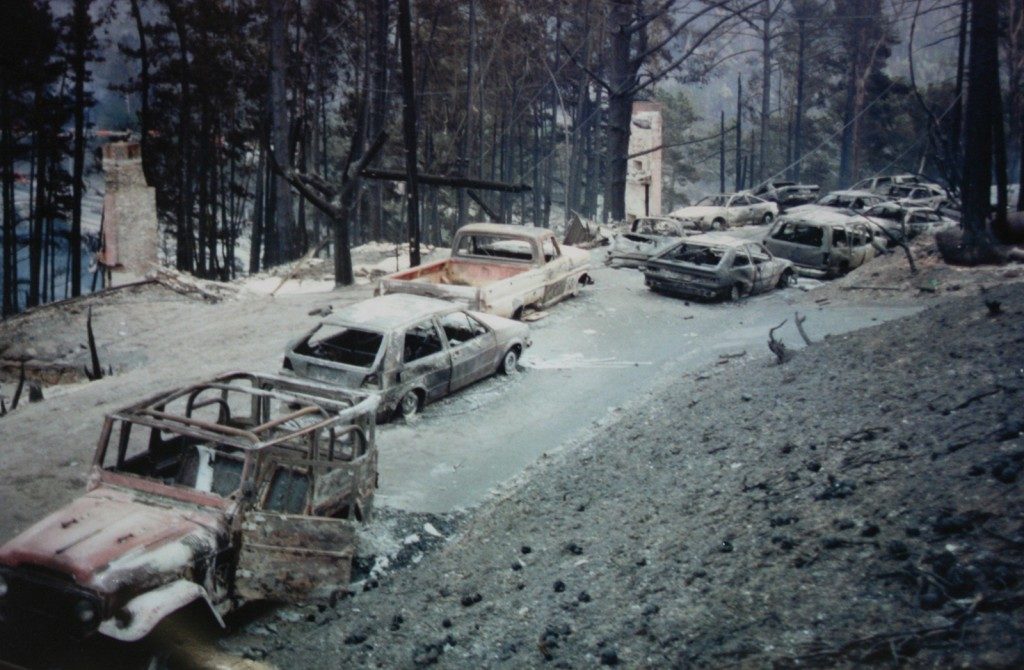
No way to navigate the narrow streets because of traffic, and with the speed of fire, people were trapped in their cars in Oakland Fire.

(Editor’s note: In this 2014 story, Station 69 Captains worried about a wind-driving brush fire.)

With Southern California experiencing its worst dry spell on record, according to the National Oceanic and Atmospheric Administration, Pacific Palisades firefighters are preparing for the possibility of a destructive brush fire in the local Santa Monica Mountains this fall.

“It could be this year, it could be next,” said Station 69 Captain Daniel Rodriguez. “No one knows when, but it will happen; and there is so much dead fuel on the hillsides, it will come through like a tornado, quick and hard.”

“When the winds are blowing, all bets are off,” said fellow 69 Captain Mike Ketailly, referring to firefighters’ ability to respond to embers that travel as fast as the winds.

The Oakland fire in 1991 was a deadly example of how an extreme wind-driven fire can wreak havoc. One news site reported, “The winds were so intense, and the area was so dry that within an hour close to 800 buildings were on fire: the fire destroyed one home every 11 seconds. In some places, the temperature reached 2,000 degrees Fahrenheit.

“Firefighting efforts were constrained by the fact that the affected homes were located on steep hills with very narrow streets. An important factor in the rapid spread of the fire was it was at an interface between developed and undeveloped land.”

Rodriguez calls the Oakland fire an “historical fire” because typically every 20-25 years there is a big fire in similar areas: for example, the 1961 Bel-Air ire (484 homes were lost, 191 damaged), the 1978 Mandeville Canyon fire (30 homes were destroyed including St. Matthew’s Church) and the Topanga/Malibu fire in 1993 (268 homes destroyed).

“Seven years ago, more than 1,000 homes were lost in the San Diego Witch fire,” Rodriquez said. “The number of residential units lost has gotten bigger because if you look back to the 1960s, there weren’t so many homes in the hills. Now they’re intermixed into the undeveloped land. The population density is now three to four times higher than it was. The next time we get a historic fire, the loss will be off the charts.”

In the event of a brush fire approaching the hillsides above the Palisades, could the embers reach the Village? “Yes,” said Rodriquez, who noted that “a wind-driven fire is predictable: it is headed from the mountains to the beach.”

Highlands residents are especially endangered because they have one way out–Palisades Drive–the Lachman Lane fire road is reserved for fire/police vehicles and closed off to residents trying to escape.

“Get out early,” Rodriquez warned residents.

Rodriquez was asked about the person we always see on television with a hose, trying to put out a fire at his house. Not a good idea. In the Oakland fire, Rodriquez said, homeowners did not have water pressure because so many water pipes burst from the fire. Also, many homes had wood-shingle roofs that were particularly susceptible to fire—it took only 10 minutes in some cases for a house to be brought down by the flames.

On the 20th anniversary of the Berkeley fire, the Berkeleyside paper ran Deirdre English’s story. “We only got as far as the corner. I swung to the left, and saw nothing but dense black smoke and shooting embers ahead. I backed up and tried going to the right. The hillside on both sides of the road was aflame, and burning branches were falling onto the street. We had to run.

“Two other cars containing neighbors also stopped and emptied. Now there were nine of us bolting towards the only way left to escape. It was downhill, down the upwind side of the hill. There was no path, just a steep open field of dry brush. To my horror, the hillside had already erupted into flame not more than 15 feet away. Now that I had witnessed the speed and fury of the firestorm, I know that in moments we could be engulfed.”

In addition to adequate brush clearance, plans for pets, and knowing what you need to load in a car at a moment’s notice, Rodriquez advises, “Don’t get stuck in traffic, especially in a wind-driven fire.”


Posted in Accidents/Fires | Leave a comment

The 1978 Blaze Destroyed 25 Homes and St. Matthew’s Church

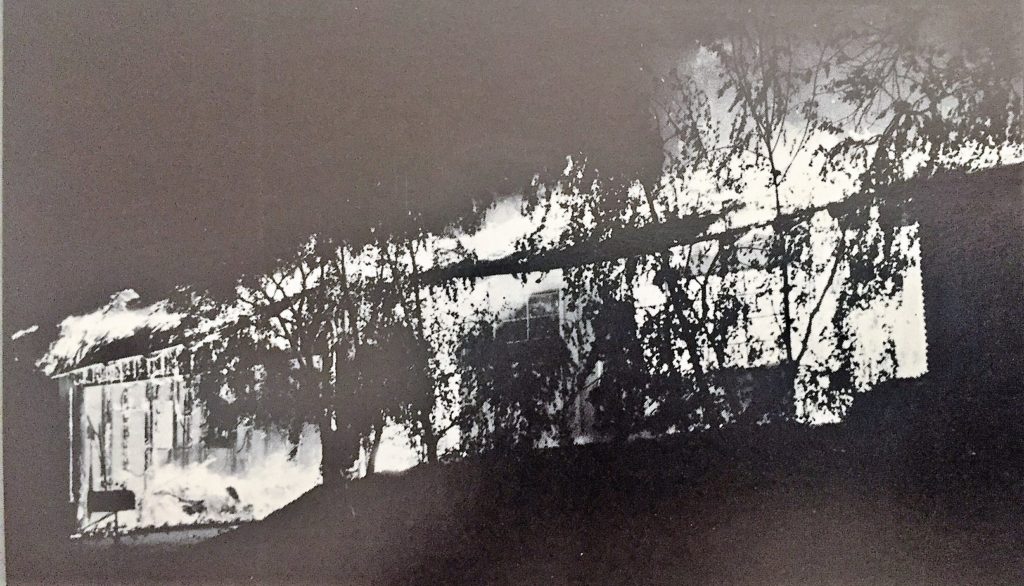
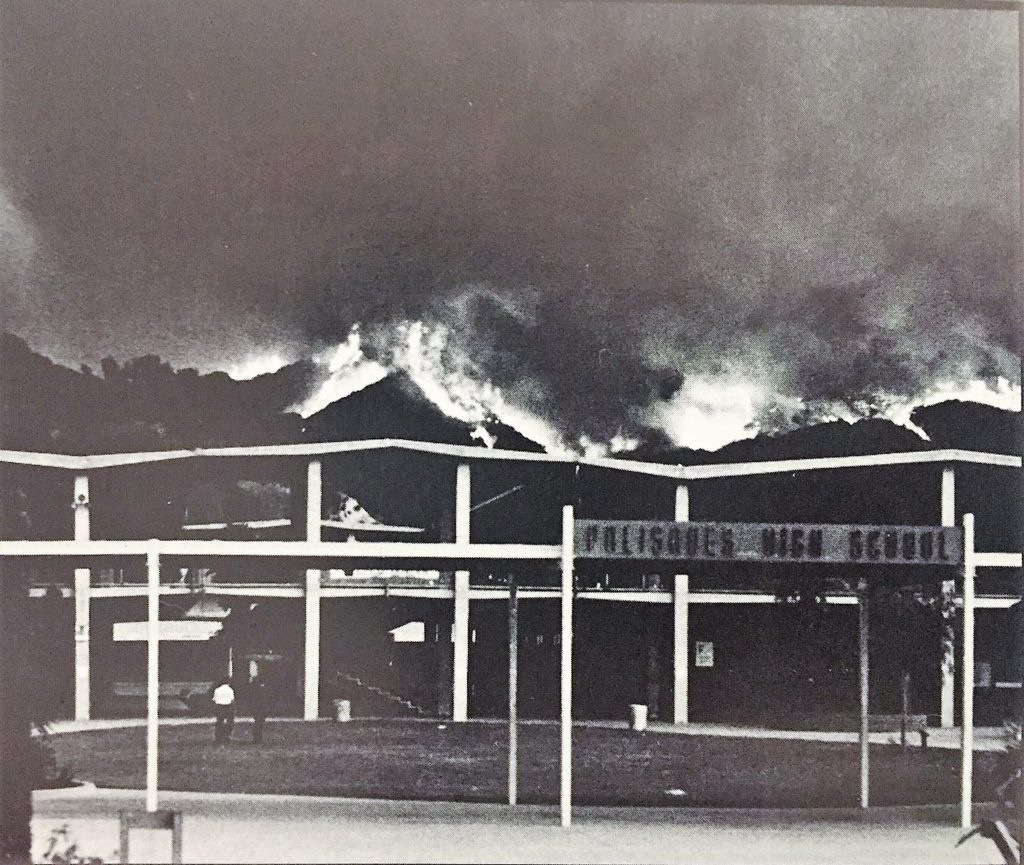
The 1978 Fire raged in the Santa Monica Mountains above Palisades High School.

On the afternoon of October 23, 1978, a blaze started near the intersection of Sepulveda and Mulholland. Whipped by winds that gusted up to 60 miles an hour, it spread west, through Kenter, Mandeville, Sullivan, Rustic, Temescal and Santa Ynez Canyons. Flames reached 50 to 100 feet, and many people in its path were evacuated. The fire reached the Pacific Coast Highway in about two hours. Sunset Boulevard became congested with traffic, making it more difficult for emergency vehicles.

At the Boy Scout camp, in upper Rustic Canyon, ranger Don Welch and wife Victoria, stayed to fight the fire. They saw their home go up in flames and it was only when they saw their own car explode in flames, did they realize they were trapped.

They submerged themselves in the algae-covered waters of the swimming pool and spent the next two hours breathing through baseball caps on their faces and fending off panic-stricken rats. When they felt the worst had passed, they drove a truck on the narrow road, though tunnels of fire, with the heat so intense that the truck tires exploded.

The fire destroyed 30 homes and damaged 18 others in Pacific Palisades, while burning 6,130 acres. St. Matthew’s Episcopal Church, built in 1941 was destroyed, along with the mill building. A guest home was destroyed on the Presbyterian Conference Grounds, the Josepho Ranch was destroyed, the Murphy Ranch, the Will Rogers Get-Away cabin and Boy Scout Camp buildings – although the Main Lodge at the Boy Scout camp escaped the fire.

On “Experiencing L.A.com,” a Pacific Palisades resident wrote “My family’s home came very close to being destroyed in the Mandeville fire. A few things I remember: 1) the speed of the fire. When I got home from High School, I literally thought the fire might be near our home sometime in the next day or two. We were evacuating within two hours; 2) the size of the fire. There is something terrifying about a 50-60 wall of flames several miles wide coming towards you. Trying to defend your home with a garden hose felt like a bad joke; 3) the smell of the fire. I get an awful feeling every time I smell a fire – bad memories of October 1978: and 4) the SOUND of the fire. This was perhaps the scariest thing of all. I still remember the low, loud roar. It was surreal.

“Our family was very fortunate that the winds shifted just was the fire approached our street. Other families were not so lucky loosing not only their homes, but everything inside.”

In the Los Angeles fire archives, it notes that “some Palisades residents complained about the lack of firemen to save their houses.” Many Palisadians were unaware that the 1978 fire was one of three major fires that broke out in a 12-hour period – including one in Agoura and in the Sierra Madre mountains north of Pasadena.

Los Angeles Mayor Tom Bradley and City Councilman Marvin Braude praised the city Fire Department for the way it battled the Mandeville blaze. “This fire department, operating under the circumstances of one of the largest brush fires in the history of the city, did an outstanding job,” Bradley said.

Fire officials would criticize city government for issuing personnel cutbacks through Proposition 13 and claimed that the LAFD’s delayed response could be attributed to their shortage of manpower.

The Santa Ana winds had resulted in dropping city power lines, which had sparked the initial brush fires. The City was held liable and eventually paid $8.5 million to twenty-two Mandeville residents and eight insurance companies.

The Agoura fire was started by a 15-year-old who used a lit cigarette wrapped in a matchbook to start the fire.

The 1978 Fire burned 30 homes in Pacific Palisades.

Posted in Accidents/Fires | Leave a comment

Corner of Temescal and PCH Beautified by the Rotary, But Irrigation Stopped

David Card (left) and irrigation contractor Juan Gutierrez work to restore water for the plants at the corner of Temescal Canyon Road and Pacific Coast Highway.

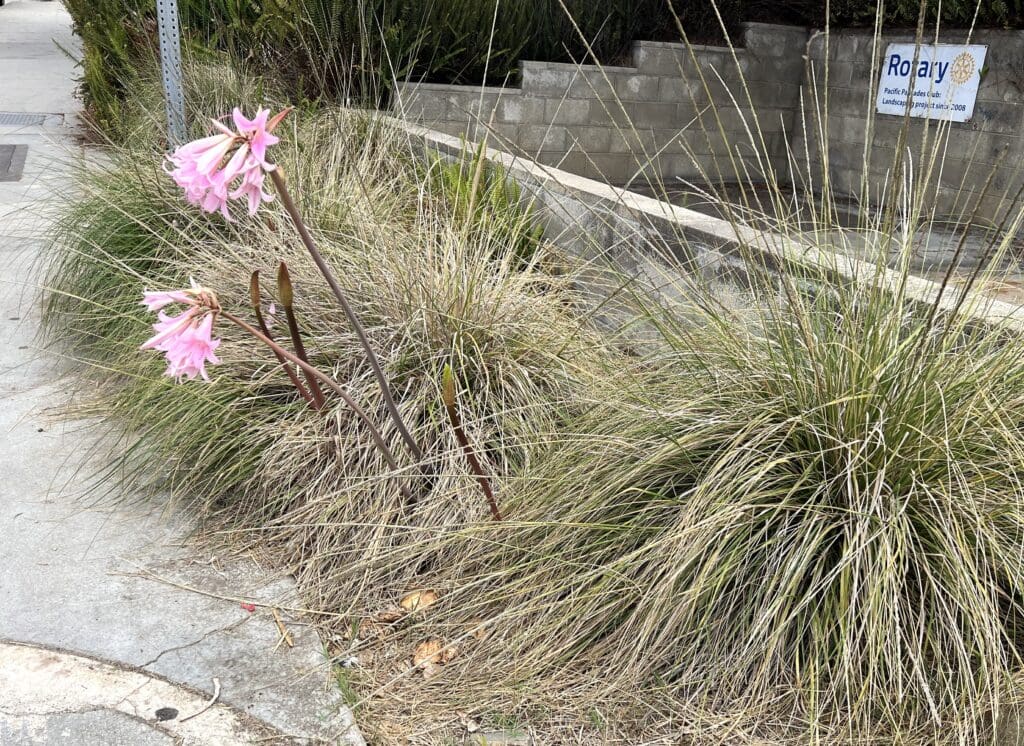
The naked pink ladies were starting to dance in the Rotary Landscaping at the Corner of Pacific Coast Highway and Temescal Canyon Road. But the ground was hard as cement and most of the plants, in the corner by the pump station, looked distressed.

Rotary Club member David Card, who had originally designed the landscaping for that corner worked with Recreation and Parks employees to find out why plants had not been watered for more than a month.

They discovered that a gate valve had been turned off and new batteries were needed for the irrigation controller.

Card also found a sleeping bag next to one of the irrigation boxes, that contain a valve. The water was set to go on at night and he wonders, if whoever was illegally sleeping may have shut it off.

The City worked to make sure that the irrigation water was flowing and on August 15, Card was with irrigation contractor Juan Gutierrez to ensure that system was back online.

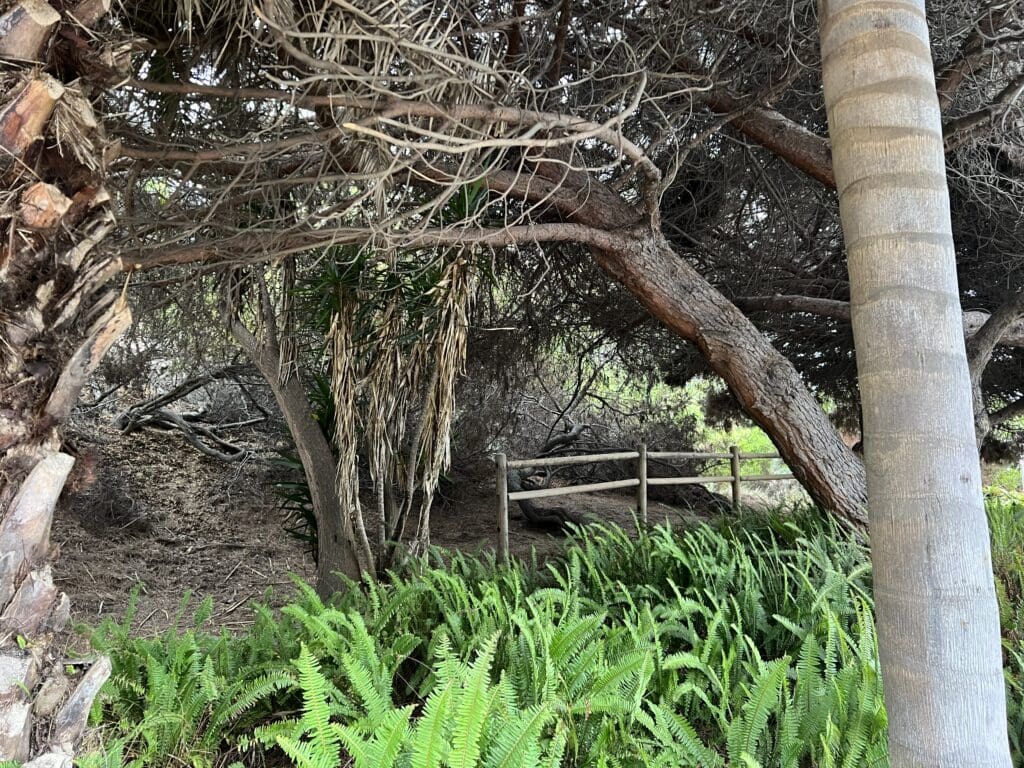
At that park site, there has not been brush clearance, and CTN promised to send the photo to Brush Clearance Inspectors.

This dried brush and trees should be cleared by L.A. City Recreation and Park workers.

People who moved to Pacific Palisades after 2006, take this corner beautification for granted.

They never saw the overgrown weeds and the trash and all of the dumping that was done at that corner.

A Rotary Club member Perry Akins suggested that the eyesore was not a good representation of this sweet community nestled between the Santa Monica Mountains and the Pacific Ocean. He recruited professional landscape designer David Card to join Rotary and to lead the beautification.

Two years later, the land was cleared, graded, and an irrigation system and plantings were installed by the Club members, Jamie Hubbs’ Eagle Scout project team (Troop 23), many community volunteers, and with the assistance of contractor Great Western Landscaping.

The Rotary Club funded it, with help from the Woman’s Club (for a solar irrigation controller) and community donors. The installation was done with the City of Los Angeles Bureau of Sanitation (the station) and the Department of Recreation & Parks (the surrounding park land).  The landscaping was dedicated with City Councilman Bill Rosendahl on July 24, 2008.

Two years later, the City dug up that site to install more pumps for a year-round diversion system that flows to the Hyperion facility.

After the pumps were installed, the City replanted the area, with plants specified by Card/Rotary.

In 2014, Stuart Muller and the Rotary Club worked on a plan to add plants to the landscaping around the station fence by creating a bed along the Temescal side (replacing the 2 pots), raising the fence (to allow the bougainvillea to cover up more of the equipment), adding railroad timber edging curb, and removing the power pole in the middle of the landscaping.

Keeping the plants alive was often difficult, because of Project O and the storm diversion project that occupied the Canyon from 2010 through 2017.

Troop 23 Eagle Scout candidate Greg Gold led a team of Scouts, Rotary Club members and other volunteers that built a two-rail wood fence in the park at the Rotary corner 2017. Over two Saturdays, Gold and his team installed the fence on the back side of the landscaping in order to prevent people from walking through and damaging the plants.

Pink Naked Ladies bloom in the fall. Many of the plants at the Rotary Corner are in need of water.


Posted in Community, Parks | Leave a comment

Our Street Is Being Repaved, AGAIN

Although Temescal was just repaved, one lane buckled.  Now it appears the sole remaining downhill lane is starting to have damage, too.

A long-time Marquez Knolls resident wrote Circling the News, “It’s so strange. We have had our streets re-paved, tarred, you name it and they’ve done it [again and again].

The resident said that streets on Lachman, Buenaventura, Las Flores and Charmel Lane seemed fine, but now “there are a dozen huge, monster trucks working on every one of those streets.

“It took me 15 minutes to get from Sunset and Bienvenida to Charmel Lane, which is usually a 5-minute drive even if you slow down for all the ‘humps.’

“When I think of all the streets that are a mess it makes me angry that they keep paving and re-paving our streets,” the reader said. “Can you find out why so much attention, time, money, is spent on our streets?”

Basically, repaving on Los Angeles city streets is done based on the Pavement Critical Index (PCI). The PCI is determined by the Bureau of Street Services (BSS).

According to the BSS, about 69,000 pavement segments were inventoried and entered into a computer database, by an automated van that took digital images of the street surface and lasers to capture roadway roughness. That information is fed into Micro PAVER, which calculates a PCI.

On the Bureau’s web site (streetsla.lacity.org), it explains that 80 percent of all resurfacing dollars are spent on normal resurfacing, and the other 20 percent goes to failed roadways. “These dollars have to be spread over the entire 6500-mile street network system to save as many streets as possible before they fail,” according to BSS.

The BSS site explains “As part of normal maintenance 3-5 years after a street is resurfaced, a slurry seal application is applied to prevent water penetration into the asphalt. This inhibits oxidation of the oils from the pavement, deters asphalt cracking, prevents water from seeping into the sub-base, and extends the serviceable life of the street, thereby reducing the need for repaving.”

By paving select streets, even if they don’t look like they need repair, BSS hopes to preventing them from failing, which ultimately would cost much more to repair.

Temescal Canyon Road had not been resurfaced, so the entire street needed to be scraped and repaved, which started in November 2022—but it is still not fixed, even though the BSS site shows it as completed.

Sunset Boulevard, another evacuation route for residents, also needs to be completely repaved. According to the site, much of its length in Pacific Palisades is rated in poor condition and has not been resurfaced or redone in 25 years.

The BSS assessment notes that there about 1,000 miles of failed streets in Los Angeles and about 3,000 miles require resurfacing. The City gives the overall system a C grade.

To see how your street ranks,  click here..

  1. In the search box in the upper right hand, type: Temescal and Sunset
    2. Click on the Table of Contents icon.
    3. On the left side of the screen, click on Bureau of Street services for the drop-down menu, and click on pavement conditions.

To see the streets currently listed for repaving or preservation in Pacific Palisades, visit: click here.

This Rec Center parking lot has not been repaved since it was installed in the late 1950s and desperately needs to be redone.

Posted in City, Community | 5 Comments

Mia Ruhman Will Sing National Anthem at Village Green’s 50th Celebration

Mia Ruhman

Palisadian Mia Ruhman, will sing the National Anthem on Sunday, August 28 at the Village Green. The triangular small park at the center of the village  is celebrating its 50th anniversary. Ruhman will step to the mike after the flag raising at 10:30 a.m.

Village Green Board Co-president Cindy Kirven said she found Ruhman through the Will Rogers 5/10K Race organizers. Kirven knew that group had held auditions for singers and contacted them to see if they could make any suggestions.

Dalena Hathway, who had helped hold auditions, wrote Kirven back and said they had found two incredible singers, Ross Chitwood, who sang before the race and Mia Ruhman.

Kirven contacted Ruhman, a sophomore at UCLA studying music composition, who agreed to sing for the event.

In   2017, as a 14-year-old Ruhman sang the National Anthem to start the Pacific Palisades Fourth of July Parade.

She has attended or been in the parade every year of her life because her grandfather, the late Lionel Ruhman, designed and built the Little Red School House float, usually entered annually by the Palisades Riviera Masonic Lodge. Lionel was a Mason, Rotarian and member of American Legion Post 283.

Ruhman was a member of the National Children’s Chorus and sang in concerts around the world including at the Vatican.

She performed in Theatre Palisades Youth productions, and at shows at Paul Revere and Palisades High School.

Ruhman graduated in 2021 – and also sang the anthem at her graduation. She sings every Sunday with the United Methodist Church Choir.

“I’m honored and grateful to sing the National Anthem for the community that nurtured my hopes and dreams,” Ruhman said. “I love the Palisades deeply.”

Circling the News has high praise for the singer, after hearing here sing the Christmas Carol, O Holy Night last Christmas Eve.

Long a favorite song of this editor’s mom, it is nearly impossible for an average singer to hit the notes.

Written in 1847 by French composer Adlophen Adam, a 2012 L.A. Times story (O Holy Night Sets the Bar High among Popular Christmas Carols), a Canadian-American singer Rufus Wainwright explained, “It’s the most operatic of all Christmas songs, for sure. With that high note near the very end, you go an octave, there’s a lot to aim for. It’s kind of like a slow rising alp that you eventually hope to scale.”

At the United Methodist Church on Via de la Paz, congregants and visitors were treated to a perfect rendition. Ruhman’s pure, clear voice was effortless in the song’s execution.

This resident who grew up in the Pacific Palisades is the perfect choice for the festivities.


Village Green Will Celebrate Its 50th Anniversary

The Village Green was built 50 years ago.

The Palisades Village Green is turning 50 years old and the board of directors of this triangular private park are asking the community to join in the festivities from 10:30 a.m. to 2:30 p.m. on Sunday, August 27.

“We want to celebrate the amazing community that helped bring the Village Green Park to life when it was converted from a gas station to the beautiful little park we all enjoy in the heart of the village,” said Village Green co-president Cindy Kirven.

Homespun activities will include live music, kids’ art table, flag raising, singing of the National Anthem. There will be CD 11 presentations, and town historians will also participate.

Everyone is asked to submit their favorite Village Green photo to [email protected] to be entered in the photo contest. Include your name, age (if a student) and contact information. Professional photographer and beloved Palisades Charter High School photography teacher, Rick Steil, has volunteered to judge the submissions.

Businesses who are supporting the event are Amazing Music (equipment) and  Katie ONeill Art.

Posted in Holidays, Parks | 1 Comment

Gofundme Organized for El Medio Bluffs Mail Carrier

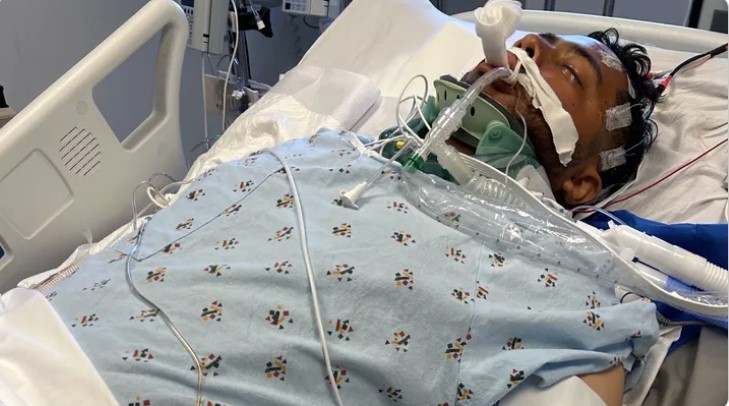
US Postal Mail Carrier Bryan Ramirez was badly injured in an accident on PCH and Entrada.


“We witnessed an accident at Pacific Coast Highway and Entrada tonight [August 8]. It appears that a motorcyclist was trapped under an SUV,” a resident wrote, and added, “it looked bad.”

It was bad. Palisades U.S. Postal Mail Carrier Bryan Ramirez was on his way home from work on Tuesday.

A resident Elizabeth, who has created a gofundme page for him wrote, “A SUV made an illegal U-turn and ran over Bryan on his motorcycle.

“Unfortunately, his right leg was pinned against two vehicles. His leg will have to be amputated from the knee down. He walks for a living, is a mail carrier, this man’s life has changed forever.”

Elizabeth said, “I ask from the bottom of my heart to help with whatever you can, to help cover his bills that he won’t be able to cover because of this tragic accident, so as he recovers, his focus can be on getting better.”

After posting the notice on Nextdoor, Postal worker Julie Garcia wrote “Bryan is my co-worker… he has been delivering mail to residents in the El Medio Bluffs for about two years now. I’m sure his customers think as highly of him as we do at the Post Office! Please consider making a contribution.”

Another person on Nextdoor wrote: “This is so horrible thank you for sharing the Gofundme page. This is horrific.”

A reader sent it to CTN and wrote “this is the accident we witnessed. Please post on CTN.”

To go to the gofundme page, click here.

Posted in Accidents/Fires | 3 Comments

Programs and Events of Interest: Mentoring, Painting and Happy Hour

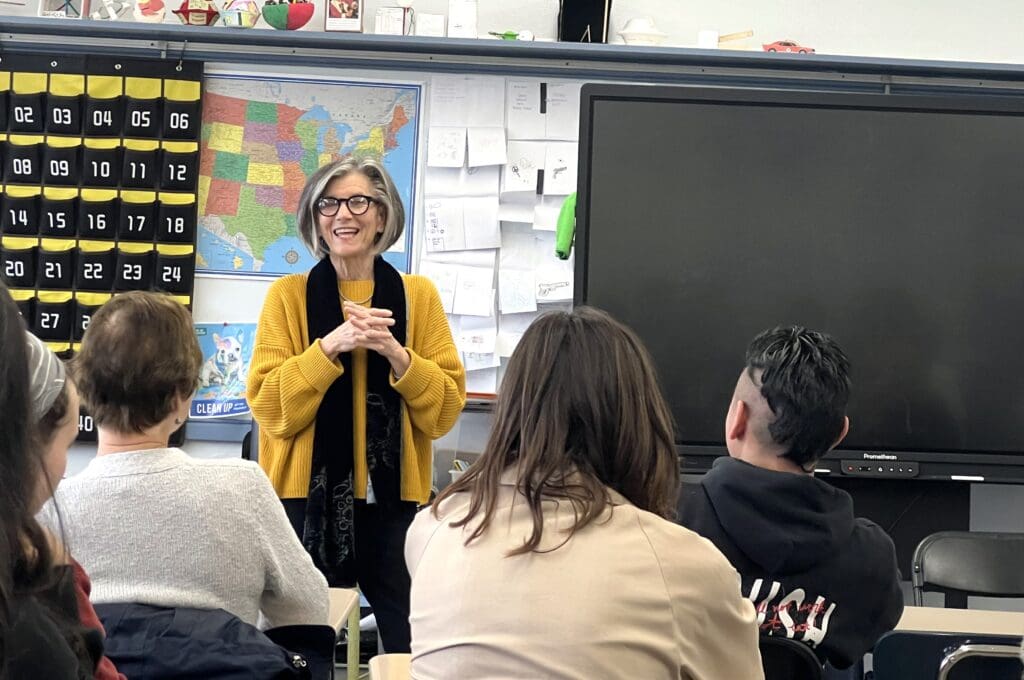
Sages and Seekers Executive Director Elly Katz works with high school students and those 60+.

Mentoring and Befriending

In March, CTN printed an emotional story about the bonding between Palisades High School students and local residents, 60+ (click here.)

Sages and Seekers pairs a high school teen with a senior citizen. They listen and share ideas and life with each other and by the end of the eight-week program, a strong bond and connection has been established.

Results of our one-year study funded by the National Endowment for the Arts showed that Sages & Seekers intergenerational storytelling intervention increased adolescents’ reported sense of social connectedness, psychological wellbeing, and purpose-in- life, and especially so for participants with the lowest initial levels.

Those in the PaliHi program spoke about fear, courage, and “it’s a choice to regret something.” The Sages provided their experiences, which in some cases was a lifetime of tradeoffs, and also emphasized the importance of family.

Sages also provided encouragement. One told her Seeker, “You are the sweetest, smartest person and I can’t wait to see what you do in life.”

Enrollment is now open for this free program. There are three sessions: fall (September 25 to November 16), winter (January 22 to March 14) and spring (April 15 to May 30), and each session runs about an hour. The deadline to enroll for the fall session is September 8 https://www.sagesandseekers.org/enroll.html


Painting with Martha Mead

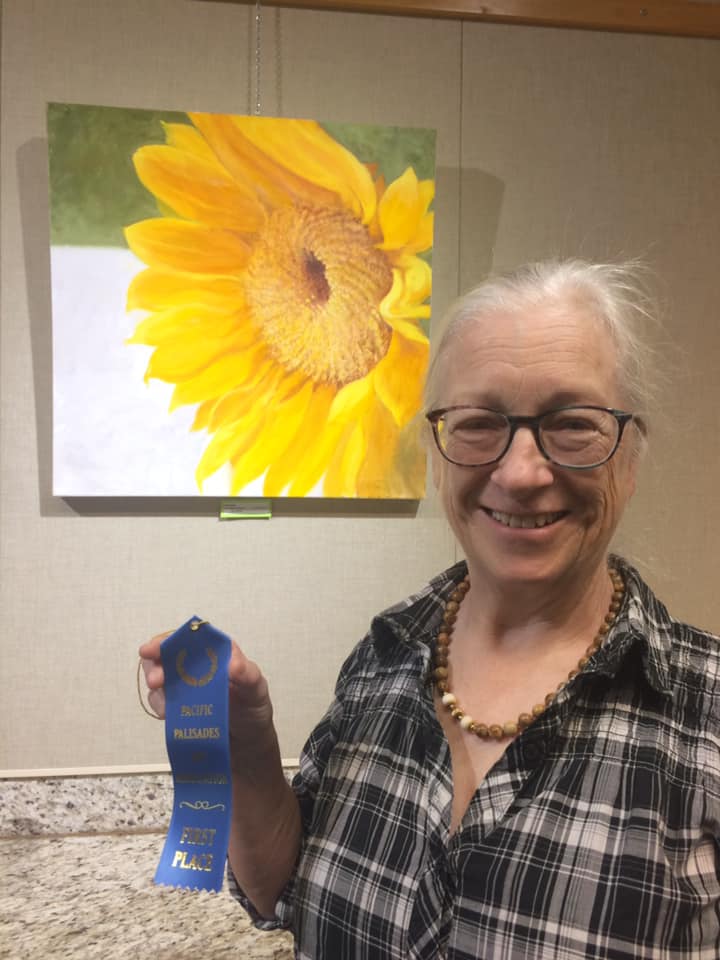
Award-winning artist Martha Meade will teach a painting class.

Local artist Martha Mead will once again be in residence at the Palisades Library, 861 Alma Real at 2 p.m. on Saturday, August 19. This free class was held twice during the summer and is back by popular demand. Under Mead’s tutelage, participants will paint with acrylics on canvas, and the students will be able to take home their work.

Mead, who works primarily in oils on canvas is a member of the Pacific Palisades Art Association. The library noted: “We are trying to expand access to this class by giving priority to those who have not taken any of the prior classes.  There is room on that list for more signups.  Please call, stop by or email [email protected] to be put on the priority list or, if you have taken the class before, you can be put on the waiting list for returning students.”


Happy Hour with The People Concern

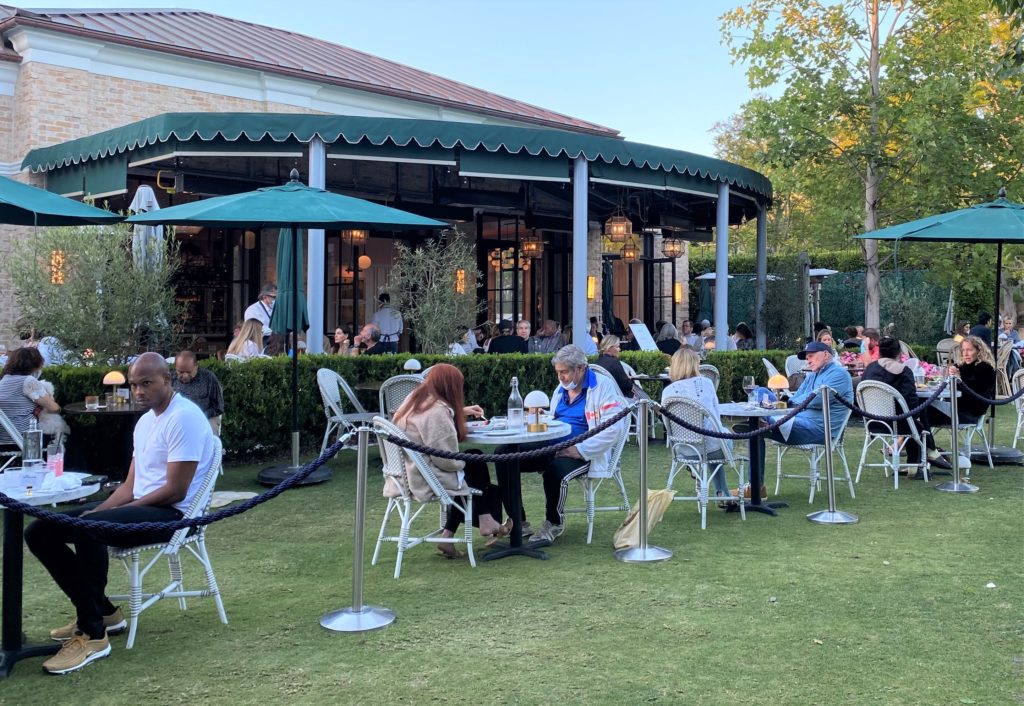
Draycott’s Happy Hour will give 10 percent to The People Concern.

One might ask how raising funds for The People Concern can be called a Happy Hour? Come over to The Draycott and find out on Friday, August 18, from 2:30 to 5:30 p.m.

The lovely restaurant, located off the little lawn in the Palisades Village, is hosting a Happy Hour with People Concern CEO John Maceri. Treat yourself to cocktails and appetizers while chatting with Maceri. Ten percent of all proceeds will go to the People Concern.

If you can’t make it Friday, throughout the entire month of August, The Draycott will donate 10% of Happy Hour proceeds to support the mission of housing the homeless. Happy Hour is weekdays from 2:30 to 5:30 p.m.


Posted in Community, Health, Kids/Parenting | Leave a comment

Traci Park Asked for Money to Fix Temescal Canyon Road

Councilmember Traci Park asked City Council for money to fix Temescal Canyon Road.
Photo: Rich Schmitt/CTN

Councilmember Traci Park wrote in a motion “Temescal Canyon Road is a critical thoroughfare in the Pacific Palisades Community, linking Sunset Boulevard to Pacific Coast Highway. It appears that the southbound lane of Temescal Canyon Road between Pacific Coast Highway and Bowdoin Street is experiencing structural instability due to water seepage from the heavy winter rains earlier this year.”

On Friday, Park asked the L.A. City Council budget and finance committee to approve $800,000, which is the amount of money that the Bureau of Engineering says will be needed to repair the road. The City Council will also need to approve it.

CTN asked about a timeline and Park’s spokesperson Jamie Paige said it could take about a month.

Initially, when BOE said they had a possible fix, Street Services said that there was no money budgeted for an emergency repair.

One resident asked why didn’t Park use discretionary funding?

Unfortunately, when former councilmember Mike Bonin left office, he emptied the coffers.

In an April 20 Westside Current story (Bonin’s Gift of City Funds to Nonprofit Develop Raises Questions. Here’s Why . . .) wrote “Between August 5, 2022, and December 28, 2022, former CD11 Councilman Mike Bonin emptied the CD11 discretionary fund and made $127,474.14 in expenditures to a variety of recipients, mostly to nonprofits.”

The story concluded “According to city documents, $5,000 of Bonin’s end-of-term discretionary funds were sent to Dignity and Power Now, an organization founded by Patrice Cullors, co-founder of Black Lives Matter, which calls for defunding the police. Bonin sent the same amount to Palms Unhoused Mutual Aid (by way of a directed donation to a registered nonprofit), who describe themselves as an ‘abolitionist network of care directly working with unhoused communities.’ Thousands of dollars in 17 different donations were given to a private company, United Site Services, which provides portable rest rooms.”

Bonin paid for numerous porta-potties for different encampments.

Temescal Canyon Road, which is normally a four-lane road is one of three ways in and out of Pacific Palisades, a community of about 28,000 residents. Additionally, Palisades High School is located on that road and daily about 3,000 students travel to or from school. With the closure of one lane, it shuts down access to Pacific Coast Highway.

After the recent Lahaina devastation, Pacific Palisades Community Council President Maryam Zar wrote to CTN, “This makes me think of our Palisades and our very few routes out. Temescal Canyon is key. I am going to agenize formal support for our Councilmember’s motion at the August 24 PPCC meeting.”

In her weekly message to constituents, in a video specific for Palisades residents, Park said, “Your safety and accessibility remain my top priorities, so please be patient as we continue this required work.”

CTN asked Park’s office, “Has the BOE identified where the leak is coming from?”

Although rains were heavy this year, according to the stats from 1942, that were initially kept, and given to CTN by the late Ted Mackie, the most rain ever recorded here was 42.60 inches in 1997-1998. This past year, the Palisades received 32 inches.

Prop O construction was completed in 2017 on Temescal Canyon Road. The section of road where the leak is now has a hydrodynamic separator and a diversion structure. Is there an issue with either of those two items?

Parks spokesperson said they would check with BOE to determine the cause of the leak and would let the community know as soon as they have more information.

Posted in City, City Councilmember Traci Park, Community | 1 Comment

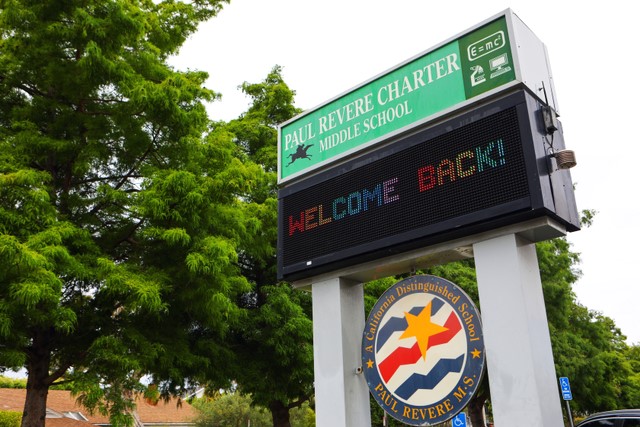
Dr. Shuntell Anthony Named New Principal at Paul Revere

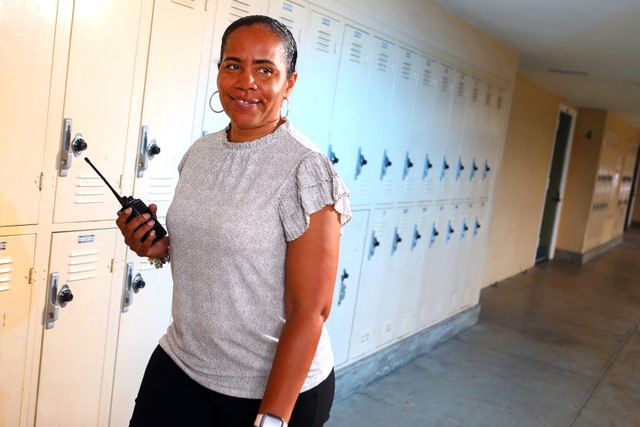
Paul Revere Principal Dr. Shuntell Anthony checks the middle-school facilities before school opens.
Photo: Rich Schmitt/CTN

By LAURA ABRUSCATO

Contributing Writer

Dr. Shuntell Anthony has had many roles with Los Angeles Unified School District throughout her lifetime: K-12 student, parent, special education teacher, administrator and now principal of Paul Revere Middle School.

“Hiring Dr. Anthony as principal of Paul Revere was the best decision the school could have made,” said Tom Iannucci who retired after six years as Revere principal in June. “Dr. Anthony is an exceptionally talented individual who will lead Revere forward with great ability and energy.”

Anthony was an assistant principal at Revere for six years before becoming the school’s principal this month. “Tom was a great teacher and leader,” she said. “I learned a lot from him and he’s a mentor.”

School begins Monday, August 14, for the
school’s sixth through eighth grade students.
Photo: Rich Schmitt/CTN

A native of South L.A., Anthony graduated from Westchester High School. She received her bachelor’s degree from UC Davis, a master’s degree from Cal State Northridge and her Ph.D. in education from USC.

Beginning her career as a special education teacher at Manual Arts High School, she then worked as a coordinator at Carson High School, and in the district’s charter division before coming to Paul Revere.

Anthony first encountered Revere as a parent when her oldest child Chris attended the school. “[P.E. teacher] Mr. Foxson introduced him to track and field and he went on to run for the state championships in high school.”

She and her husband Spencer Campbell, a soon-to-be retiring park and recreation supervisor, live in the South Bay.

In addition to Chris, a Houston Baptist University graduate who is now a personal trainer and educator, her family includes daughter Simone, a graduate student at the University of Illinois, Chicago; son Kole, who attends Sacramento State; stepson Trey, a UC Irvine graduate who is getting his master’s degree in social work at Claremont Graduate Institute; and stepdaughter Joy who attends Old Dominion.

Anthony enjoys the middle school age group and seeing the students’ growth during their three years at the school. “They have so much energy and they’re full of positivity. They come in and their backpack is bigger than they are, and by eighth grade, they have it down and they’re ready.”

She also appreciates the parent involvement at Revere. “I want to continue the great partnerships with parents and families. I look forward to working with PRIDE,” she says of the Revere parent booster club.

“I have an amazing staff,” Anthony says of the school’s teachers, administrators and support staff. “The staff is very committed. There’s a low turnover rate and they come every day from all parts of L.A. to work here. I love the family feeling.”

Some of her goals for the school include making sure all 1,750 students have access to high-quality instruction, improving test scores, eliminating barriers and providing social emotional support. The school has two psychologists and a full-time psychiatric social worker.

Anthony is also interested in pursuing more partnerships, such as the one the school currently has with UCLA for math and science.

She appreciates Revere’s high expectations and is looking forward to seeing happy students when the school year begins on Monday. “We want them to have a connection on campus and make good choices.”

Dr. Shuntell Anthony meets with teachers before school opens.
Photo: Rich Schmitt/CTN

Posted in Schools | Leave a comment