Kupfer’s Murderer on Trial: DNA Examined. Medical Examiner on the 46 Stab Wounds

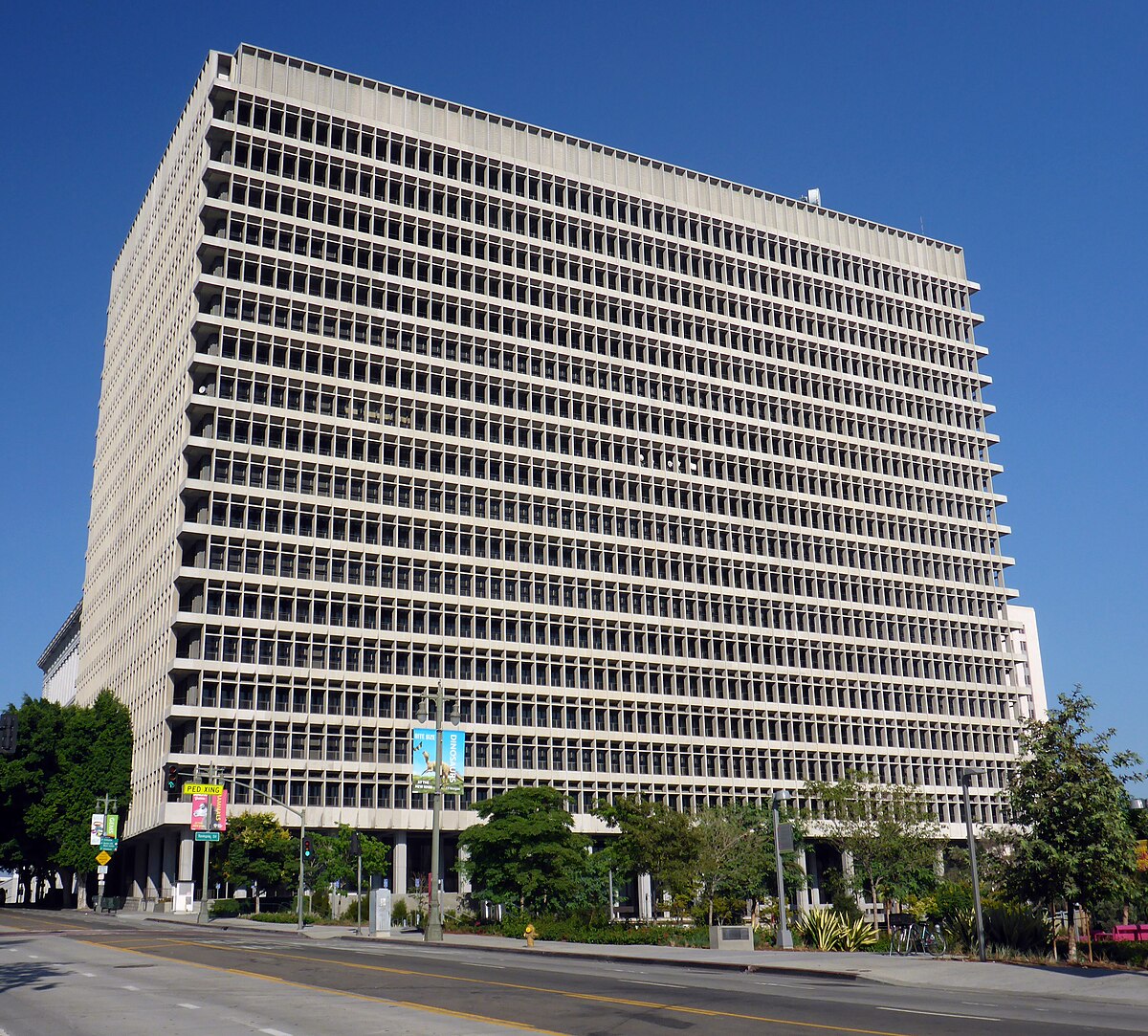
The trial for the murderer of Brianna Kupfer is taking place downtown at the ClaraShortridge Foltz Criminal Justice Center.

Before Medical Examiner Richard Ou took the stand, Defense Attorney Robert Haberer, asked that the number of photos shown of Brianna Kupfer, be limited. He said would be prejudicial to the jury.

District Attorney Habib Balian said that more than 200 photos had been taken of the wounds of Kupfer, who had been stabbed 46 times.

“I’ve narrowed it down to 14,” he told Judge Mildred Escobedo. “I did a modesty screen and cleaned up some of the blood.”

He gave the photos to the judge, who asked “how many times was she stabbed?”
“Forty-six,” Balian said. The judge looked at the photos.

She then told Haberer, “Your objection is well taken. But here you have 14 selected from different aspects of the body. I do not find that prejudicial.”

The defendant, Shawn Laval Smith, is on trial for murder of Brianna Kupfer. He faces two special circumstance allegations: lying in wait and the use of a knife.

The jury was brought into the courtroom.

“I started the examination on January 17,” Ou said, “and concluded it on January 18.”

When Balian asked why it took two days,  Ou said, the case “was slightly out of the ordinary because of the large number of skin injuries. It took a day to document the injuries.”

He was asked to describe the injuries. “There were 46 sharp force injuries: 26 stab wounds and 20 incised wounds,” Ou said. “There were injuries to internal organs, the right and left lung, liver, stomach and the aorta.”

He said that “if severe injuries do not receive immediate medical attention, it will cause death.” Ou said that seven of the wounds were classified as severe and estimated she could have died anywhere from seconds to minutes.

As the photos were shown of Kupfer of the stab wounds, her parents and other spectators in the courtroom covered their eyes.

There were four stab wounds on the right side of the chest, one in the center and six to the left side of the chest.

Ou explained that a stab wound is deeper than it is long,  and that an incised wound would be longer than it is deep. Balian showed a long wound by her neck and Ou told him that it was 6 inches long and from about 1/16 to ½ inch deep.

The deepest stab wound was five and a half inches deep.

Brianna Kupfer, a petite woman, was stabbed more than 46 times.

Ou was asked if Kupfer had defensive injuries – injuries sustained while trying to protect herself.

He said “there are numerous cuts on her left arm, that would be consistent with defensive injuries. There are more defensive injuries on her right arm.”

Ou also showed an injury where a sharp object entered and exited the petite Kupfer’s arm. She was 5’3” and weighed 123.

An additional entrance and exit wound was on her left chest. “She sustained more than 46 injuries because a blade exited and entered her body in different places,” Ou said.

Kupfer was on her back, and she put up her legs in a defensive effort to stop the stabbing, but then was stabbed in several places in the back of her legs.

The defense asked if hormones might have helped blunt the effect of the stabbing and if knife wounds were different with different body tissues such as fat or muscle.

“It would depend on the person,” Ou said.

The day had started with the devasting and emotional testimony from The Croft House owner Robert “Riley” Ray. The owner of the furniture store said he did not know Brianna well, that the day-to-day management of the store fell to Kari Steib (who testified earlier).

Ray explained how he had mounted three NEST cameras in his store, one on a wall behind a sales desk, one on pole facing the entrance and a third on a pole facing the back exit. He said the cameras allowed him to watch the interior of the store on his phone. “It was set up to look at live and to record for 30 days,” he said.

How come the video was not available to the court? Nest was purchased by Google and Ray later learned he had not purchased a subscription to Google.

When asked what happened on January 13, 2020, Ray said, “I received a phone call from a co-worker [Kari] who asked me to check the cameras. I told her to call the police immediately.”

He also called the store next door [Chiropractor’s office] and asked them to check on Kupfer, but they didn’t answer. Ray watched the cameras in the store on his phone and reviewed the historical data as he drove to the shop. “I saw a person interacting with Brianna at the counter,” Ray said.

When he arrived at the store on La Brea, he was met by a police officer. “I asked what had happened to Brianna and if she was okay. The officer said she had expired.”

On the stand, Ray was distraught and fought to hold back tears, as he continues to explain what happened that day.  He said he showed his phone to the officer [LAPD Officer Paulette Gonzalez] who took screen shots of the person who had been in the store with Brianna.

Habib asked him “Were there other images that you saw that were not here?”

“I saw him [Smith] coming into the store touching things,” Ray said.

Then Ray described Brianna running from behind the counter to try and get to the front door. “It was like she was fleeing, escaping,” he said.

The suspect was on the other side of the sofa from Kupfer. “I saw the images several hundred times,” Ray said.

“Why did you keep looking at the images,” Balian asked.

“How could you stop looking at it?” Ray asked.

The defense attorney asked him if he saw a knife in the defendant’s hand.

“No,” Ray said.

“Could you say with any degree of certainty that he had anything in his hands?”

“No,” Ray said.

On the redirect Ray was asked by Balian about his statement “His back was to me, and I couldn’t see his hands.”

Haberer asked if Smith was running.

“I don’t know if he was running or jumping. All I could see was his silhouette,” Ray said. “I could tell she [Brianna] was running.”

Ray spoke about a footprint that was on the white sofa cushion. Ku was found by the sofa near the door. Ray speculated that “I think she was running, and he leapt over the sofa.”

He said after the police left, he cleaned up the blood from the crime scene and also the footprint from the sofa.

Also giving lengthy testimony today were two DNA experts. Penny Reid, an LAPD criminologist, who is the technical DNA director and has been a DNA analyst since 2008, testified that she has tested thousands of samples during her career and testified in more than 50 cases.

Reid said there are steps in place to ensure protocol was followed and that no cross contamination occurs. She reported that on the knife blade the DNA was of Brianna Kupfer. On the digital recorder the DNA belonged to Smith. On the knife sheath, it was a mixture of two individuals, Kupfer and Smith. On the knife handle there were three samples of DNA (Kupfer – 17 percent. Smith – 83 percent and an unknown person one percent).
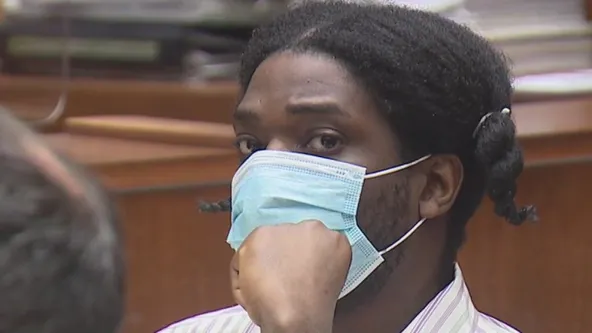
Shawn Laval Smith is on trial for murdering Brianna Kupfer.

The audio recorder that was left on the counter of the Croft House, during the murder was taken into custody by the police. Detective John Lamberti has been with LAPD for 15 years. Prior to that he was in television production. “Anything video or audio falls in my lap,” he said.

The recording from the Olympus digital recorder was downloaded and stored on a computer. “It shows the date the recording was made,” Lamberti said. When asked he said it could record 80-100 hours. The tape was played during the opening arguments and details the last minute of Kupfer’s life.

Councilmember Traci Park was in the courtroom today, listening to testimony.

“No family should ever have to hear testimony about the brutal, senseless, intentional murder of their beautiful daughter,” Park said.  “We have no choice but to remove threats from our streets. Period.”

Tomorrow the trial will continue at 9:40 a.m., downtown in Department 126 on the 15th floor of the Clara Shortridge Foltz Criminal Justice Center, 210 West Temple Street, L.A. Ca. 90012.

Parking ($12 a day) is available a block away in the former L.A. Times building, entrance on second street, off Broadway.
Posted in Crime/Police | Leave a comment

2024 Democratic Garden Party Scheduled

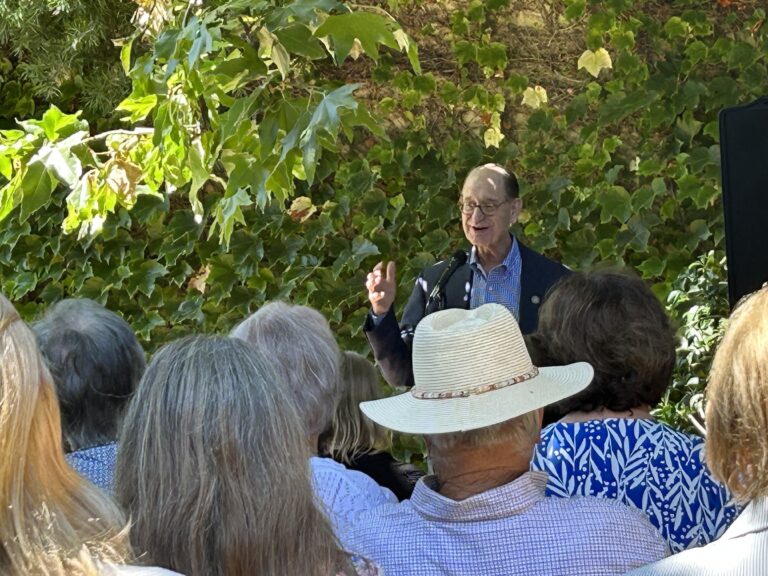
Representative Brad Sherman spoke and took questions at the Garden Party last year.

The annual 2024 Palisades Democratic Garden Party is scheduled from 2 to 4 p.m. on Sunday, September 8 at a home in the Riviera Palisades. (Doors open at 1:30 p.m.)

There will be delicious food and drink while relaxing outdoors, and there will also be a silent auction.

Guests scheduled to attend include Assemblymember Jacqui Irwin, Supervisor District 3 Lindsey Horvath, City Attorney Hydee Feldstein Soto, City Councilmember Traci Park, L.A. County Democratic Party Chair Mark Ramos and Senior Barack Obama Advisor and Deputy Press Secretary Bill Burton.

A video message will be played that was recorded specifically for Pali Dems by Representative Brad Sherman.

This is a chance to mingle with officer holders and other VIPs.

After brief remarks the attending politicians generally take questions. Now might be a good time to ask Horvath her stance on Grants Pass and why. Or hear Park explain about plans for the L.A. Olympics.

To RSVP,click here.

OTHER NEWS – Westside Headquarters Opened

Westside Democratic Headquarters officially opened its 4,000-sq.ft campaign center on September 1 with refreshments, entertainment and political swag for those attending.

The Center is located 1241 3rd St. Promenade (between Wilshire & Arizona, across from Sephora) in Santa Monica.The location’s regular hours will be noon to  8 p.m. Monday – Thursday, noon to 6 p.m. Friday and 10 a.m. to 6 p.m. on weekends. A special Presidential Debate viewing party is also planned for September 10 at 6 p.m.

Posted in City | 3 Comments

Family Walk Harms Six-Year-Old

On Lincoln Boulevard, a child cut his hand on a broken crack pipe that still had drug residue.

(Editor’s note: This letter was printed with permission from the family, who wish to remain anonymous.)

Yesterday, my family went on an evening walk.

While on Lincoln Boulevard, my 6-year-old son tripped on a ridge in the sidewalk and grabbed onto a nearby planter box to steady himself. As soon as his hand hit the planter, he began screaming out in pain.

To my stunned surprise, when he lifted his hand up, I saw blood streaming down his small fingers. I ran to the planter box to see what had caused this injury, and to my horror, I discovered a broken meth pipe covered in a foamy white residue, resting on the surface of the dirt.

Panic set in.

We quickly called his doctor’s emergency line. The police were called out. Reports were taken. Statements were made. Bandages were placed, and directions for monitoring the wound were given.

It was a big, terrifying, sickening ordeal and the truth is, it never should have happened in the first place.

The needle and pipe distribution program in Santa Monica is a cruel sick joke that is being used to prey on the vulnerable – not just vulnerable drug addicted people but also vulnerable children. It is not compassionate to homeless people to encourage and facilitate their drug use. It is not kind to provide the weapon that will inevitably kill the vast majority of drug addicted people. It is not right to commingle innocent children and addicts. It is evil to expose young people in our parks and city to communicable diseases and deadly drugs in order to support whatever stupid feel-good cause you want to campaign on.

The truth is, in all likelihood, this pipe was given away in our parks for free, and the addict who used it was encouraged to come back to Santa Monica for yet another hit.

My 45-pound son should not have been exposed to drugs or diseases. A family walk should not have turned into monitoring my son overnight for intoxication.

I should not have to explain to my small children that they can’t go near the bushes because needles or glass pipes are handed out like candy in our parks, and careless people can’t be bothered to walk to a trash can. It is heartbreaking that our city’s goals and policies value the falsely imagined safety of its drug addicts over the actual safety and wellbeing of the children who live here.

What a sad sick place we call home.


Posted in Crime/Police | 3 Comments

With “Friends” Like These . . .

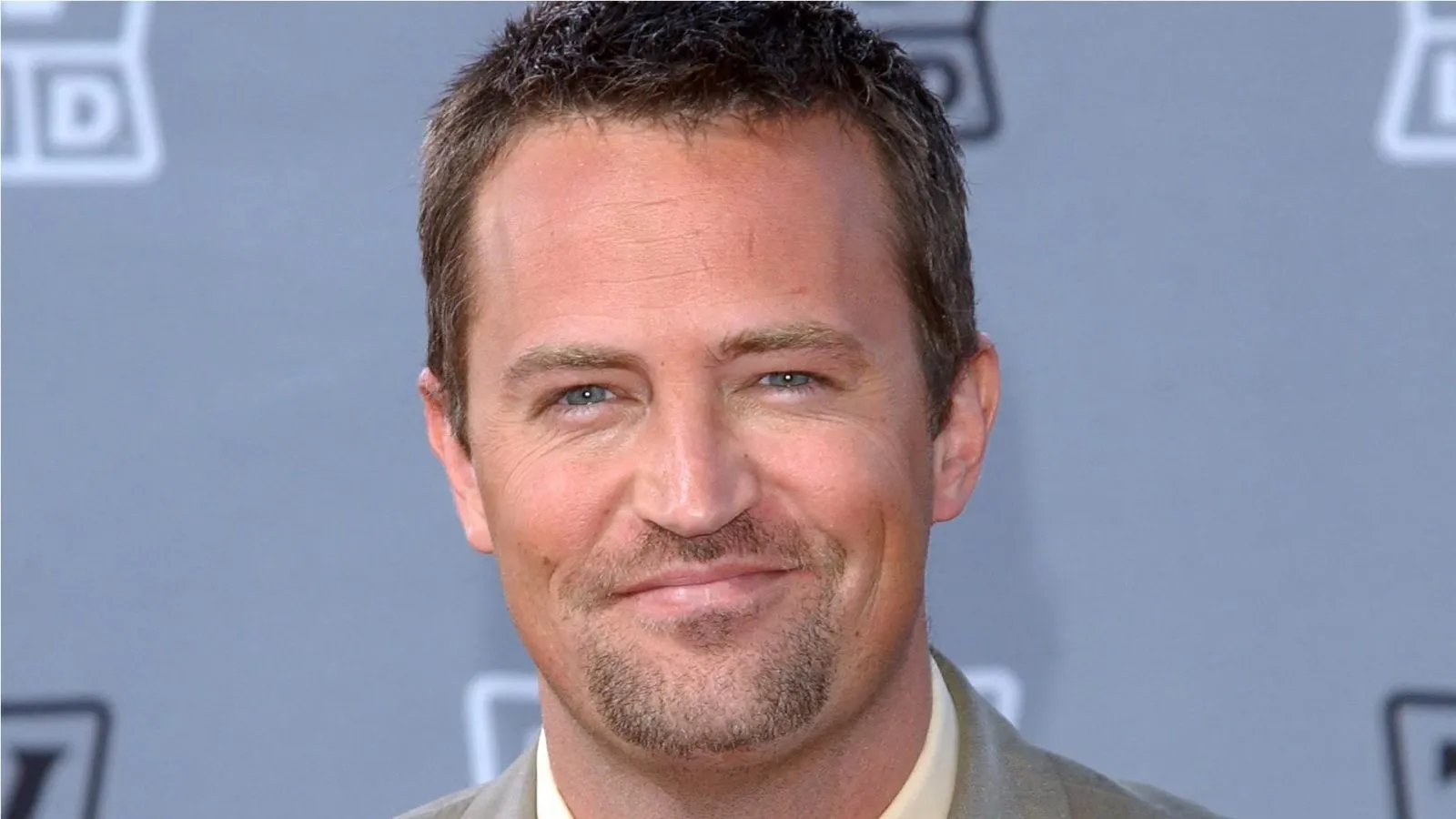
Matthew Perry

Matthew Perry’s addiction was well documented. He wrote about it in his book “Friends, Lovers, and the Big Terrible Thing” published in November 2022.

The story takes readers from his childhood to fame to addiction and recovery in the aftermath of a life-threatening health scare. Before the frequent hospital visits and stints in rehab, Perry wrote about his life. The book has been called “a hand extended to anyone struggling with sobriety.”

Perry died in his hot tub on October 28, 2023, from an overdose of ketamine, injected by his personal assistant Kenneth Iwamasa. The Friends star lived in Pacific View Estates in Pacific Palisades.

On August 30, Dr. Mark Chavez, 54, of San Diego was charged in Los Angeles Federal Court in connection with Perry’s death. He was the third person in this case to plead guilty.

Chavez, who received his medical degree from UCLA, also agreed to cooperate with prosecutors as they pursue Dr. Salvador Plasencia, the doctor Chavez worked with to sell ketamine to Perry.

Kenneth Iwamasa

Also cooperating with the U.S. Attorney’s Office are Perry’s assistant, Iwamasa, who admitted helping Perry obtain and also injected ketamine, and Erik Fleming, a Perry acquaintance, who admitted acting as a drug messenger and middleman with Jasveen Sangha, a woman who authorities say is a dealer who sold the actor the lethal dose of ketamine.

Ketamine is used medically as an anesthetic. Although not FDA-approved for treating any psychiatric disorder, it has been used in pain management, addressing treatment-resistant depression and managing suicidal thoughts.

Perry had been treated with ketamine infusion therapy, but the levels found in his blood were in the range used for general anesthesia during surgery and not from therapy.

Five people have been charged in connection with Perry’s death.

“These defendants took advantage of Mr. Perry’s addiction issues to enrich themselves. They knew what they were doing was wrong,” U.S. Attorney Martin Estrada said when he announced the charges on August 15.

THE PLAYERS:

Erik Fleming, 54, was described as a friend of Perry’s.  Fleming was able to get 50 vials of ketamine from drug dealer Jasveen Sangha, who was known as the “Ketamine Queen.” He gave the vials to Kenneth Iwamasa.

Kenneth Iwamasa, 59, worked as Perry’s live-in assistant. He admitted injecting Perry with the drug.

Dr. Mark Chavez

Dr. Mark Chavez, who used to run a ketamine clinic, sold ketamine that he had previously obtained by writing a fraudulent prescription to Dr. Salvador Plasencia, who then sold it to Iwamasa. Clinics typically treat chronic pain, depression and PTSD (post-traumatic stress disorder) .

Fleming, Iwamasa and Chavez have pled guilty and all face jail time but are cooperating with authorities.

Dr. Salvador Plasencia and Jasveen Sangha have pled not guilty.

Dr. Salvador Plasencia

Santa Monica Dr. Salvador Plasencia, 42, who graduated from UCLA, was charged with one count of conspiracy to distribute ketamine, seven counts of distribution of ketamine and two counts of altering and falsifying documents or records related to the federal investigation.

Plasencia’s attorney said, “Ultimately, Dr. Plasencia was operating with what he thought were the best of medical intentions,” and his actions “certainly didn’t rise to the level of criminal misconduct. His only concern was to give the best medical treatment and to do no harm,” said Stefan Sacks. “Unfortunately, harm was done. But it was after his involvement,” as quoted by the Associated Press.

Jasveen Sangha

Jasveen Sangha, 41, was called the “Ketamine Queen” in court filings. She was charged with one count of conspiracy to distribute ketamine, one count of maintaining a drug-involved premises, one count of possession with intent to distribute methamphetamine, one count of possession with intent to distribute ketamine, and five counts of distribution of ketamine.

A status conference in the case against Sangha and Plasencia is scheduled for September 4 before U.S. District Judge Sherilyn Peace Garnett in Federal Court in downtown Los Angeles.

Posted in Crime/Police | Leave a comment

How to Fix the Homelessness in Los Angeles: Deal with Drug Addiction

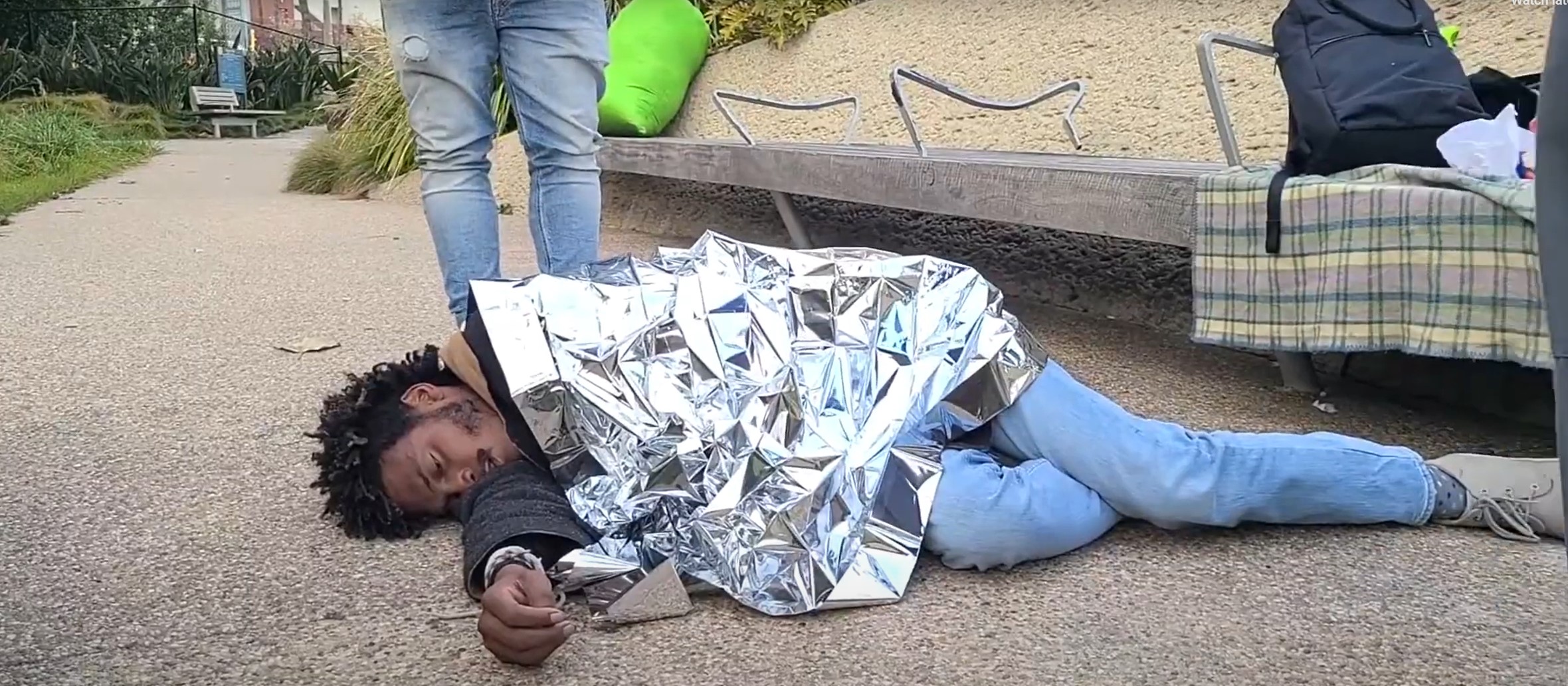
This person suffered a drug overdose in Tongva Park in Santa Monica.                                                 Photo: JOHN ALLE/SANTA MONICA COALITION

A reader said she was tired of hearing about the homeless in Los Angeles (amen, to that), with no one offering any solutions. This editor accepted the challenge and will examine the issue in three parts.

The first step to fixing homelessness, and cleaning up the City before the 2026 World Cup and the 2028 Olympics, is to stop lumping all people living on the street in the same category.

There are three broad categories of homeless: 1) drug/alcohol addiction, 2) mentally ill and 3) those who need help getting back on their feet. Each population needs to be dealt with individually.

PART 1 DRUGS:

If you know someone is an alcoholic, would you say, “Can I give you a gin and tonic?”

That’s what L.A. County is doing with Harm Reduction, enabling addicts, and keeping them on the streets.

As many as one-half to three-fourths of homeless have diagnoses of alcohol or other drug dependence. Rates of alcohol and other drug use disorders, and the social costs associated with untreated substance disorder, are higher among homeless than non-homeless persons, according to the National Institutes of Health.

L. A. County Public Health Director Dr. Barbara Ferrer

L.A. County Department of Public Health Director Barbara Ferrer supports Harm Reduction. That is a program that focuses on non-judgmental addiction-aiding services delivered without preconditions.

“Here’s some needles, no questions asked.” Harm Reduction studies do not have data to show the program helps addicts get clean. The program also recognizes that many people are not willing or able to stop using substances.

About 3,220 people die from fatal drug overdoses in L.A . County every year – or about eight to nine people daily die from overdose. “The numbers are continually going up,” said Dr. Gary Tsai, director of L.A. County’s substance and Abuse prevention and control division.

L.A. County doesn’t help the addict get off drugs, which might kill him/her, instead it supplies drug paraphernalia. Harm Reduction does not stop usage; the only positive found in studies about that program notes that HIV transmission may be minimized.

The L.A. County budget for the Harm Reduction program jumped from $5.4 million in 2023 to $31.5 million in 2024.

Have another gin and tonic.

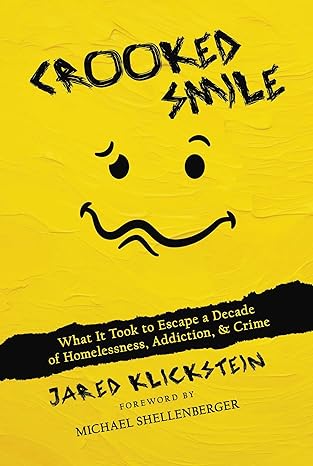
How do addicts get their money for drugs? At least one prior user Jared Klickstein, who was homeless for nearly a decade – wrote about his experience in Crooked Smile: What It Took to Escape a Decade of Homelessness, Addiction, & Crime.

“It’s a good way to show that there are people inside those bodies that right now are being governed entirely by addiction,” Klickstein added. “These people have souls, and they have value, but as long as they’re under the spell of horrific drug addiction and mental illness, their lives are basically being wasted, and it’s not right to just enable that sort of thing and sit back and [sit] on our hands.”

He wrote that while addicted he and another addict would take a bus to Santa Monica and rob supermarkets and drug stores and take part in property crimes.

When California passed Proposition 47, it reduced possession of illegal drugs from a felony to a misdemeanor and raised the felony threshold for theft from $400 to $950. Those that passed the Prop. felt that jail was not appropriate for drug addicts.

But before its passage, a person who was arrested for illegal drugs was given a choice of rehab or prison—and for many it was the push they needed to start getting clean. After Prop. 47 passage, participation in diversion programs, particularly drug courts, dropped over the past decade.

“If you give someone that’s addicted to fentanyl a free apartment, you just have fit an addict in an apartment, that’s all you have,” Klickstein said. “It’s not going to fix anything. In fact, a fentanyl addict sitting in an apartment is much more dangerous than a fentanyl addict sitting on the sidewalk, because this gives them a place to basically overdose with no one watching … I’m not against housing the homeless, I just want to house them in therapeutic communities that promote recovery from addiction and give them medical treatment for mental illness if they have any.”

Proposition 36, which will be on the ballot in November allows people who possess illegal drugs to be charged with a “treatment-mandated felony,” instead of a misdemeanor.

Specifically, this applies to people who (1) possess certain drugs, such as fentanyl, heroin, cocaine, or methamphetamine, and (2) have two or more past convictions for some drug crimes (such as possessing or selling drugs). These people would get treatment, such as mental health or drug treatment. Those who finish treatment would have their charges dismissed. Those who do not finish treatment could serve up to three years in state prison.

We need to treat the homeless who have drug addictions, instead of offering addiction accessories.

Could a family, whose child was addicted and died on the streets using paraphernalia from the County, sue the County for aiding in the death of a loved one?

Passage of Prop. 36 may force those with addictions to seek help.

If Los Angeles County Health Department could help those with addictions, instead of serving platitudes and needles, as many as half of the people living on the streets could disappear.

(Next up: Part 2 of the Solution.)

Posted in Homelessness | 3 Comments

STOP! Bus Stop Signs’ Rules

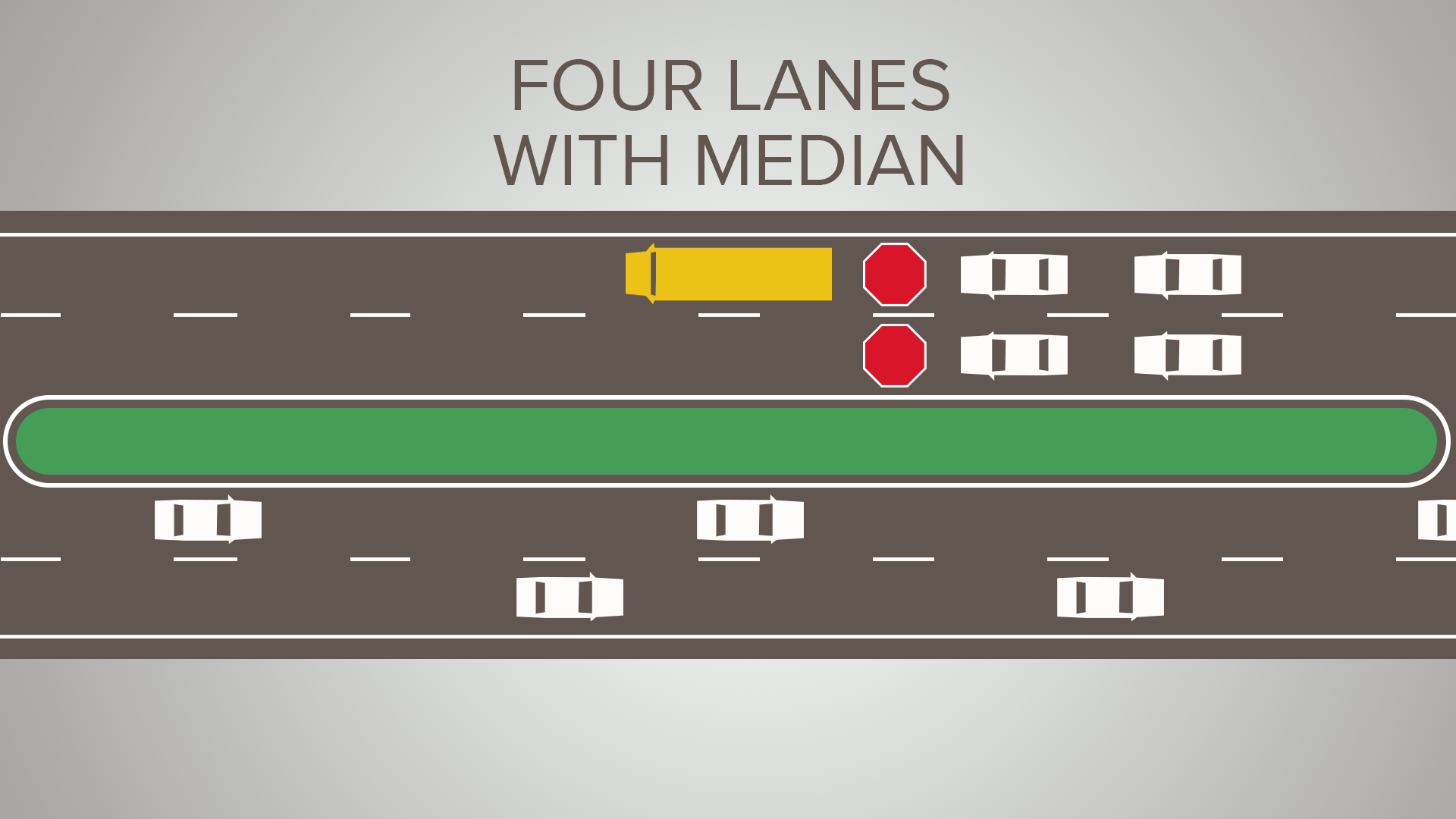
When a bus STOP sign goes out, drivers behind it must stop.

There are numerous children and youth from Pacific Palisades, who attend private schools and Paul Revere Middle School.  Many take a private yellow school bus.

When the bus is loading or unloading, the stop sign by the front driver’s window on the bus comes out and red lights come on. If you’re directly behind the bus, do you stop? Do you stop if you are in the lane next to the bus? Do you stop if you’re in the traffic approaching the bus?

HERES THE LAW:

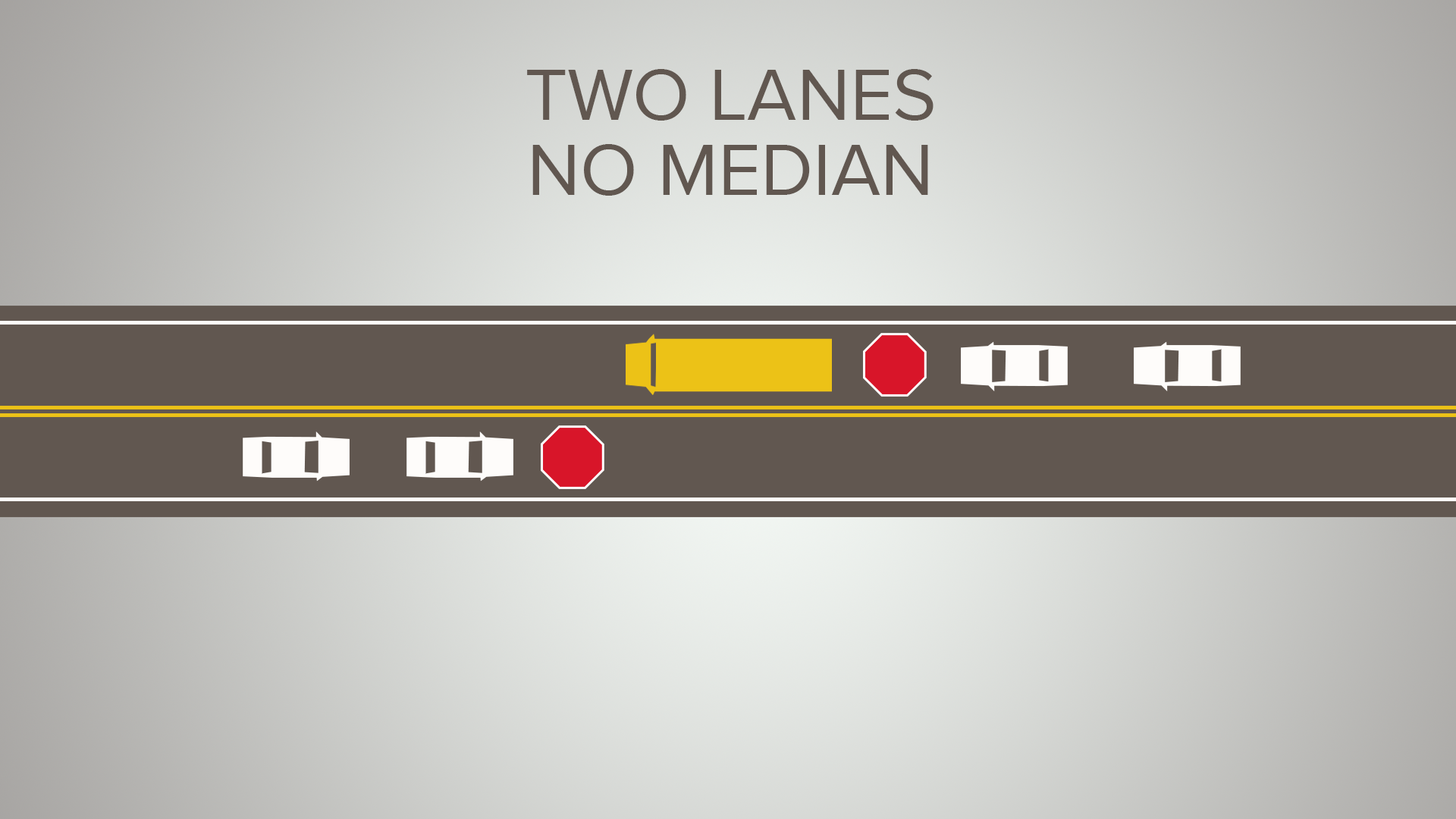
On a two-lane road with no median, traffic MUST STOP on both sides of the road. That would be the case on Alma Real by the library. If the bus puts up the Stop sign, both sides of traffic must stop.

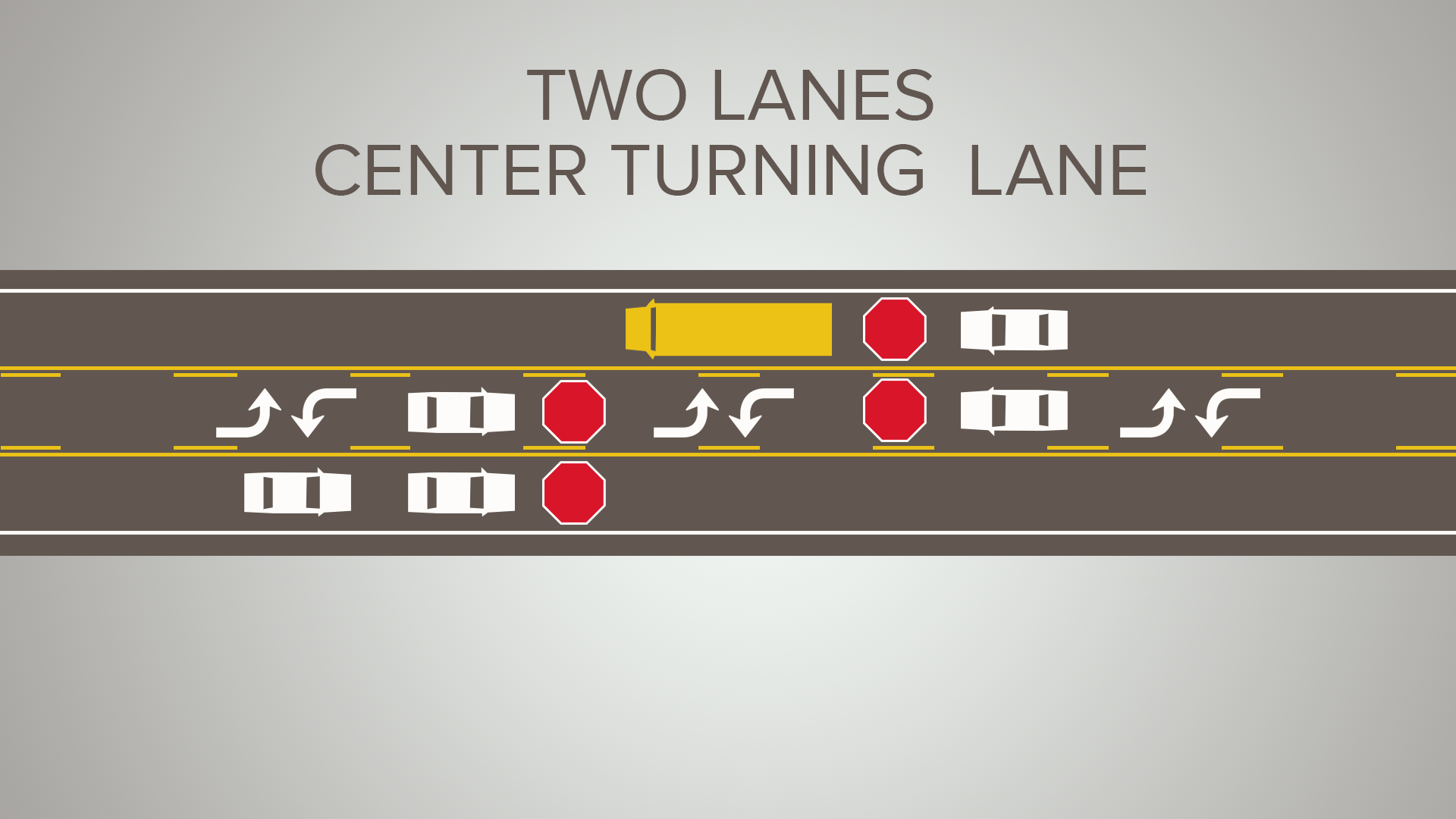
On a two-lane road with a center-turn lane, traffic MUST STOP on both sides of the road.

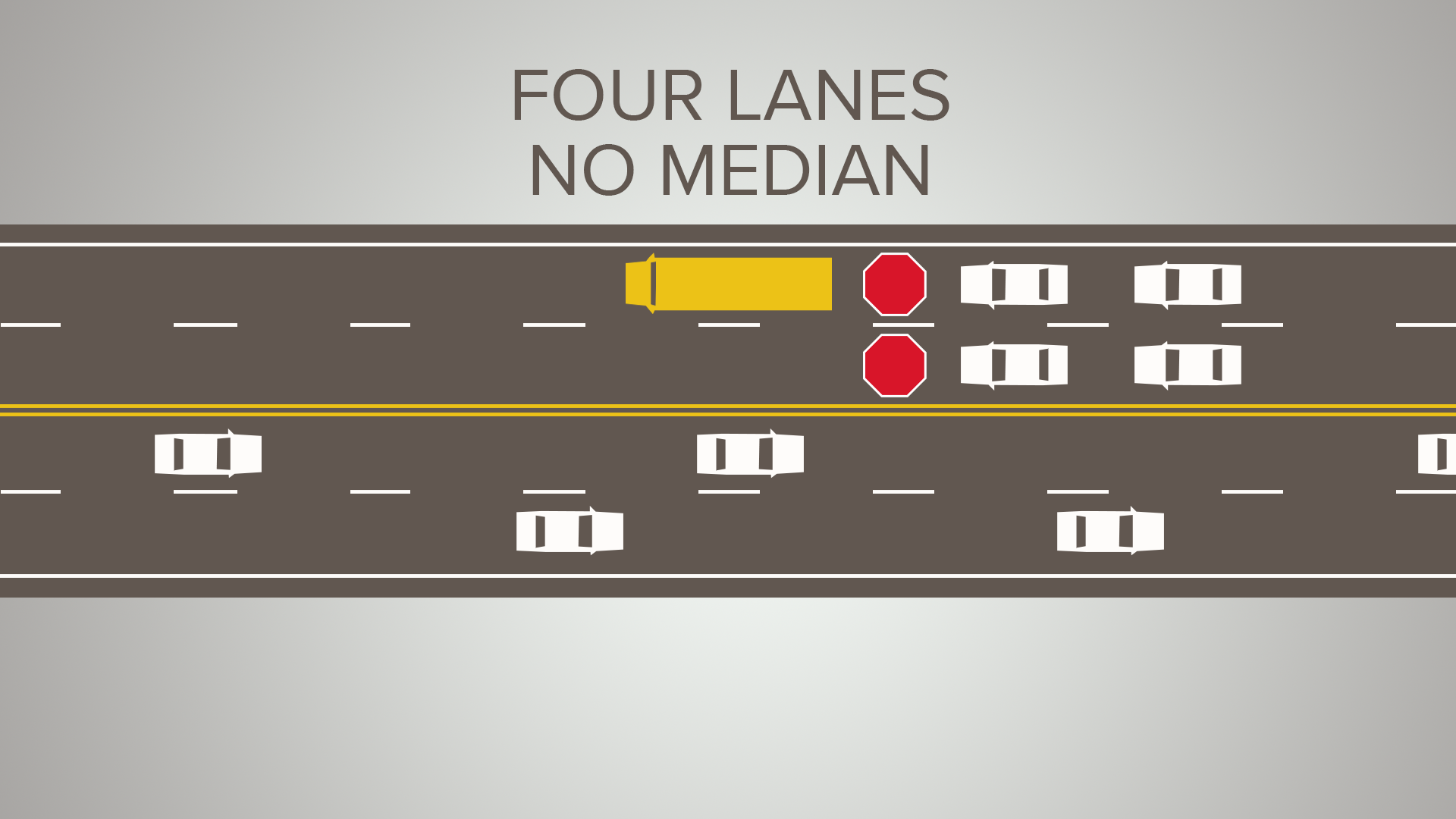
On a four-lane road, such as Sunset Boulevard, the side of traffic without the bus can continue driving cautiously. But cars in both lanes behind the bus MUST STOP, until the Stop sign is put down.

Last week, one resident stopped, as she was required to by law.  She told CTN that “eleven  cars whizzed past my daughter’s bus this afternoon, and that one woman in a Tesla gave me the finger.” She has reported license plate numbers to LAPD’s Traffic Safety Office, who is also reaching out to California Highway Patrol.

She reminded residents “A family in our neighborhood lost their only daughter to a driver ignoring this law, not so many years ago. Don’t be that driver.”

According to a report by Stanford Children’s Health, an average of 19 school aged children are killed each year.


Posted in Kids/Parenting, Schools | 2 Comments

Pali Football Defeats Roosevelt 24-17

Quarterback Jack Thomas looks for a receiver for the pass.

There was incredible talent, enthusiasm and hard work on display by the Palisades High School Football team as they beat the Roosevelt Rough Riders 24-17.

How good are the Dolphins? The potential is there. There are rough edges and occasional lapses, but each week more maturity is starting to show and if they continue on this path, they will be one tough team to beat by playoff time.

Even though the game was at the Stadium by the Sea, Roosevelt was the home team. The Rough Riders field is still under construction. The team was being followed a film crew in anticipation of the game between Roosevelt and long-time rival Garfield in October.

Going into the game, both teams had come away with a prior victory: Roosevelt over Venice 28-15 and Pali over Dymally 58-6.

The first 10 minutes of the first quarter was largely a defensive effort. Roosevelt scored first after Pali punted and the Rough Riders picked it up on their own 35 and took it to the 42. Five carries later, Roosevelt was on the one-yard line to end the quarter.

At the beginning of the second, Roosevelt scored and added a two-point conversion.

Then, Pali “amped it up.”

Quarterback Jack Thomas has a bullet-like throw. After the kickoff return, which found Pali on its 26, a handoff to Harrison Carter and a pass to Lehenry Solomon, took the ball to the Roosevelt 5, and then the endzone, but a penalty on Pali, brought the ball back to the 18.

Carter ran it in for the Dolphins first TD. The first of three PATs by Jack Malloy was good.

Roosevelt, deep in its own territory, was unable to make a first down, punted and the Dolphins started on the Rough Riders 31. After an incomplete pass, Thomas ran the ball in from the 19 for a TD.

But the Dolphins were just getting started, Roosevelt fumbled on the kickoff and it was picked up by Pali’s Jackson Kaufman. Starting on the 14-yard-line Thomas completed a pass to Augie Evans and the Dolphins had a comfortable margin of 21 to 8 going into the half.

Roosevelt used a running game, throwing only one pass and that was intercepted late in the second half by Jayden Joch.

The Dolphins final score came in the third quarter when Thomas completed a pass to King Demethris.

Thomas would complete 10 of 18 attempted passes for 140 yards.

Near the end of the third quarter, a brouhaha broke out and security came onto the field. The officials decided that there were three fouls because of the interaction. Both teams were given unsportsmanlike conduct.

Roosevelt then received the ball on its own 45. They marched down the field and about 15 plays later were at the Pali 1, and then a touchdown. They tried for two but were unsuccessful. The final score was 27 to 14.

“They played great,” said Palisades Head Coach Dylan Smith about his defense.

Leading in tackles were seniors Kenneth Sanchez (two solo and 11 assists) and Cash Allen (one solo and 11 assists).

“They [Roosevelt] were a tough team offensively and a tough team overall,” Smith said after the game.

He praised his players for their preparation during practice, “They grinded it out all week.”

After the game, players line up and shake hands with the other team.

Palisades High School’s next game is at Granada Hills Charter on September 6. The next home game is against Brentwood at 7 p.m. on September 13.

Posted in Sports | Leave a comment

What is It? #37

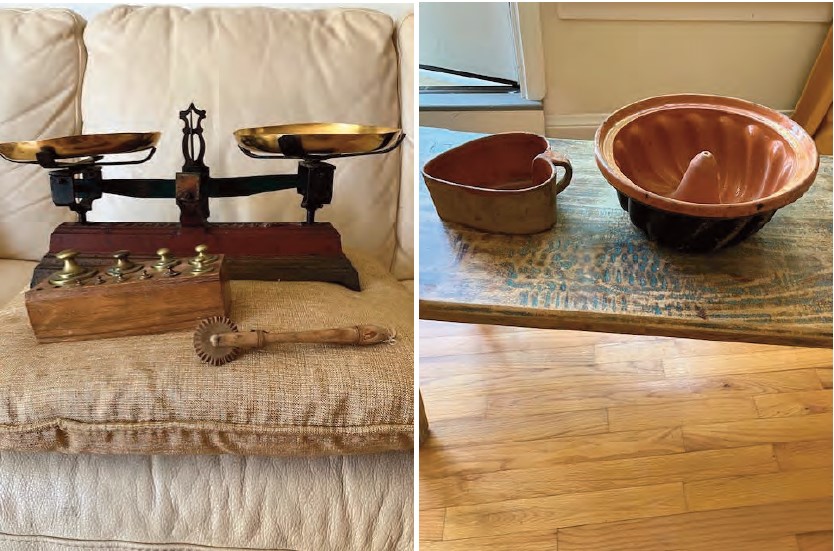
This balancing scale was in the apartment of Daniele’s Aunt Henriette in Nancy. Daniele lived with her during the school week from the age of about 6 through age 16.

She recalls fondly the wonderful cakes and pies that her aunt made measuring precisely the weight of the flour and butter and sugar.

The molds belonged to Daniele’s grandmother who lived in Domevre, France. They were used for baking cakes. Both ladies made wonderful pies often using Mirabel plums picked fresh in season at the small family orchard in that Lorraine town.

(Editor’s note: Palisades resident Howard Yonet has an interesting collection of curios from around the world and with his permission, Circling the News is publishing one a week. About the collector: Dr. Howard Yonet was born in Brooklyn in 1934 and attended Brooklyn College. He went to Baylor Medical School and then returned to do an internship at Bellevue Hospital. Yonet completed his residency at the Manhattan V.A. and the Montefiore Hospital. During this time he went skiing in Vermont and the Catskills, and while traveling found barns filled with early American pieces. This led to his interest in American Antiques.

In 1965, he married Daniele, who was originally from Nancy, France. During the Vietnam War, Yonet was drafted as a medical officer and stationed in Landstuhl, Germany (1966-1969). This was close to the French border, which meant he and Daniele and could visit her family.

While abroad, the Yonets took weekend trips through France and Italy, purchasing many interesting pieces at flea markets.

The family settled in Pacific Palisades in 1970 and Yonet practiced general radiology until 2006. He continued to acquire antiques and collectables at estate and garage sales and the Salvation Army Store. He also enjoyed looking for collectibles while traveling in Montana, Idaho, Colorado and Massachusetts. Daniele’s family helped add to his collection.)

Posted in What is it? | 1 Comment

Day 2 of the Trial for Justice for Brianna Kupfer

Unlike the first day of the trial for the murder of Brianna Kupfer, when there was heavy media attention, this day the media was absent.

Brianna, 24, had suffered 46-sharp force wounds. There were 26 stab wounds and 11 of the wounds were to the chest, which punctured both lungs. According to the autopsy, she died from exsanguination – the loss of blood.

Before the jurors were brought into the court room Defense Attorney Robert Haberer approached the bench for a conference with Judge Mildred Escobedo and District Attorney Habib Balian.

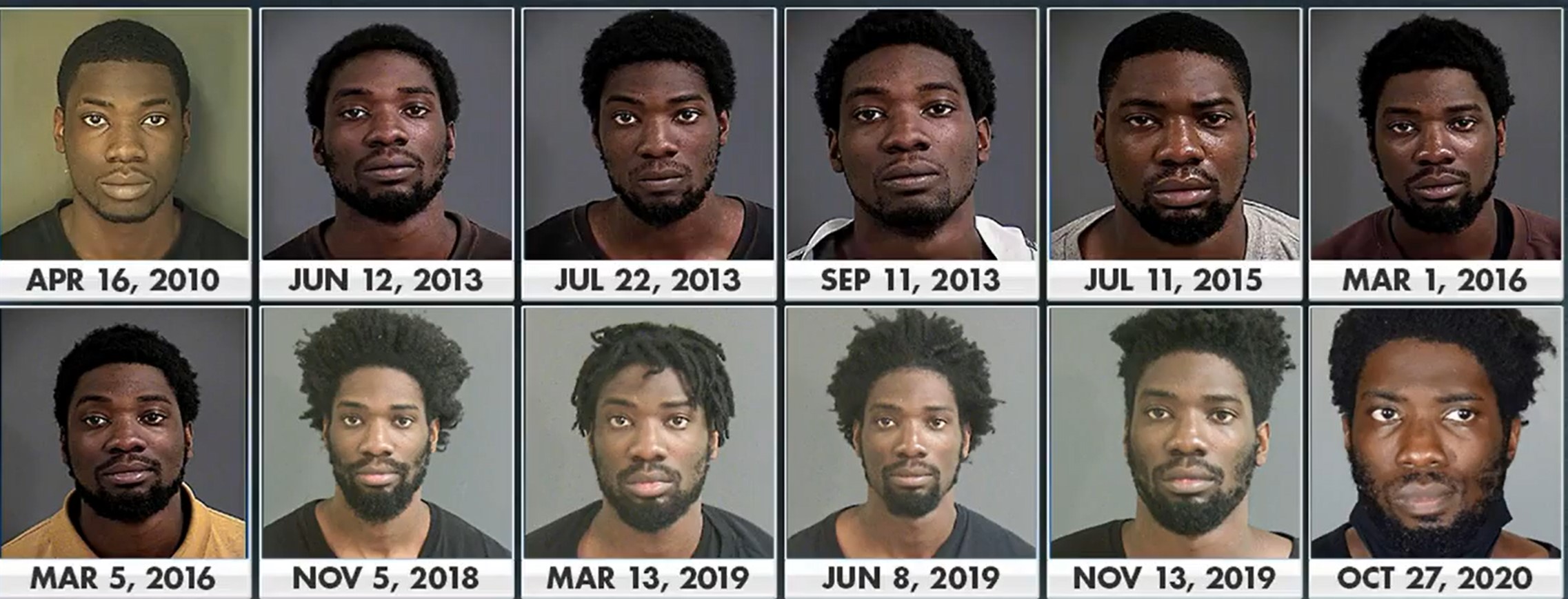
He said in one of the media reports yesterday (Fox), all of Shawn Level Smith’s booking shots had been shown, but that would be prejudicial to the jury, because his client had not been convicted in all the cases.

Escobedo said that she had admonished the jurors not to listen to news reports and told them if they walked into a room when someone was listening to the news, to walk out.

Balian said, “We cannot control the media, and you already gave admonishment.”

The judge remarked that the media do not always understand judicial matters.  When the jurors were seated on Friday morning, the first question the judge asked was “How many of you watched the news last night?”

No one, including the alternates, raised their hands. “Good,” she said. “You listened.” And reminded them of her admonishment not to listen or read anything about the trial: that it would stay in place during the trial.

The defendant, Shawn Laval Smith, is on trial for murder, and also faces two special circumstance allegations: lying in wait and the use of a knife.

Balian questioned Pasadena officers, who had arrested Smith. Initially, Smith told them his name was Cameron. The police cams showed his arrest in Pasadena.

The questioning was detailed and repeated with different officers testifying.

“Did you tell him he was arrested on suspicion of murder?” Balian asked.

“No” was the answer and it was explained that for officer safety and to prevent the man from running, police instead told Smith he was being detained because of “suspicious activity.”

“Why did you tell him to take off his backpack?” Balian asked.

“There could be a possible weapon,” an officer responded.

Balian ran video from different police cams to show they followed the rules. He asked about wearing gloves, and handling items, to show that a clear chain of command was established.

In trying to prove lying in wait, Balian interviewed shop owners that interacted with Smith that day. Stores included Artsspace Warehouse, Twentieth, the Friedman Law Offices, Langden Cole Furniture, and a Chiropractic Center. Jurors were shown video footage from the stores.

At each, Smith walks in and then walks out after a quick interchange, once he realizes someone else is in the store – until he reaches the Croft House. Brianna was by herself that day.

For example, at the Friedman Law Offices, Smith walks up to the second floor, sees the receptionist (and then hears a man in the background) and asks, “Is this a law office?” and then leaves.

Raquel Rodriguez of Twentieth – an art and furniture store on 7470 Beverly Boulevard, near the Croft house, said (and there was video) that Smith had come in. Her co-worker was seated at a desk and was not visible, until one walked further into the store.

She said at one point in reference to Smith that “something went off in me about the time of the verbal interaction.”

The defense attorney asked her if Smith would have been her typical customer. “There have been other customers that come in and fit his description and dress like him,” she said and added for example there was “a celebrity musician.”

Then, Haberer wanted to know how many art/furniture stores were on that block. Rodriguez did not know, but said the area is known for those kinds of shops.

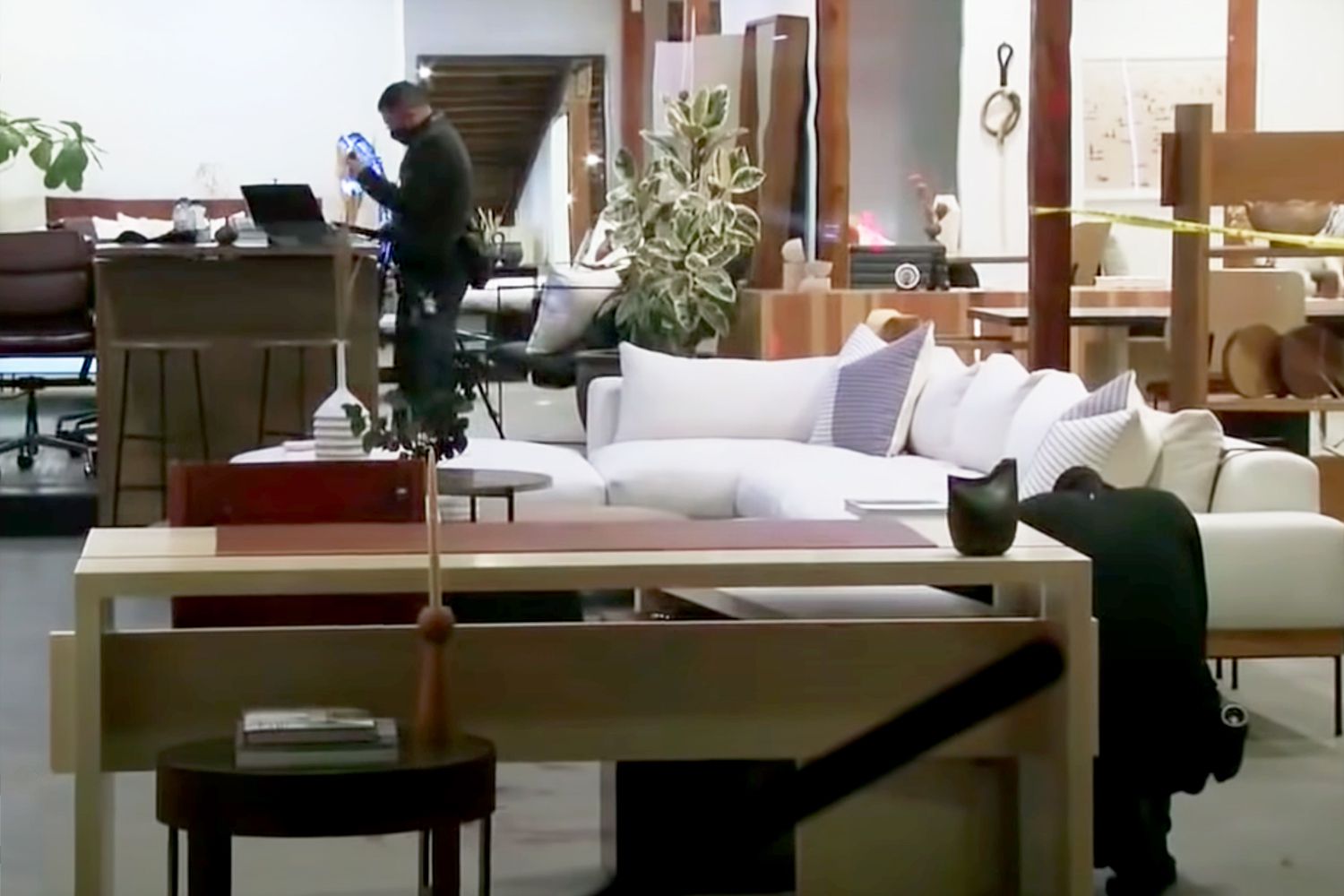
Interior of the Croft House, where the murder took place.

The last witness called today was LAPD Officer Paulette Gonzales. She said that when she arrived at the Croft House at 2:02 p.m., her priority was clearing the scene and to see if there was any surveillance to identify the victim. She saw three cameras, Nest (Google). “I was trying to get a suspect’s description and get it out to the police and public,” she said.

It was explained to the jury that Nest is remotely operated by Google and a person can watch the cameras live in real time. Or Nest will store videos for a specific time and offers that subscription plan for a fee. The owner of the store had installed Nest on his phone, but did not purchase the additional feature to store clips.

On the day of the murder, Gonzales captured several screen shots from the manager’s phone, which were shown in court.

“What were you looking for?” Balian asked.

“What had occurred, and images of the suspect,” the officer replied. With the description from the screen shots, police were able to identify Smith as a possible suspect.

She was asked if she knew that the video had been removed by Google in 2023. “No,” she said.

The officer was asked what else she saw on the video but did not take a screenshot that day.

“Surveillance showed a white female run for the front door between the sofa and the mirror,” the officer said. “The suspect was also running to the front door and appeared to be trying to cut her off.”

Then, she said, “I saw an image of the suspect running towards the back door.”

These are the booking photos of Shawn Lavel Smith that were run on Fox. Defense Attorney Robert Haberer said it was not fair, because his client was not convicted in all of those cases and it could be prejudicial to the jury.

The trial will continue at 9:45 a.m. Tuesday, September 3, downtown in Department 126 on the 15th floor of the Clara Shortridge Foltz Criminal Justice Center, 210 West Temple Street, L.A. Ca. 90012. There is a large cafeteria on the ground floor in that building. One can park for $12 a day at the old L.A. Times Building, entrance on Second Street, off Broadway. The lot is a block from the court building.
Posted in Crime/Police | 1 Comment

Jump in the Water: Closure Lifted

The beach a half a mile either direction from Sunset at PCH was closed because of a sewer spill.

If you had planned a trip to the beach over Labor Day, and didn’t want to come home with e-coli and other intestinal illnesses,  the  closure of Will Rogers State Beach, half mile in each direction at Sunset Boulevard, was put into place by the L.A. County of Public Health on August 29.

The Los Angeles City Sanitation Department notified Public Health of a sewage discharge that occurred at the 17300 block of Sunset Boulevard at the intersection of Paseo Miramar. Per the report the discharge was caused by a root blockage and resulted in approximately 6700 gallons of sewage entering the storm drain and entering the ocean at Sunset and PCH.

The Department of Public Health was planning to conduct water sampling starting today, but good news, as of 5 p.m. the ocean water closure has been lifted.

The Department of Public Health was notified today by the Los Angeles County Department of Public Works Flood Control Division that a low flow diverter on the affected storm drain successfully redirected the sewage discharge to prevent the sewage from contaminating the ocean waters. Therefore, ocean water closure for Will Rogers State Beach is no longer in effect.

Go play in the ocean over Labor Day!

Recorded information on beach conditions is available 24- hours a day on the County’s beach closure hotline: 1-800- 525-5662.

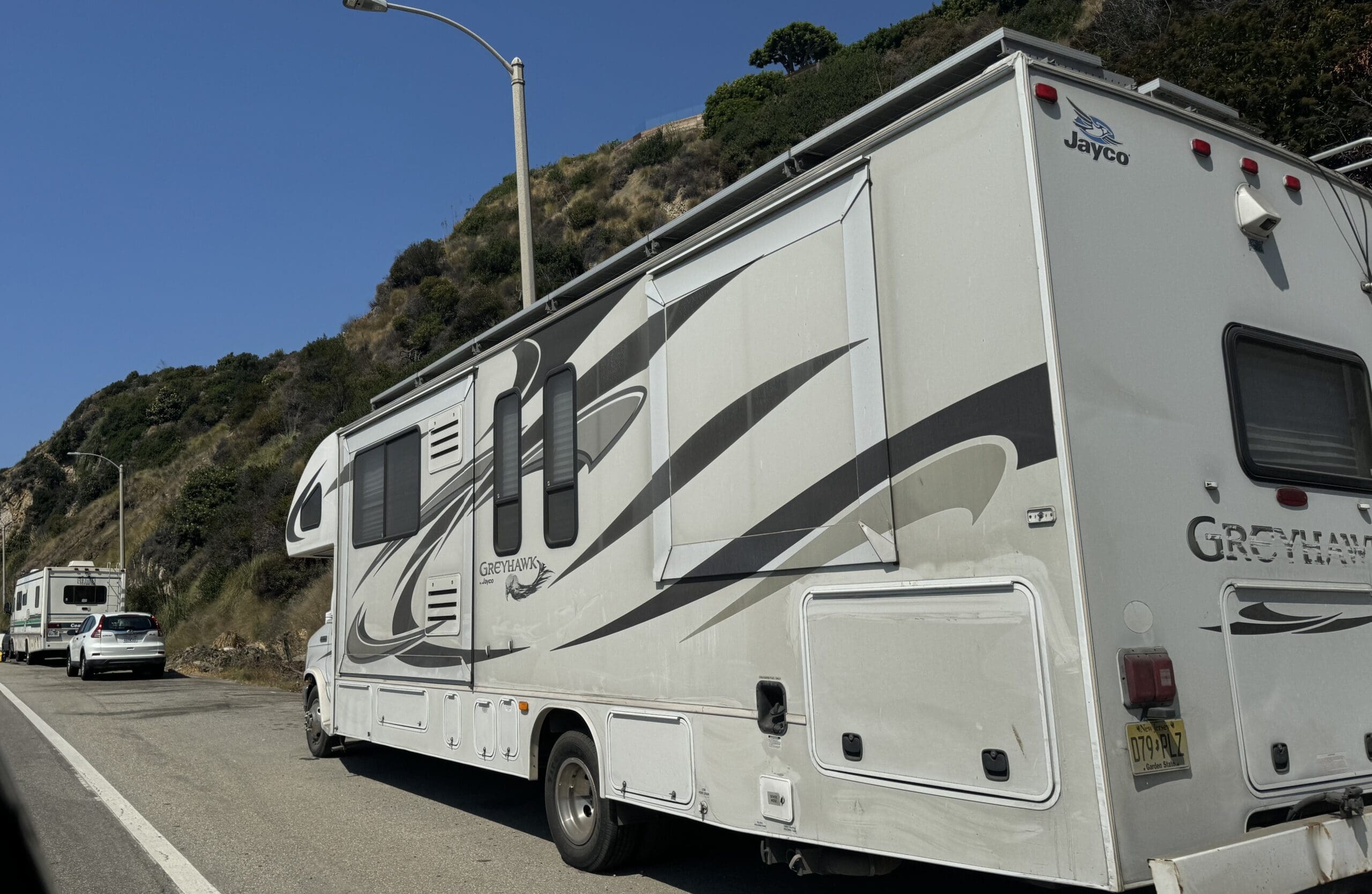
(Editor’s note: And what about the RVs that dump black water (feces and urine) between Porto Marino and Topanga Canyon Boulevard? L.A.County Supervisor Lindsey Horvath would tell you they don’t have to obey the “No Parking” signs, because “Where else could they go?”)

Rv’s park along PCH by the ocean for weeks/months and dump their black water.

Posted in General | Leave a comment