Pot Shots #23


What are Pot-Shots?


Ashleigh Brilliant writes:

WHAT EXACTLY IS A “POT-SHOT” OR “BRILLIANT THOUGHT?”

Pot-Shots are epigrams, composed according to the following very strict rules.

The length must never exceed 17 English words. Note that this is a maximum. Some Pot-Shots are much shorter. Hyphenated words count as a single word.

Pot-Shots must be easy to translate into other languages. Therefore there can be no use of rhyme or rhythm, idioms, puns, or other word-play.

Pot-Shots should be capable of being appreciated in all times and cultures. Topical and cultural references must be avoided.

Every Pot-Shot should be as different as possible from every other one.

Every Pot-Shot must be totally original, and unlike anything else the author, or anyone else, has ever said before.

The words of a Pot-Shot must be able to stand on their own, and not require any illustration in order to be understood or appreciated.

Whatever is being said should be worth saying and said in the best possible way.

NOTE: These are ideal standards, and I myself have failed to meet some of them occasionally — but in general I have adhered to them quite scrupulously


Posted in Pot-Shot | Leave a comment

Owl Habitat Destroyed by Brush Clearance

This is an example of habitat destruction under the guise of brush clearance.

A resident sent the following letter and video to Mountains Recreation and Conservancy Agency and to Circling the News.

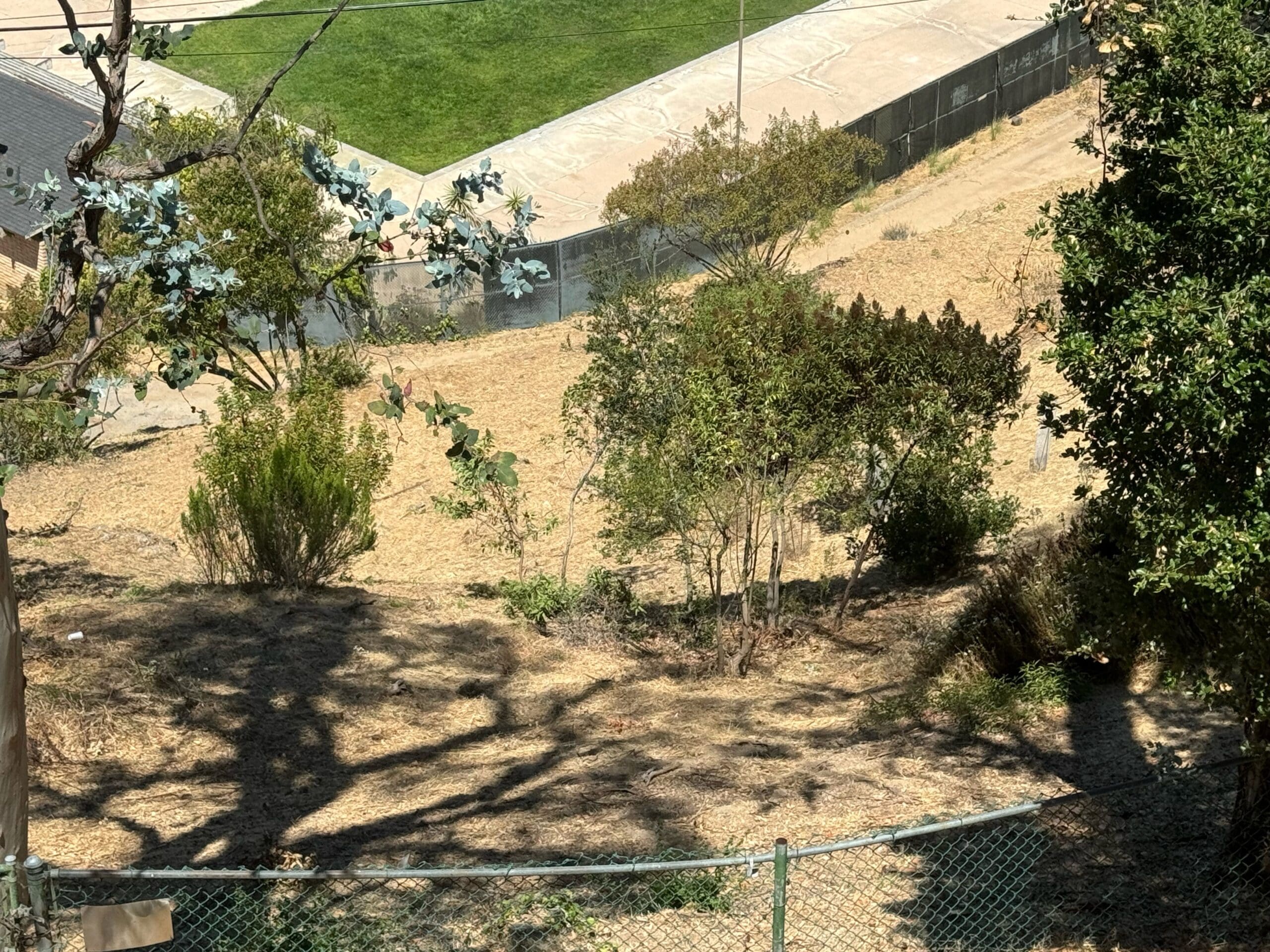
We just got home to find that the service doing work in Temescal Canyon today (trucks say Greenleaf Tree Service) has eliminated a tree where a pair of owls has been nesting for years (see attached video), as well as many other trees and bushes in the canyon just below our and our neighbors’ property lines!

It is one thing to do necessary brush clearance (and MCRA was very late with that, just starting last week while the rest of us were required to have it completed weeks ago) but completely different to destroy the homes of the animals and birds that live in the canyon.

It appears that many of the fire safe trees and bushes on the hill have been over-trimmed and even removed. See attached photo from our property taken just now.

Did MCRA or the service MCRA hired do any work to determine which trees and plants should actually be removed? What was done to ensure the safety of the nests of the owls, hawks and other birds that live in the trees here?

Has anyone attended to the role of these trees and plants for the deer, coyotes, rabbits, squirrels, etc. that also live here?  There are grave environmental concerns at issue.  The birds and animals keep the canyon both alive and in balance; have you acted to protect them as well as us? Surely there is no reason MCRA cannot do both.

I am cc’ing the Palisadian Post and Circling the News, as well as the Nature Conservancy, in the hopes that they may be interested in assisting with this inquiry.  I am not familiar with the names of organizations that might be of help in this so hope these folks will forward this email and our concerns to those who should be involved.  We are one of many neighbors surrounding the canyon who are deeply invested in its safety and care.

(Editor’s note: this letter was forwarded to California Department of Fish and Wildlife. This editor agrees with the resident that an owl nesting habitat should have never been destroyed.)

Posted in Animals/Pets, Environmental | 3 Comments

Two Art Events Scheduled for August

The Pacific Palisades Art Association has two events of note in August: a Show and Tell and Color Pencil Techniques demonstration.

The first is an Art Show and Tell from 5:45 to 7:30 p.m. on Monday, August 19, in the Palisades Library Community Room 861 Alma Real. Artists are told that if they attended the first Art and Tell, to feel free to attend and bring newer or other art pieces.

Artists are limited to two pieces to ensure that everyone participating has time to speak and share his/her art. “We hope you can make it,” said PPAA President Annette Alexakis.

Later this month from 6 to 7:30 p.m. on Wednesday, August 28, there will be a color pencil techniques demonstration given by Caryl Wolff. This will also take place in the community room, 861 Alma Real.

Supplies will be provided but limited. Feel free to bring your own if you have them.

Alexasis said, “I am looking very forward to this demonstration because I missed the demonstration Caryl did in 2019.

For more information about the art association click here.

Posted in Arts | Leave a comment

Honor for Jamie Lee Curtis; Anticipation for Christopher Guest’s New Film

Jamie Lee Curtis accepting an honorary doctorate at the AFI graduation at the TCL Chinese Theatre in Hollywood, California.                                                                                                                                             PHOTO: Michael Kovac/Getty Images for AFI


By BERNICE FOX


It’s an exciting time for Pacific Palisades couple Jamie Lee Curtis and Christopher Guest. Curtis has received a special honor. And Guest has finished filming, what could be, his most anticipated movie ever.

Curtis now has an Honorary Doctorate of Fine Arts degree from the American Film

Institute (AFI). Director John Carpenter presented her with the honor during the film school’s graduation ceremony on Saturday, August 10. It was Carpenter who started Curtis’ film career rolling by casting her in her first movie role — the 1978 horror classic, Halloween.

Carpenter told those at the ceremony at the TCL Chinese Theatre in Hollywood that Curtis made an impression when they first met, “She was, and is, a force of  nature.”

Curtis got a standing ovation when she stepped to the podium to accept her honorary degree. She then shared one of her favorite quotes: “Life hinges on a couple seconds you never see coming.”

Later, Curtis wrapped up her comments with advice for the graduates, telling them to “Stay open, stay free, stay engaged, stay absolutely enthusiastic. Don’t get lazy, fight for it, work for it, save the universe please.”

When Curtis returned home to Santa Monica Canyon, that made two honorary doctorates in the house. Back on December 1, 2007, Guest received an honorary doctorate from the Berklee College of Music in Boston.

You might be wondering how a member of the fictional heavy metal band, Spinal Tap, was worthy of an honorary doctorate. Well, Guest, like the other members of that faux band, truly is a musician.

He attended New York’s prestigious High School of Music and Art. He’s done some serious music projects. Guest also won a Grammy for the title track of A Mighty Wind.

Currently, Guest and the others in Spinal Tap have finished filming the sequel to the 1984 mockumentary, This is Spinal Tap. Like the original, it’s directed by Rob Reiner.

The new storyline has the band reuniting for a final concert. Paul McCartney and Elton John are in this sequel.

An audience is seeing a test screening of the sequel this week. Spinal Tap fans are among those eagerly waiting to see the finished film. A release date has not yet been announced.

Rob Reiner and Christopher Guest in This Is Spinal Tap.
PHOTO: Embassy Pictures

Posted in Film/Television | Leave a comment

Viewpoint: Homeless California Gold Rush: Nonprofits Panning for Money  

Photo: JOHN ALLE – Santa Monica Coalition

During the California Gold Rush, there were 624 miners for every 1,000 people. But, it wasn’t the goldminers that made millions, it was the businessmen providing services.

The 1850s millionaires included Samuel Branan, a journalist and businessman, who opened supply stores in the gold fields and sold equipment. Thomas Larkin finance voyages that brought clothes and food to San Francisco. Levi Strauss of Levi Strauss & Co. who established a dry good business in San Francisco.

Nothing’s changed in 175 years. It’s still the businesses (nonprofits) providing the services, that making the money. Here’s how today’s gold rush works.

The government gives tax dollars to nonprofits, which are supposed to help the homeless. The homeless are like the miners—don’t get the money, but stay for the weather. The people making money are the nonprofits “serving” the homeless.

Federal, state and local money flowed into California in 2023 to help the more than 181,000 homeless. An audit by the legislative Analyst’s office showed that an unprecedented $24 billion in state was spent on homelessness over the last five years – and that doesn’t include the $4 billion that the city and County spend on the homeless, including at least $255 million for Inside Safe.

With all the money spent, homelessness has not significantly decreased. The last point in time count showed that LA county homeless had gone down slightly from 75,518 in 2022 to 75,312 in 2023. The City showed a decrease from 46,260 (2022) to 45,252 (2023). Even that slight decrease has been disputed because of count problems and because of the increase in deaths because of fentanyl.

If you go to any homeless nonprofit website, you will not see statistics of how many people they have helped into permanent housing.

Photo: JOHN ALLE – Santa Monica Coalition

When Circling the News followed the effectiveness of Safe Parking, CTN looked at six nonprofits for information on how many people they had helped find permanent housing. Zero.

All sites listed several years of the filed Form 990, which means they have a tax-exempt status.

Nonprofits, examined included Volunteers of America (VOALA), North Valley Caring Services, Safe Parking Lot, End Homelessness Ca., Special Services for Groups – Homeless Outreach Program Integrated Care System (HOPICS) and WLCAC.

VOA partnered with the California Department of Housing and Community Development and City of Los Angeles and opened two affordable, permanent housing facilities: The Londie in Northridge, and Elderberry Village in Woodland Hills. Both properties are former motels acquired through the city’s Phase Two: Project Homekey initiative, which strives to offer permanent housing to qualifying individuals. https://voala.org/voala-opens-affordable-housing-facilities-in-northridge-and-woodland-hills/. Its total assets were listed as $329,675,334 in 2023. And the total amount for salaries, wages and benefits was $124,654,753. It partnered with the nonprofit Skid Row Redevelopment Corporation.

North Valley Caring Services group’s income went from $357,761 (2018) to $8,286,455 (2022).

Community Partners had assets of $47,722, 802 (2018) and $70,054,669 (2023).

End Homelessness California $112,578 (2017) and $2,813,954 (2022)

HOPICS received $84 million (2018) and $149.1 million (2022). The nonprofit site said it received funding from Measure H, the 2017 L.A. County Sales tax, and a mix of federal, state and city funds.

WLCAC – Watts Labor Community Action Committee showed revenue of $14,263, 174 (2018) and $24,792,737 (2022).

Several nonprofits such as Venice Community Housing listed buildings and land valued as $13,356,124 (in 2012). But by 2022, property and equipment on Form 990 were listed as $91,808,666 (the 2023 audit showed total property and equipment as $126,106,103 before depreciation). VCH currently owns 19 properties (https://projects.propublica.org/nonprofits/display_audit/2023-12-GSAFAC-0000049876).

One of VCH’s properties is the Rose Apartment building, near Lincoln, across from Whole Foods, 720 Rose Avenue was designed by Brooks + Scarpa and Tina Chee Landscape Studio and is a LEED Platinum Building. the city approved $13,906,003 issued bonds for the building that would provide 34 units of affordable housing. It was completed for $20.6 million with $6.8 million from Proposition HHH.

The salaries of the key people were listed for the nonprofit and most were in the six-figure range. For example, Community Partners President Alicia Lara received $354,646, HOPICS Director Veronica Lewis received $261,000, End Homelessness California Executive Director Mel Liyanaarachichige Tillekeratne received $105,600 and Venice Community Housing Executive Director Becky Dennison $110,369.

This new apartment building, located across from Whole Foods on Lincoln  houses the offices of the Venice Community Housing Corporation.

The losers in the 2020 Gold Rush are the homeless.

State Senator Dave Cortese began pushing for the state for an audit of the billions of dollars spent after visiting a massive homeless encampment on vacant land near San Jose’s airport, where hundreds of people lived among rodents, massive piles of trash and broken-down cars and RVs. When he started asking whether state funding was going to that encampment, he couldn’t get a clear answer.

In Los Angeles it seems clearer, the money is going to homeless nonprofits, which is why local leaders didn’t welcome the Supreme Court decision on the Grants Pass cases. Their friends run the nonprofits.

Photo: JOHN ALLE – Santa Monica Coalition


Posted in Homelessness, Viewpoint | 3 Comments

Saving Endangered Plants, One Orchid at a Time

(Editor’s note: The President of the Malibu Orchid Society Birute Anne Vileisis, told this editor about an orchid species that was endangered because of a declining habitat. We often hear about extinct animal species, but the idea fascinated me that plants are also becoming extinct. Her essay was the 2016 winner in an essay contest and was published in the June 2017 American Orchid Society magazine. It is reprinted with permission and portions have been edited.)
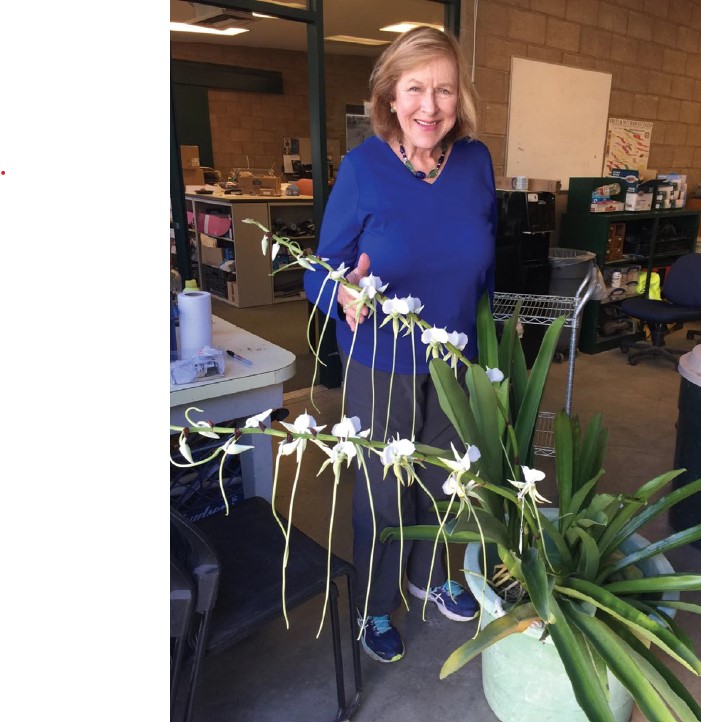
The author with her exceptionally
well-grown specimen of Angraecum longicalcar
when it was donated to the Huntington.
Photograph by John Delfino.


By BIRUTE ANNE VILEISIS, Ph.D.

When I walk into my greenhouse nestled in my garden overlooking the Pacific Ocean at the top of the Santa Monica Mountains, a number of orchid genera greet me.

Although a preponderance of my collection of some 300 orchids belongs to the Cattleya Alliance, one group in particular has provided me with an immense sense of satisfaction and accomplishment and a feeling that I have made at least a small contribution to the world of orchid conservation.

I am referring to my small collection of angraecums, and specifically to the Angraecum longicalcar that was in my care for 11 years.

In June of 2005 when, as a relatively new member of the Malibu Orchid Society, I attended an orchid estate sale following the passing of John Christie, a past president of the society.

His widow had organized a sale of John’s orchids and I, not really knowing one species from another, selected a bunch of plants. One of those I purchased for $20 was a medium-sized plant with fresh green leaves and no flowers.

When I brought it home, I discovered that it had a clearly printed label. On one side: Angraecum longicalcar and on the reverse side, the name of the originating nursery: Hoosier Orchid Company, Indianapolis, Indiana. (Later I learned that this nursery in its heyday had in its inventory some incredibly rare plants; but sadly market forces subsequently closed its doors in 2008.) The orchid’s Latin name longicalcar is a descriptive reference to the flower’s long spur.

Armed with those few clues about the new plant I had just acquired, I began to read everything I could about angraecums. I purchased Hillerman and Holst’s 1986 Introduction to the Cultivated Angraecoid Orchids and read it cover to cover.

I learned that my new acquisition, Angraecum longicalcar, originated from the central highlands in the environs of Analavory in Madagascar with altitudes of 3,300 to 3,900 feet (1,000–1,190 m). According to Hillerman and Holst, this species grows “semiterrestrially among rocks on west- facing slopes, often in almost full sun.”

They added that in the greenhouse this orchid needed bright light, lots of humidity and good air movement. The authors said that “vegetatively Angraecum longicalcar conveys the impression of strength, viability, nobility and grandeur, and in our opinion makes an ideal specimen plant.”

How extraordinary, I had a plant that had the potential of becoming noble in its bearing!

From other sources, I also discovered that this species is now considered “critically endangered” and quite possibly verging on extinction in its natural habitat. Just the knowledge that I had a precious, endangered plant prompted in me a sense of responsibility. I needed to ensure that it grew well, that it thrived, and that it reached its full potential of “grandeur.”

In addition to the destruction of its habitat through logging, fires and mining, another possible reason for the decline of this species in its natural habitat, is the loss of its pollinator.

Brenda Oviatt and Bill Nerison in Orchids (2014) noted, “So many orchids have evolved with their pollinators in a complex and intricate way.” Could it be, they asked, “that in addition to all the other human-caused losses that there is a lack of reproduction due to the disappearance of pollinators?”

When I discovered photos of the flowering plant, I was further intrigued that one day I might see flowers with nectary spurs that could be even longer than those of the famed Angraecum sesquipedale.

Hillerman and Holst wrote that Angraecum longicalcar has a fantastic nectary spur, often 16 inches (about 41 cm) in length, and that “probably no other angraecoid could equal this species in spur-length development.”

But, alas, the flowers on my orchid would not be forthcoming so quickly. In the summer of 2009, I made a note in my inventory diary that the plant had nice long healthy leaves, but that it had not yet flowered in four years. Patience… patience…that’s what orchid growers learn.

In the meantime, I kept wondering whether I should repot my plant. When I asked more experienced growers about repotting it, they warned me against doing so, noting that this species often sulks after repotting. Thus, I postponed repotting it.

Finally, in the summer of 2011, I mustered up enough courage, handling its roots ever so gingerly, and giving it some new medium and a slightly larger pot. By January of the following year, it had begun sending out such an abundance of new growths with vigorous new leaves and a plethora of healthy thick roots that, in retrospect, I concluded that I should have repotted it sooner.

At long last, after nurturing this orchid for eight years, in June 2013, it rewarded me with the appearance of the tip of its first inflorescence [flower group]. What joy!

But that inflorescence developed ever so slowly over several months. Eventually it bloomed in October, opening up its glorious long-spurred flowers, just in time for the Southland Orchid Show at the Huntington Botanical Garden, where it won a First-Place ribbon.

I was so thrilled even with that single inflorescence. Then a friend at the show, who knew this species well, said it would produce even more in the following years.

Apparently, what I had at this stage was still just a young plant. Eventually that indeed came to pass the following year when it rewarded me with two inflorescences.

Off it went once again to the Huntington Show the following October where it was awarded another First-Place ribbon.

By the summer of 2015 my plant was obviously growing well. It was observably so happy in my newly expanded greenhouse that it started growing out of its pot once again. It was lush and so huge that it was badly in need of being repotted again.

This time with the help of a strong orchid friend we undertook its second repotting, ensuring that it had the best possible mix, imitating its natural habitat as best we could, with lots of large chunks of fir bark, some broken up tree fern, bits of charcoal, some gravel and a mixture of diatomaceous stones.

No inflorescences that year — yes, it did sulk for a while – but the new growth that the new mix promoted the following year was even more phenomenal than before.

Fast forward to this past summer; my vigorous orchid produced six new basal keikis (orchid babies) and another two glorious inflorescences that eventually touched the ceiling of my greenhouse. The plant was 4 ½ feet (1.4 m) tall and still growing. It was time to make a decision.

I had asked Brandon Tam, the Orchid Collection Specialist at the Huntington Botanical Gardens, whether he might have an interest in adding my Angraecum longicalcar to their collection, and he enthusiastically replied, “yes,” sight unseen!

And so, with the help of another orchid society friend, we carefully padded and tied down my beloved plant into his good-sized van for its third and final trip to the Huntington, some 46 miles (74 km) away.

Driving along Southern California freeways we took precautions all along the way that the two inflorescences would not break off. Indeed, it reached San Marino intact and unbruised.

Once we unloaded the plant into a staging area next to the Huntington orchid greenhouses, my friend and I watched with rapt attention as Tam removed the tiny pollinia and hand-pollinated the lowermost flowers of each inflorescence. He then tagged each flower with the date, 9/28/16.

It was the first official step to ensure future progeny of this critically endangered species for future generations.

Brandon then placed the newly pollinated Angraecum longicalcar onto a dolly and wheeled it off to its new home in the Huntington Conservatory. As I stood there admiring it and saying my silent wistful goodbyes to an orchid that I had nurtured for 11 years, I experienced the quiet joy of giving, knowing that in some small way I had contributed to the survival of this rare and endangered species.

Upon reflection I began to appreciate all that this small plant that I had adopted many years ago had taught me. I had become acquainted with the world of angraecums and started collecting and growing other related species. I began to appreciate the rhapsodic beauty and purity of these waxy star-like white flowers.

I became fascinated with Madagascar and read about its varied microclimates that provide such a diversity of growing areas for the various angraecoid species that grow there. I remembered my mentor, John Christie, and thought he would be pleased to know his orchid had flourished.

Then I joined in with greater understanding and empathy the lament that much of these native habitats were being destroyed Finally, I appreciated more deeply the importance of orchid conservation to ensure that future generations of orchid growers might enjoy the beauty of this species.

I recognized that each hobbyist orchid grower has the power to contribute to saving species that are critically endangered in their disappearing habitats. Even if only a handful of orchid growers from each of the 500 or so affiliated AOS orchid societies would devote themselves to growing one or two such orchids, what a difference we could make.

This orchid was considered critically endangered and on the verge of extinction. Angraecum longicalcar was nurtured by Birute Anne Vileisis for 11 years.


Posted in Environmental | 1 Comment

Hypocrisy of Local Leaders Become Apparent

(Editor’s note: This viewpoint first appeared in the Westside Current and is reprinted with permission.)

Diana Teran

By TIM CAMPBELL

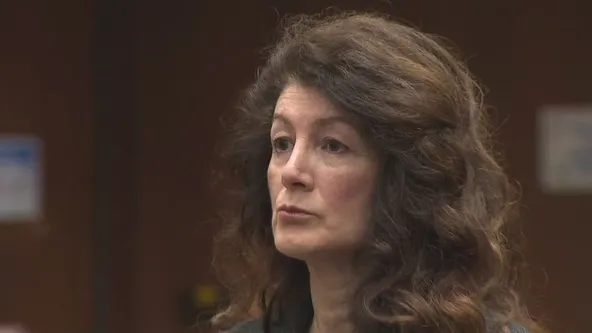
There have been some interesting stories in the news about questionable actions by local officials.  One of D.A. George Gascon’s top deputies, Diana Teran, was indicted on several felony counts of stealing the files on police officers’ disciplinary records.

Former Council member Mike Bonin faced community backlash after he criticized Governor Newsom’s recent executive order on cleaning up homeless encampments. Critics mentioned his habit, while on the Council, of approving transitional and affordable housing projects with little or no public input.

Earlier this year, when LAHSA released a report critical of the City’s anti-camping ordinance, LAMC 41.18, some progressive members of the Council and Board of Supervisors, including Hugo Soto-Martinez, Katy Yaroslavsky, and Lyndsey Horvath were quick to condemn the ordinance as ineffective and cruel.

Then, on May 31, the City’s Chief Legislative Analyst released a review of LAHSA’s report, revealing serious procedural and methodological errors that made the report virtually useless.  None of the elected officials have walked back their comments.  Yaroslavsky has been roundly criticized for approving an interim housing facility and ignoring her constituents’ concerns about crime and trash near homes and small businesses.

What all these stories have in common is a serious case of moral relativism on the part of local officials.

For example, Ms. Teran, who was once in charge of police misconduct prosecution, apparently thought it was okay to commit a crime to prove certain officers are criminals.

Former Councilmember Mike Bonin

Likewise. Mr. Bonin and Ms. Yaroslavsky feel they are justified circumventing the Brown Act for the higher purpose of building shelters and housing. Mayor Bass and others have chosen to ignore the Supreme Court’s Grants Pass decision for their morally superior Housing First approach, even though LA’s programs are cruelly ineffective at getting people off the street.

My term for this attitude is the ethics of convenience.  I define it as a willingness to impose a strictly defined moral code on others while giving yourself the right to ignore the same moral norms. It is a classic case of the ends justifying the means.

If I’m convinced most cops are little more than sadistic thugs, then pilfering a few confidential files is justifiable.  If I’m convinced dropping a transitional housing facility in the middle of a mixed residential/small business area is morally right, then public notice requirements are little more than a minor inconvenience.  If I can claim the moral high ground, anyone with disagrees with me is inherently immoral; they hate the homeless or want to criminalize poverty, or condone police brutality.

This is, of course, nonsense. When the policies you support leave thousands on the streets while you lecture constituents about social justice, then your policy is immoral.  When you insist Housing First’s failed model is the one and only cure for homelessness, your views are as puritanical as any zealot’s, and you’ll have no problem creating meaningless numbers that make it look successful. Seeing crime as an inevitable result of social injustice denies the role of personal responsibility and dehumanizes its victims.

The primary fuel of the ethics of convenience is arrogance. By convincing yourself your beliefs are morally and intellectually superior to others, you not only have the right, but the duty, to impose them on an ignorant and benighted public.

That’s why you often see comments like “when will you get it through your head…” or “if you weren’t so closed-minded/old/privileged/prejudiced, you’d see how wrong you are.” The arguments are long on insults but short on objective truths.

For example, let’s look at advocates’ insistence that most homeless people come from the communities they live in, and are victims of economic injustice. They argue that people coming from other areas is a myth, and substance abuse or mental illness are the results of, rather than the cause, of homelessness.

However, a recent Westside Current article  exposed the Weingart Center’s practice moving people from other states to taxpayer-subsidized housing, even though there are higher-needs people in LA.

A March 2024 L.A. Times article reported nearly half of San Francisco’s drug users came from somewhere else.  Likewise, several surveys, including the UCSF/Benioff study, have consistently reported anywhere between half and 65 percent of homeless people had mental health or substance abuse problems before they became homeless.

Because these facts do not fit advocates’ narrative, they are dismissed as a consequence rather than a cause of homelessness.  Arrogance prevents advocates from dealing with the reality of homelessness in Los Angeles.

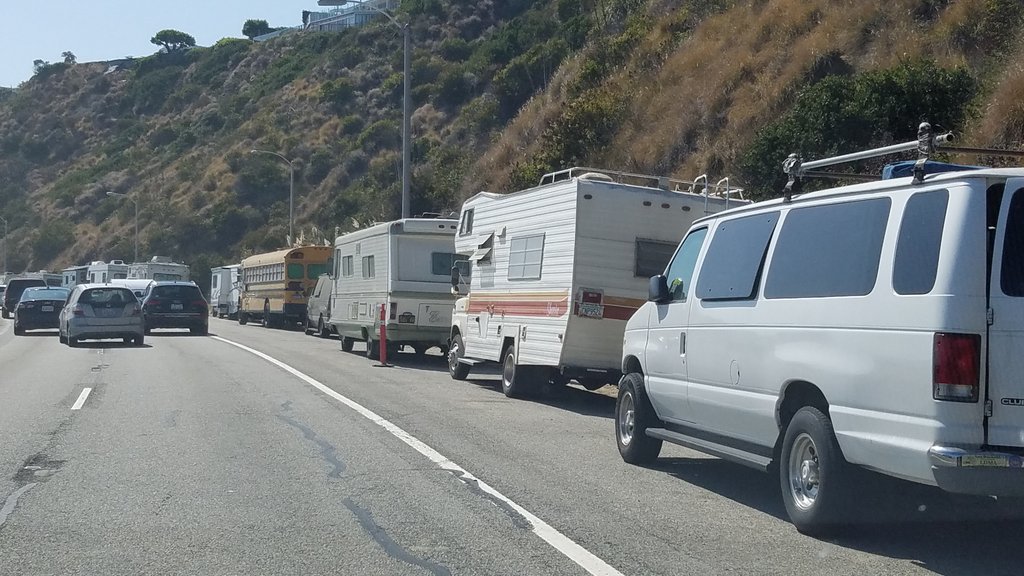
One of the most tragic signs of this purposeful blindness is when advocates ask their favorite question, “Where will they go?” Clear an encampment that blocks a sidewalk and forces pedestrians into the street? “But where will the campers go?” Tow derelict RV’s dumping raw sewage into storm drains?  “Where can they go?”

There is no comping posted for portions of PCH, it is not enforced.

Advocates use this question as a weapon to make those who ask it look like heartless NIMBY’s who just want the homeless out of sight. They never think to ask themselves that perhaps there are so few places for the unhoused to go because of the failed policies of the advocates themselves; an obsession with expensive and time-consuming housing construction instead of transitional housing, and woefully inadequate treatment programs that have stranded thousands on the streets.

“Where will they go” should be a question advocates should have been asking local officials five or ten years ago, when it would have been easier and more economical to implement a variety of solutions for the unhoused.

Instead, the fixation on housing construction has created the need for the moral gymnastics we see from our Council and BOS members, as they try to justify expensive and ineffective solutions to a problem that just gets worse.


(Tim Campbell is a resident of Westchester who spent a career in the public service and managed a municipal performance audit program. He focuses on outcomes instead of process.)

Posted in City | 2 Comments

40-Year-Old Playground Needs to be Replaced

(Editor’s note: The simple facts: the Palisades Recreation Center 40-year-old playground is not ADA compliant. Although Palisades residents are among the highest taxpayers in Los Angeles, it appears the only way a playground will be replaced if 1) someone, who needs an ADA-compliant structure sues the city; 2) Palisades is annexed to Malibu; or 3) residents raise a million dollars to replace it.)

This is Palisades Playground, which is 40-years-old, and not ADA Compliant. It also still has sand and no shade structures.

The facts are simple the playground at the Palisades Recreation Center is not ADA handicapped accessible. It still has sand, which should be cleaned daily, but is not. There is no shade on the playground that is now close to 40 years old.

It is out of compliance by California standards. California Assembly Bill, 1055, required all playgrounds installed between January 1, 1994, and December 31, 1999, be updated by January 2000.

The Palisades Rec Center playground was not updated, because it was installed in 1986,when resident Steve Soborff raised the money. Then, he was quoted as saying “When people pack lunch boxes to go to Palisades Park with their kids, they take sandwiches and Band-Aids.” He described the equipment as dangerous. He solicited money from residents and got 250 people to donate, and the playground was upgraded.

Former General Manager of the Department of Rec and Parks Michael Shull told commissioners in 2014: “Ideally, playgrounds should be replaced every 15 years. We’re constantly trying to replace them and do about 25 to 30 playgrounds every year.”

Somehow Palisades was not on the list.

At the July 2024 Palisades Park Advisory meeting the playground came up again, but it appears to be contingent on Venice receiving a new playground. And then maybe, according to the Councilmember’s District Director Juan Fregoso. …Palisades will get one at the same time, because as one PAB board member said they were told “not to delay, the momentum was there.”  The member was told “We should move, ‘strike while the iron is hot.’”

There were three options given to Palisades residents, and it appears most like the color blue, because that was the top choice. The different apparatuses were not closely examined, nor were the appropriate ages for the pictured equipment given.

The PAB sent a letter to L.A. Rec and Parks, writing “PAB, in conjunction with the outreach efforts of PPCC, has solicited community input for the suggested playground design schemes and relayed to L.A. City Rec and Parks that it was observed a community preference for the first choice of playground schematics, with the blue and green color theme.” The letter also expressed a need for shade and clear visibility layout so children could be easily monitored

CTN reached out to Councilmember Traci Parks office to ask why the 40-year playground would be contingent on Venice receiving a playground and a timeline.

Spokesperson Jonathan Davila responded, “We will defer to the Recreation and Parks Department (RAP) on the timeline. Additionally, there have been no resources allocated as of now.”

He said that because RAP has limited resources and that Venice had priority because it has high usage because it is a global destination. CTN asked about the age of the Venice playground and if it were ADA accessible. He did not respond in time for story, which will be updated.

Davila said that Palisades community members said the priority for the Palisades Recreation center were ADA bathrooms and cameras; that the playground was third on the list of priorities.

Regarding the design that several in the community questioned, CTN asked if they City had a “deal” with a playground maker that allowed them to purchase several sets of equipment and save money. Davila said, “This is the initial design. We will collaborate with RAP and the contractor to develop an updated, comprehensive design for the community. This will be part of the next step in the process.”

Forty years and counting . . ..

(CTN sent a follow-up note to the City asking how old the Venice playground was and if it were handicapped accessible and how is a global destination determined. When I have a response I’ll update the story.)


Posted in City, Parks | 3 Comments

What is It? #34

If you guessed something from the ocean, you would be correct. The green object is a Japanese glass fishing-net float.

I found it on Will Rogers State Beach after a pineapple express storm in the 1980’s. I’ve never seen another one since, because the Japanese stopped making glass floats in the 70’s.

Apparently, there are still many out in the Pacific Ocean, but currents take them north to the Oregon coast where they can still be found.

This float has a “rolling pin ” shape. Most are round and of varying colors. The floats range from 2″ in diameter to 40″ and sell from $10 to $200 in shops.


(Editor’s note: Palisades resident Howard Yonet has an interesting collection of curios from around the world and with his permission, Circling the News is publishing one a week. About the collector: Dr. Howard Yonet was born in Brooklyn in 1934 and attended Brooklyn College. He went to Baylor Medical School and then returned to do an internship at Bellevue Hospital. Yonet completed his residency at the Manhattan V.A. and the Montefiore Hospital. During this time he went skiing in Vermont and the Catskills, and while traveling found barns filled with early American pieces. This led to his interest in American Antiques.

In 1965, he married Daniele, who was originally from Nancy, France. During the Vietnam War, Yonet was drafted as a medical officer and stationed in Landstuhl, Germany (1966-1969). This was close to the French border, which meant he and Daniele and could visit her family.

While abroad, the Yonets took weekend trips through France and Italy, purchasing many interesting pieces at flea markets.

The family settled in Pacific Palisades in 1970 and Yonet practiced general radiology until 2006. He continued to acquire antiques and collectables at estate and garage sales and the Salvation Army Store. He also enjoyed looking for collectibles while traveling in Montana, Idaho, Colorado and Massachusetts. Daniele’s family helped add to his collection.)


Posted in What is it? | 1 Comment

Break-in on Embury: LAPD Offers Prevention Tips

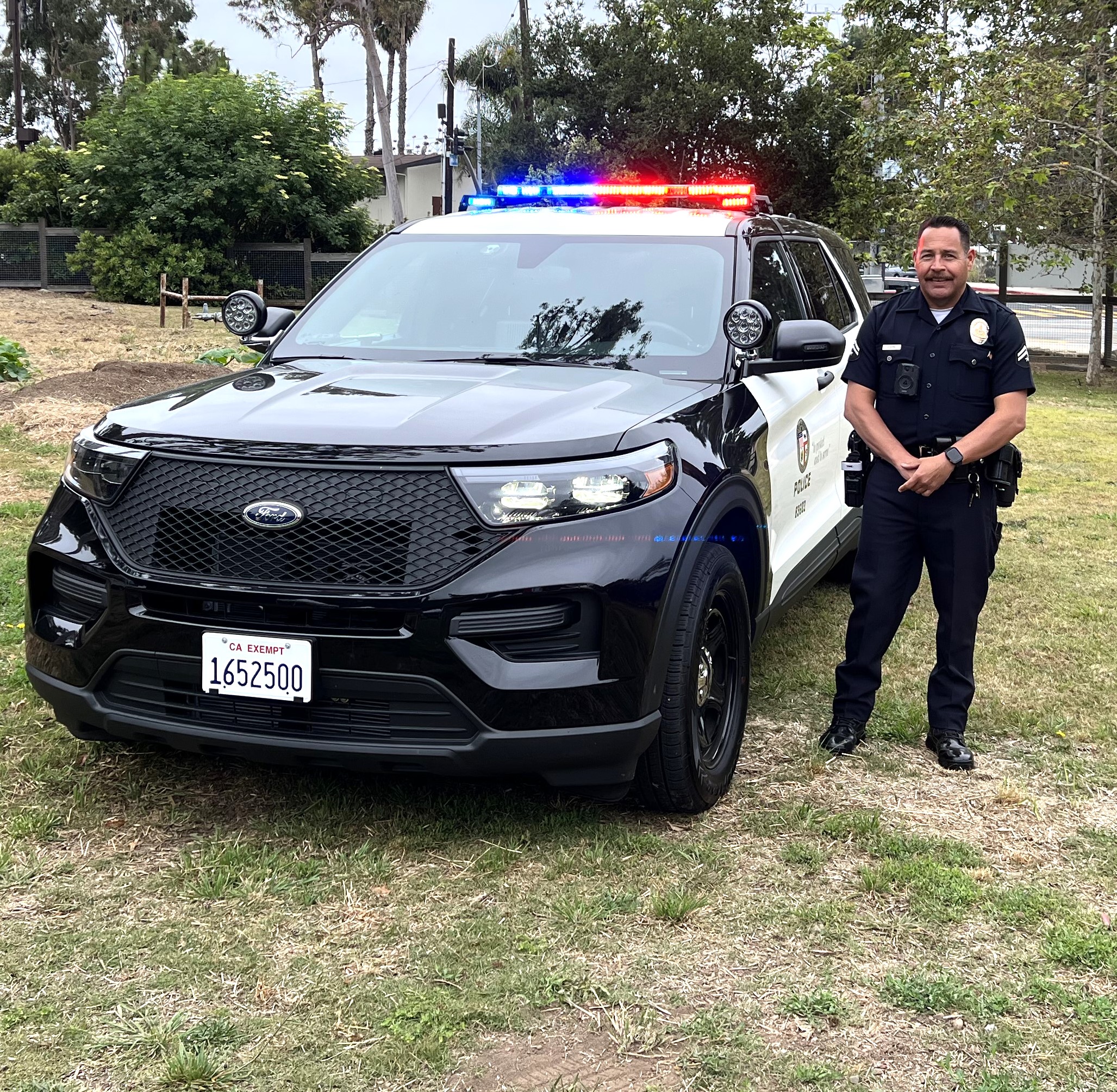
Palisades Senior Lead Officer Brian Espin.

There were two break-ins in the 1100 block of Embury Street this past weekend.

The first occurred at 10:04 p.m. on Saturday, August 3. The criminals used a ladder to enter the house via a second story window after it was smashed. Designer handbags and a safe valued at $60,500 were taken. The suspects fled in a black Chevy SUV. CCTV was available.

The second break-in happened at 4 a.m. on Sunday, August 4, when the rear door was smashed, the residence was entered, ransacked and designer purses were removed. Possible CCTV available. There were no prints, gloves were worn.

Senior Lead Office Brian Espin reminds residents of the following tips.

A majority of these organized burglaries use sports utility vehicles or crossover style vehicles, usually with no front plate and a “cold plate” (stolen license plate) affixed to the rear of the vehicles.

“Very often you see uninvolved motorists drive right past them during the commission of their crimes,” Espin said.

If you see a black SUV pulled up to your neighbor’s home, do not automatically assume it is someone taking a car service or an Uber to the airport. Check to see if it is actually a planned trip to the airport.

Espin said, “More and more we are seeing burglars utilizing Wifi Jammers, cutting the power to homes, ripping alarm systems out of the wall, and reaching up to push cameras out of view.”

He said burglars also use backyard lawn furniture or equipment to access the second story of residences to gain entry.

“A way to combat this is to hard wire all camera systems, padlock electrical boxes, and place security cameras out of reach and clandestine places throughout their homes,” Espin said and added to be aware that many “dinnertime burglaries” that occur between 6 and 10 p.m. happen when people leave their homes to go out for the evening.

“Anytime you leave your home, have situational awareness and pay attention to vehicles missing front plates, or no plates, that are idly parked in your neighborhoods,”
Espin said. “If you have an alarm system and security camera system, make sure it is on and in good working order.”

He advised that the master bedroom be alarmed with a motion detection, glass break notification, and if the master bedroom is on the second story, that the balcony doors are alarmed.  He said that many burglars have entered residences via this means.

It is recommended that if you have a safe it be bolted to a concrete floor, because “If it’s bolted to a hardwood floor, burglars will pry or cut it out of the floor.”

If you have a beak-in immediately notify officers and if evidence is left behind, do not handle it with bare hands.

“Finally, look out for each other in your neighborhoods,” Espin said. “Our biggest breaks come from neighbors paying attention and providing information to officers who are responding.”

burglary_prevention

Posted in Crime/Police | Leave a comment