Importing Addicts across the Country for Rehab, Then Homeless in LA

(Editor’s note: This story first appeared in the Westside Current on February 18 and is reprinted with permission. Because of the sensitive nature of these issues, all last names have been withheld. )
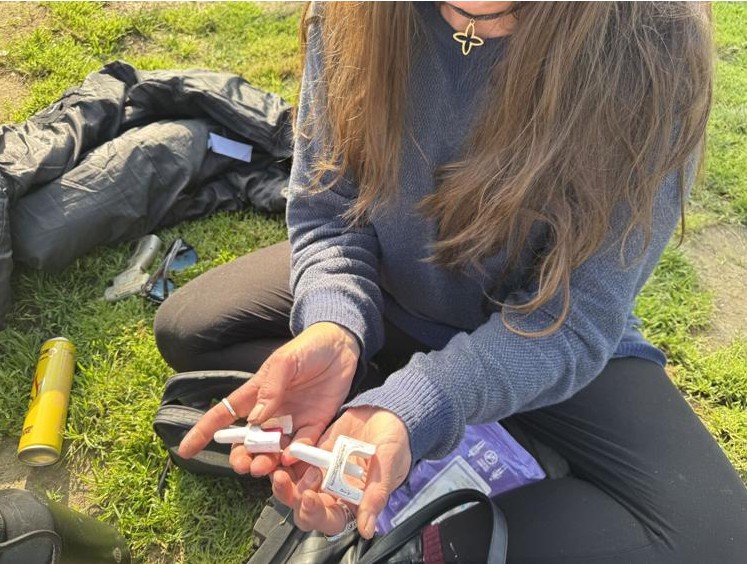
A woman shows a used Narcan nasal spray.

BY RACHAEL GAUDIOSI 

When Hailey and Chandler agreed to move 2,000 miles to California, they said they were sold a dream, a couple’s drug recovery program that would be covered by insurance. Less than six months later, the Westside Current met the young couple crying in a McDonald’s parking lot — desperate to find a way back to their families in Alabama so they wouldn’t have to spend the night on the curb.

Over the past five years, the Westside of Los Angeles has become a hub for out-of-state drug recovery. In many neighborhoods across the county, Southern license plates and accents are not uncommon. Residents told the Current they quickly pieced together that many of the newcomers were walking back and forth from the same cluster of addiction recovery centers.

As neighbors watched people walk the same routes day after day, some said they began to recognize familiar faces turning up on the street after they disappeared from those houses. When residents asked the individuals what happened, they said the same explanation kept coming up — people recruited from out of state for treatment, then left stranded on the street when their insurance coverage ran out.

Hailey and Chandler said they were messaged on Facebook and asked if they wanted to come to California and get treatment for methamphetamine and marijuana addiction by the beach at no cost. The couple said they jumped on the offer, switched their insurance providers to join, and hopped on their free flight across the country.

“The place was a joke, if I knew the program was going to be run that way I would’ve never even come.” said Chandler. “We do nothing during the day and most of the people here just go over to MacArthur Park to do drugs.”

The couple claims to have then spent their days getting to know roommates and the West Coast surroundings in between detox, Zoom treatment sessions, and drug testing — until, they said they were told their insurance coverage had maxed out and they needed to leave immediately.

With no return bus or plane ticket back to Alabama and not enough money to purchase one themselves, they said they were stranded and homeless halfway across the country.

Despite moving thousands of miles to Los Angeles with the promise of a better life, Hailey and Chandler said they now found themselves worse off. Two people who came to Los Angeles with a promise of drug treatment ended up in a fast-food parking lot trying to figure out how to get back to Alabama before nightfall.

This is not an isolated case.
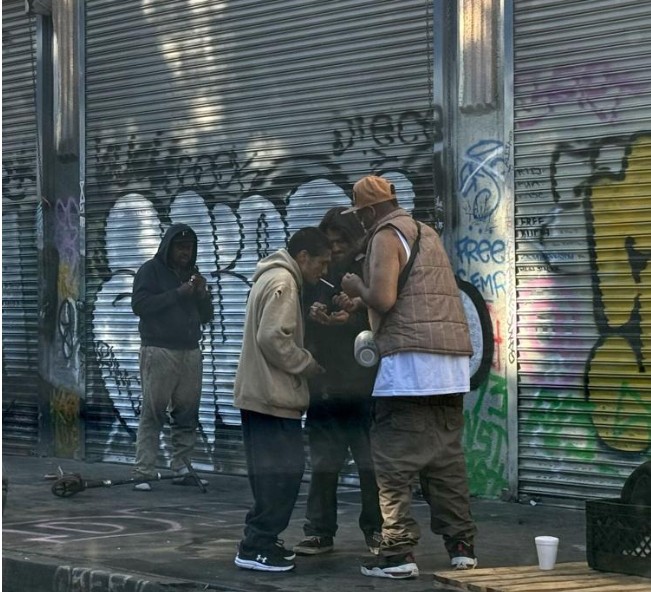
A group huddles on a sidewalk outside shuttered city storefronts, a snapshot of the street-level drug activity Angelenos say has become routine.

Angelenos across the Westside have said they’ve watched versions of the same story play out again and again — out-of-state clients cycling through addiction treatment programs, then turning up on the street when the program ends.

HIGH COST, ZERO HELP

In a similar fashion to a college campus, some addiction treatment centers will transition multiple lots in the same neighborhoods into different levels of care and housing. “Druggy Buggys” or white vans drive the same short circles all day, transporting people and meals from one facility to another. Patients like Hailey and Chandler describe free rein between all buildings, with the pair claiming marijuana was allowed to be smoked and MacArthur Park could be visited.

In a similar style to Hailey and Chandler, Vicky and Josh from Mississippi said they were sold a dream on Facebook to come and get sober for free by the beach. They said they quickly agreed to have their insurance coverage switched to California providers and grabbed their free tickets to the West Coast.

Before being denied further coverage and evicted from her eighth treatment center in the county, Vicky claims to have been bounced around across a various network of facilities in Sherman Oaks, Santa Monica, Culver City, Del Rey, and San Pedro — at absolutely zero cost to her.

While Vicky paid little to no cost, her insurance was billed for about $300,000 for services related to her addiction treatments. Shortly after Vicky discovered she was pregnant, her insurance provider deemed her as ‘recovered’ and the facility she was staying at literally kicked her to the curb. Josh billed up a similar amount before he exhausted his insurance and said he was helped to switch to MediCal so he could continue treatment. Josh has since been billed for $27,000 on the California taxpayers’ dime.

After this hefty cost and county tour, the young couple described minimal to no actual treatment or supervision for their substance issues, and now found themselves pregnant and struggling to find a bed to sleep in each night.
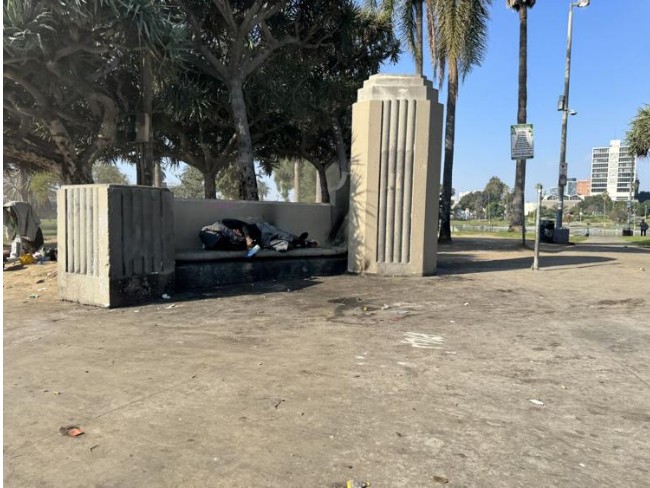
A person sleeps on a concrete bench in MacArthur Park, one of the scenes residents told the Current they’ve watched on repeat.

Under California State Law AB919, Hailey, Chandler, Vicky, and Josh all should have been offered a return ticket for up to one year following their discharge from treatment. But both couples, alongside an increasing number of individuals, are claiming this is becoming a more and more frequent case.

John Alle of the Santa Monica Coalition said the community group has personally sent home over 100 out-of-state homeless individuals since the start of their A.I. reunification program less than one year ago.

BIGGER THAN THE WESTSIDE

This issue is not new either. Four years ago, the Department of Justice filed criminal charges against 10 defendants for kickback schemes at substance abuse treatment facilities in Orange County.

“These cases reflect the continued efforts of the Department of Justice to combat fraud by substance abuse treatment facilities and patient recruiters,” said Assistant Attorney General Kenneth A. Polite Jr. of the Justice Department’s Criminal Division in 2021. “These schemes take advantage of vulnerable members of our society — addiction patients seeking help. These cases illustrate the government’s commitment to protecting patients and prosecuting those who try to victimize them.”

But the issue has continued to spiral out of control next door in Los Angeles unchecked.

Sean, who worked for an agency that helps place people in recovery treatment, said he noticed a trend of certain facilities in Los Angeles that he felt uncomfortable referring clients to. In Sean’s official position as a “business consultant,” he would receive calls or messages about people ready to enter treatment. Sean would read their files and figure out which facility they would fit best in, and then recommend placement.

But, Sean noticed he started to receive pushback when he would try to place patients at facilities that “did not have a high referral rate.” Sean said he was told to push more referrals to other facilities because those were more likely to send back new referral patients — this was what mattered most, not the best fit for care.

Sean said this process made him increasingly uncomfortable, so he started to look into the facilities more deeply. Sean said shortly after this, he was fired for a reason he believes has to do with the searches he was running in the system on the facilities he thought raised red flags. Before he was fired, Sean searched the total referral rate for the facilities he felt most uncomfortable with. He quickly noticed one company was accepting patients at nearly 100 times the rate of all others in the network — the company he believes is likely tied to the one Hailey, Chandler, Vicky, and Josh traveled across the country to come to.
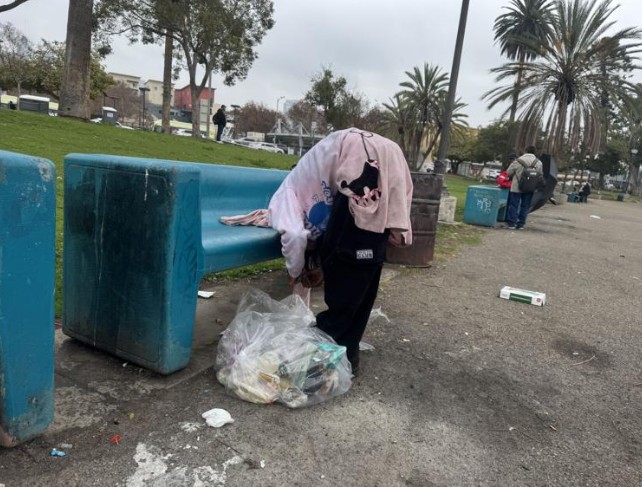
A person bends over a plastic bag of trash beside a MacArthur Park bench, underscoring the day-to-day instability former treatment clients say they face after being cut loose with nowhere to go.

CAN THIS BE STOPPED?
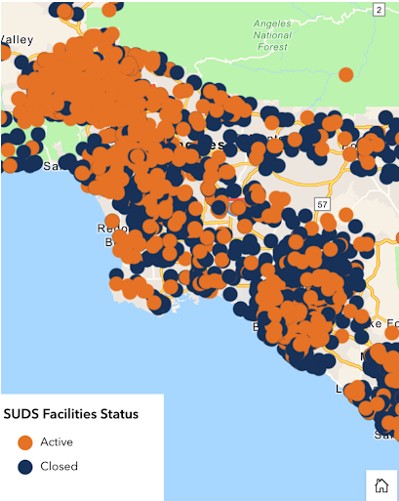
In total, Los Angeles has 909 active substance use disorder facilities, many located in clusters at the center of residential neighborhoods. A large amount is also operating using the same techniques that left a pregnant woman out on the street 2,000 miles away from home.

Locations of substance use disorder treatment facilities clustered across Los Angeles, as shown in a county map.

The city is taking some steps to work towards regulating addiction treatment centers in terms of density, with a motion currently going through the legal process to regulate the distance between each addiction treatment facility in Los Angeles. But even if the motion is passed once it returns from committee, it’s unknown what will happen to the facilities already in place within close distances to each other.

“Any service provider that brings people to Los Angeles for treatment and then abandons them onto our streets is irresponsible and unethical,” said Councilwoman Traci Park. “That is not recovery — it’s neglect. Los Angeles should never be a dumping ground for out-of-state programs that fail to see their clients through.”
 

Posted in Homelessness | Leave a comment

Just Another Day in Pacific Palisades

NOT APPROVED EVACUATION ROUTE:

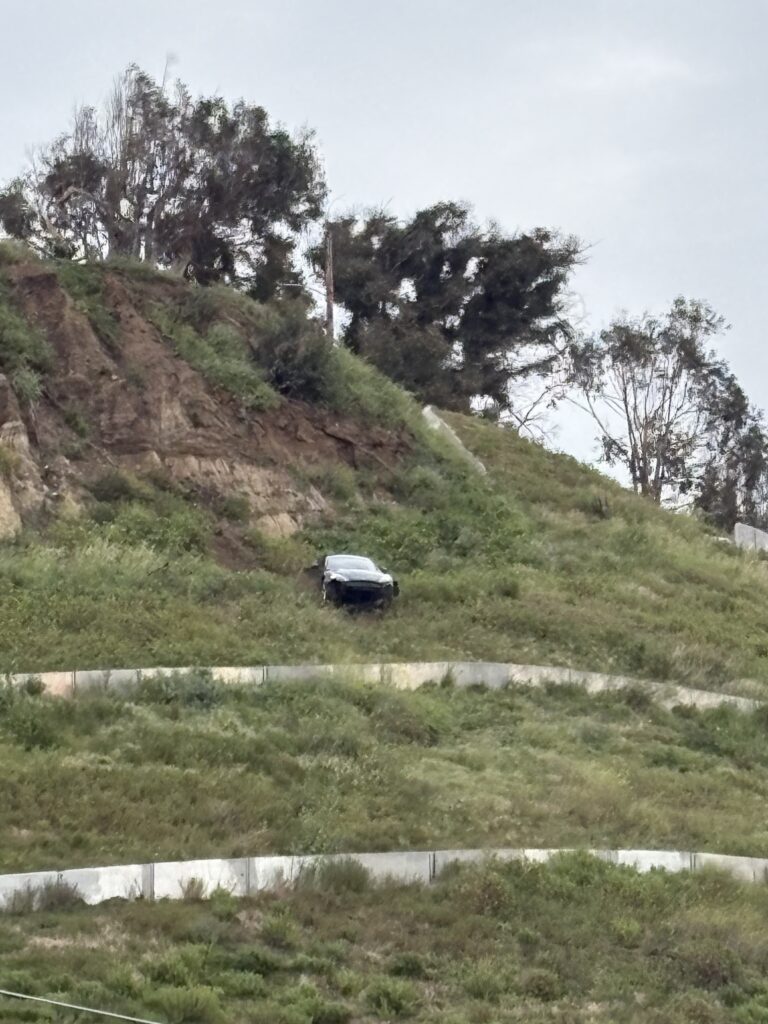
A car went over the Via de las Olas Bluffs at Friends Street, in the early a.m. on February 20. The car landed on the first plateau.  The couple inside were uninjured.

Some thought that since there are so few evacuation routes available out of Pacific Palisades, an enterprising individual attempted to discover a new one.

Yet, at least another person reported that it might have been sexual activity, which led the driver to hit the gas and explode over the side of the cliff. The car was gone off the bluffs by midafternoon.

PILING IT UP:

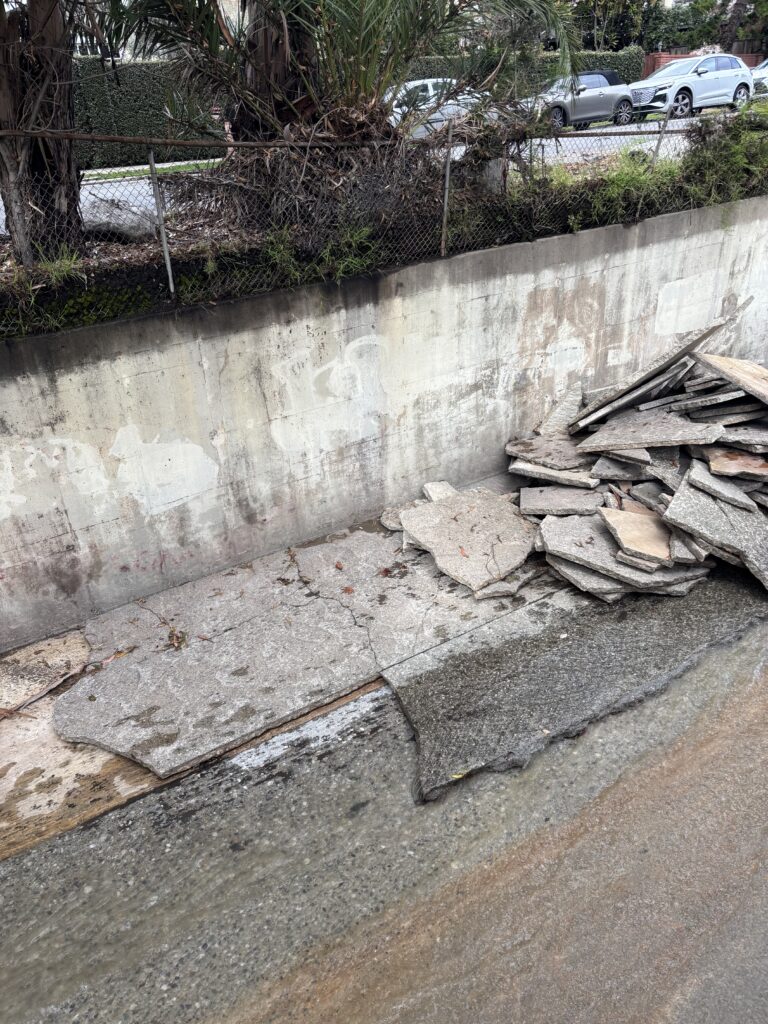
On February 16, Santa Monica Canyon residents were alarmed to hear a loud rumbling sound in the channel behind their homes.

Water rushed up the sides of the concrete flood channel walls. Had the rain not stopped when it did, water could have poured into neighboring yards and onto the streets.

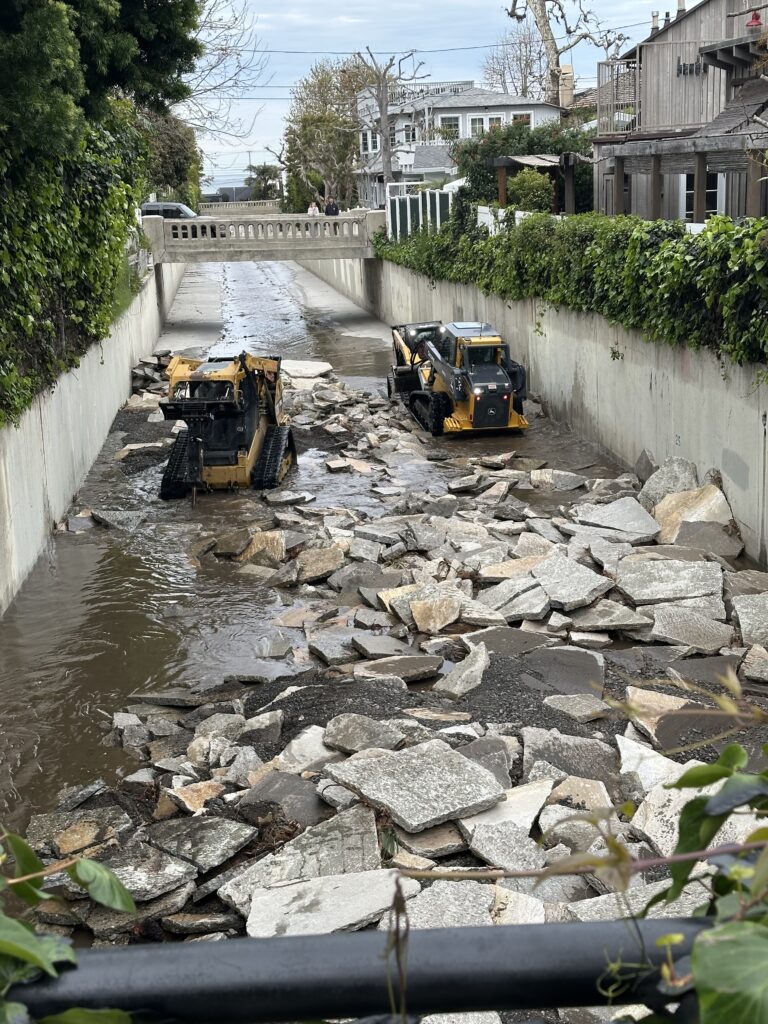
When the rain and water subsided, huge slabs of concrete could be seen piled in the channel. County and City officials were contacted by resident Sharon Kilbride.

Councilmember Traci Parks office responded immediately. “Preliminary reports from LA County Public Works field engineers for the Santa Monica Channel say the concrete overlay that was installed in the 1970s has peeled off and this was the material in the channel.”

Work to remove the concrete started today, February 20 and will take four to five weeks depending on the weather. Work will take place Monday through Sunday from 7 a.m. to 5 p.m.

Broken and loose concrete will be removed and transported to the channel in the Amalfi Drive area. There will be an excavator at the dead-end cul-de-sac near Amalfi Drive to lift the material into haul trucks. About 40 truckloads of material are expected to be removed.  During busiest times eight to 10 truckloads per day will leave the area to an approved disposal site.

Disposal trucks may be staged at a nearby beach parking lot to minimize congestion.

Posted in News | 3 Comments

VIEWPOINT: Lies, Misdirection and Coverup Can Go to Trial

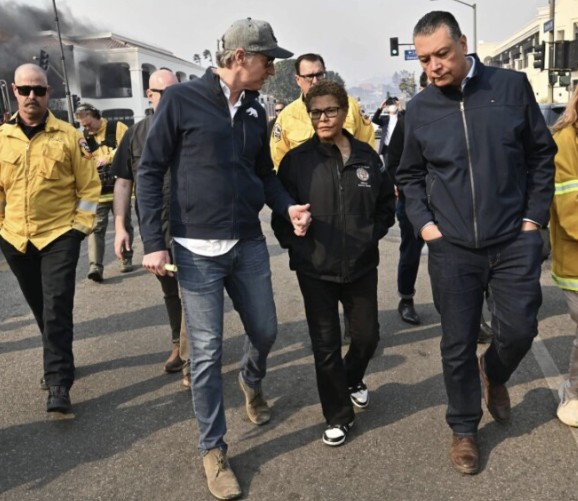
L.A. Mayor Karen Bass and Governor Gavin Newsom walk the streets on January 8. They claim they were not responsible for the damages of burning down a town.

(Editor’s note: CTN reported yesterday in “Malibu Joins the Palisades Fire Lawsuit Party” that attorney Roger Behle of Foley, Bezek, Behle & Curtis, said “The judge has issued her final ruling denying the motions to dismiss, filed by the State and City. The case is going forward, full steam ahead.”)

By JEREMY PADAWAR

GAME ON!

To: Mayor Karen Bass, Governor Gavin Newsom, the L.A. Department of Water and Power, the Los Angeles Fire Department . . . .

Immunity OVERRULED in Palisades Fire on February 19. So ordered by L.A. Superior Court Judge Samantha Jessner. The lies, the misdirection, the gaslighting, the coverup, the conspiracy concerning the January 2025 Palisades Fire will all be available in discovery to the public and our collective microscope.

Judge Jessner just issued her final order overruling the demurrer by the City of Los Angeles in its entirety and overruling the State’s demurrer on all counts except the 3rd cause of action (dangerous condition – vacant lots) and 4th cause of action (public nuisance – vacant lots). (She issued a tentative ruling on February 10.)

This is a huge victory for the Palisades Fire victims and means our case can now move forward into the discovery phase.

We were greatly damaged by the ineptitude, gross negligence, lack of planning and bad policy associated with the fire.  So many lost everything.  That hurt badly.

But nothing has been worse than your response. Not only did you lie, conspire, erase texts (which we will find), change LAFD reports, but then you blamed the victim.  You called us PROFITEERS.  Me specifically.  Bass called “They Let Us Burn” first anniversary rally profiteering.

Newsom called us “Opportunists.”  The Fire Chief told us to “Put it behind us.”  And, you sought TOTAL AND COMPLETE IMMUNITY.

You get NOTHING.  We get the truth.

And then compounding all of this, your lies about how much help the city and state were providing.  You provided almost nothing.  We have to pay FULL SALES TAX on the rebuild. An estimated $50 billion dollars to rebuild for Altadena, Palisades and Malibu.  Los Angeles and California will benefit from $5 BILLION in incremental taxes paid.  You’re collecting full property tax on toxic, unlivable homes… and charging individuals tax on their burned down lots as if they were speculating. Bad policy.  Bad leadership.  Compounded with lies, coverup.  Compounded with terrible response.

And now... We will get THE TRUTH. That’s all we wanted. Buckle up, everyone.  You’re about to see American Democracy work. Let’s go.   PacificPalisades.com

Posted in General, Viewpoint | 2 Comments

Pali High 2026 Baseball Preview

Senior right-hander Jett Teegardin will anchor Palisades’ deep and talented pitching staff.
Photo: STEVE GALLUZZO

“New Look” Dolphins Are Ready to Play Ball

By STEVE GALLUZZO

CTN Contributor

The Palisades High baseball program starts the 2026 season with a new coach and a new field but a similar mission: to win the Western League championship.

On paper, the Dolphins have all the ingredients to make that happen, starting with a stable of pitchers that features seniors Jett Teegardin, Brayden Levy, Yamato Yukimoto and juniors Caleb Gitlin, Cash Cook, Zev Welles-Binns, Charlie Meyers and Sy Kalish.

“We have the best pitching staff in the City Section,” Gitlin declared.

First-year coach Jordan Myrow knows all about Palisades’ proud tradition. His dad was a center fielder on the Dolphins’ 1989 squad which lost to Kennedy 4-3 in the City 4A final at Dodger Stadium.

“Your adversity last year does not define this year,” Myrow told his players after practice last week at the Palisades Recreation Center. “You practice how you play. We need to be better.”

The Dolphins have a bevy of catchers: senior Mikko Melendez, juniors Asher Cohen, Carter Branch (who will also pitch) and Laith Thierry and sophomores Griffin Cosman and Bennett Davis.

“Our team goal is to win the Open Division,” said Teegardin, who posted a 3-3 record with a 1.19 earned run average and 52 strikeouts in a total of 47 innings pitched last spring. “I’m pumped. My slider and my curve are my mainstays but I’m adding a splitter so I have a good arsenal.”

Myrow grew playing Little League at Ladera and Encino, was a four-year outfielder at Notre Dame High in Sherman Oaks (graduating in 2015) and played collegiately at UCLA and Cal State Los Angeles.

He was an assistant at Buckley High in Sherman Oaks before taking over at Palisades.

“Coming here was about what I expected,” Myrow said. “Everyone was very vibrant and open. I need to know what’s going on with my players. We have a happy balance of offense and defense, but I’m an offensive coach. We need runs to win.”

Myrow replaces Mike Voelkel, who stepped down in July after an 18-year tenure in which he racked up 316 victories.

“It’s weird practicing here,” said Teegardin, who lost his home in the Palisades Fire last January. “During the day it feels like a field, but at night it brings back memories of PPBA. I won’t forget that experience.”

Conor Greene bats during practice at the Palisades Recreation Center’s Field of Dreams.
Photo: STEVE GALLUZZO

Defense around the diamond is essential and the Dolphins are steady with seniors Dylan “Hawkie” Idelson (who will also play in the outfield), Andreas Konnari, Max Toro and Conor Greene (who will also pitch); juniors Hudson Ramberg, Desmond Brown, Colton McNulty, Maximo Ramirez and Alfredo Villaba; and sophomores Ethan Davis and Jet Del Giorgio.

“We’ve worked a lot more on the offensive side while keeping our core of pitching and defense,” said Yukimoto, who must provide leadership along with his fellow co-captains Konnari, Ramberg and Gitlin. “Coach knows where we’re at and the rigor that comes with the sport.”

Patrolling the outfield will be seniors Jack Kurland (who stole a team-best 32 bases last spring), Joseph Levy and Jack O’Brien (who will also see action on the mound); and sophomore Tribe Edwards, who will also pitch.

The Dolphins lost nine players to graduation, including home run leader Roman Hawk (he had six), hits leader Ian Sullivan (he had 26) and All-City outfielder Logan Bailey.

In mid-January, the team transitioned from Memorial Park in Santa Monica to the Pali Rec Center. The schedule includes a spring break trip to San Diego for the Lions Tournament.

Hudson Ramberg fields a grounder at shortstop. He is one of the Dolphins’ four captains.
Photo: STEVE GALLUZZO

“It’s a challenging schedule and that’s what I wanted,” Myrow said. “We want to dominate in our league. We’ve got everything we need to do it.”

Myrow has hired assistants with pro experience: Charles Grant-DeBose and D’Anthony Beckman, who have both pitched in the Pioneer League (Class C); pitching coach Nathan Gilman; and speed and agility coach Mark Iadanza, who will oversee the JV program.

“Based on what I’ve seen from fall games and scrimmages something we need to be better at is finishing games,” Myrow said. “We’re always good through the first three to six innings.”

Palisades won league 11 times under Voelkel but finished second to Venice the last two seasons. The Dolphins were 18-11 last spring and lost in the City Division I quarterfinals to eventual-champion Carson.

The Dolphins will play their home games at Cheviot Hills Recreation Center on a new field—with a grass infield, new dugouts and sound system—that Myrow expects will be ready in time for his team’s first home game February 25 against Taft.

“You’re going to find yourself in a situation you don’t like, whether it’s coming to bat after you’ve been sitting in the dugout all game or being called on to pinch run—that’s baseball,”

Myrow said. “The question is, how are you going to handle it?”

Palisades opens the season Saturday morning at Campbell Hall.


Coach Jordan Myrow is confident his team can regain the Western League title in his first season.
Photo: STEVE GALLUZZO

2026 Palisades Varsity Baseball Schedule

Date – Opponent – Site – Time

2/21 Campbell at Hall Campbell Hall 10 a.m.

2/25 Taft at Cheviot 3 p.m.

2/28 Windward at Windward 10 a.m.

3/03 Calabasas at Calabasas 3 p.m.

3/13 Bell at Cheviot 3 p.m.

3/14 Palos Verdes at P Verdes 10 a.m.

3/18 Hamilton* at Cheviot 3 p.m.

3/20 Hamilton* at NVLL 1 p.m.

3/21 Verdugo Hills at V Hills 11 a.m.

3/23 University* at Cheviot 6 p.m.

3/26 University* at Cheviot 6 p.m.

3/28 North Hollywood at N Hollywood 10 a.m.

3/30 San Fernando at San Diego 1 p.m.

3/31 Mission Vista at San Diego 1 p.m.

4/01 Narbonne at San Diego 1 p.m.

4/02 Clark (Las Vegas) at San Diego 1 p.m.

4/08 LACES* at Cheviot 6 p.m.

4/10 LACES* at Cheviot 6 p.m.

4/11 Marshall at Cheviot 9 a.m.

4/15 Brentwood at Brentwood 4 p.m.

4/18 Leuzinger at  Leuzinger 12 p.m.

4/20 Westchester* at Westchester 2 p.m.

4/23 Westchester* at Cheviot 3 p.m.

4/29 Fairfax* at Cheviot 3 p.m.

5/01 Fairfax* at Fairfax 2 p.m.

5/02 San Pedro at Cheviot 11 a.m.

5/04 Venice* at Cheviot 3 p.m.

5/07 Venice* at Venice 3 p.m.

* Western League game

Posted in Sports | Leave a comment

PaliBu Chamber of Commerce Hosts Expo Sunday

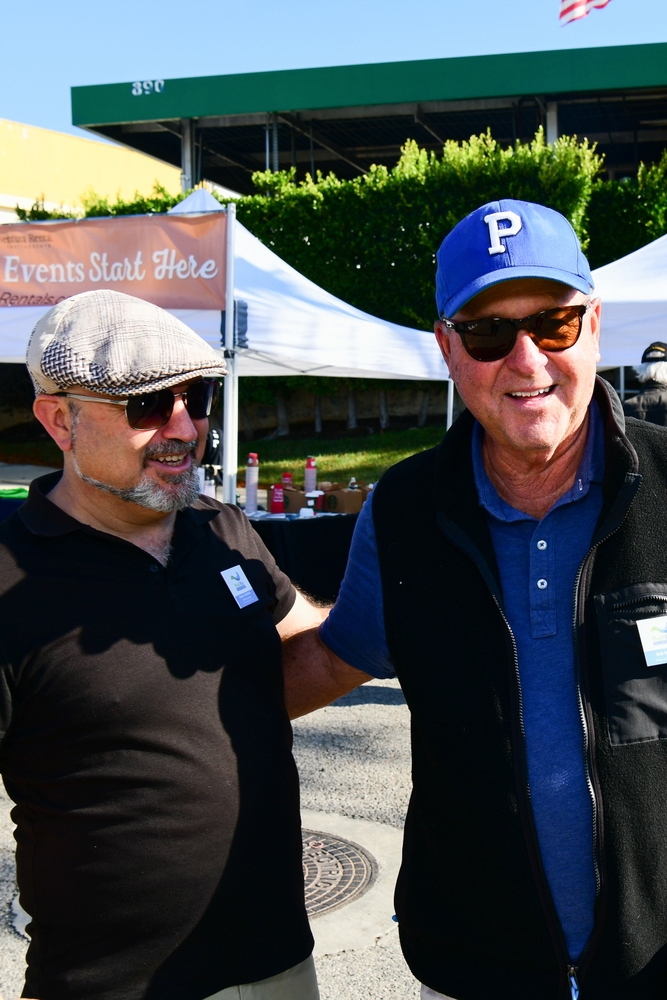
PaliBu Board Chair Ramis Sadrieh with former chair Bob Benton at the last Expo in December.
Photo: RICH SCHMITT

The Malibu-Pacific Palisades Chamber of Commerce is holding a Recovery Expo from 11 a.m. to 3 p.m. on Sunday, February 22. There will be street closures from Alma Real Drive to LaCruz Drive and on LaCruz from Sunset to Swarthmore Avenue.  The event is free to the public.

There will be food trucks, contractors, L.A. City Departments, public adjusters and builders.

New at this expo recovery will be three different sessions of experts speaking on different topics that will be held in Ronald Reagan American Legion Post 283 Hall, at 15247 La Cruz Drive.

At 11:30 a.m. panelists will speak about revolutionary technologies and new building techniques. They include: Lisa Price, Lisa Price Interiors; Daniel Fogelson, Sonic Fire Tech;
Desiree Flanigan, Frontline Wildfire Defense; Bea Hsu, Builder’s Alliance; and Ramin Bassam, Rane Construction / Speccs App. The discussion will be moderated by Deborah Zara Kobylt, Award Winning Journalist + Podcast Host.

At 12:30 p.m. the topic will be Ask the Architects: A Future Informed by the Past, and include panelists: Patti Baker, Backen & Backen; David Lee, Fame Architecture + Design;
May Sung, SUBU Design Architecture; and Geddes Ulinskas, Geddes Ulinskas Architecture. This will be moderated by Maryam Zar, CEO of PaliBu Chamber & President, Palisades Recovery Coalition.

At 1:30 p.m. the question is “Should I Stay or Go?” Panel experts will include Alison Schweitzer, Flagstar Private Bank; Solishia Andico, Home Run Experts; Gregg Clifford, SunPoint Public Insurance Adjusters; Trace McGuire, The Home Gallery; and Eddie Lorin, Monument Home Builders. This panel will be moderated by Don Schmidtz of Schmidtz & Associates.

https://www.palibu.org/

Posted in businesses/stores | Leave a comment

Corpus Christi School  Welcomes Community to “Sneak Peek”

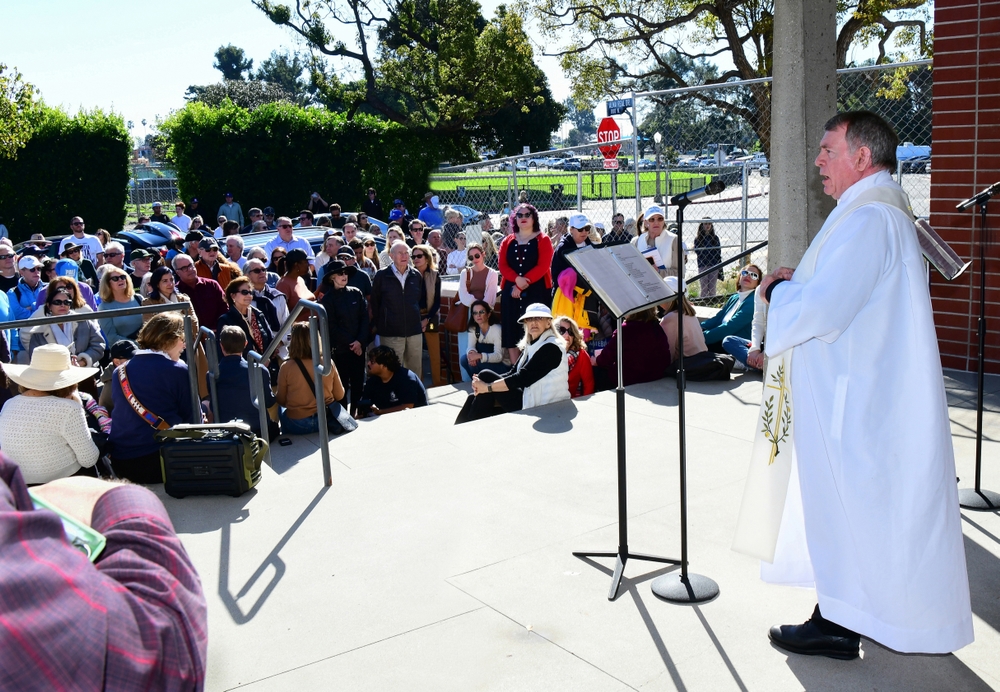
Prayer’s were held on the steps of Corpus Christi School at noon on January 7. The school was damaged and the church was destroyed in the fire.
Photo RICH SCHMITT/CTN

A special campus sneak peek will be offered by Corpus Christi School on Monday, February 23 at 10 a.m. at 890 Toyopa Drive.

The school was damaged and the church destroyed in the January 2025 Palisades Fire.  As rebuilding efforts continue, this event offers a first look at Phase 1 of the campus restoration, scheduled for completion this fall with students returning to campus in the fall in grades Kindergarten through 8.

The sneak peek will give families, neighbors, alumni, and supporters an opportunity to preview the progress, view renderings, and learn more about the spaces that will soon welcome students back to a school that was established in 1951.

This event is open to the entire community, and all are encouraged to attend and be part of this meaningful milestone at Corpus Christi School.

For more information about the school, please contact  [email protected] or click here.

Posted in Schools | Leave a comment

Tahitian Terrace and Our Struggle to Return: Fighting for a Mobile Home Community By the Sea

(Editor’s note: This article first appeared in Lotus Rising on February 17 and is reprinted with author’s permission.)

By CHRIS RUSSO

For most of my life, I aspired to own my own home — a little house with a yard, maybe a garden, maybe even a few trees. In Los Angeles, on a documentary filmmaker’s income, that kind of dream usually puts you fifty miles east of the city and certainly nowhere near the ocean. For years, I tried to figure out how to put my love for nature and the coast first and still make it work. Eventually, I found it in a 670-square-foot single-wide at the Tahitian Terrace Mobile Home Park.

When most people think of the Pacific Palisades, they imagine an affluent pocket of the city where celebrities hide behind hedges and gated driveways. What’s less known is that nearly 30% of the Palisades was made up of multi-unit housing — condos, townhouses, apartments and mobile homes — the only housing that was actually accessible to low and middle-income residents. When I bought my mobile home on Kiki Place, it felt like I’d won the lottery: a place by the beach, finally within reach. What I didn’t fully understand then was what it truly meant to own a mobile home — the structure itself, but not the land beneath it — until the Palisades Fire destroyed it.

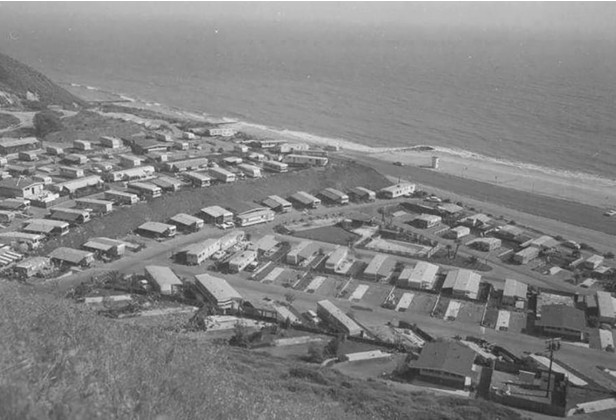
Tahitian Terrace, circa 1960s.                                                                      Photo Credit: PPHS Clearwater Collection/Santa Monica Public Library Image Archives.

Tahitian Terrace was established in 1962 as a senior rental park, tucked into a terraced hillside overlooking Will Rogers State Beach. Over time, it evolved into a diverse, all-ages community of more than 150 homes that were family-owned, long-held, and deeply rooted. The park drew people who liked a bohemian lifestyle with practical sensibilities: teachers, artists, public workers, firefighters, and people who had spent decades in the entertainment industry. It wasn’t flashy. It was down to earth, and I truly felt like I had found home.

I had bicycled past the mobile home parks along the PCH for years before one day deciding to stop and take a closer look. That was the moment I knew I had found something special. As I got to know my neighbors, I fell for the spirit of the place — the eclectic rows of homes, each personalized with surfboards, seashells, wind chimes and hand-built decks. It was lived-in and real.

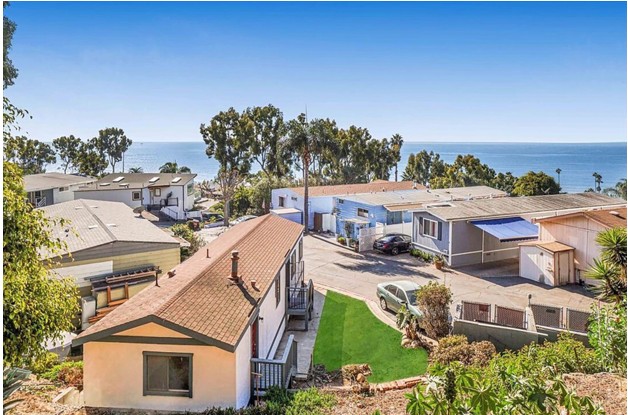
Author’s home before the fire.
Photo: MLS.com listing

My home backed up to a hiking trail and offered a peekaboo view of the ocean. Neighbors told me stories about the woman who lived there before me, who decorated the yard with little gnomes. The quirkiness fit my vibe. We all seemed to understand something unspoken: we had figured out how to live a dream lifestyle by embracing, rather than resisting, the stigma of living in a mobile home park. We knew what we had and it felt priceless, until January 7th when the fire destroyed our community.

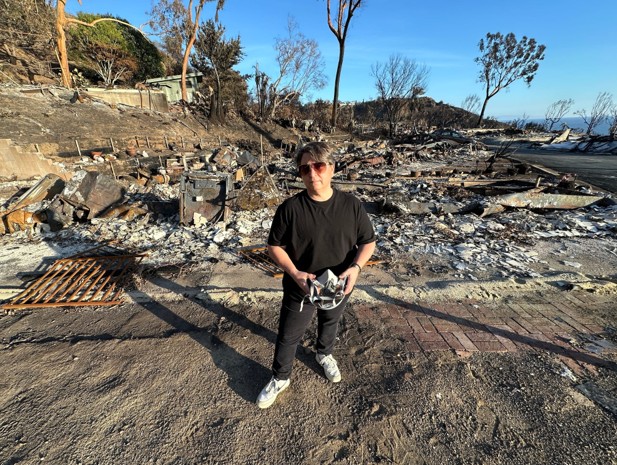
What took me more than a year to figure out and find was gone overnight. I had just closed escrow the day before the fire — proof, if nothing else, of how fragile “ownership” can be. In the days that followed, I found myself buried in disaster recovery paperwork, fighting for rights I didn’t even know I needed. This is the part of mobile home living few people talk about: ownership stops at the walls. Insurance rarely reflects reality and payouts are based on the replacement value of a single-wide mobile home — not the views, the location, or the zip code where you pay taxes. And after a fire, the decision about whether you can return no longer rests with the people who lived there, but the ownership group of the land.

Chris Russo in front of her home after the fire.
Photo: CHRIS RUSSO

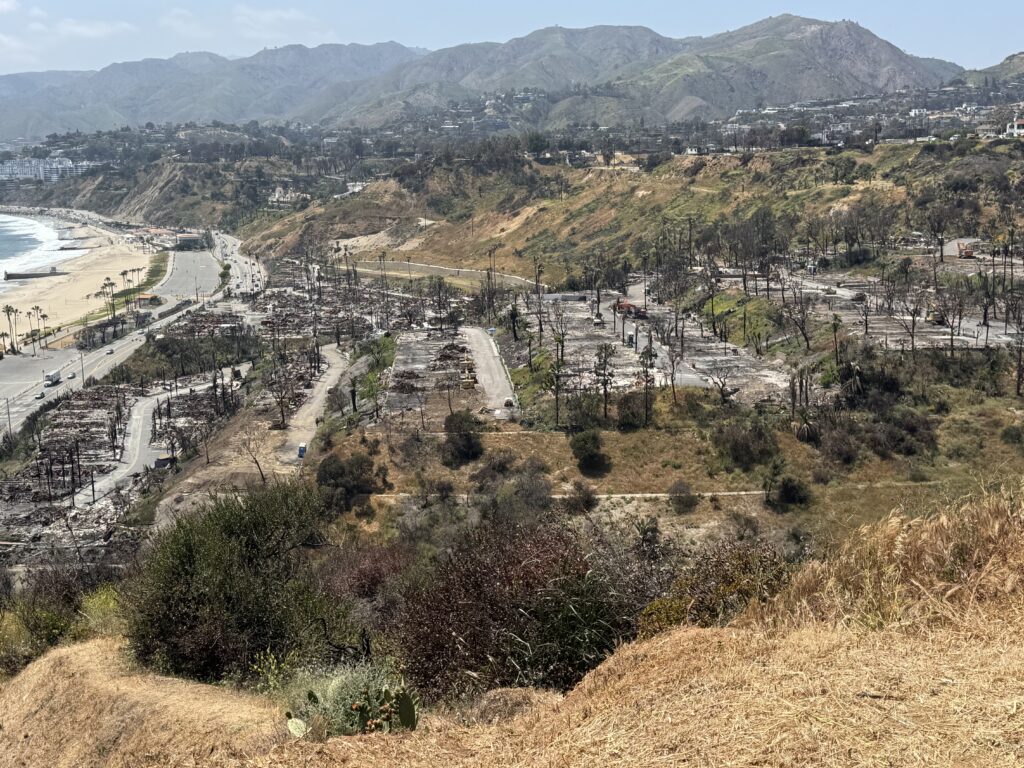
This has been the hardest part to reconcile — not just the loss, but the silence. One hundred and fifty-eight households were displaced from Tahitian Terrace, and in the year following the fire, residents have received little to no meaningful communication from the park’s ownership group about rebuilding, timelines, or whether returning home will even be an option.

I was quickly educated on the fact that mobile home parks occupy a strange middle ground. They’re often described as affordable housing, yet treated like private real estate when disaster strikes. Residents invest their life savings into homes they cannot easily move, while the land beneath them remains a commodity. When a fire destroys the structures, the land remains — and with it, the opportunity for redevelopment. They are vulnerable by design.

In places like the Pacific Palisades, and increasingly everywhere else, where land values soar and coastal access grows increasingly exclusive, disaster does not hit evenly. It exposes long-standing fault lines around class, age, housing type, and who is deemed worth rebuilding for. Tahitian Terrace was home to people who had already figured out how to live smaller, slower, and closer to the land. Many cannot simply relocate again. For some residents, this was the last home they expected to own.

What happens to Tahitian Terrace will quietly signal how Los Angeles intends to rebuild after climate disaster, and whether recovery includes working-class communities or whether fire becomes another mechanism for erasure. I am still standing in the aftermath, learning how land use, insurance, and recovery policies show up in ordinary days and unanswered questions. This is not simply a story about losing a home, but about the fragile line between rebuilding a community and watching it disappear.

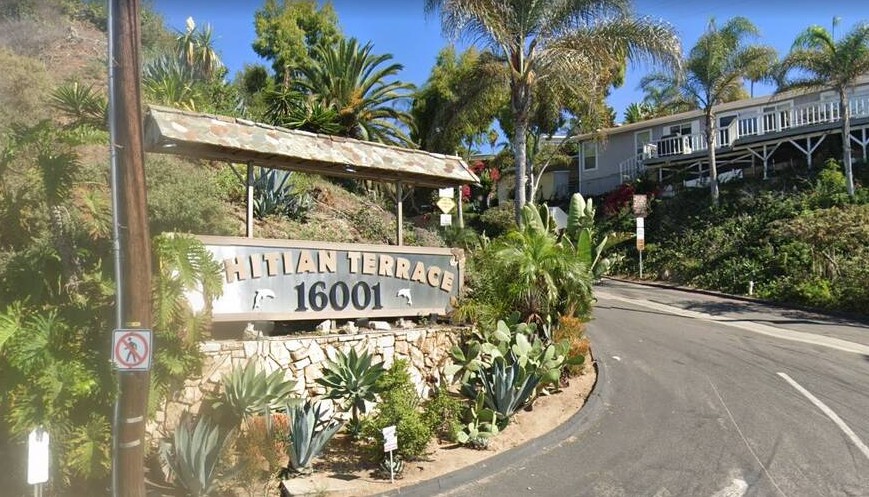
This was Tahitian Terrace, a mobile home park that provided affordable living in Pacific Palisades.

Posted in City Councilmember Traci Park, General, Palisades Fire | 2 Comments

Malibu Joins the Palisades Fire Lawsuit Party

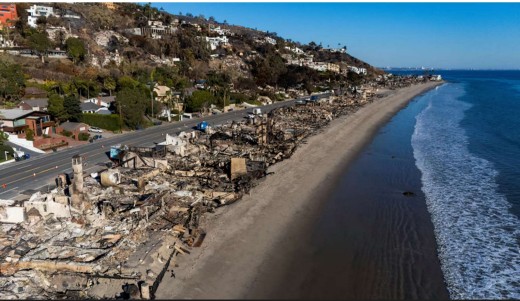
Homes along Carbon Beach in Malibu were destroyed.

The City of Malibu filed a lawsuit February 18 in Los Angeles Superior Court against the State of California, L.A.City, the L.A. Department of Water and Power and L.A. County over the January 2025 Palisades Fire.

The City of Malibu contends that the fire killed at least six residents, wiped out about 700 homes and dozens of businesses inside city limits. With Pacific Coast Highway closed for months, the City also lost revenue and had a significant disruption to tourism, employment, and local revenue.

“This decision was not made lightly,” Malibu Mayor Bruce Silverstein said in a statement announcing the lawsuit. “The city has an obligation to act in the best interests of our residents and taxpayers. The lawsuit seeks accountability for the extraordinary losses suffered by our community while recognizing that Malibu must continue to work collaboratively with our regional partners going forward.” https://malibucity.org/DocumentCenter/View/37305/City-of-Malibu-Legal-Action-Palisades-Fire-Losses-2172026

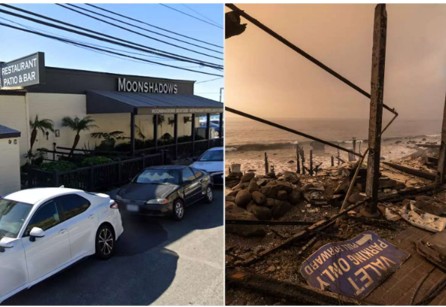
The popular Moonshadows Restaurant along Pacific Coast Highway burned during the Palisades Fire.

In the complaint, it notes that “the Palisades Fire was not an accident, an Act of God, or permissive firefighting.. . .rather the fire was a foreseeable and proximate result of the unlawful conduct of Defendant State of California, operated by the California Department of Parks and Recreation (collectively “the State”), that harbored a dangerous condition on State-owned land where the Palisades Fire was allowed to ignite. Shockingly, the State elevated rare plants over human lives in failing to inspect and address the dangerous burn scar from the Lachman Fire that ignited just days before on its own land – its smoldering embers remaining clearly visible to anyone who cared to look.”

Other agencies named in the 66-page lawsuit includes the Mountains Recreation and Conservation Authority, the Santa Monica Mountains Conservancy and L.A. County Waterworks District 29 (a division of L.A. County Public Works.

The suit points out that after the November 13, 2024, Fire next to the empty Santa Ynez Reservoir “LADWP should have refilled the Santa Ynez Reservoir and ensured that adequate water was available for firefighting in the Pacific Palisades. Instead, it consciously chose to leave a risky and clearly inadequate water supply system in place.”

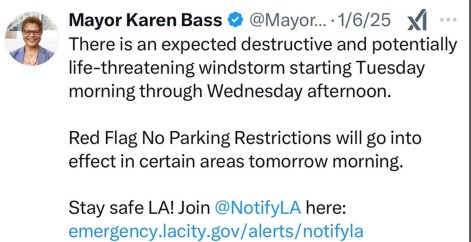
The suit notes that on “January 6, 2025, the NWS in Los Angeles issued its most severe fire weather warning – “LIFE-THREATENING & DESTRUCTIVE WINDSTORM!!!” – for several areas, including the area that the Palisades Fire would eventually ravage.”

And added “In spite of these dire warnings, the State and CA State Parks failed to adequately inspect the Lachman Fire burn scar, while the City and LADWP remained committed to their plan, which insured an inadequate water supply infrastructure. When the warnings proved prescient, the destruction was a foregone conclusion.”

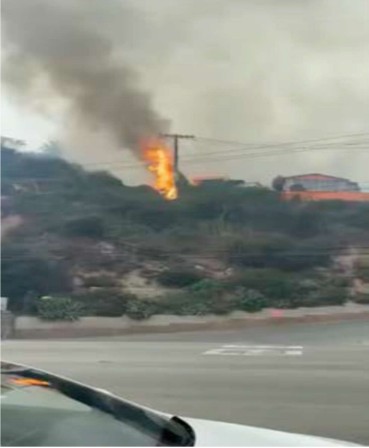
The suit also details LA DWP’s decision not to shut off electricity. “LADWP’s failure to de-energize its distribution equipment caused multiple pole fires, including one captured in an eyewitness video on January 7, 2025, at approximately 3:36 p.m. at 17015 Pacific Coast Highway, directly in front of the Malibu Village mobile home park. On information and belief, this pole fire spread and ultimately caused the complete destruction of the Malibu Village mobile home park.

“Defendants’ conscious decision not to de-energize power, despite winds of over 80 to 100 miles per hour, led to combinations of overhead power lines arcing, power poles breaking, and transformers exploding—clear consequences of LADWP’s choice to leave its equipment energized. Sparks rained down, exacerbating existing fires or igniting new sources of fuel, as depicted in the below images taken during the Palisades Fire.”

The lawsuit seeks unspecified damages.

According to Roger Behle of Foley, Bezek, Behle & Curtis, “The suit filed by the City of Malibu will be added to all the cases now pending before Superior Court Judge Samantha Jessner.

“The judge has issued her final ruling denying the motions to dismiss, filed by the State and City. The case is going forward full steam ahead,” Behle said.

Posted in Palisades Fire | 1 Comment

Bye-Bye Concrete: Canal Cleaning to Start

The concrete overlay in the flood channel came up and was pushed into a pile with the flowing water. It needs to be removed before the next rains,

County Public works will be staging heavy equipment and trucks starting tomorrow at 474 E. Channel for about three to four weeks to complete debris cleanup of the flood control channel.

Residents were warned that the dead-end portion of East Channel Road at Amalfi Drive would be temporarily closed to facilitate this work. Dump trucks will be used to haul the removed material. The county expects two to three trucks to be staged in the cul-de-sac for loading at any given time. Personnel, including flaggers, will be onsite to manage traffic.

On February 16, Santa Monica Canyon residents were alarmed to hear a loud rumbling sound in the channel behind their homes.

Water rushed up the sides of the concrete walls channel walls – and had the rain not stopped when it did, water could have poured into neighboring yards and onto the streets.

When the rain and water subsided, huge slabs of concrete could be seen piled in the canal. County and City officials were contacted by resident Sharon Kilbride.

Councilmember Traci Parks office responded immediately. “Preliminary reports from LA County Public Works field engineers for the Santa Monica Channel say the concrete overlay that was installed in the 1970s has peeled off and this was the material in the channel.

The storm on February 16 caused sections of the sacrificial concrete overlay in the Santa Monica Canyon Channel to delaminate and collect within the channel.

Posted in News | 1 Comment

Sunset Club Will Feature Events for Palisades Seniors

At the inaugural Sunset Club event, there was dinner, drinks, music and dancing. Jimmy Dunne served as the emcee for the event.
Photo: RICH SCHMITT

Many Pacific Palisades residents had a fantastic time at the Valentine’s Party, organized and underwritten by The Sunset Club. Founded by Cary Singleton, Will Singleton, and Jimmy Dunne, the Sunset Club is a new community organization — celebrating a treasure of our town: our seniors.

In towns like Pacific Palisades, there are endless calendars for young families and working adults, but remarkably few invitations designed specifically for the people who built the place—the longtime residents who carried the PTA, coached the teams, ran the charities, started the businesses, served on the boards, and quietly kept the lights on for decades.

Now the surprising part. Before the fire, nearly 6,000 Pacific Palisades residents were 65+ — about one in four neighbors. That’s not a niche group. That’s a pillar of town life.

The Sunset Club is  creating events where our seniors can see familiar faces, meet new friends, laugh, dance, listen, learn, and feel celebrated. The tone is joyful and respectful: a club that says, you matter here—still—and always.

Carey, Will and Jimmy plan to offer a range of, well-produced gatherings: intimate dinners with great food and ambiance; TED-style talks and storytelling nights; concerts and small performances; salon-style conversations; holiday events; dances; and other “you name it” evenings that make it easy to show up—especially for those who don’t want to go alone. (That’s right you don’t have to be part of a couple to attend.)

In Pacific Palisades, this is also a way to honor the town’s elders as its living memory and founding voices—particularly meaningful as the community continues to recover and reconnect after the January 2025 fire.

And after a year like we’ve had, nobody should have to feel alone in the town they helped build. And the model is simple enough to travel: every town has a Sunset Club demographic, and every town benefits when elders are brought back into the social fabric—not as an afterthought, but as a headline act.

The Sunset Club is a love letter to the people who came before us, and a promise that the best parts of town life—warmth, friendship, music, laughter—don’t end at 65.

To find out more or how to sign up, email Jimmy Dunne [email protected] or  click here.


Posted in General | 1 Comment